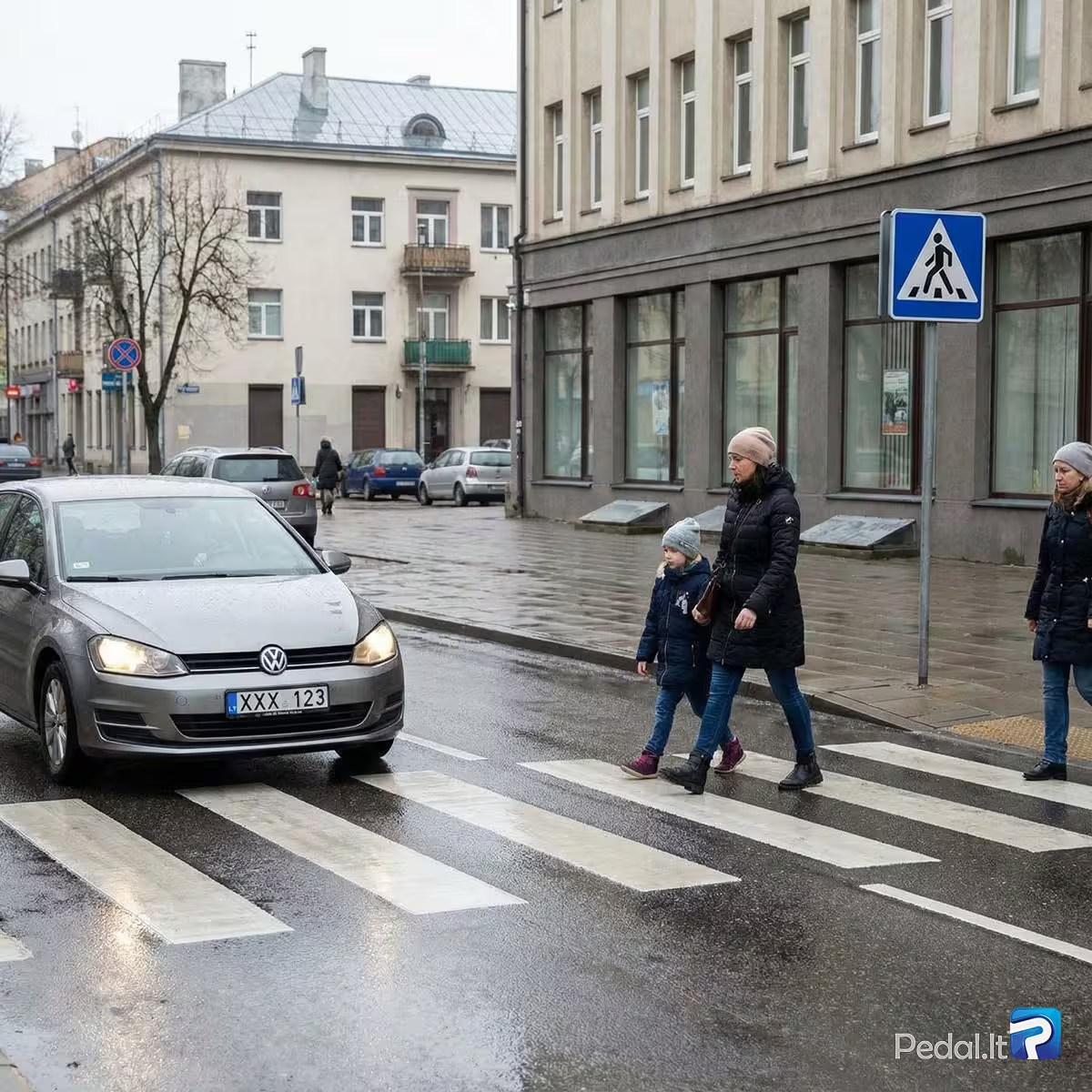
At this pedestrian crossing, you must yield to:
RTR 30. When approaching an uncontrolled pedestrian crossing, a driver must slow down or stop before the crossing to yield to pedestrians who have stepped into any lane, are walking in any lane, or are standing at the edge of the carriageway waiting to step into a lane in the direction of the vehicle's travel (or into any lane on a single-lane road with traffic in both directions). Drivers must exercise extra caution at night, in poor visibility, or when the crossing is not clearly visible from the driver's position, and must ensure there are no pedestrians entitled to priority at the crossing.
1. Pedestrians who have stepped into the lane carrying oncoming traffic.
2. Pedestrians standing at the curb adjacent to the crossing.
3. Pedestrians who have stepped into the lane in which you are travelling.
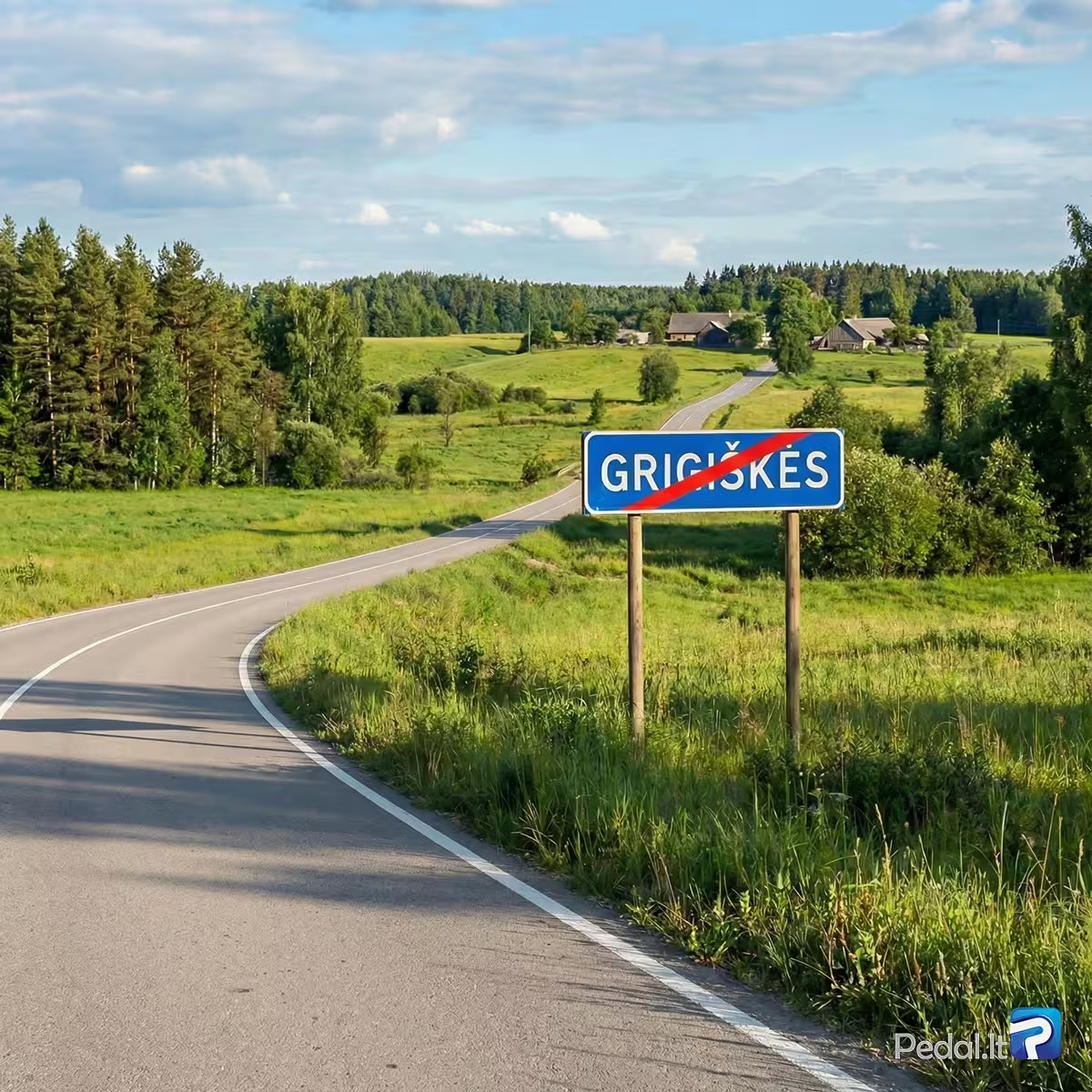
What is the maximum permitted speed for a passenger car on an asphalt- or concrete-surfaced road where this sign applies?
According to the Road Traffic Rules (RTR), a blue sign showing the settlement name in white letters indicates the start of a settlement where the special traffic regulations that normally apply within built-up areas do NOT apply. By contrast, a sign with the settlement name in black letters on a white background marks the start of a settlement where built-up-area traffic rules are in force (RTR 131). The following maximum speeds apply outside built-up areas (RTR 131.1): for passenger cars, light goods vehicles with a permissible maximum mass up to 3.5 tonnes, motorcycles and tricycles — on motorways: 130 km/h from April to October and 110 km/h from November to March; on expressways/highways: 120 km/h from April to October and 110 km/h from November to March; on roads with asphalt or concrete pavement: 90 km/h; on other roads: 70 km/h. See road sign 612: Beginning of a built-up area where special built-up-area rules do not apply. Road sign 613: End of a built-up area (marked by sign 616); it may show the name of another settlement and the distance to it.
1. 70 km/h
2. 80 km/h
3. 90 km/h
How would you react if the vehicle began to skid on a wet surface (i.e., started to aquaplane)?
On roads (especially those with ruts) during heavy rain, water can accumulate on the asphalt because it cannot drain quickly toward the edges. If you accelerate under these conditions, the tire treads may be unable to disperse the accumulated water. The vehicle can aquaplane when a wedge of water lifts the tires off the road surface, reducing traction and making the vehicle difficult to control. If a vehicle begins to aquaplane, the driver should reduce speed to regain traction and stability.
1. You would immediately apply the brakes.
2. You would ease off the accelerator to reduce your speed.
3. You would increase your speed.
On which road sections can exceeding the speed limit cause a road accident?
Exceeding the speed limit on any section of road is dangerous: it increases braking distance and thereby raises the likelihood of a road accident.
1. At pedestrian crossings.
2. On curves and turns.
3. At intersections.
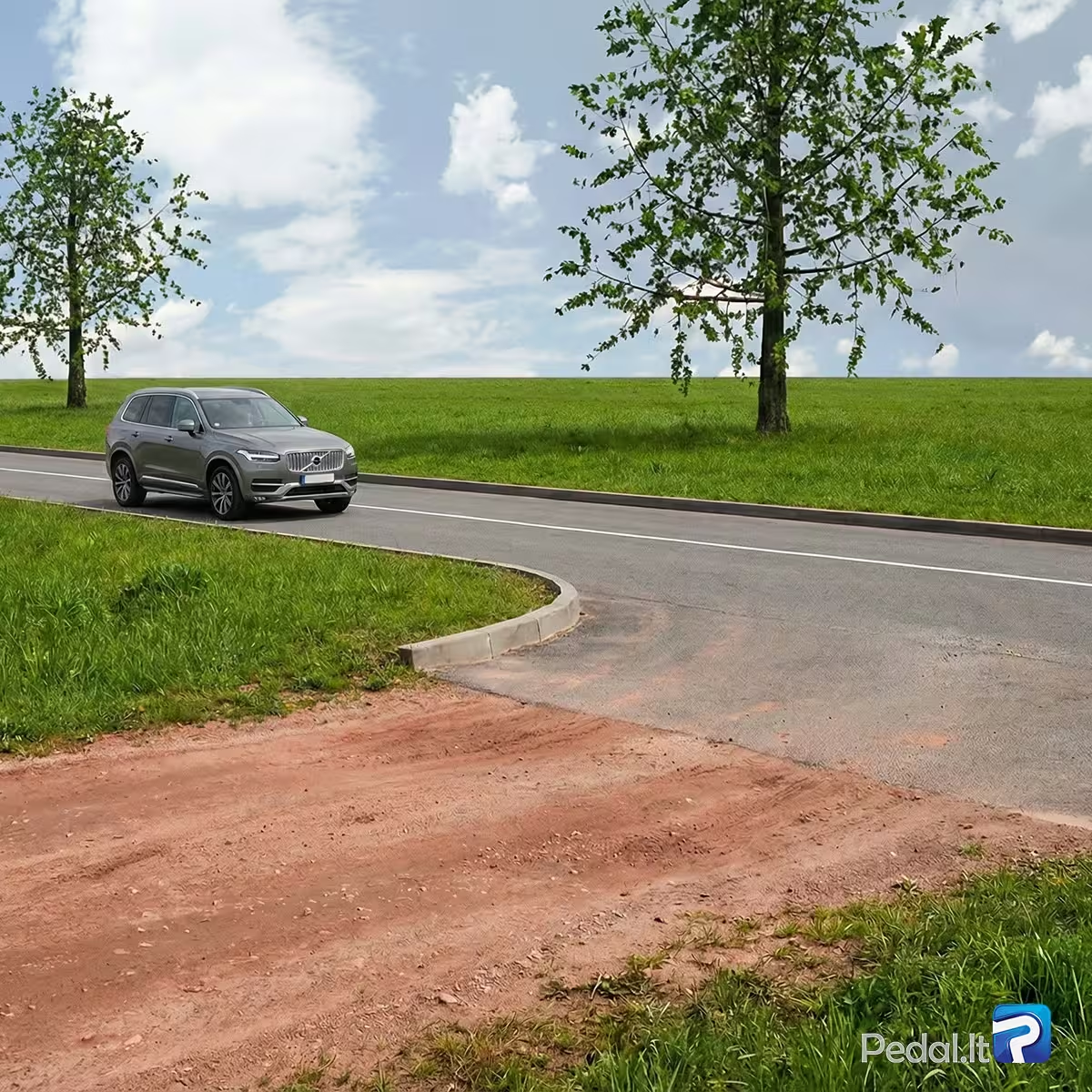
Which road is the main road at this intersection?
RTR 3.14. The main (priority) road is: a road marked with the 'Priority Road' sign, an 'Intersection with a Side Road' sign, a 'Side Road from the Right' or 'Side Road from the Left' sign, or designated as a 'Motorway' or 'Road for Motor Vehicles' in relation to the intersecting or joining road; a road in relation to another road marked with 'Give Way', 'STOP', or 'End of Residential Area' signs; a paved road (concrete, asphalt, or cobblestone) in relation to an improved unpaved road (macadam or gravel) or a dirt road (forest, field, or similar road); and an improved unpaved road in relation to a dirt road. A paved or improved unpaved section of a side road immediately before an intersection does not make that side road equivalent to the intersecting or joining road. There is no priority road at intersections controlled by traffic signals. JB
1. The road with a gravel surface.
2. Both roads are equivalent.
3. The road with an asphalt surface.
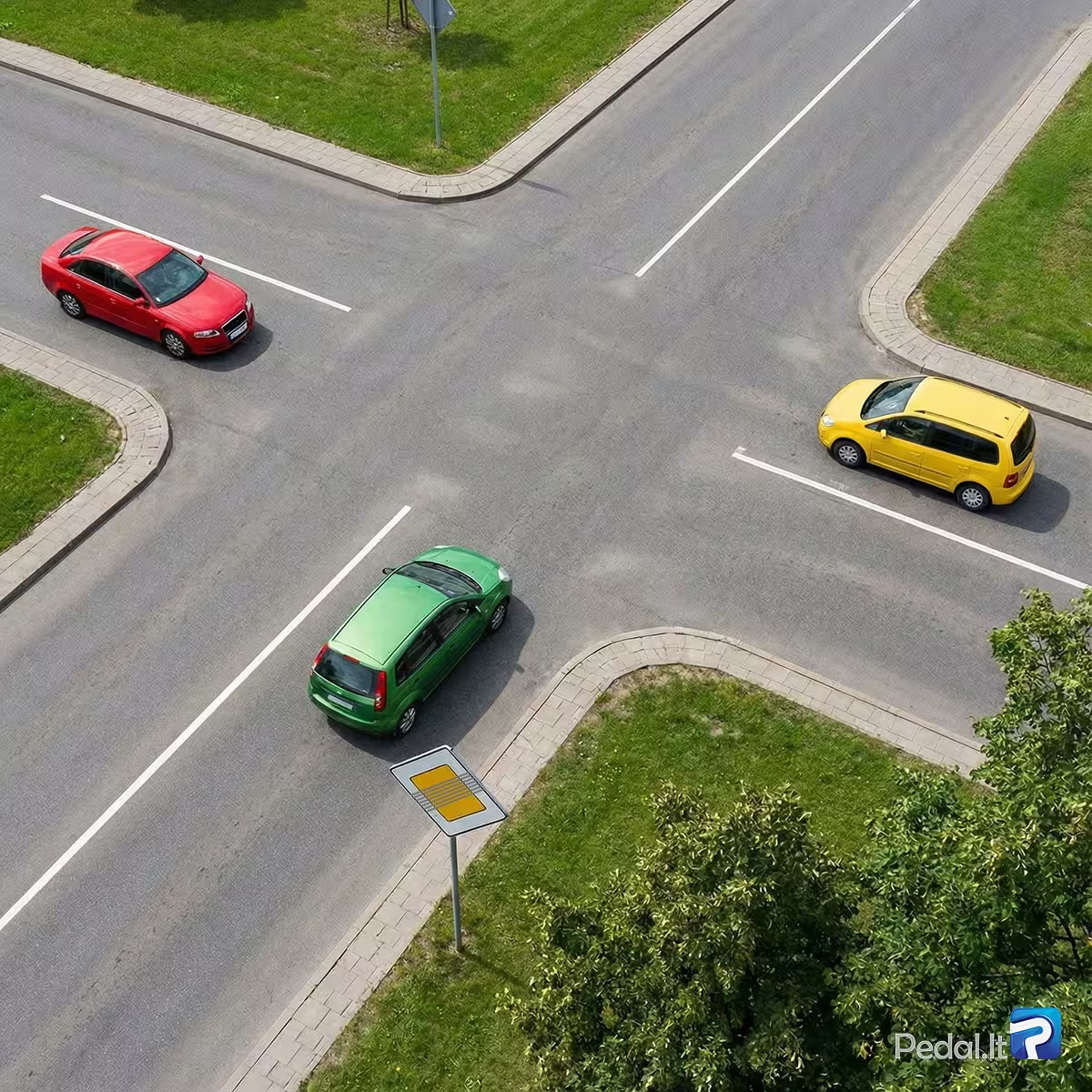
In what order will the vehicles pass through the intersection?
The yellow vehicle goes first because it is the only one without a vehicle to its right obstructing its path. Next comes the green vehicle, and last is the red vehicle. RTR 155. At an uncontrolled intersection, drivers must yield to vehicles approaching from the right when their trajectories intersect.
1. The yellow vehicle first, followed by the green vehicle, and finally the red vehicle.
2. The green vehicle first, then the red vehicle, and finally the yellow vehicle.
3. The red and yellow vehicles together first, followed by the green vehicle.
4. The green vehicle first, then the red and yellow vehicles together.
Are you required to signal before starting to move?
RTR 82. A driver must indicate intended actions by using the right or left direction indicators, or by arm signals if the indicators are not available or are inoperative: 82.1 before starting to move off and before stopping; 82.2 before changing lanes, before and after overtaking, before and after bypassing an obstruction, before turning right or left, before making a U-turn, and before leaving a roundabout or an intersection where traffic circulates in a circle. JB
1. Yes — you must signal before starting to move.
2. No — you are not required to signal.
Are other vehicles permitted to enter the space between a motorcyclist and the driving instructor who is accompanying the motorcyclist in a car?
RTR 26. Drivers of other vehicles must not enter the space between a learner driver—who is learning to operate a moped, motorcycle, tricycle, or any type of quadricycle—and the driving instructor who is accompanying the learner in a vehicle. During the training period the learner must wear a high-visibility vest marked with the distinguishing sign 'M' on both the front and the back. A driving instructor who accompanies the learner on a motorcycle must also wear a vest of the same type bearing the words 'DRIVING INSTRUCTOR'. If the instructor accompanies the learner in a car, the car must display the identifying marking specified in Annex 4 of these Rules.
1. It is permitted.
2. It is prohibited.
A vehicle driving ahead of you on the motorway has switched on its hazard warning lights and keeps driving. What does this indicate?
91. If a vehicle is equipped with hazard warning lights, they must be used: 91.7 when other road users should be warned of an obstruction or hazard.
1. There is an obstruction or hazard ahead.
2. Police are ahead.
3. They are indicating that they intend to turn around.
To begin driving uphill, when should the parking brake be released?
If the parking brake is used when starting on an uphill gradient, release it simultaneously with moving off.
1. After you have started moving.
2. Before you start moving.
3. Simultaneously with starting to move.
You should select a speed so that the stopping distance is:
If the stopping distance is longer than the visible portion of the road, you may collide with an obstacle. Therefore, the distance visible ahead must always exceed the stopping distance.
1. Longer than the visible distance ahead.
2. Shorter than the visible distance ahead.
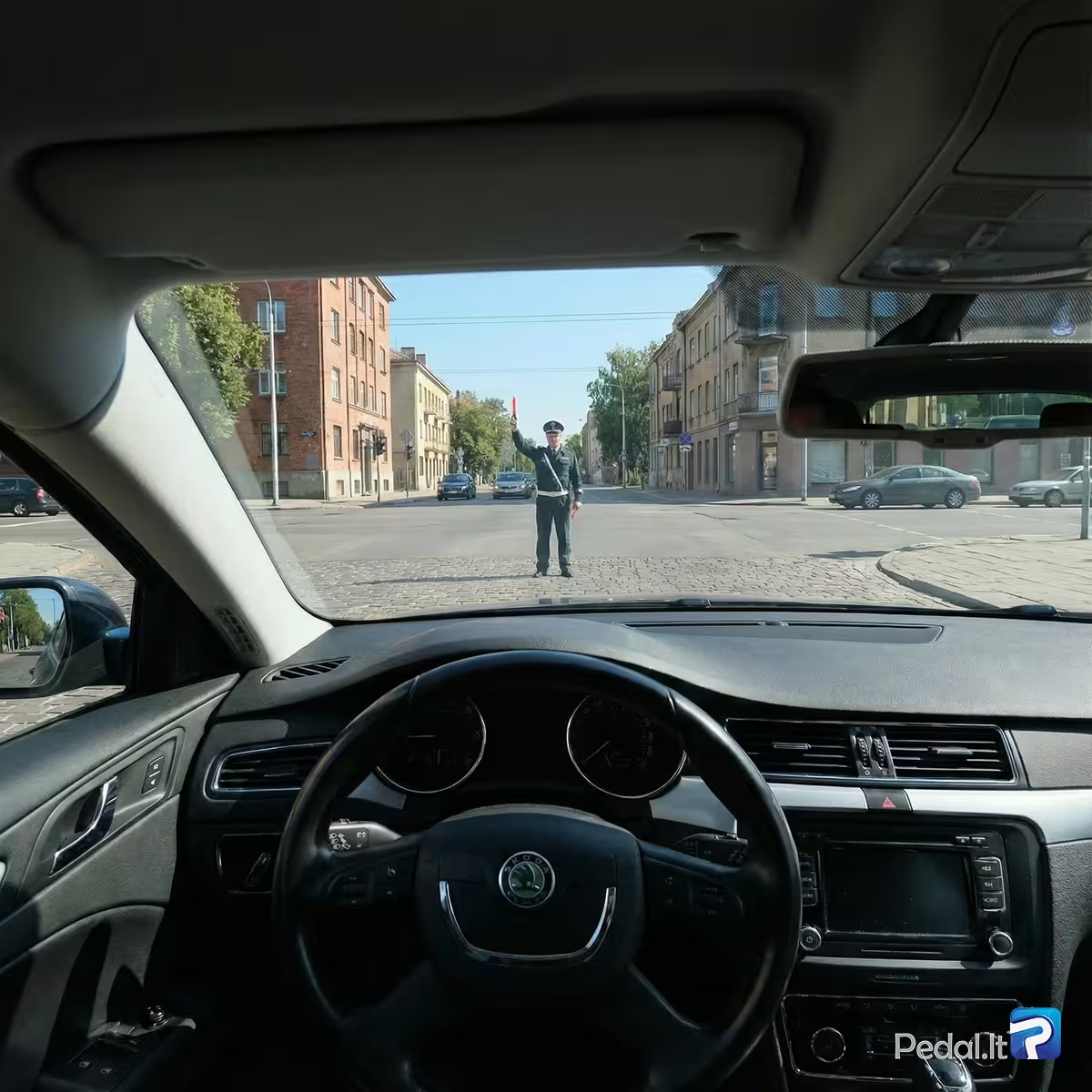
Are you permitted to proceed in this situation?
RTR 77. Signals given by traffic officers have the following meanings: 77.3. Arm raised upward: 77.3.1. All road users must not proceed in any direction.
1. Yes — you may proceed.
2. No — you must not proceed.
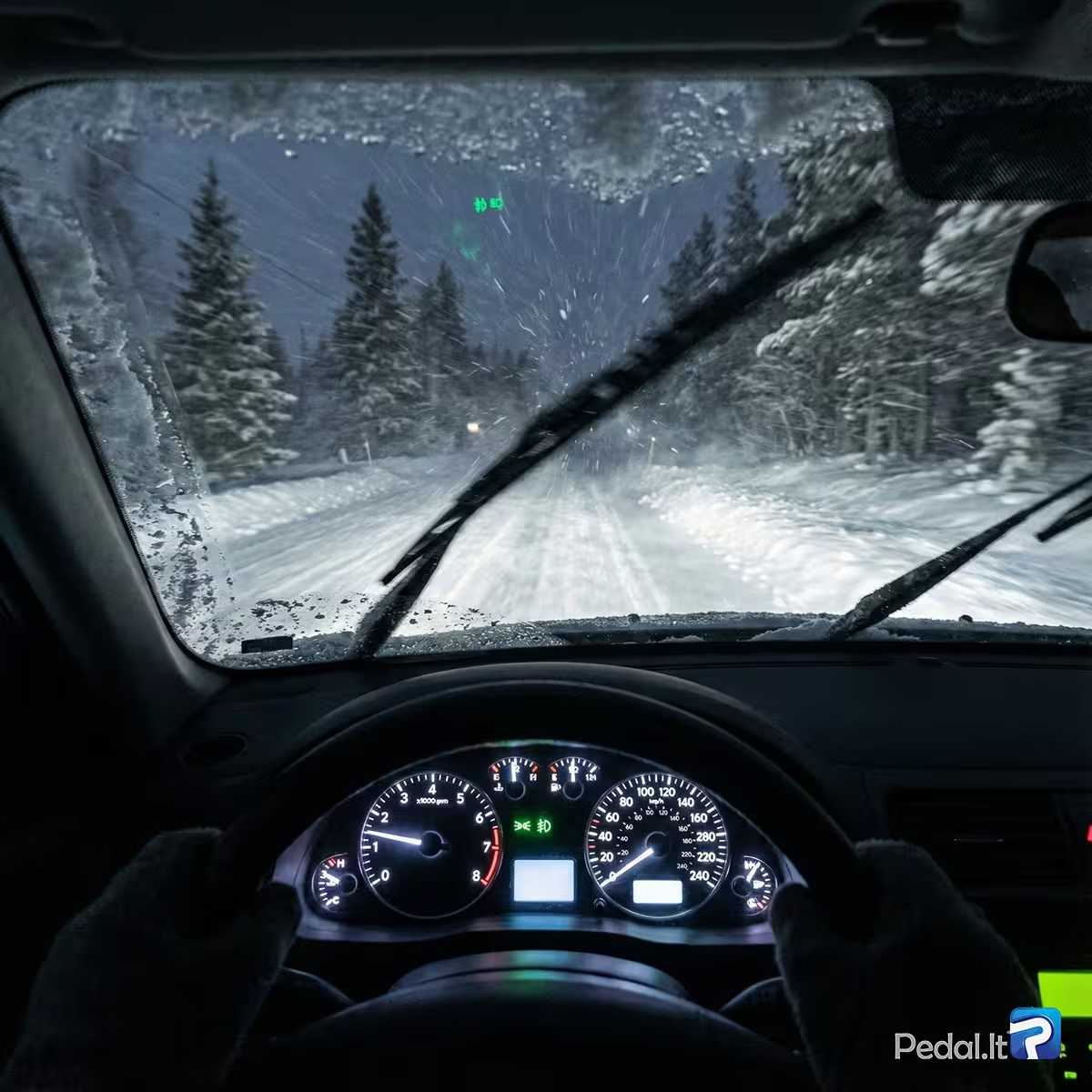
Which exterior lights should be switched on to improve visibility on the road during darkness and when snow is blowing?
When driving at night and during blowing snow, you should switch on the fog lamps together with the dipped-beam (low-beam) headlamps. Using the main-beam (high-beam) headlamps will cause light to reflect off the snow and dazzle the driver. (RTR 98) Fog lamps should only be used when visibility is seriously reduced; the front fog lamps may also be used in the event of failure of the front left dipped-beam headlamp.
1. Fog lamps used together with the main-beam (high-beam) headlamps.
2. Fog lamps used together with the dipped-beam (low-beam) headlamps.
While stopped uphill at a traffic signal, the best method to keep a manual-transmission car stationary is to:
When stopped uphill at a red traffic light, the recommended way to keep a manual-transmission car stationary is to use the parking brake. This is especially advised for inexperienced drivers, as it makes starting away easier and reduces the risk of rolling backward.
1. Apply the parking brake.
2. Select first gear and partially release the clutch to hold the vehicle.
3. Leave the vehicle in gear and switch off the engine.
4. Apply and hold the service (foot) brake.
Why is it dangerous to drive fast on an asphalt road during heavy rain?
Heavy rain creates a layer of water on the asphalt surface (especially in longitudinal ruts) that cannot drain quickly to the roadside. At high speeds, a tire's tread cannot displace this water from beneath the wheel, and aquaplaning (hydroplaning) can occur. In other words, the wheels lose contact with—or have reduced grip on—the road surface, and the vehicle may become uncontrollable.
1. Water will enter the engine and cause it to stall.
2. The vehicle may lose control due to aquaplaning.
3. The windshield wipers will stop working.
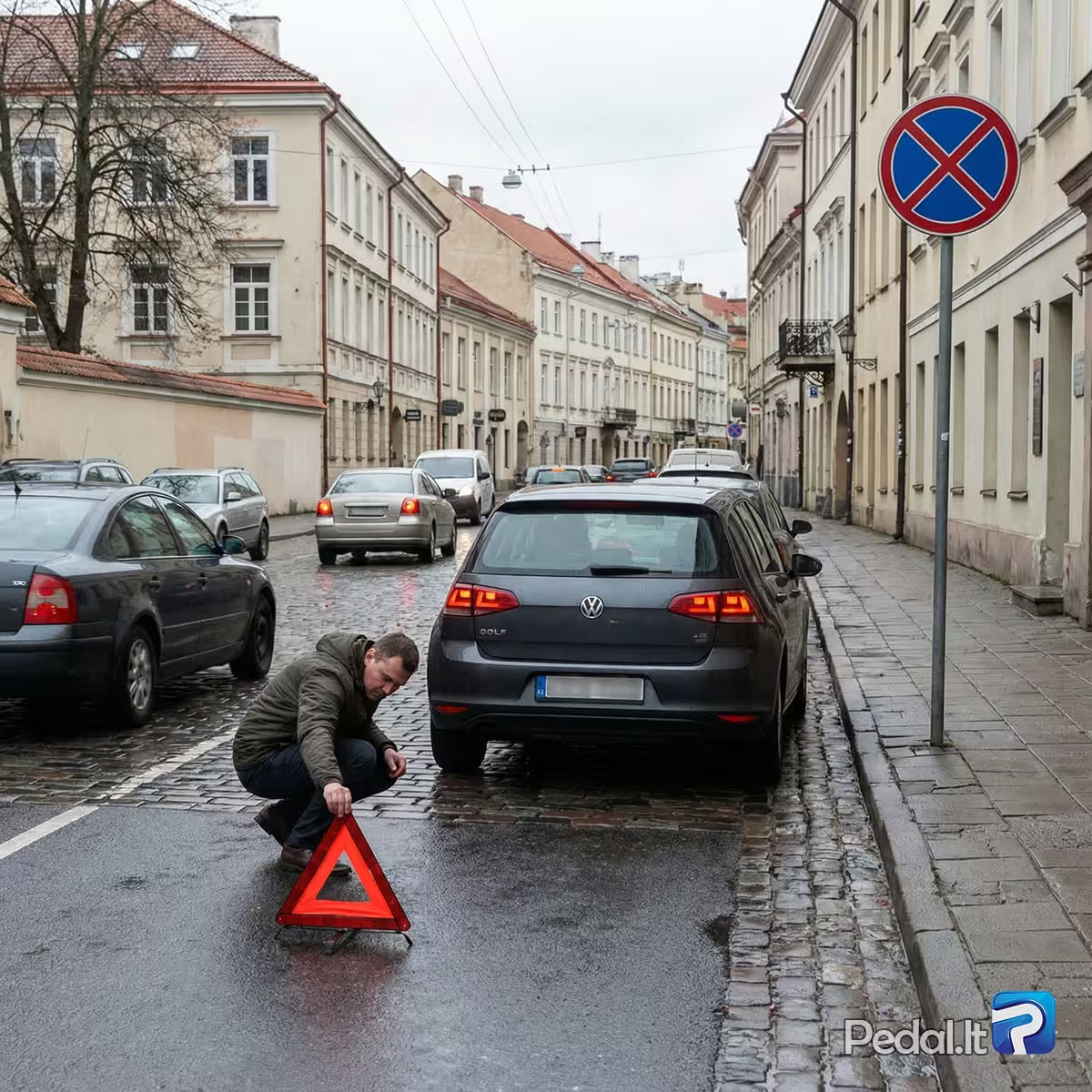
What must you do if you are forced to stop inside a settlement where stopping (parking) is prohibited and the hazard warning lights are not working?
RTR 92. If the emergency warning light system is not fitted or is defective and an emergency stop is required where stopping or parking is prohibited, in the event of an accident, or where the stopped vehicle would be visible to other road users from less than 100 metres, the driver of a motor vehicle (other than a motor moped or a motorcycle without a trailer), a tractor, or a self-propelled machine must immediately place an emergency stop sign on the carriageway side opposite to the direction of travel: in settlements, not closer than 25 m, and outside settlements, not closer than 50 m from the stopped vehicle. If at least one rear position lamp is defective and the hazard warning lights do not work while driving in darkness or poor visibility, an emergency stop sign must be attached to the rear of the vehicle in order to continue driving.
RTR 151. When a vehicle is forced to stop where standing or parking is forbidden, drivers must switch on hazard warning lights if available and/or place a warning triangle on the road as specified in Paragraph 92 of the Rules, and remove the vehicle from the road as soon as possible. If drivers intend to stop on unlit road sections at night or in poor visibility and hazard warning lights are unavailable or inoperable, the vehicle must be parked off the carriageway. If this is impossible, the place must be marked as specified in Paragraph 92 of the Rules. JB
1. Place a warning triangle at least 25 m from the stopped vehicle.
2. Attach a red flag to the vehicle.
3. Switch on the dipped headlights.
4. Stop another vehicle and ask for assistance.
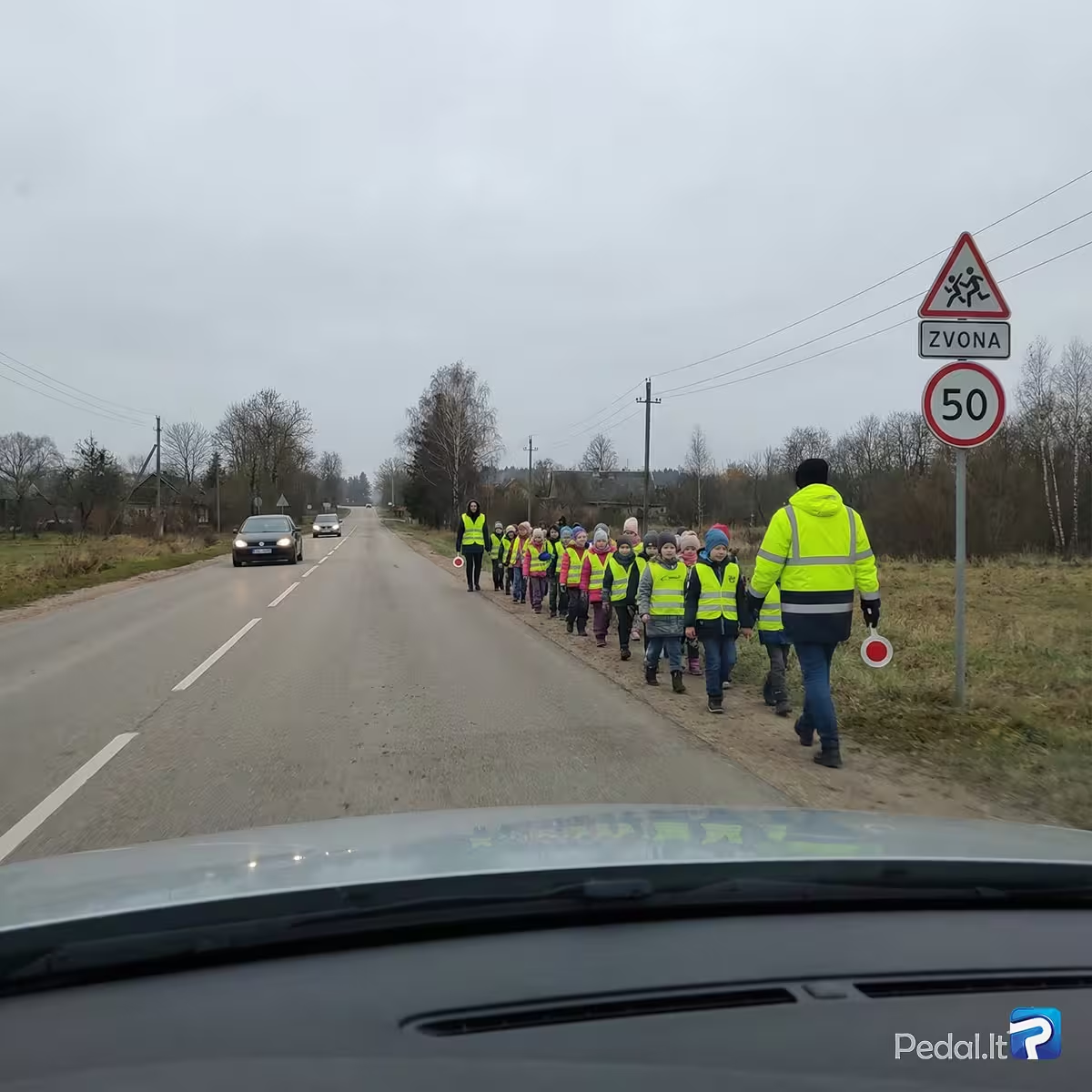
Under what conditions and at what times may an organised group of pedestrians composed of children under 16 be led along the roadside?
RTR 40. An organised group of children under 16, accompanied by at least two adults, may use pavements, footpaths, or the pedestrian side of shared footpath and cycle tracks if available. If none of these facilities are present, the group may walk along the hard shoulder, but only in daylight hours when visibility is good, in no more than two files walking against the flow of traffic, and only when it is safe to do so. Accompanying adults must be positioned at the front and rear of the column and wear high-visibility vests. It is recommended that all children in the organised group wear high-visibility vests when walking along the hard shoulder.
1. During daylight hours and only when visibility is good.
2. In no more than two files, walking against the flow of traffic.
3. At any time of day provided visibility is good.
What would you do if your engine suddenly failed and stopped running?
Towing a vehicle whose engine has failed or stopped running is not prohibited. However, if the engine is not operating, the brakes may not function correctly because the brake servo will not work, and steering will be more difficult because the power steering will not operate. When using a dolly to tow a vehicle, towing is prohibited if only part of the vehicle rests on the dolly; it is permitted only when the entire vehicle rests on the dolly. RTR 217. The following vehicle towing and transporting practices are prohibited: 217.1 towing a vehicle with a broken steering mechanism using a tow rope or a rigid tow bar; 217.10 carrying a vehicle with part of it resting on a dolly.
1. You will tow the vehicle using a rigid tow bar at the earliest safe opportunity.
2. You will tow the vehicle with only part of it supported on a dolly.
3. You will exercise caution when towing the vehicle with a tow rope, because the brakes and power steering will not function properly.
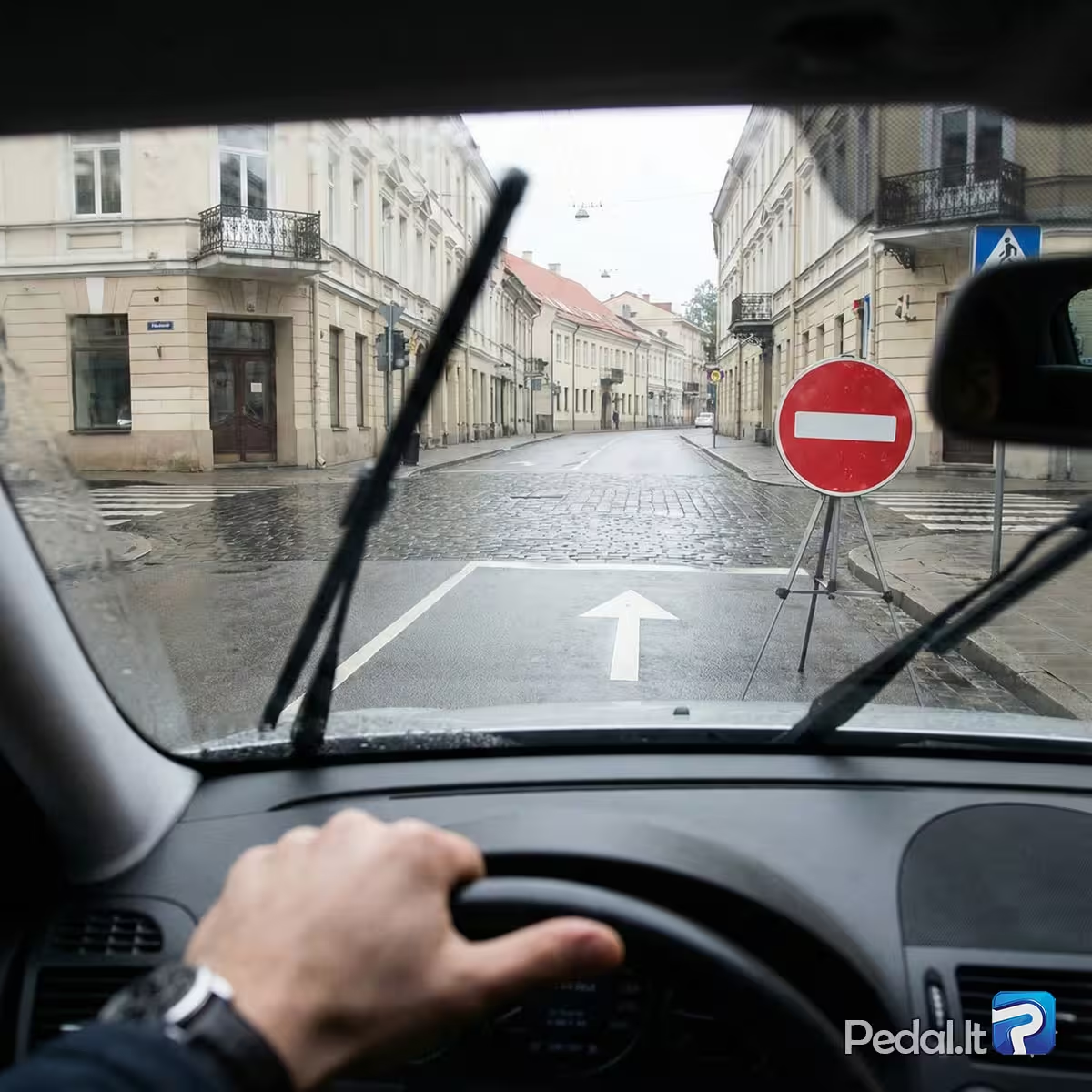
What should you do if road signs contradict the horizontal road markings?
RTR 8. In the Republic of Lithuania, traffic may be regulated only by road signs listed in Annex 1 to the Rules, by variable message signs treated as road signs (examples are given in Annex 2), by road markings specified in Annex 3, by traffic lights, and by signals from traffic officers, as provided for in these Rules and other legal acts governing traffic control. If the requirements of a road sign conflict with those of a road marking, the road sign must be obeyed. When variable message signs are in use, their indications must be followed. Signals given by traffic officers take precedence over traffic lights, road signs, road markings, and the provisions of these Rules. Road users must comply with the signs that apply to them.
1. You should follow the road signs.
2. You should follow the horizontal road markings.
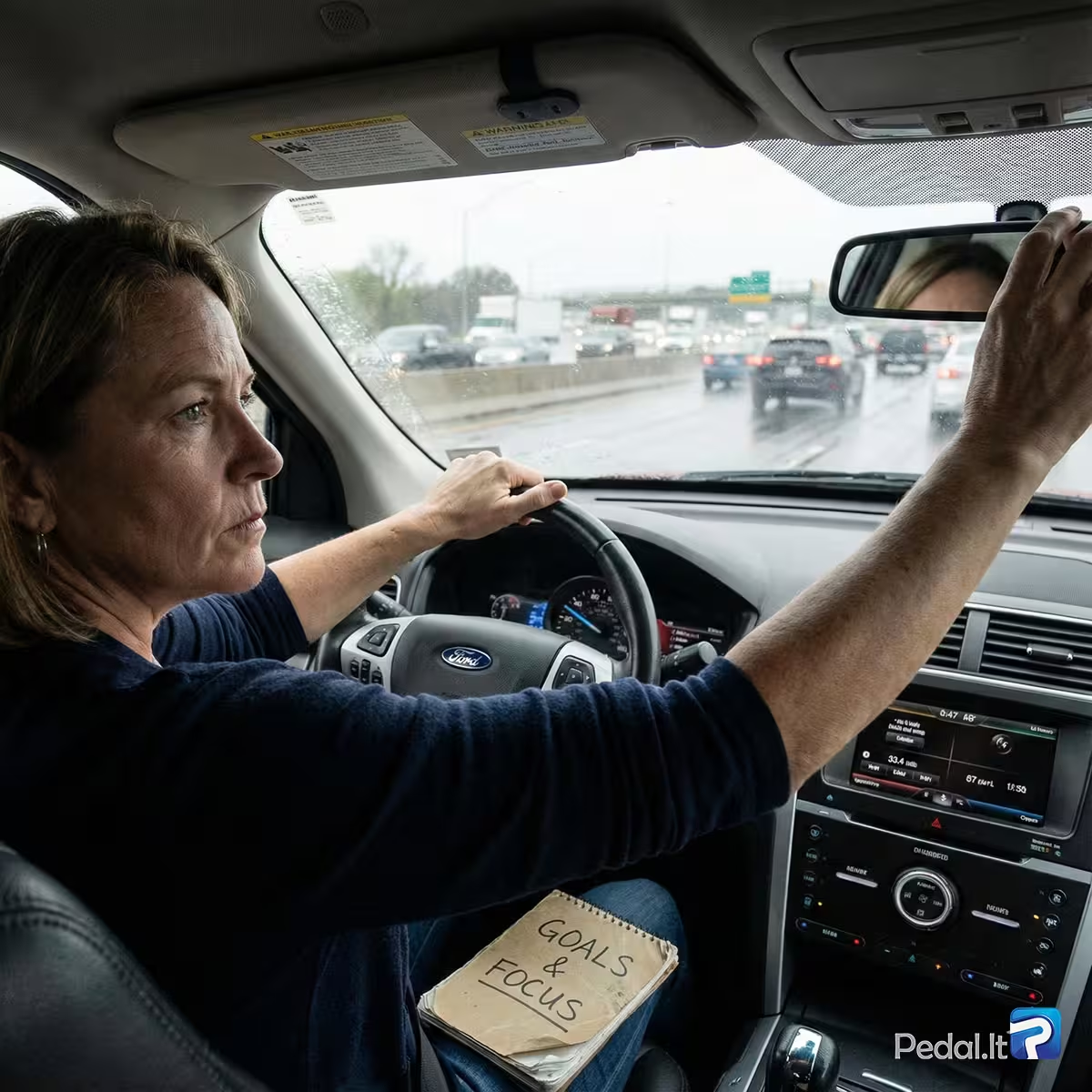
What are the primary characteristics of a driver's will?
The primary characteristics of a driver's will are discipline, determination, self-control, and perseverance. Disciplined drivers consistently obey the rules of the road (RTR). Determined drivers do not hesitate about decisions they make while operating a vehicle. A driver's self-control is demonstrated by remaining calm in complex traffic situations and by showing respect for other road users. Perseverance is the ability to overcome difficulties encountered on the road.
1. Discipline and determination.
2. Aggression and anger.
3. Self-control and calm temperament.
4. Indifference.
If there are no posted speed limit signs, when must you drive at a speed not exceeding 50 km/h?
129. The maximum speed limit within built-up areas for all vehicles is 50 km/h.
1. If diversion signs are present.
2. If a solid yellow line is present.
3. If pedestrian refuge islands are present.
4. Within built-up (urban) areas.
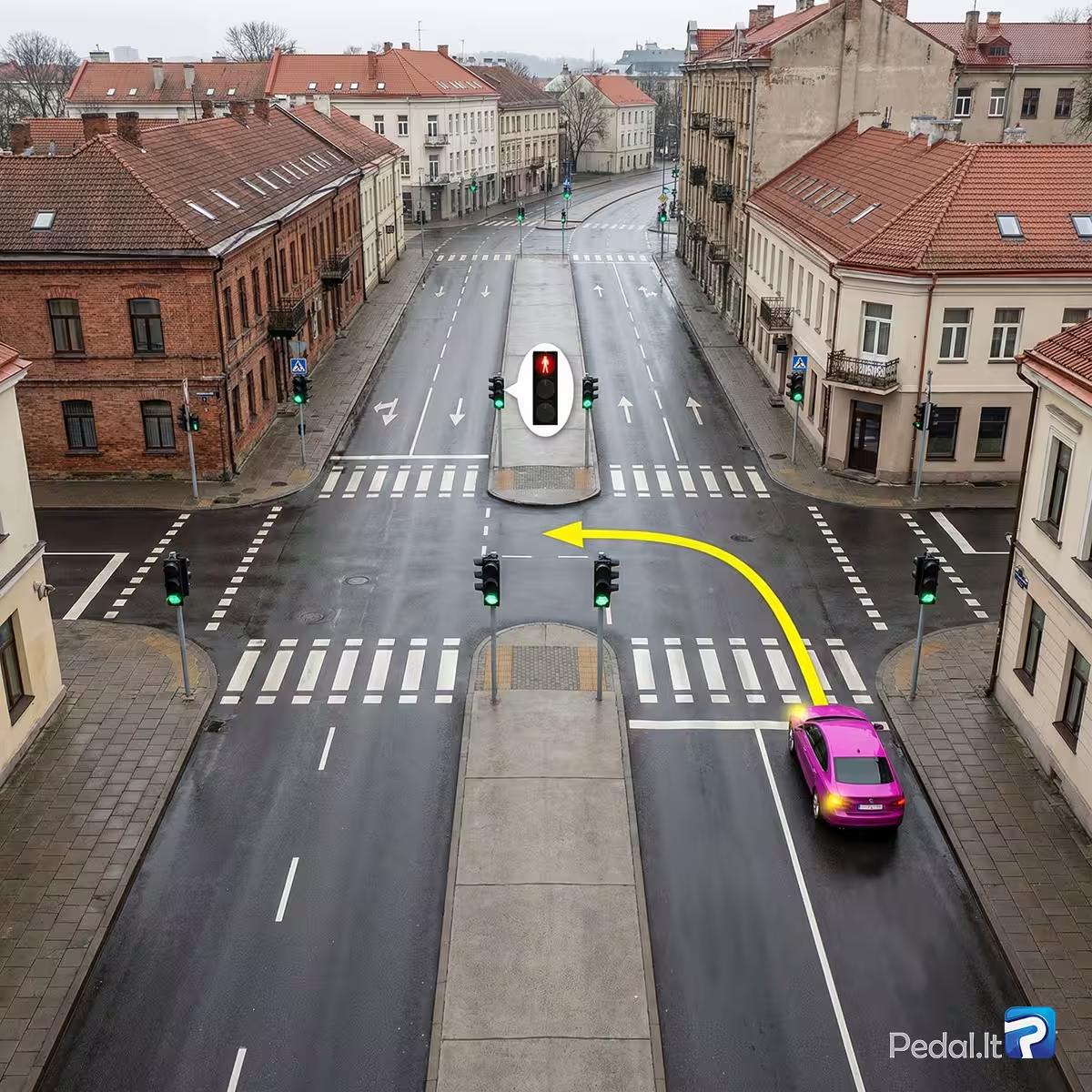
What must the driver do when turning left at the intersection?
RTR 73.11. A red light or two alternately flashing red lights prohibit traffic; if the light displays black arrow(s), it prohibits traffic in the direction(s) indicated by the arrow(s) and indicates which directions road users may proceed when the green arrow appears. RTR 162. Drivers who entered the intersection in accordance with a traffic light signal permitting them to proceed may continue in their intended direction regardless of the traffic light signal shown when the vehicle is leaving the intersection. However, if the 'STOP' sign and/or a 'Stop' line is present at the intersection before other traffic lights on the route, the driver must obey every traffic light signal. RTR 165. If traffic light signals or traffic officers prohibit driving, drivers must stop before the 'STOP' sign and/or the 'Stop' line if present; if not, they must stop before the traffic lights, before the carriageway they are about to cross or join, or before a pedestrian or bicycle crossing so as not to obstruct vehicular or pedestrian traffic.
1. The driver must turn left and then proceed straight ahead without stopping.
2. The driver must turn left and then proceed straight ahead without stopping, provided this does not obstruct other road users.
3. The driver must turn left, stop before the 'Stop' line, and when the traffic light displays a signal permitting movement, proceed straight ahead.
What does a flashing white traffic light at a level crossing indicate?
RTR 73. Traffic light signals have the following meanings: 73.10. A flashing white light used at level crossings means that vehicles may proceed after ensuring that no rail-borne vehicle is approaching the level crossing;
1. It prohibits traffic from proceeding.
2. It permits traffic to proceed after ensuring that no rail-borne vehicle is approaching the level crossing.
3. It permits traffic only if you can cross the level crossing before the approaching train arrives.
In which situations may drivers of emergency vehicles exercise priority when operating with blue and red flashing lights and special audible signals?
Drivers of special (emergency) vehicles — such as ambulances, police, and fire service vehicles — may use blue and red (or only blue) flashing lights and special audible signals when necessary to: (1) save human life or health; (2) protect property; (3) ensure public order and traffic safety; (4) apprehend persons suspected of offences; or (5) escort or accompany official delegates and protected persons. Flashing lights must be visible in all directions (360°). While using these signals, drivers of special vehicles may disregard certain traffic rules specified in the Regulations, provided they do not jeopardize traffic safety and only after ensuring that other road users are giving way. They must drive cautiously and avoid creating danger to other road users. Other road users are required to give way immediately to such vehicles so they can pass safely and quickly. The right of way also applies to drivers of vehicles being escorted by special vehicles.
1. When doing so does not endanger traffic safety.
2. After confirming that other road users are yielding to them.
Is it permitted to park a vehicle with a mass of 2.6 tonnes in the yard of an apartment building?
RTR 176. In residential areas road users must not: 176.3. leave parked lorries with a maximum permissible weight of more than 3.5 tonnes, buses with more than 12 seats, tractors, self-propelled machinery and trailers with a maximum permissible weight of more than 3.5 tonnes; RTR 178. The requirements of this Chapter also apply to the yards of apartment blocks. The provisions of Paragraph 175 and Subparagraph 176.4 of the Rules apply to car parks.
1. Yes, it is permitted.
2. No, it is not permitted.
What size handcart carrying a load that is pushed or pulled at the roadside must be equipped with reflectors?
The option "More than 1 meter long" is incorrect because the RTR do not specify any marking requirement based on the cart's length. Under RTR 41: pedestrians moving along an unlit hard shoulder or along the edge of the carriageway, or standing there during hours of darkness or when visibility is poor, must carry a torch visible to other road users, wear a high-visibility vest, or carry a reflector visible to other road users. A pulled or pushed handcart wider than 1 m must have reflectors affixed on its left side: a white reflector at the front and a red reflector at the rear. JB
1. More than 1 meter wide.
2. More than 1 meter long.
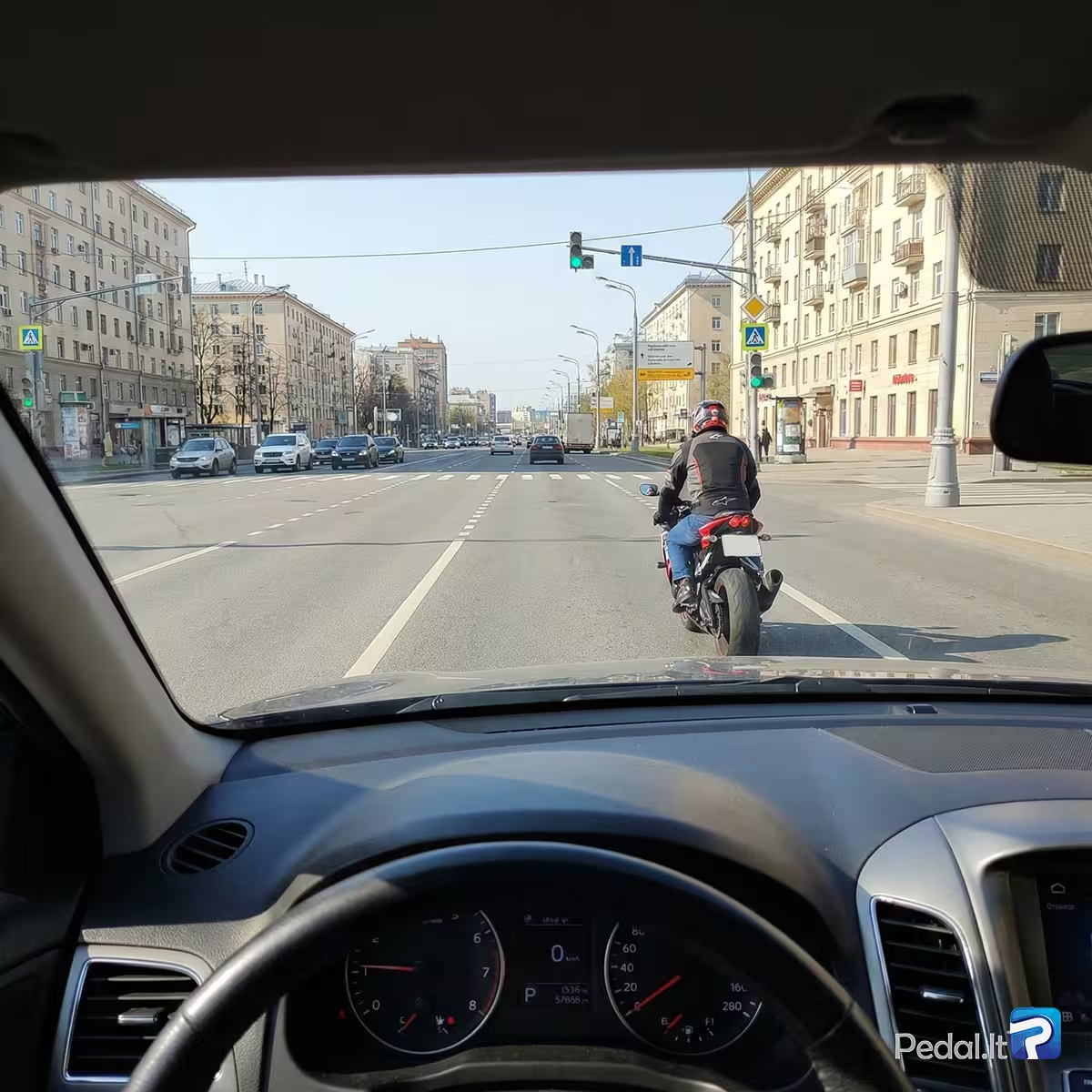
Are you allowed to ride a motorcycle with only a category B driving licence?
LAW ON ROAD TRAFFIC SAFETY — Article 22(12). Persons aged 24 or older who have at least two years' driving experience with a category B licence and who have completed practical training for category A1 vehicles in accordance with the procedure established by the Ministry of Transport and Communications or its authorised institution are granted the right to drive category A1 vehicles within the territory of the Republic of Lithuania.
1. Driving category A1 motorcycles is permitted for persons aged at least 24 who have held a category B licence for at least two years and have completed special practical motorcycle training at a driving school.
2. It is permitted to drive all motorcycles.
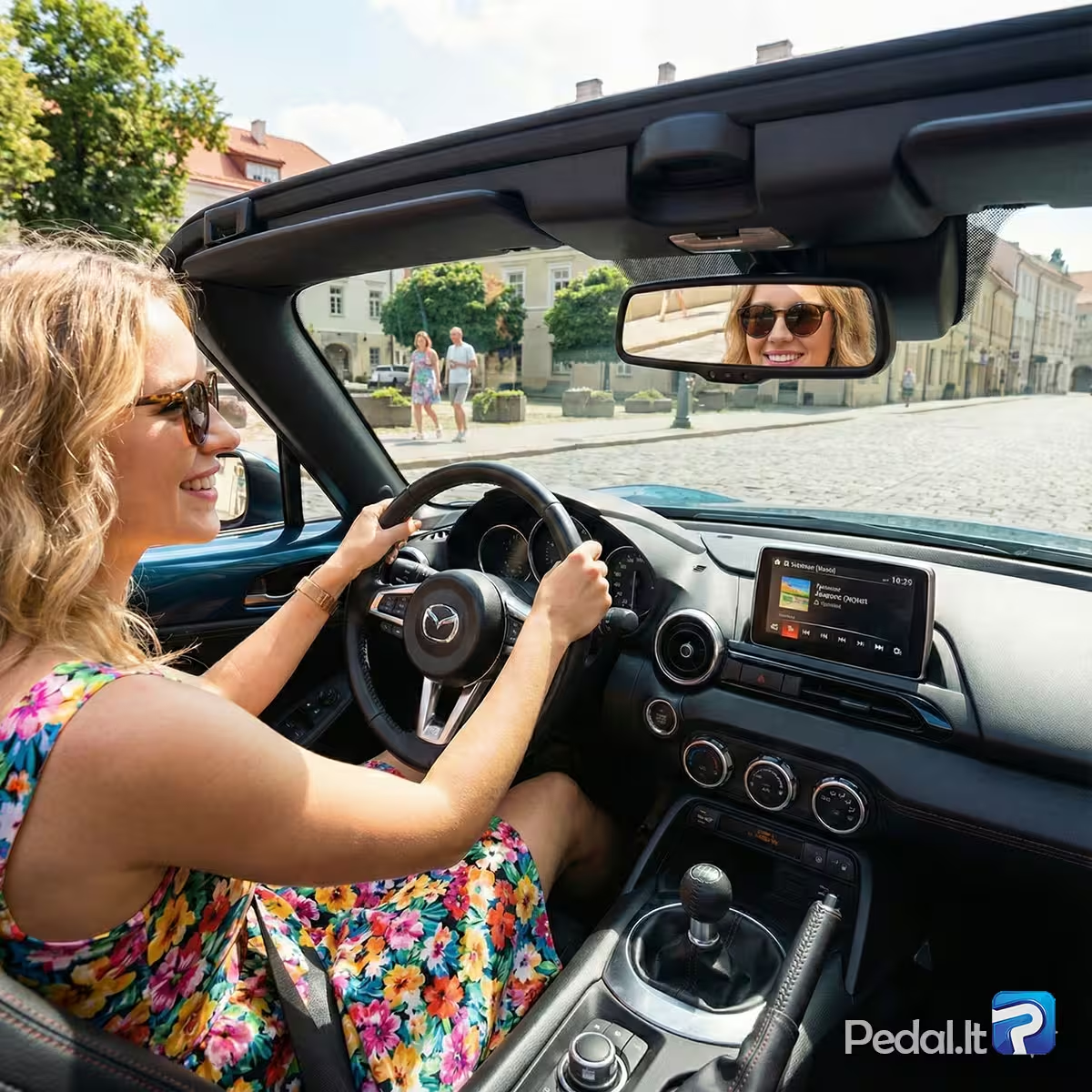
When driving safely, you must:
Always make safety your priority. That means thinking ahead, planning your actions, and anticipating the behavior of other road users.
1. Anticipate the actions of other road users.
2. Driving slightly above the speed limit.
3. Stay closer to the edge of the road.
4. Driving well below the maximum permitted speed.
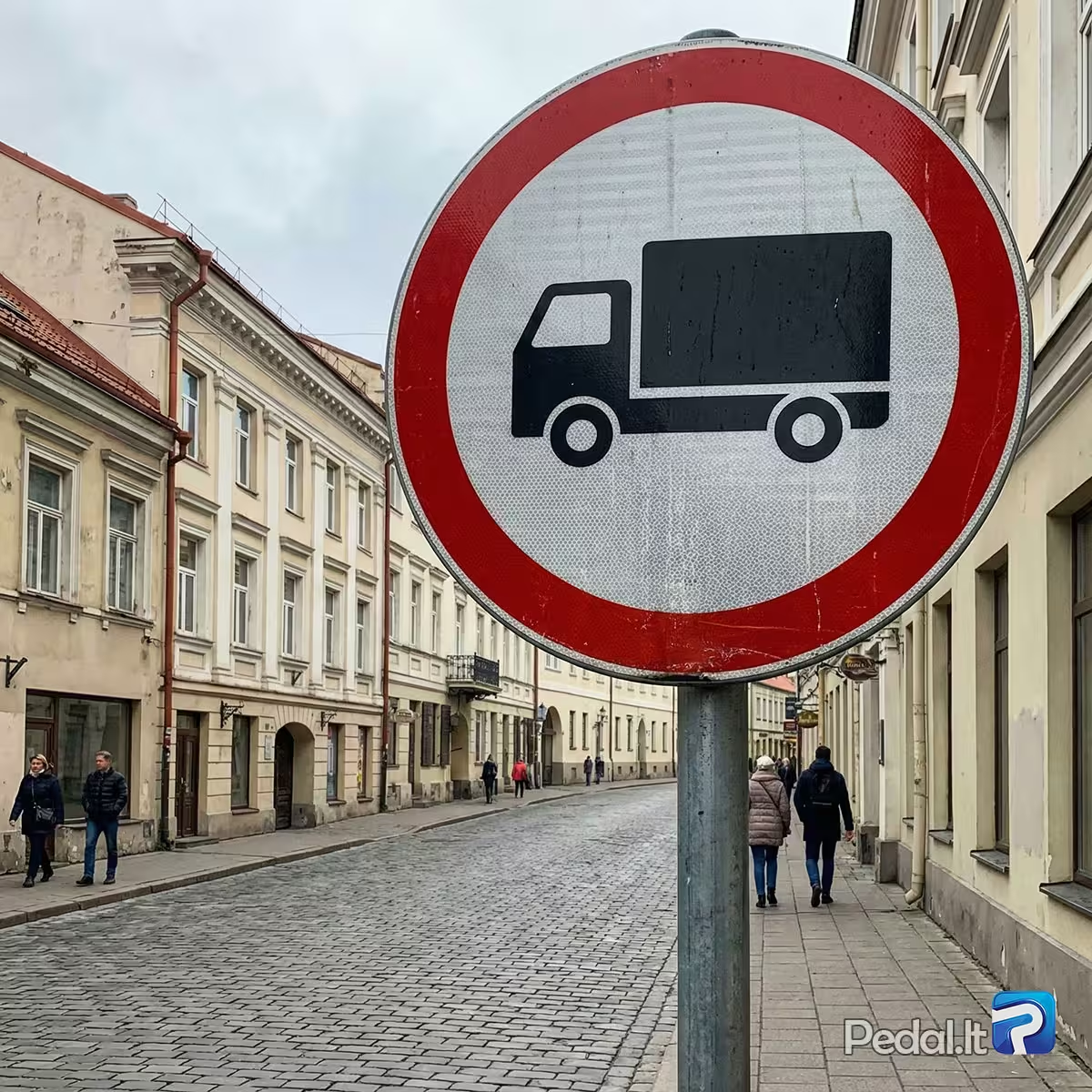
Are tractors or self-propelled vehicles permitted to pass this road sign?
Road sign 304 — "No entry for goods vehicles." Entry is prohibited for goods vehicles and vehicle combinations whose permissible maximum mass exceeds 3.5 tonnes or the weight shown on the sign. Tractors and self‑propelled vehicles are also prohibited, except for service vehicles.
1. Yes — passage is permitted.
2. No — passage is prohibited.
3. Passage is allowed only on working days.
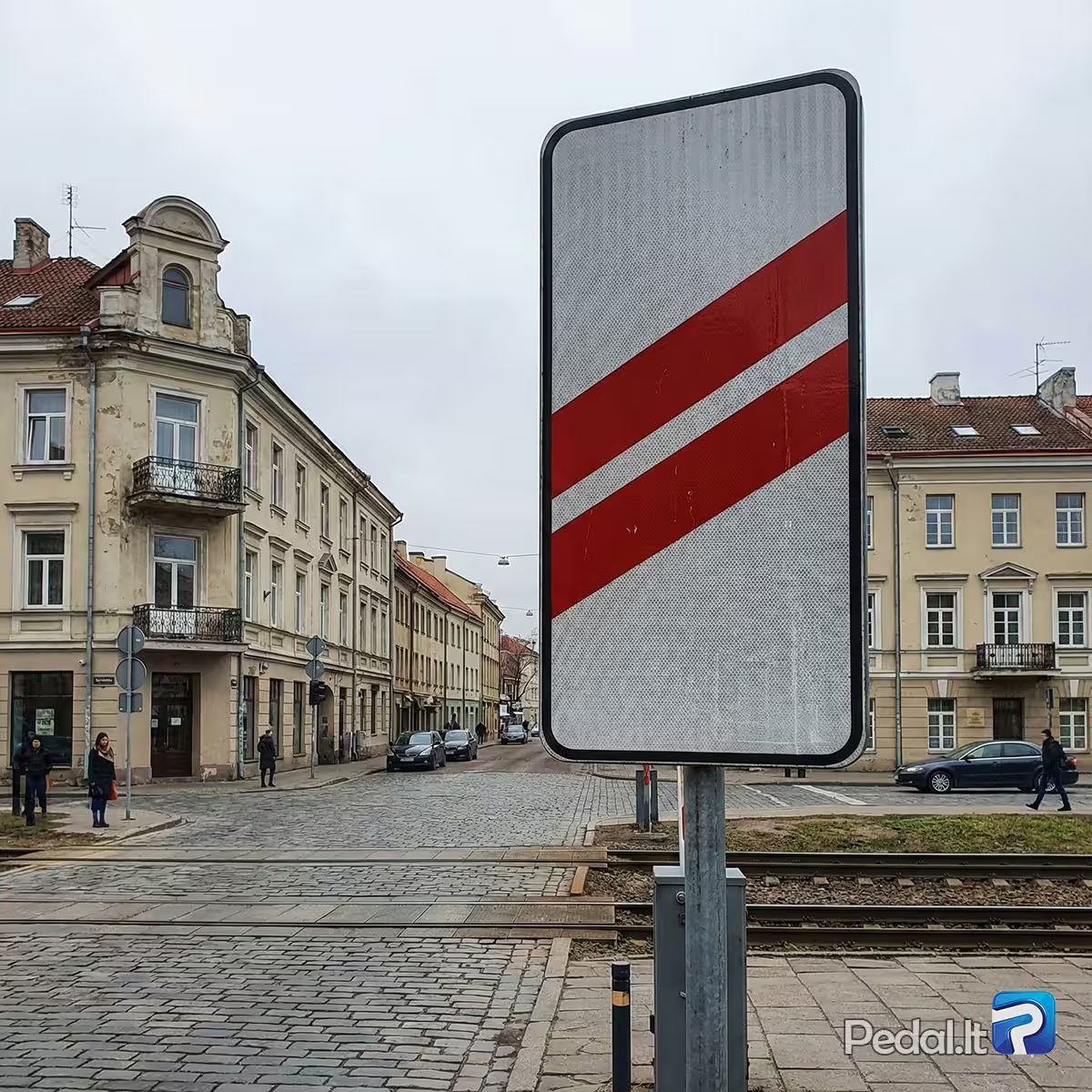
What does this traffic sign indicate?
141. "Level Crossing Ahead" — warns of a railway level crossing ahead located outside a built-up area. The sign is mounted on the right-hand side of the road.
1. It indicates a level crossing ahead located outside a built-up area.
2. It indicates a level crossing ahead located within a built-up area.
1 of 30 Task
Time left: 00:00:00
1
2
3
4
5
6
7
8
9
10
11
12
13
14
15
16
17
18
19
20
21
22
23
24
25
26
27
28
29
30