What or who provides a driver with useful information while driving on the road?
A driver obtains information from: - the road itself; - the surrounding environment; - moving road users (vehicles, pedestrians, road workers, etc.); - stationary objects on the road (central islands, speed bumps, road markings, etc.); - road signs; - traffic lights; - the condition of the road surface; - environmental and weather conditions. RTR 53: Passengers must not distract the driver or interfere with their driving.
1. From the road and the surrounding environment.
2. From moving and stationary objects on the road.
3. From road signs and traffic lights.
4. From passengers.
The vehicle may transport passengers:
RTR 195. Drivers must not: 195.1. carry more passengers than are permitted by the vehicle's technical specifications; JB
1. Only to the extent necessary for urgent matters or when transporting persons en route for serious reasons.
2. No more than the number permitted by the vehicle's technical specifications.
When are drivers permitted to brake on a pedestrian crossing?
According to traffic regulations, there are no specific locations where braking is prohibited. Braking is necessary to ensure road safety; therefore drivers must brake whenever required.
1. When it is necessary to prevent a traffic accident.
2. When they see the brake lights of the vehicle ahead.
3. When they need to stop after the pedestrian crossing on the right-hand side of the road.
4. It is forbidden to brake on a pedestrian crossing in all circumstances.
Must road users involved in a traffic accident refrain from consuming alcohol and other intoxicating substances?
RTR 221. Road users involved in a traffic accident must refrain from consuming alcoholic beverages, medications, narcotic drugs, or any other intoxicating substances immediately after the accident until they have either undergone, or formally refused, a test to determine drunkenness or impairment caused by a narcotic, psychotropic, or any other substance.
1. Yes — until the circumstances of the accident involving other road users have been clarified.
2. Yes — until the circumstances at the accident scene have been established and investigated.
3. No — they are not required to do so.
4. Yes — until the sobriety or intoxication of the road user involved in the accident has been determined by testing or they have formally refused the test.

What does the letter 'R' indicate in tyre markings?
The letter 'R' denotes a radial tyre construction. In a radial tyre, the carcass cords run from one bead to the other in a radial direction instead of being wrapped around the bead cores. Thin, flexible crown plies provide the tread area with the required rigidity and flexibility while minimizing elastic deformation.
1. The tyre's construction (radial construction).
2. Tyre diameter.
3. Tyre load index.
If the rear of a front-wheel-drive vehicle begins to skid sideways during a turn, how should you respond?
Gradually apply the accelerator and steer smoothly to return the vehicle to the intended line. Slightly increasing front-wheel traction helps counteract the rear's lateral slide, reducing the effect of centrifugal force and stabilizing the vehicle.
1. Lightly apply the brakes and steer into the skid.
2. Ease off the accelerator and steer carefully to return the vehicle to the intended line.
3. Gradually apply the accelerator and steer smoothly to return the vehicle to the intended path.
What is the colour of the road sign labelled 'Place of Interest'?
629. 'Place of Interest' sign. Indicates the name of a cultural or historical site of interest. The sign has a brown background.
1. Blue.
2. Green.
3. Yellow.
4. Brown.
When is the road surface most slippery?
The road surface is most slippery at the start of rain because accumulated dust and oil on the pavement combine with the first drops to form a slippery film.
1. When rain begins.
2. After heavy rain.
3. After puddles have formed on the road.
.avif)
In what order will the vehicles pass through the intersection?
If a 'STOP' road sign is present, drivers must stop before the sign and yield to vehicles traveling on the road they are about to cross. RTR 154. At a controlled intersection, drivers entering from a side road must yield to vehicles on the priority road. RTR Annex 1. 204. 'STOP'. Drivers must not proceed without stopping before the stop line or, if there is no stop line, before the sign. A driver must give way to vehicles on the road being crossed. If additional plate No. 843 'Direction of Priority Road' is mounted below the sign, the driver must yield to vehicles on the priority road.
1. Yellow and red vehicles proceed together, followed by the blue vehicle.
2. Blue and red vehicles proceed together, followed by the yellow vehicle.
3. Blue vehicle first, then the red vehicle, and finally the yellow vehicle.
4. Yellow vehicle first, then the blue vehicle, and finally the red vehicle.
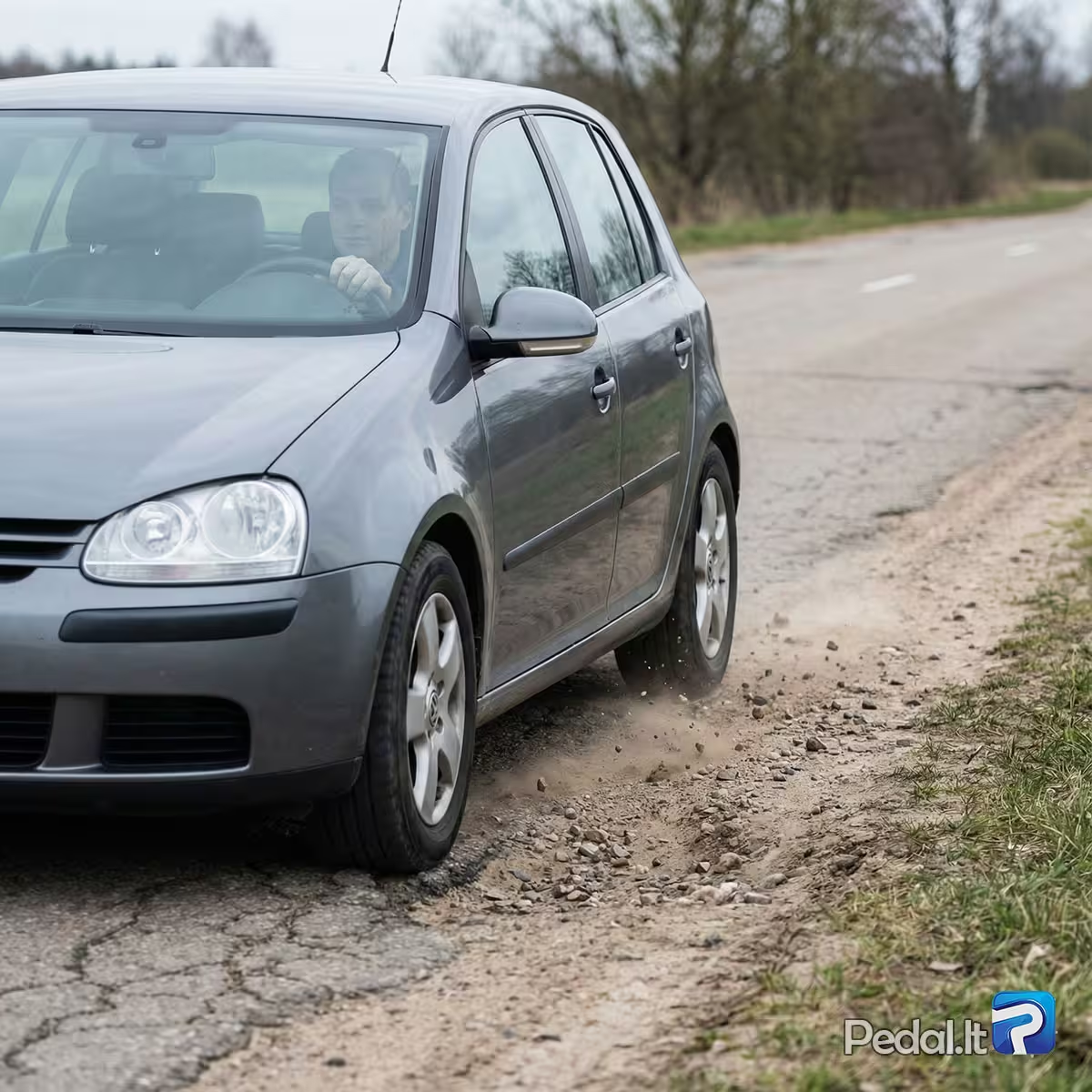
If two wheels of your vehicle move onto the road shoulder while driving, what should you do?
Avoid sudden steering or braking to prevent further instability. Gently accelerate — increasing the driven wheel's RPM will help the wheel regain traction and make it easier to return to the paved road.
1. Apply the brakes and steer back onto the carriageway.
2. Gently accelerate and steer back onto the carriageway.
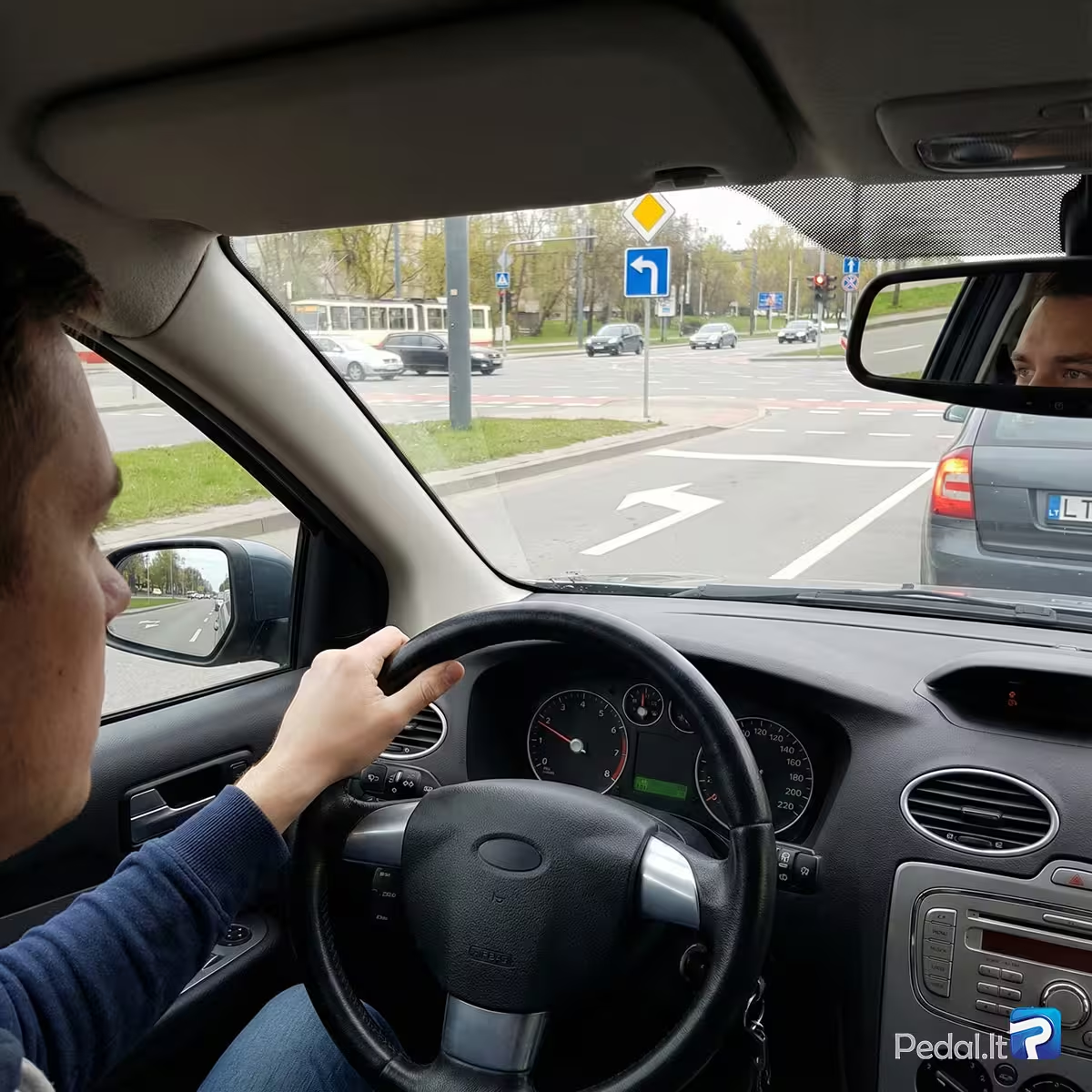
A driver intends to make a left turn. According to the road safety rules used in the driving theory exam, which is the correct sequence of actions?
1. Activate the left turn signal, then check surrounding traffic, and then perform the turn.
2. Ensure the road and traffic are clear, then activate the left turn signal, and finally execute the turn.
3. Execute the turn first and then switch on the turn signal.
4. Activate the left turn signal and immediately commence the turn.
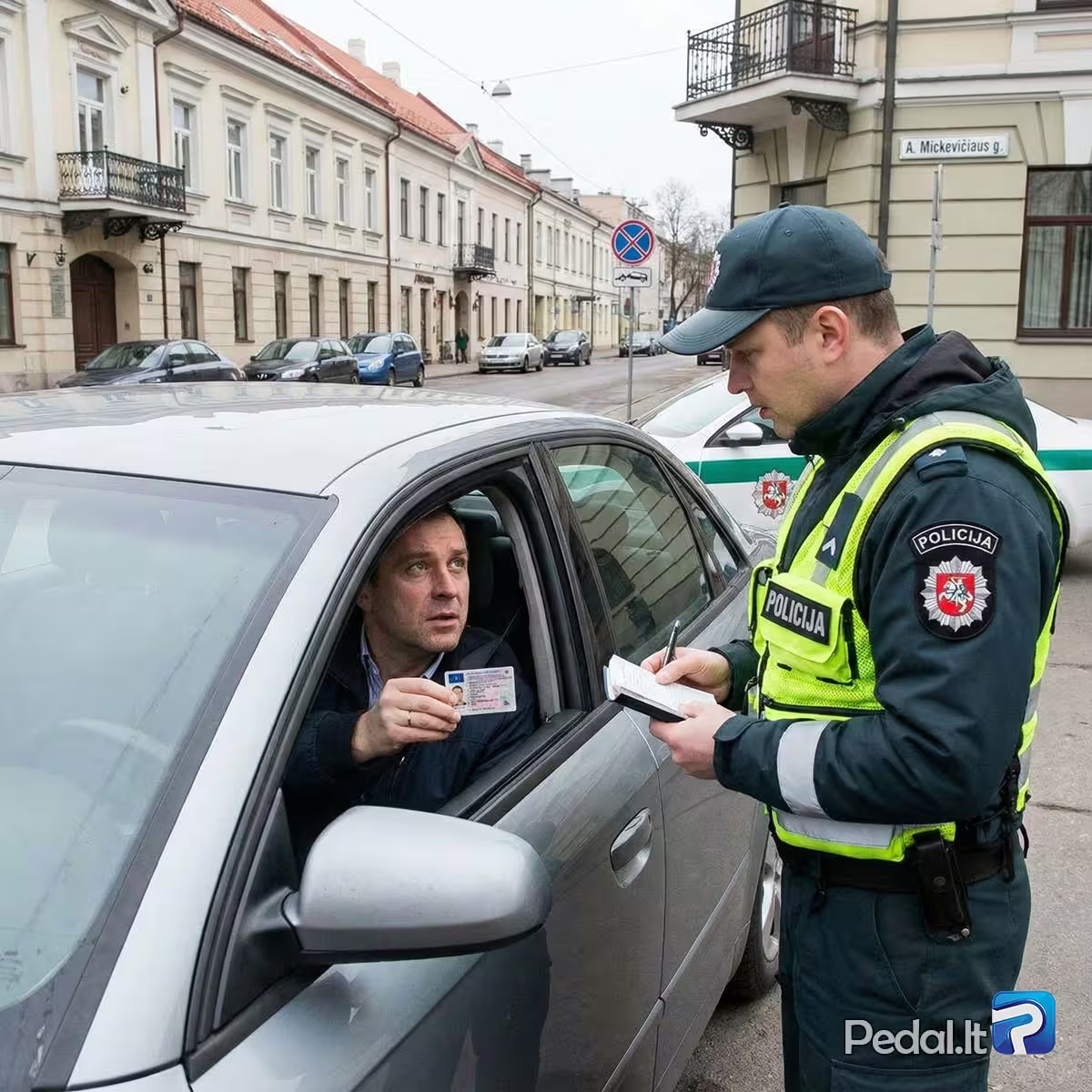
Is a person without a valid driving licence in the Republic of Lithuania permitted to drive (as opposed to only learning to drive) a motor vehicle?
Driving licences issued in Lithuania, in other EU Member States, and in certain other countries are recognised in Lithuania. This question, however, asks whether a person may drive in Lithuania without a valid driving licence (including one issued abroad). The correct answer is “No”.
LAW ON ROAD TRAFFIC SAFETY — Article 13(1): Persons who do not have the right to drive a motor vehicle, tractor, or self-propelled work machine; who are intoxicated; who are under the influence of narcotic, psychotropic or other psychoactive substances; or who have not taken the legally required daily rest must not drive. In addition, a person who is fatigued or ill must not drive if doing so could endanger road safety. A vehicle must not be entrusted to a person affected by any of the factors listed above or who is not authorised to drive that type of vehicle.
1. No — they are not permitted to drive.
2. Yes — they are permitted to drive.
When are pedestrians permitted to step onto the carriageway?
RTR 44. Pedestrians may enter the carriageway only after assessing the distance to and speed of approaching vehicles and ensuring it is safe to proceed. Before stepping onto or while moving along the carriageway, pedestrians must refrain from actions (such as using mobile devices) that would distract them from observing the surroundings and traffic conditions and would prevent them from confirming it is safe to continue.
1. After evaluating the distance to approaching vehicles.
2. After evaluating the speed of approaching vehicles and ensuring it is safe to cross at the pedestrian crossing.
3. Provided they refrain from actions (e.g., using mobile devices) that could distract them from observing the surroundings and the traffic situation.
4. If they are not looking at the carriageway.
What must you do first before overtaking?
RTR 136. Drivers should avoid unnecessary overtaking maneuvers. Before overtaking, drivers must take extra precautions and ensure that: 136.1 no driver following has already begun to overtake them; 136.2 the driver of the vehicle to be overtaken is not signaling a left turn; 136.3 the portion of the lane required for overtaking is clear and the maneuver will not obstruct oncoming traffic or pedestrians on the carriageway; 136.4 a safe distance from the vehicle being overtaken will be maintained throughout the maneuver; 136.5 after overtaking, the driver can safely return to the original lane without obstructing the overtaken vehicle.
1. Ensure the road ahead is clear.
2. Shift to a lower gear.
3. Increase your speed.
4. Reduce your speed.
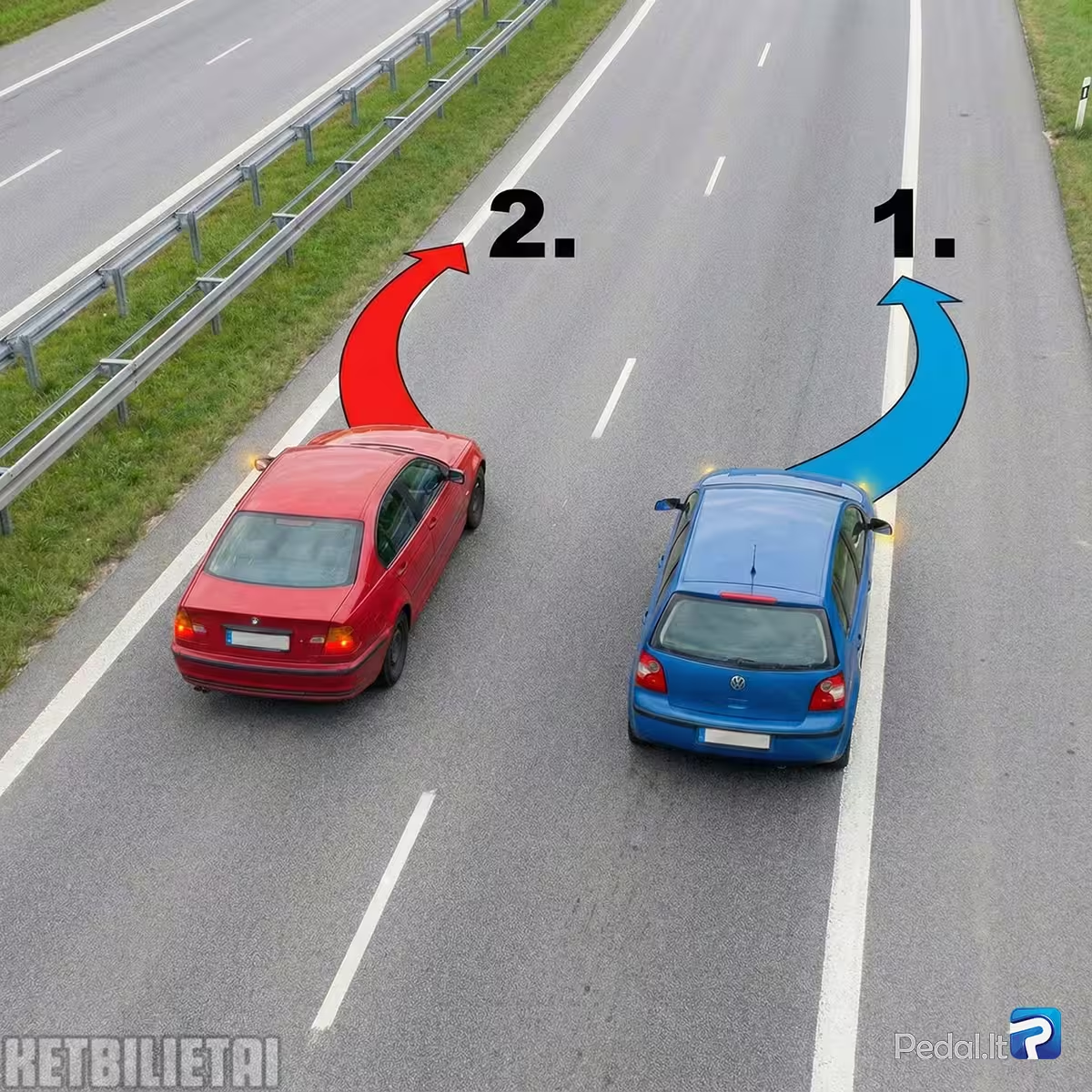
On which side of the road is stopping permitted?
RTR 141. Vehicles may stand or park on the right-hand side of the road, as close as possible to the right edge of a hard shoulder, or at the carriageway edge if no hard shoulder exists. When entering or leaving the hard shoulder, the driver must not endanger other road users. If a cycle lane is installed along the right edge of the carriageway, drivers may stand or park adjacent to that cycle lane.
1.1. A NARROW CONTINUOUS LINE separates traffic flows in opposite directions and prohibits driving in the lane for oncoming traffic on the marked section of road; it also marks the edges of traffic lanes, sections of the carriageway into which entry is prohibited, the limits of vehicle parking spaces and the carriageway edge. At road sign No. 413 "Pedestrian and bicycle path" it separates the part of the path intended for bicycle traffic from the part intended for pedestrian traffic. Crossing this line is prohibited, except where it marks the carriageway edge or the boundary of a parking space.
1. On the right side of the road.
2. On the left side of the road.
3. Stopping is prohibited.
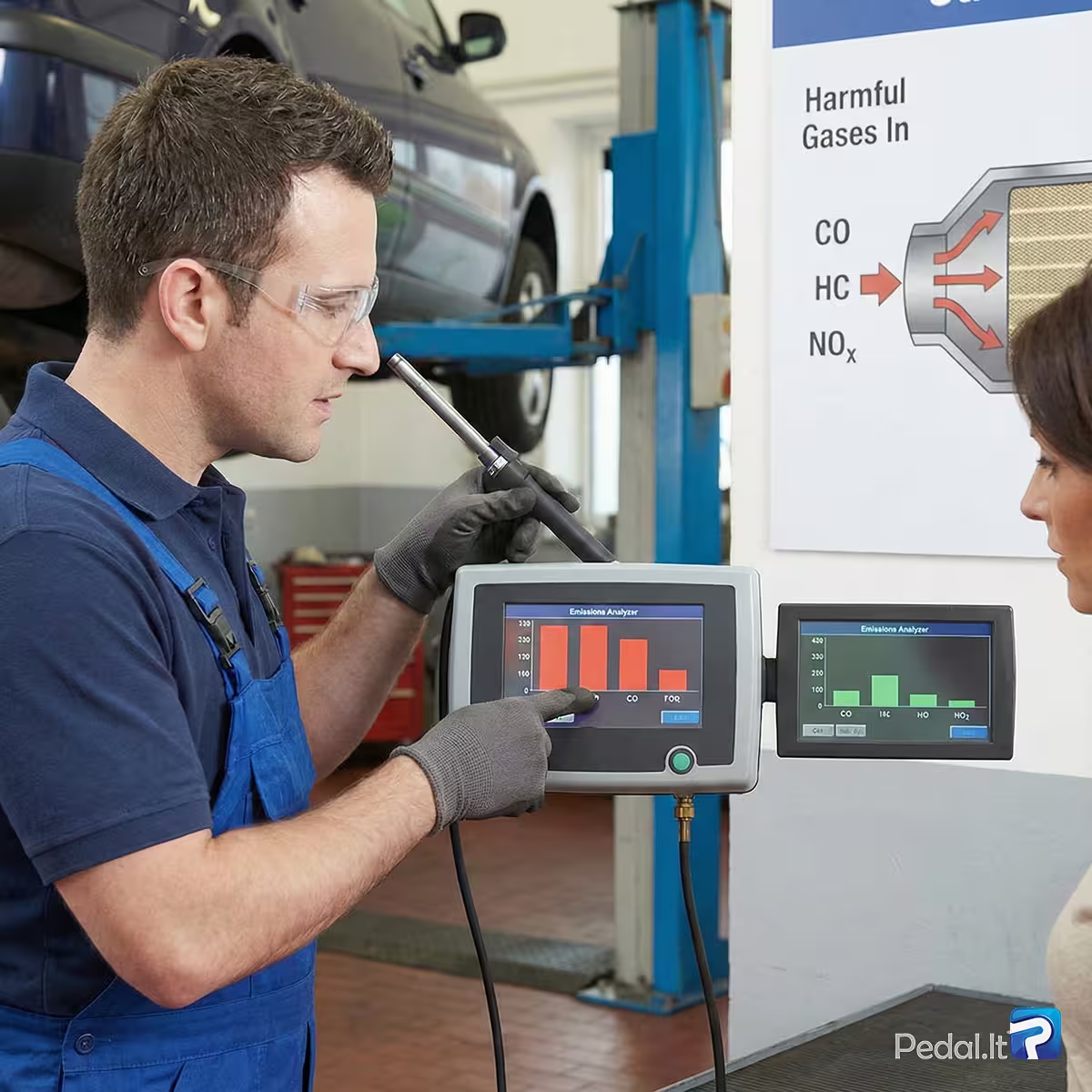
Why does a car need a catalytic converter in its exhaust system?
A catalytic converter neutralises (burns) harmful exhaust gases. It converts three toxic substances—carbon monoxide (CO), nitrogen oxides (NOx), and unburnt hydrocarbons (UHC)—into non-toxic substances through oxidation and reduction reactions. Its purpose is not to dampen engine noise; that is the role of the muffler (silencer). Removing a catalytic converter can alter the car's exhaust sound and often makes it louder or harsher, but this is only a side effect, not the converter's primary function.
1. To reduce engine noise.
2. To neutralise harmful pollutants in the exhaust gases.
3. To reduce fuel consumption.
What is the purpose of an anti-lock braking system (ABS) in a vehicle?
An anti-lock braking system (ABS) prevents wheel lockup during heavy braking, helping to maintain tire traction and steering control—especially on slippery surfaces. When wheels lock, the vehicle can skid and the driver may lose the ability to steer. ABS modulates brake pressure to preserve grip and directional stability.
1. Because it prevents the wheels from locking during sudden or hard braking, preserving traction and steering control.
2. Because it helps prevent vehicle theft.
3. Because it prevents the vehicle from rolling downhill.
Which features ensure a vehicle's active safety?
Difference between active and passive safety:
- Active safety: systems and features that help prevent accidents by improving vehicle control, handling and stability before a collision occurs. These measures operate before an impact and commonly include technologies such as Anti-lock Braking System (ABS), Electronic Brakeforce Distribution (EBD), traction control, correct tyre pressure and adequate tread depth, among others. Active safety also depends on the driver’s condition and behavior — for example, poor ventilation or heating can cause drowsiness or nausea and reduce attention on the road.
- Passive safety: systems and equipment designed to reduce injury and damage during or after a collision. These features are activated in a crash to protect occupants and other road users and include seat belts, airbags, motorcycle helmets, seat-belt reminders, head restraints, crumple zones and other structural or restraint systems that absorb impact and lower the risk of injury.
1. Proper ventilation and heating.
2. Tyre pressure and tread depth.
3. Anti-lock Braking System (ABS).
4. Electronic Brakeforce Distribution (EBD).
Is a driver involved in a road accident required to transport injured persons to the nearest healthcare facility in a private vehicle when the accident occurs within a built-up area?
XXIX. Obligations of Road Users in the Event of a Road Accident (paras. 219–222) 219. In the event of a road accident, every driver involved or any other road user must: 219.5. take all necessary measures to provide first aid to the injured, call an ambulance, or — when calling an ambulance or transporting the injured to a healthcare institution by other means is impossible — convey them to the nearest healthcare institution in a private vehicle, unless such transportation would endanger their life or health.
1. Yes — but only if calling an ambulance or transporting the injured to a medical facility by other means is impossible.
2. No — the driver is not required to do so.
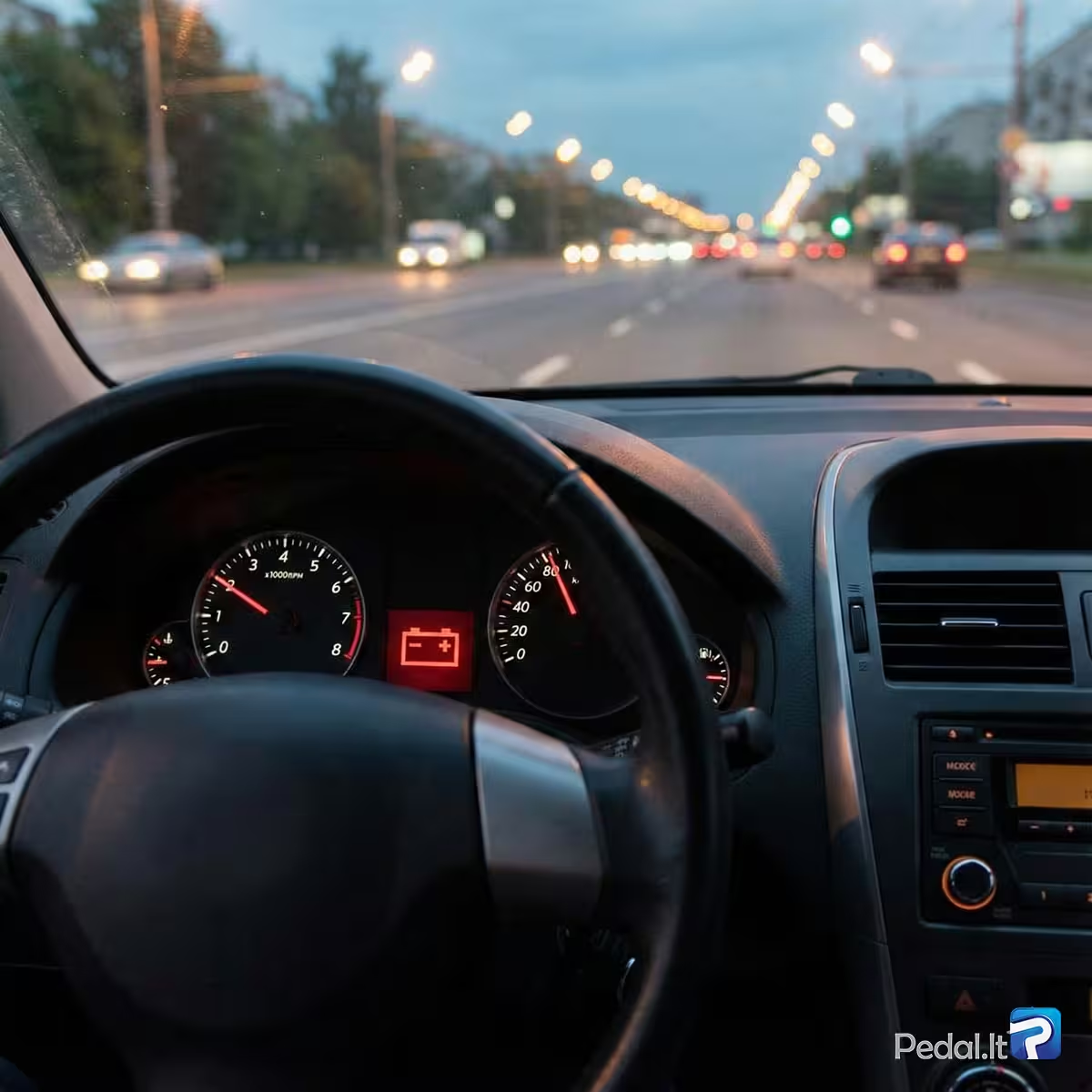
When the engine is running, a red battery warning light on the dashboard indicates:
If the red battery warning light illuminates while the engine is running, it indicates the alternator (generator) has failed and the battery is not being charged.
1. The battery is being overcharged.
2. The battery is completely discharged.
3. The battery is not being charged.
4. The battery's electrolyte level is too low.
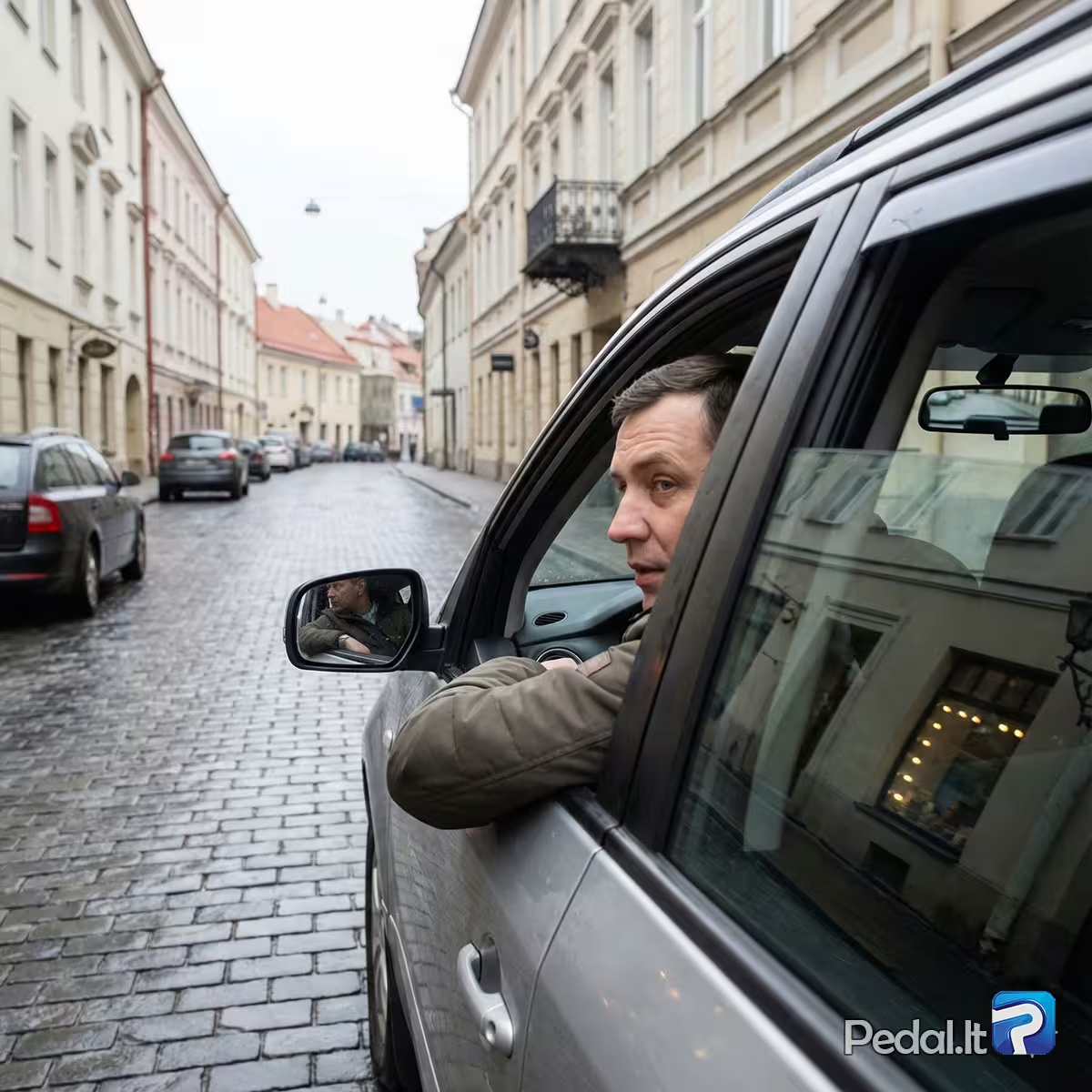
What must a driver do when reversing?
Note: If the steering wheel is turned sharply while reversing, the front of the vehicle can swing to the side and strike obstacles or other road users. When reversing, a driver must give way to other road users.
1. The driver must give way to other road users.
2. The driver must use the horn.
3. The driver must make sure that there are no obstructions behind the vehicle.
4. Do not obstruct other road users ahead.
Persons holding a school-issued certificate are permitted to ride bicycles on roads starting at what age?
Persons under 14 years of age are not permitted to ride bicycles on roads. However, those who complete an additional training course and obtain a school-issued certificate may ride on roads from age 12. Within residential areas, there is no minimum age restriction for cyclists.
1. 12 years of age.
2. 14 years of age.
3. 16 years of age.
Where is overtaking prohibited?
RTR XVI.140. Overtaking is prohibited. Clause 140.8: in residential areas, courtyards of apartment buildings, parking lots, and bicycle streets. JB
1. In parking lots.
2. In the courtyards of multi-apartment residential buildings.
3. In residential areas.
4. On bicycle streets.
.avif)
Is it permitted to use high‑beam headlights after dark on an unlit road within a settlement?
On unlit roads it is permitted to use high‑beam headlights. According to regulation RTR 95, during hours of darkness or in conditions of poor visibility high beams must be switched to low beam on illuminated roads (see 95.1).
1. Yes — it is permitted.
2. No — it is prohibited.
Are you allowed to drive across a level crossing when the traffic lights are switched off and the barrier is raised or absent?
Driving across a level crossing where the traffic lights are switched off and the barrier is raised or absent is permitted, but only if you obey traffic regulations and ensure that no train is approaching. 168. Before entering and crossing a level crossing, a road user must comply with road signs, road markings, the position of the barrier, traffic lights, audible warnings, and the signals given by level crossing attendants/controllers. Before entering a level crossing, a road user must always verify that no rail-borne vehicle is approaching the level crossing. It is recommended that children under 12 be accompanied when crossing a level crossing. 173. Drivers must not: 173.3. enter a level crossing after the barrier has been lowered or has begun to be lowered, willfully lift the barrier or manoeuvre around the barriers;
1. Yes — permitted, provided you follow road rules and confirm that no train is approaching.
2. No — not permitted.
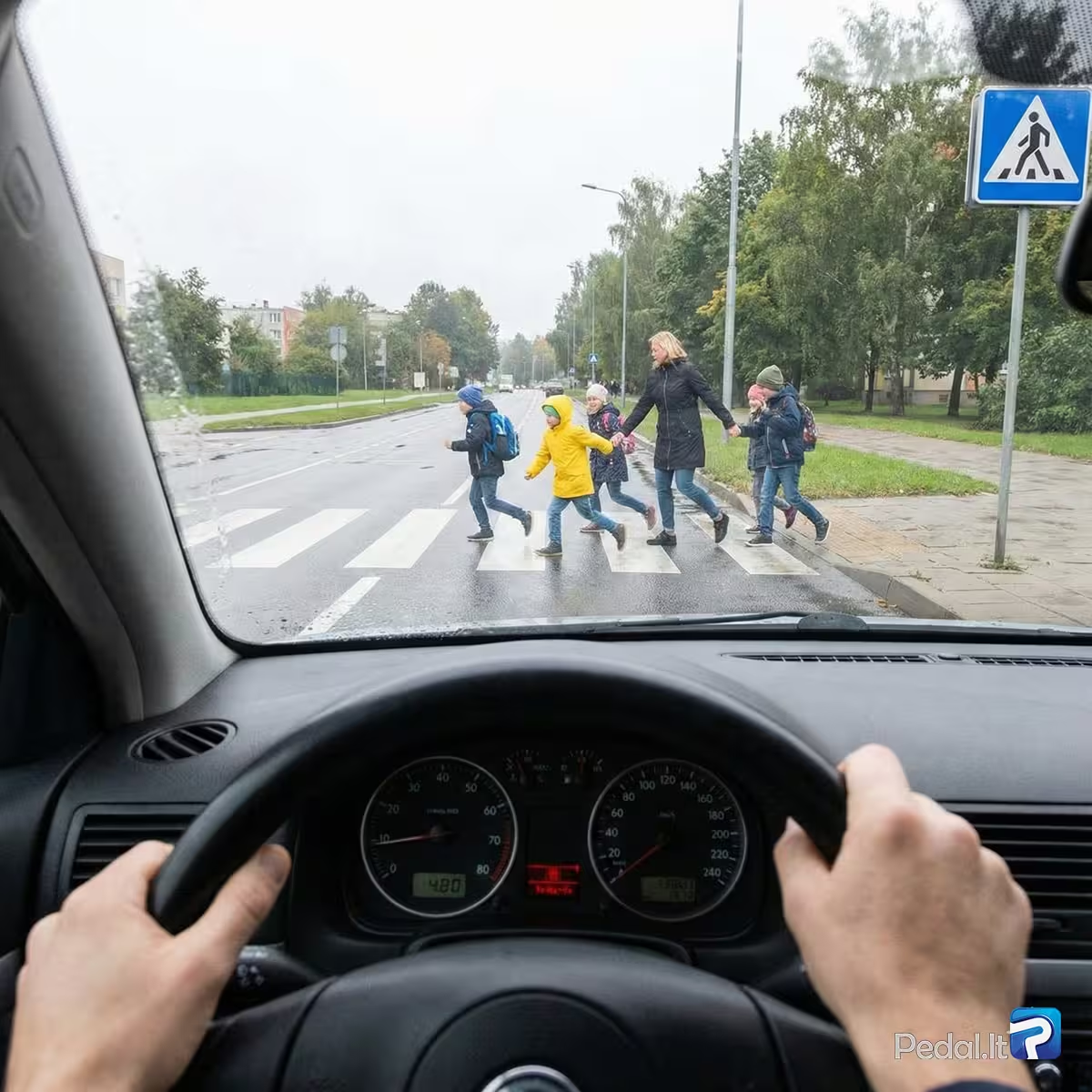
What should a driver be aware of about children's behavior when they cross a pedestrian crossing?
Drivers should be prepared for unexpected behavior from children at pedestrian crossings. When children act predictably and responsibly, it improves road safety.
1. Children may suddenly step onto the pedestrian crossing.
2. Children may stop or hesitate while on the pedestrian crossing.
3. Children behave predictably and in an orderly manner.
Which vehicle is not allowed to be ridden on the pavement (sidewalk)?
RTR VIII. Requirements for Cyclists (paras. 55–66). 57. Bicycles may be ridden only on cycle tracks, footpaths, or cycle lanes; if none of these is available, bicycles may be ridden on an appropriate hard shoulder (with an asphalt or concrete surface). When a road has no cycle track or combined footpath-and-cycle track, and there is no cycle lane or hard shoulder on the right side — or if such facilities exist but are unsuitable for cycling (for example, are damaged) — cyclists may ride on the pavement (sidewalk) or in single file in the right-hand lane of the carriageway, keeping to the right edge of the lane, except in the cases specified in Paragraph 106 of these Rules, or when a cyclist needs to pass an obstruction or must continue straight ahead while only a right turn is allowed from the first lane. When riding on a hard shoulder, footpath, cycle track, or pavement, a cyclist must yield to pedestrians and must not create obstructions or hazards; when overtaking a pedestrian, the cyclist should travel at a speed close to walking speed (3–7 km/h) and leave sufficient lateral space so that passage is safe.
1. A moped (motorized two-wheeled vehicle).
2. A bicycle (non-motorized).
Before making a turn, drivers must ensure that:
Before making a turn, drivers must reduce speed and ensure their vehicle does not enter the lane of oncoming traffic or that the rear wheels do not mount the pavement. RTR 108. The turning manoeuvre must be executed so that vehicles do not encroach on the oncoming-traffic lane when entering or leaving the intersection. If a turn is made from a single lane, the driver may choose any lane of the carriageway into which they are turning. If turning is permitted from multiple lanes, drivers must remain in their lane and must not obstruct a vehicle turning from an adjacent lane.
1. Their vehicle does not enter the lane designated for oncoming traffic.
2. The rear wheels of their vehicle do not mount the pavement.
How does fatigue affect a driver?
When a driver operates a vehicle while fatigued, their memory and attention are impaired. They take longer to notice signals and assess situations, driving performance declines, reaction times are delayed, and vehicle control deteriorates.
1. Attention diminishes.
2. Fatigue has no effect on driving.
3. Reaction time is delayed.
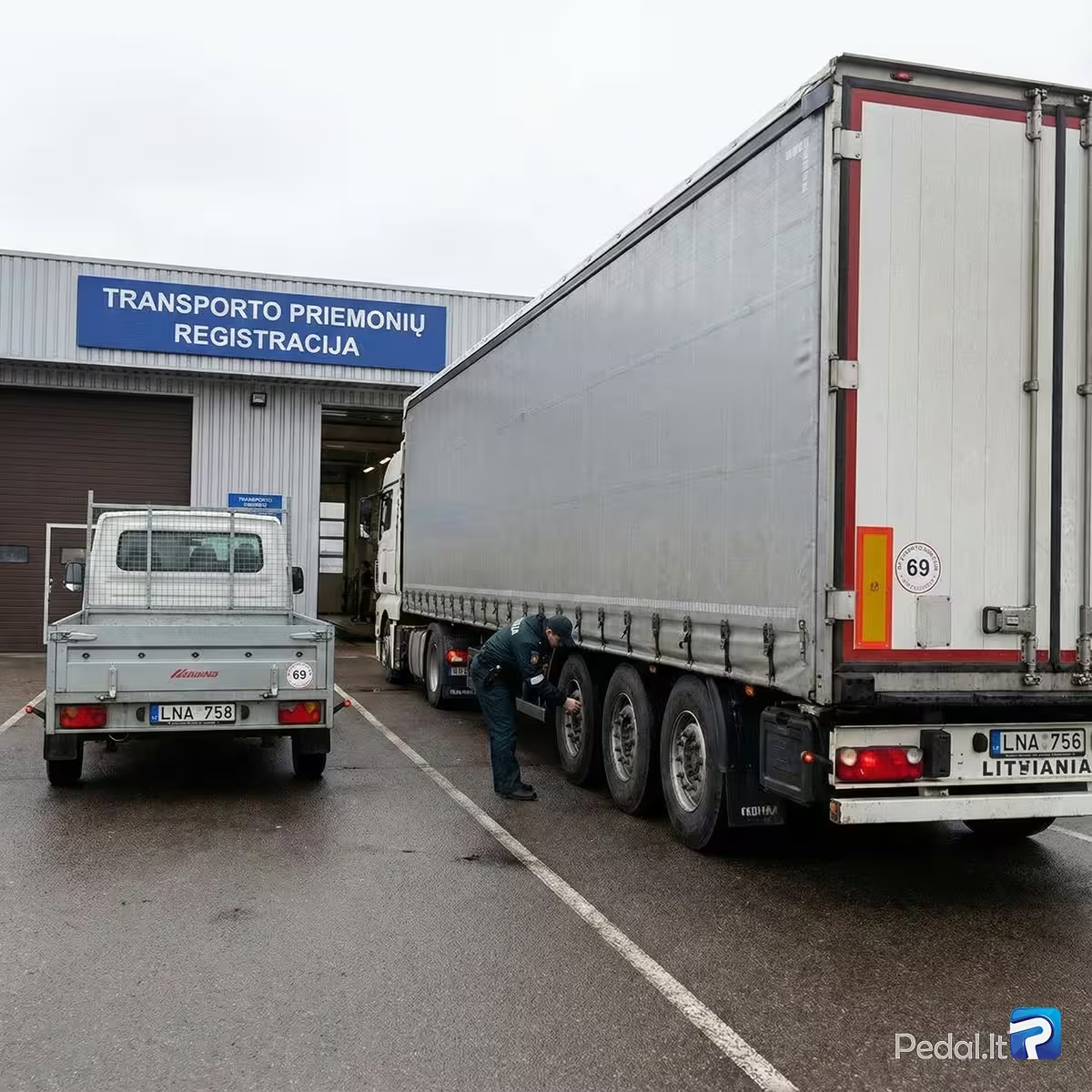
Are trailers and semi-trailers considered vehicles?
48. A trailer is a vehicle designed to be towed by a motor vehicle. Semi-trailers are also regarded as trailers. 52. A semi-trailer is a trailer coupled to a motor vehicle in such a way that part of its weight and the weight of its load are borne by the motor vehicle.
1. No.
2. Yes.
1 of 30 Task
Time left: 00:00:00
1
2
3
4
5
6
7
8
9
10
11
12
13
14
15
16
17
18
19
20
21
22
23
24
25
26
27
28
29
30