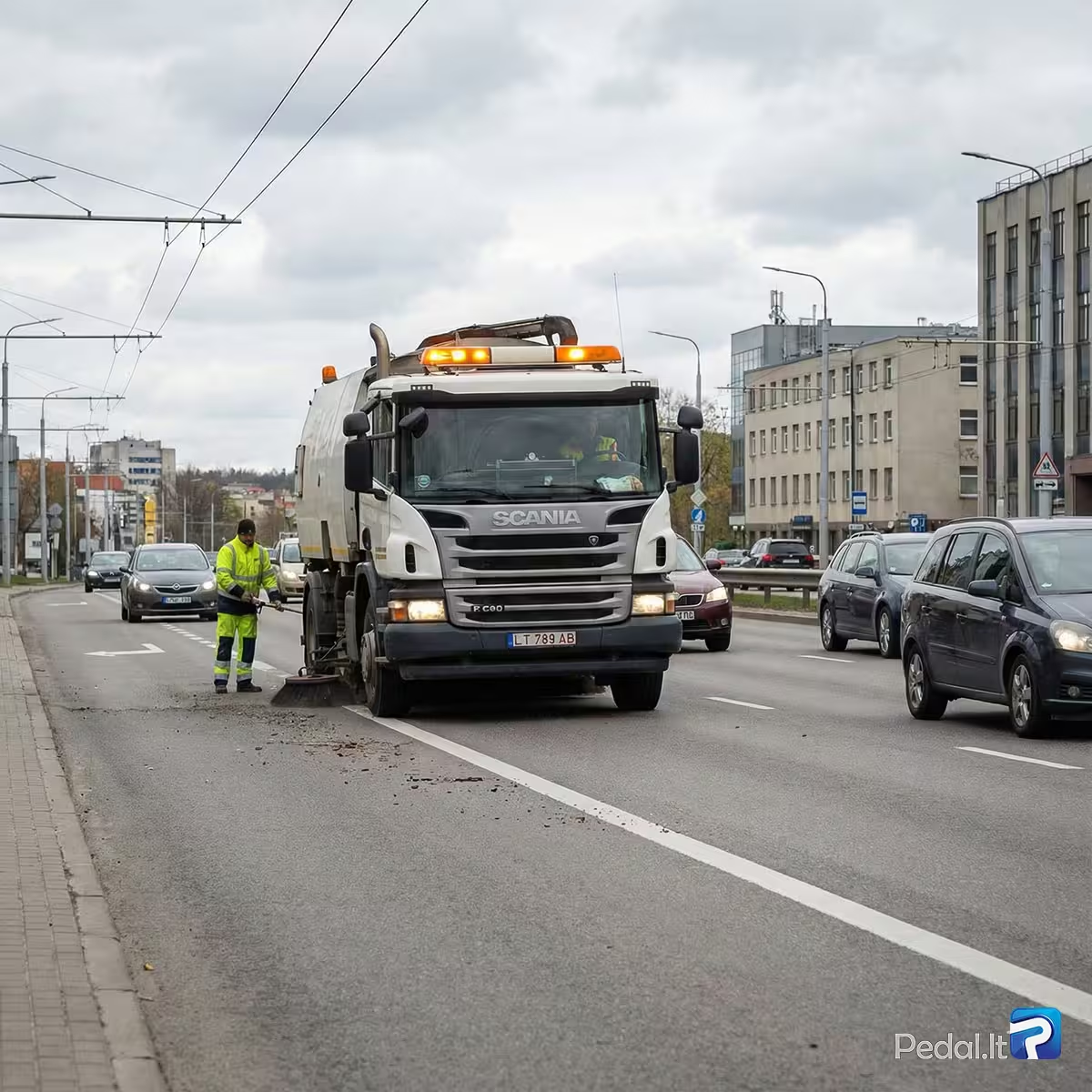
Are drivers of motor vehicles equipped with orange flashing lights permitted to disregard road-marking lines while performing work on the roadway?
Regulation RTR 188: An orange flashing light may be used only when the vehicle obstructs other road users—for example, when the vehicle's loaded or unloaded dimensions exceed permitted limits; when performing work on the roadway; when stopping or standing; when moving at very low speed; when escorting an organized group of cyclists; or when transporting hazardous goods. An orange flashing light does not confer priority; it merely attracts attention and warns other road users of a potential hazard. While driving, standing, or working on the road, drivers of vehicles displaying orange flashing lights must ensure they do not compromise traffic safety.
1. Yes — provided doing so does not jeopardize traffic safety.
2. No — they are not allowed to do so.
In which situations may drivers of emergency vehicles exercise priority when operating with blue and red flashing lights and special audible signals?
Drivers of special (emergency) vehicles — such as ambulances, police, and fire service vehicles — may use blue and red (or only blue) flashing lights and special audible signals when necessary to: (1) save human life or health; (2) protect property; (3) ensure public order and traffic safety; (4) apprehend persons suspected of offences; or (5) escort or accompany official delegates and protected persons. Flashing lights must be visible in all directions (360°). While using these signals, drivers of special vehicles may disregard certain traffic rules specified in the Regulations, provided they do not jeopardize traffic safety and only after ensuring that other road users are giving way. They must drive cautiously and avoid creating danger to other road users. Other road users are required to give way immediately to such vehicles so they can pass safely and quickly. The right of way also applies to drivers of vehicles being escorted by special vehicles.
1. When doing so does not endanger traffic safety.
2. After confirming that other road users are yielding to them.
Is it permitted to drive on winter tyres during the summer season?
According to the traffic regulations, vehicles fitted with studded tyres must not be used from April 10 to October 31. Therefore, winter tyres without studs are permitted during that period. However, using summer tyres is recommended in warm conditions. If winter conditions persist, the Minister of Transport and Communications may issue an order extending the permitted use of studded tyres.
1. Yes — winter tyres without studs are permitted.
2. No — that is prohibited.
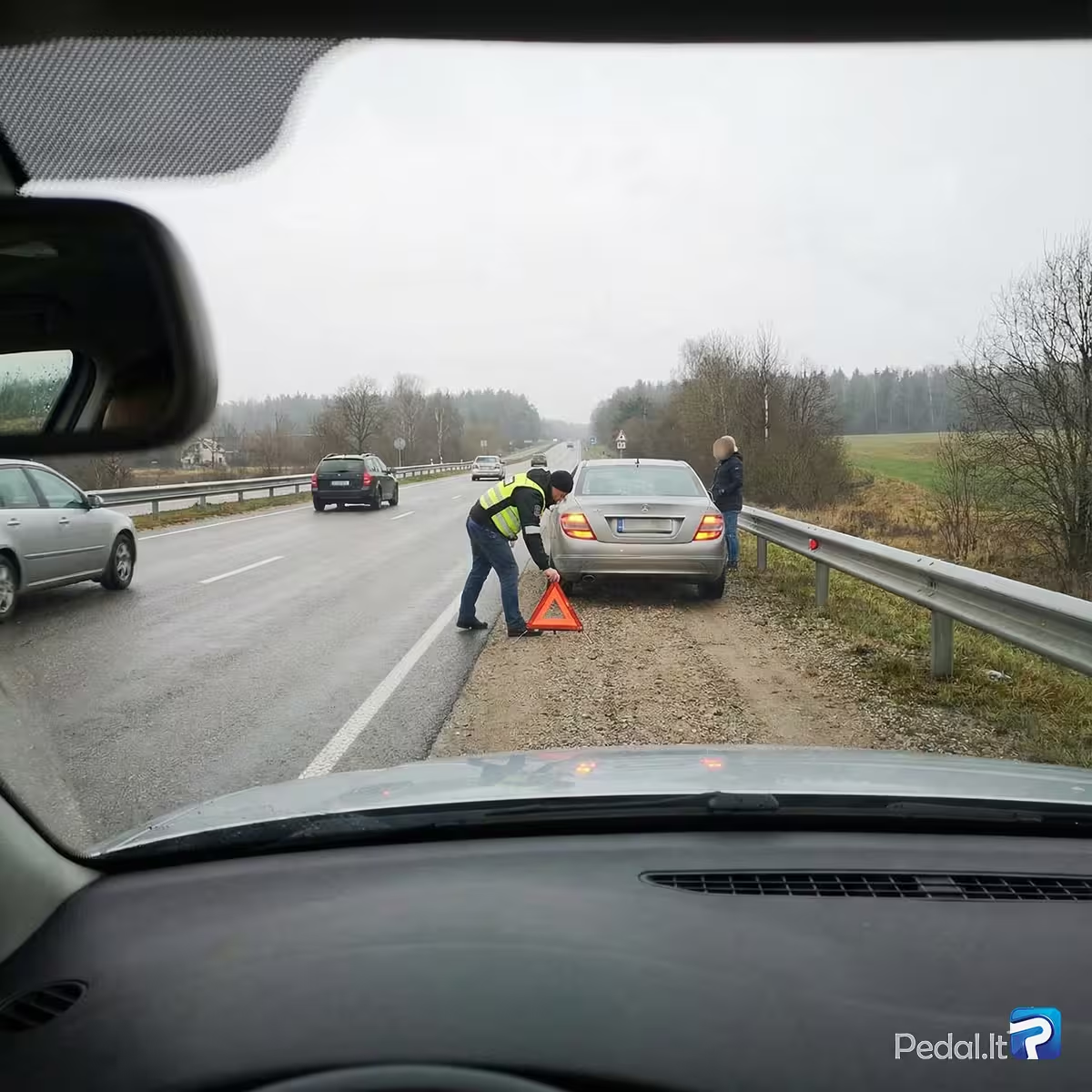
A vehicle has broken down on the road. What is the safest action to take?
1. Have the vehicle removed from the roadway as soon as possible using a tow truck (rigid towing).
2. Turn on your hazard lights and wait beside the vehicle.
3. Try to push the vehicle to the side of the road.
4. Stop and attempt to repair the vehicle while still on the roadway.
Who must give way on a signed slope when an obstruction is present?
On slopes marked with the appropriate road signs, the vehicle traveling downhill must give way when an obstruction is present, regardless of which side the obstruction occupies (RTR 139). However, if it is difficult for two vehicles to pass each other, the driver whose side has the obstruction should give way.
1. The driver traveling uphill.
2. The driver whose side of the road has an obstruction.
3. The driver traveling downhill.
4. The driver whose side of the road has no obstruction.
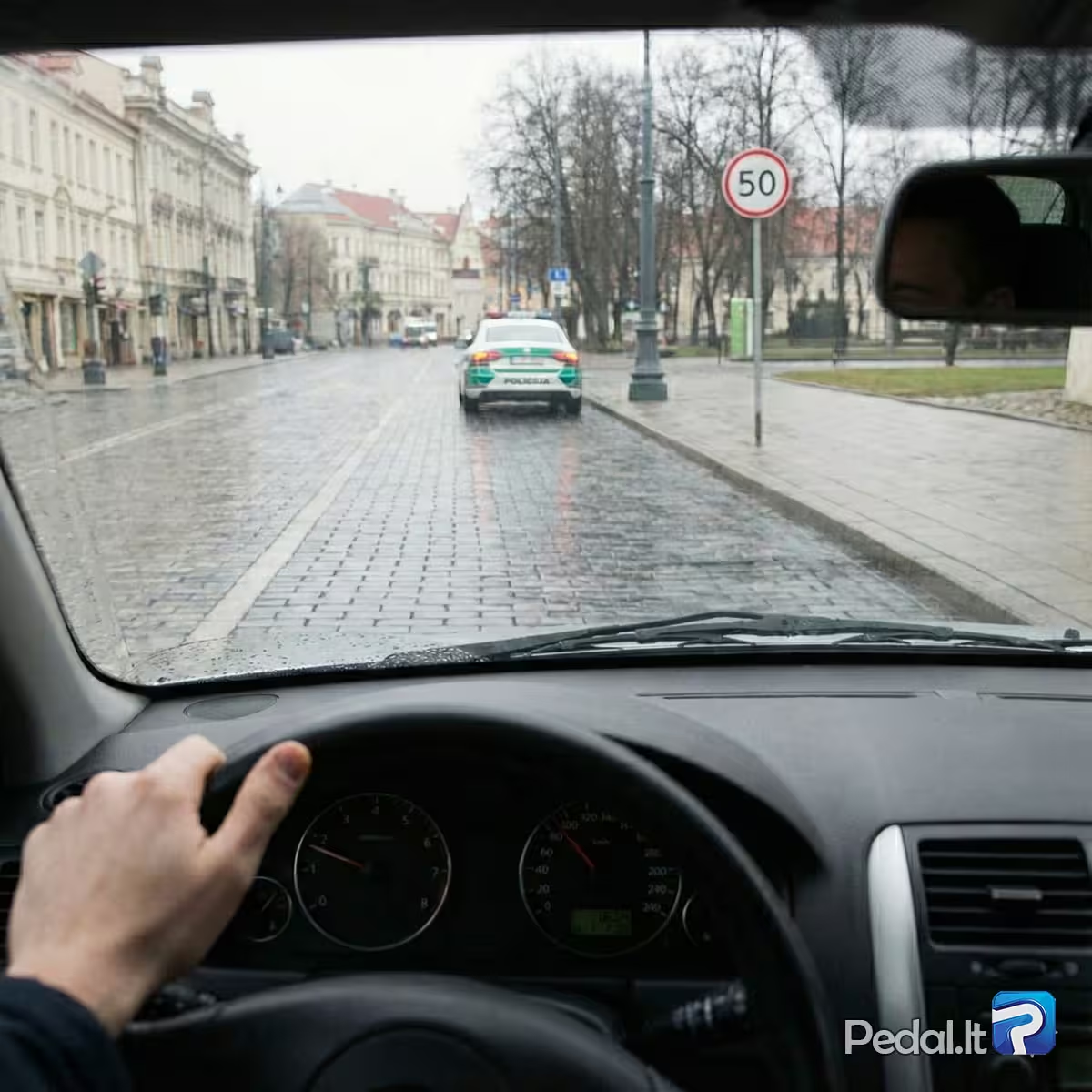
What should you do in this situation if you are driving 10 km/h above the speed limit?
When you see traffic sign 636 — Automatic traffic control (part of the Advanced Traffic Management System) and you are traveling 10 km/h above the speed limit, ease off the accelerator so your speed drops to the legal limit and you avoid a possible fine. Sign 636 indicates a road section monitored by fixed automatic devices. The first version of the sign warns of devices that detect various traffic rule violations (except speed violations); the second version denotes a section where fixed devices record speed limit violations and, where technically feasible, other infringements.
1. Brake suddenly.
2. Ease off the accelerator pedal.
3. Maintain your current speed.
The front passenger airbag must be deactivated when a child is seated in a rear-facing child seat on the front passenger seat in a motor vehicle because:
RTR 201. A child must not be transported in a rear-facing child seat appropriate for their size on a front passenger seat that is protected by an active airbag. This restriction does not apply if the front airbag has been deactivated. It is recommended that a child be carried as long as possible in a child seat suitable for their height and weight and installed rear-facing, contrary to the vehicle’s direction of travel (as specified by the seat manufacturer).
1. In a collision the child’s neck can be seriously injured.
2. In a collision the child’s head can be seriously injured.
3. The driver may receive a fine.
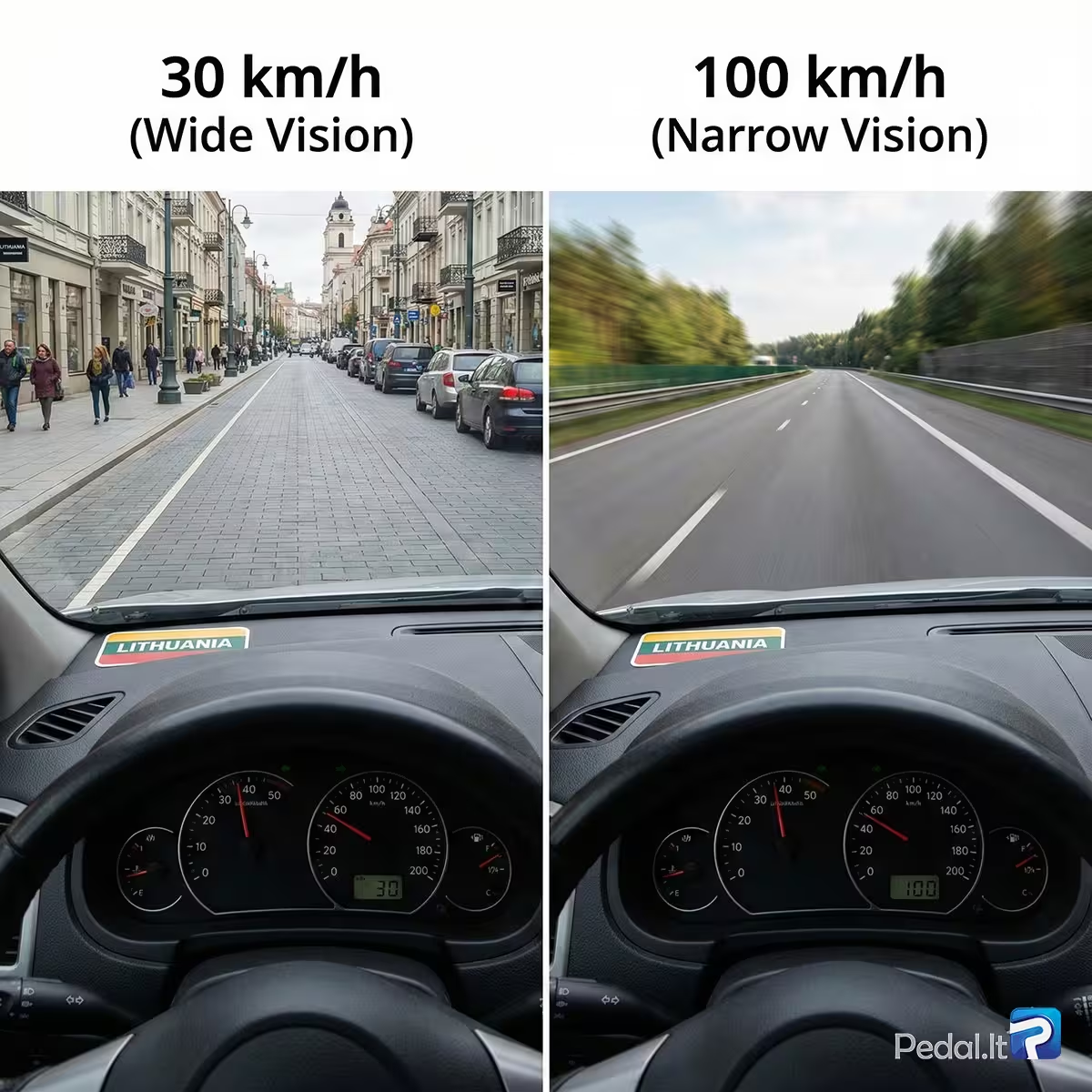
How does your field of vision change as your driving speed increases?
The field of vision is affected by driving speed, visual acuity (e.g., short-sightedness), fatigue, the color and brightness of objects, their contrast with the background, and other factors. As speed increases, a driver’s area of attention narrows and shifts forward: although drivers tend to look farther ahead, the effective dimensions of attention decrease inversely with speed. For example, at 50 km/h it is usually sufficient to focus about 150 m ahead to detect an obstacle; at 140 km/h an oncoming vehicle may not be noticed until it is only 15–20 m from the point of passing.
1. It becomes narrower.
2. It becomes wider.
3. It does not change.
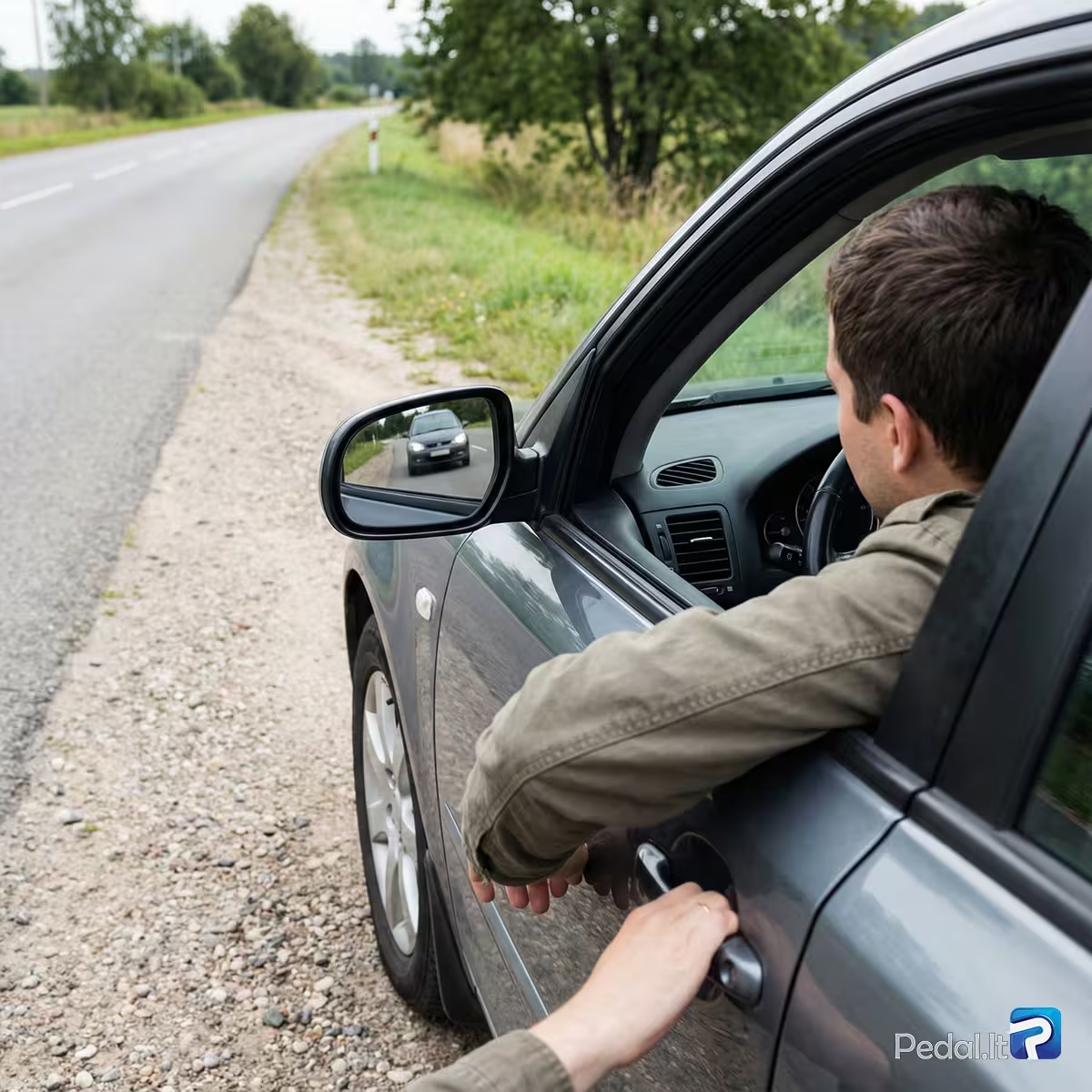
After stopping on the right-hand shoulder, what should a driver check before opening the door?
Vehicles may be approaching from the rear on the left-hand side, so opening the door could be unsafe. (RTR 148) Do not open the doors of a parked vehicle if doing so would create an obstruction or pose a hazard to other road users.
1. Vehicles approaching from behind on the left-hand side.
2. Vehicles approaching from behind on the right-hand side.
3. They do not need to pay attention to anything specific.
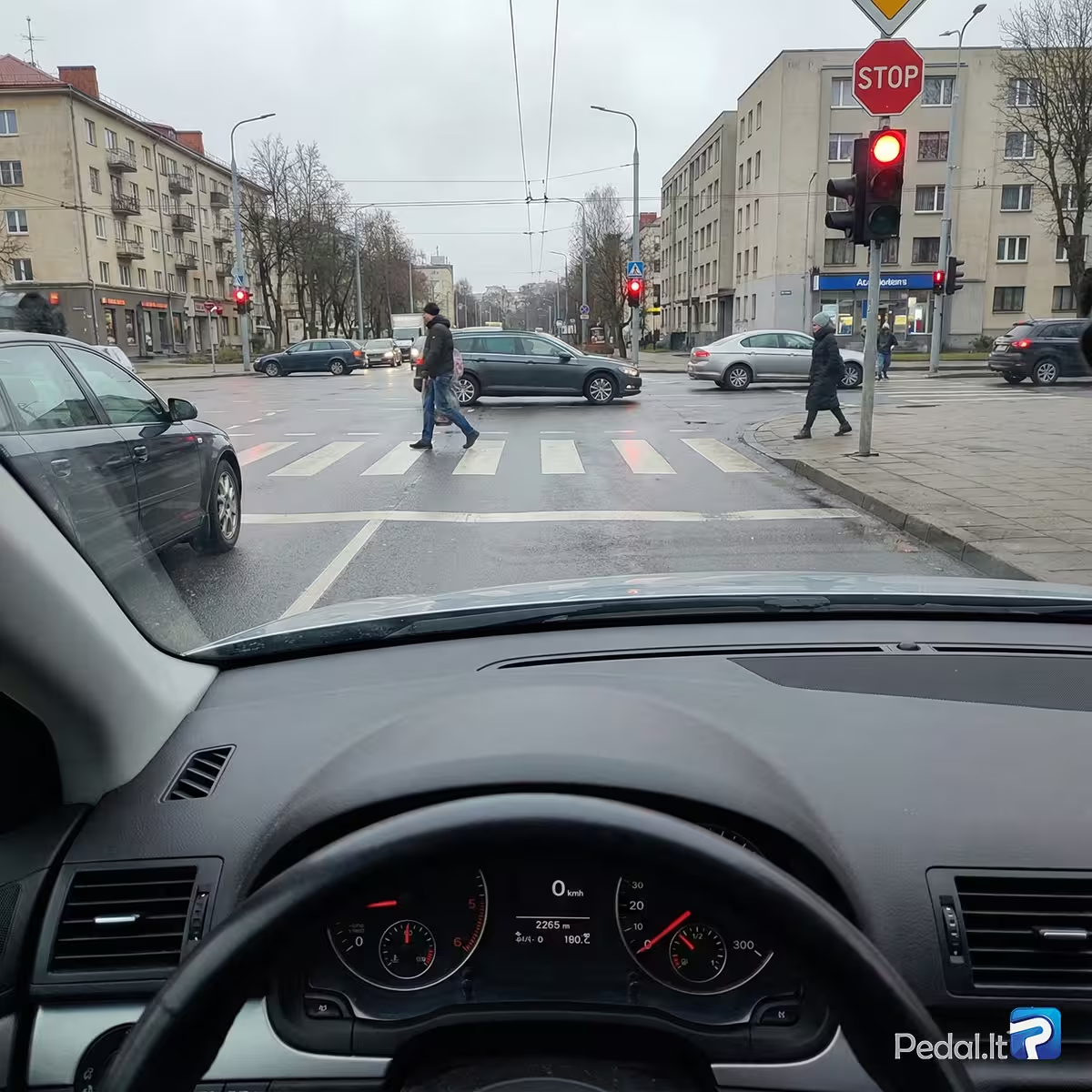
Where must the driver stop, according to traffic rules, when a prohibitory traffic signal or a traffic regulator's signal is in effect?
RTR 165 p. When a prohibitory traffic signal or a traffic regulator's signal is displayed, the driver must stop before the 'Stop line' road sign and/or before the marked stop line. If neither is present, the driver must stop before the traffic light, before the junction or the connecting carriageway, before a pedestrian crossing, or before a bicycle crossing, in such a position that does not obstruct vehicular or pedestrian traffic.
1. Before the 'Stop line' road sign and/or before the marked stop line.
2. So as not to obstruct vehicular traffic.
3. So as not to obstruct pedestrian traffic.
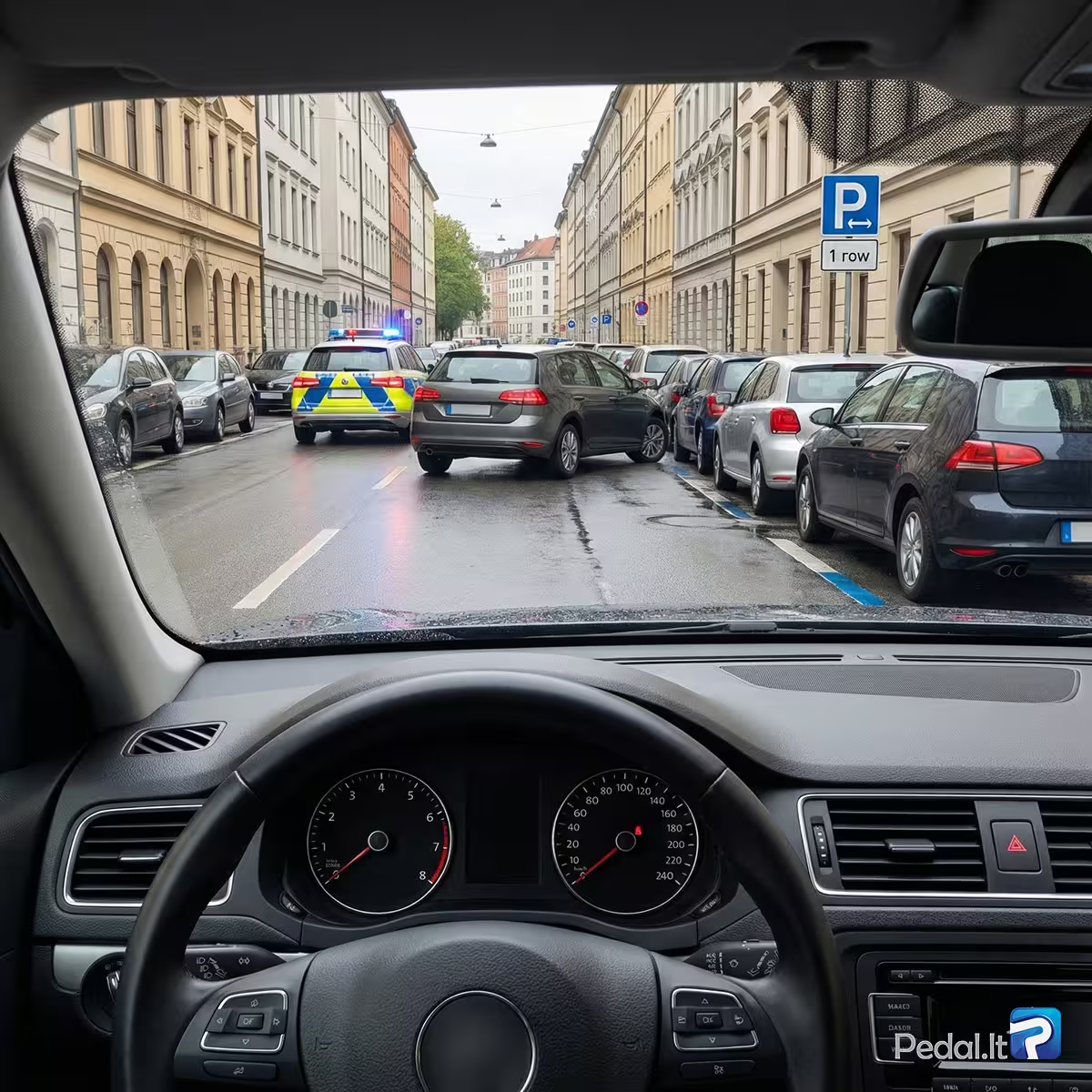
How many rows of cars are permitted to stop and park on the roadway?
RTR 144. Vehicles must stop and park on the carriageway in a single line. RTR 145. Motorcycles without a sidecar, mopeds, bicycles, and electric micromobility devices may be parked in two lines provided such parking does not obstruct traffic.
1. In a single row.
2. In two rows.
3. In three rows.
How would you react if the vehicle began to skid on a wet surface (i.e., started to aquaplane)?
On roads (especially those with ruts) during heavy rain, water can accumulate on the asphalt because it cannot drain quickly toward the edges. If you accelerate under these conditions, the tire treads may be unable to disperse the accumulated water. The vehicle can aquaplane when a wedge of water lifts the tires off the road surface, reducing traction and making the vehicle difficult to control. If a vehicle begins to aquaplane, the driver should reduce speed to regain traction and stability.
1. You would immediately apply the brakes.
2. You would ease off the accelerator to reduce your speed.
3. You would increase your speed.
What factors should you consider when choosing a safe distance?
A safe distance is the distance a vehicle travels from the moment the driver notices a hazard until the vehicle comes to a complete stop. It depends on vehicle speed, size, braking performance, road type and surface condition, visibility, driver reaction time, and personal characteristics such as temperament. To choose an appropriate distance, you need to know the vehicle's stopping distance.
1. Visibility.
2. The condition of a road surface.
3. Speed.
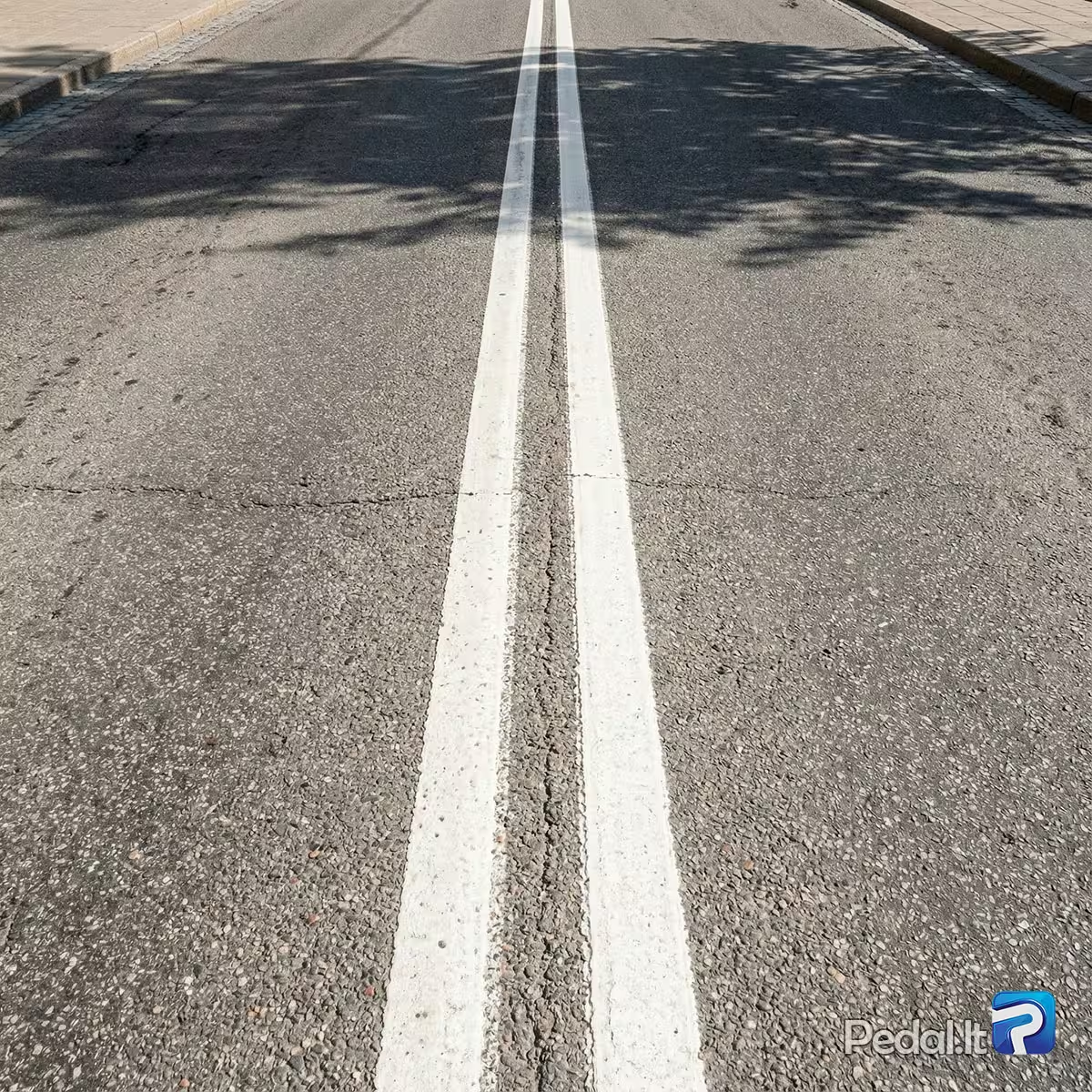
What does this road marking indicate?
On roads with four or more lanes, a double solid line separates opposing traffic flows. It prohibits driving in lanes that carry traffic in the opposite direction on the marked section; vehicles must not cross this line.
1. Crossing this line is prohibited.
2. Crossing the line is only permitted when making a U-turn.
3. Crossing this line is allowed.
What is the primary difference between winter diesel and summer diesel fuel?
In winter, air temperatures can easily drop to -25 °C or lower, causing diesel vehicles to experience starting problems. When temperatures fall below 0 °C, water in diesel fuel can freeze; failing to prepare a diesel vehicle for such conditions may lead to breakdowns. At service stations you can choose “summer” diesel, typically suitable from May through October, or “winter” diesel, formulated for use from November through April and adapted to low sub-zero temperatures.
1. Winter diesel fuel does not gel or freeze at -25 °C.
2. Winter diesel fuel begins to gel or freeze at temperatures below -5 °C.
You are driving in heavy rain and the steering wheel suddenly becomes very light to turn. What should you do?
If the steering wheel becomes very easy to turn, the vehicle's tyres have likely lost traction on the slippery road surface. In this situation, you must reduce your speed gradually — abrupt throttle changes or hard braking can cause the vehicle to skid or lose control.
1. You will slightly increase your speed.
2. You will gradually release the accelerator.
3. You will brake suddenly to reduce your speed.
4. You will move towards the hard shoulder.
What is meant by "crossroads"?
RTR 3.17. "Crossroads" means the area bounded by imaginary lines drawn from the outer edges of the intersecting carriageways, regardless of whether those edges are widened or rounded.
1. An area bounded by imaginary lines drawn from the outer edges of the intersecting carriageways.
2. An area bounded by imaginary lines connecting the outer edges of pavements or road shoulders.
Does a driver issuing a warning signal have the right of way?
RTR XI. WARNING SIGNALS (paras. 81–93). Paragraph 87: A driver who issues a warning signal does not have the right of way.
1. The driver does not have the right of way.
2. The driver has the right of way when initiating a manoeuvre.
3. The driver has the right of way when completing a manoeuvre.
4. The driver has the right of way in all situations.
You are on the right side of the road and are about to start moving. A goods vehicle is behind you. What should you take into consideration?
101. Before starting to move, changing lanes, or otherwise altering course, drivers must ensure the manoeuvre is safe and give way to other road users (i.e., avoid creating obstructions).
1. You may not notice vehicles traveling in the same direction that are approaching or about to overtake you.
2. Other drivers may fail to see your left‑turn indicator.
During the hours of darkness, the poorest visibility on a road occurs:
The worst visibility at night occurs just before passing an oncoming vehicle because the oncoming headlights can dazzle the driver. When approximately 100 m remain before meeting an oncoming vehicle, the driver should reduce speed, keep as close as safely possible to the right edge of the carriageway, and look toward the kerb. These actions reduce glare and help the driver detect pedestrians, cyclists, people operating animal‑drawn vehicles, and other hazards more quickly. Specifically, drivers should: reduce speed to increase reaction time; position the vehicle near the right edge of the road to minimise the risk of head‑on conflicts and to allow space for unexpected events; and avoid looking directly at oncoming headlights, instead focusing toward the kerb or road edge to preserve night vision.
1. When there are 100 m remaining before passing an oncoming vehicle.
2. Just before passing an oncoming vehicle.
Indicate the maximum permitted speed for learner drivers when driving outside a built-up area on a road with an asphalt surface.
RTR 131. The following speed limits apply outside built-up areas: 131.2. The maximum speed for A1, A2, A or B category vehicles driven by novice drivers, persons learning to drive or taking a practical driving test, and buses (including school buses) is: 100 km/h on motorways; 90 km/h on highways; 80 km/h on roads with asphalt or concrete pavement; and 70 km/h on other roads. JB
1. 50 km/h.
2. 80 km/h.
3. 70 km/h.
4. 90 km/h.
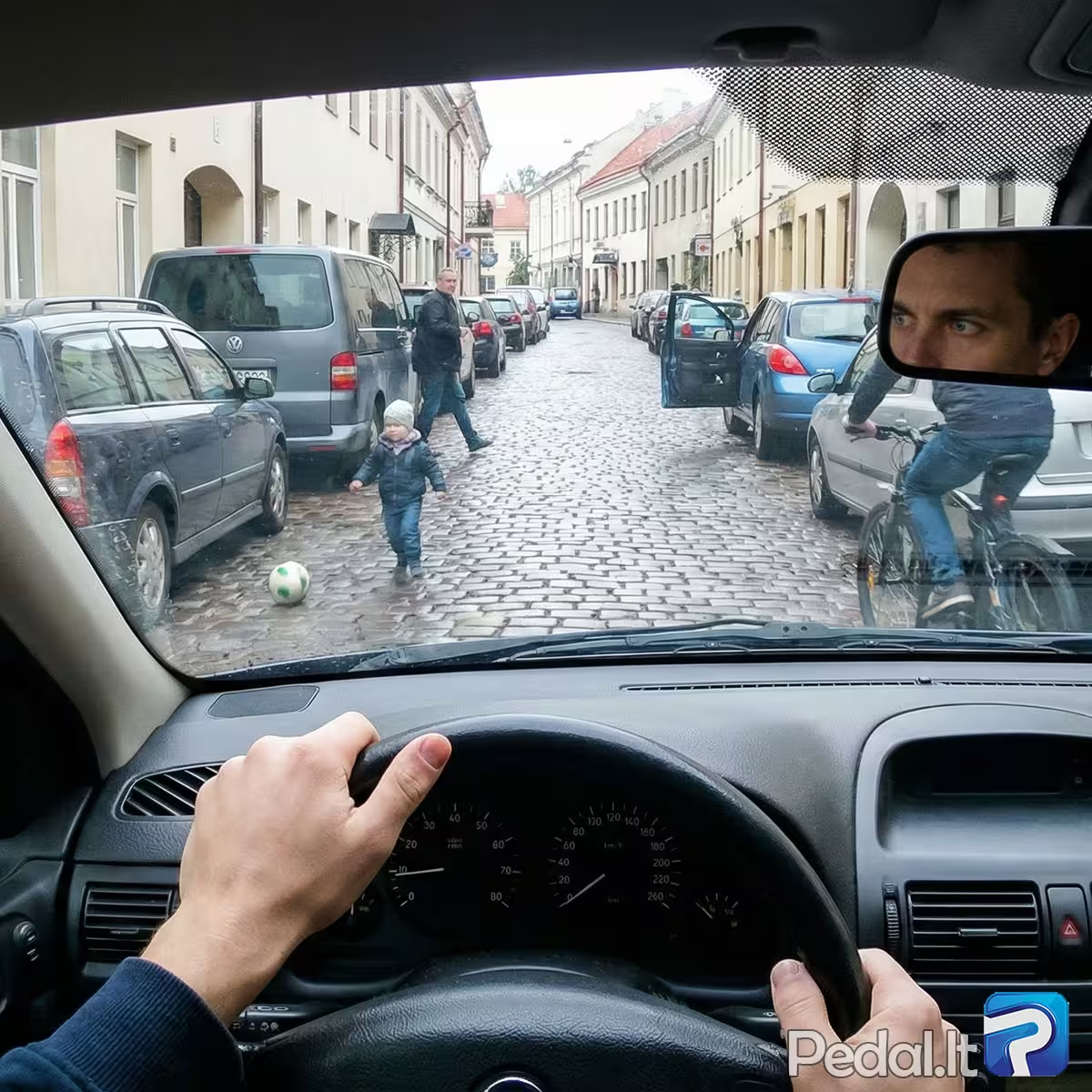
When driving past parked vehicles, you should be particularly alert for:
When driving beside a line of parked vehicles, watch for pedestrians who may step out into the road, drivers exiting their cars, and vehicle doors opening unexpectedly — any of these can cause a collision. 148. The doors of a parked vehicle must not be opened if doing so could create an obstruction or a hazard to other road users.
1. Pedestrians walking between parked vehicles.
2. Drivers exiting their vehicles.
3. Doors of parked vehicles that may open unexpectedly.
4. Children at play who may run into the carriageway.
Effects of driving at high speed:
When driving at high speed, tires are subjected to greater loads and wear more quickly. (RTR 127.) Drivers must not exceed the posted speed limit. A driver must choose a driving speed appropriate to the prevailing conditions — in particular the terrain, the condition of the road and the vehicle (including the load), the weather, and traffic density — so as to be able to stop safely before any predictable obstacle. The driver must reduce speed or stop when conditions require it, especially when visibility is poor. JB
1. Increases the risk of a traffic accident.
2. Fuel consumption is reduced.
3. Tires wear out more quickly.
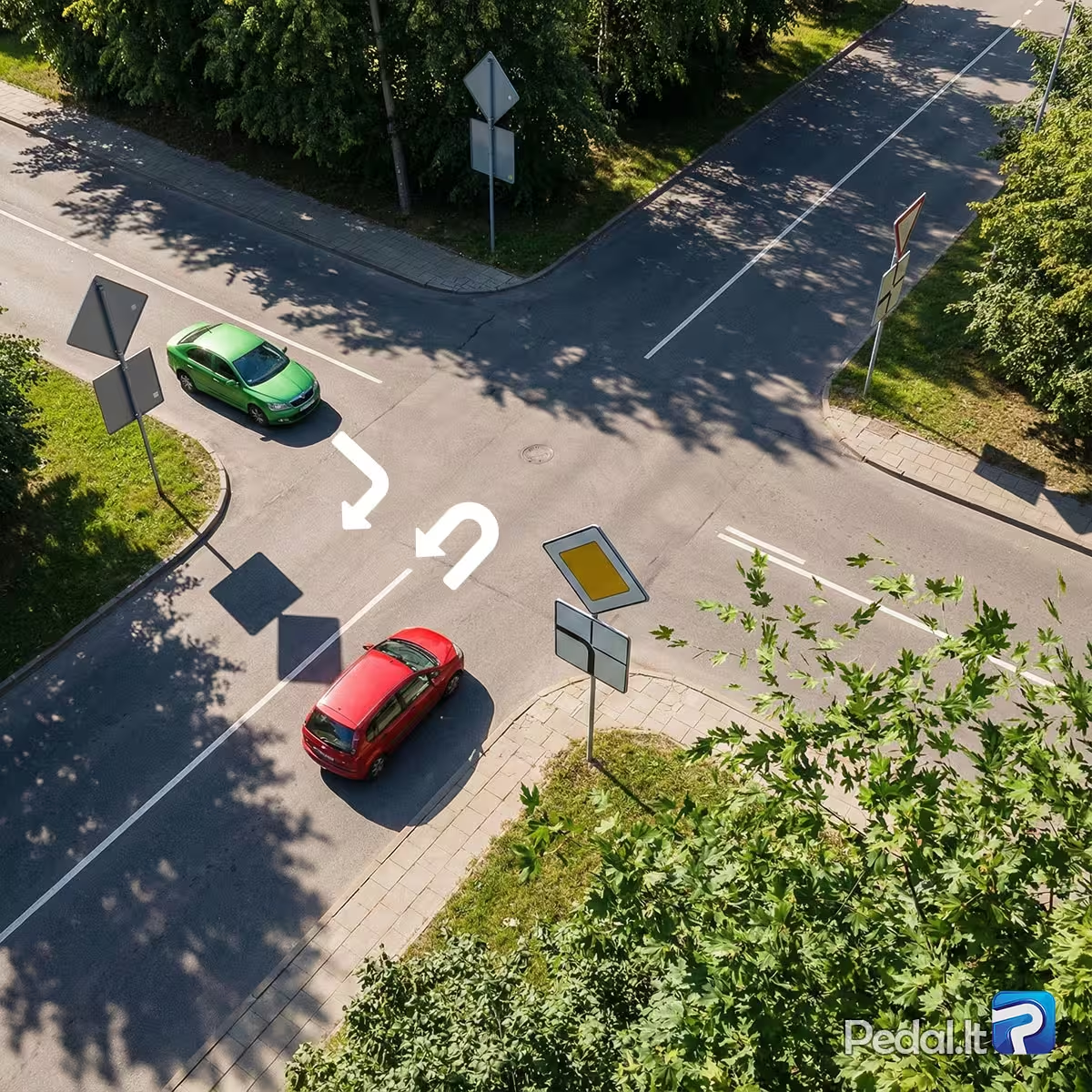
The driver of the red car is about to make a U-turn. Does he have the right of way?
When turning, the driver of the red car must yield to any vehicle coming from the opposite direction on a road of equal priority that is approaching from the right (the green car). Once the red car has already entered the intersection, the green car is considered an obstacle. At intersections where the main road changes direction, the priority-to-the-right rule applies (RTR 157). When turning left or making a U-turn, a driver must yield to oncoming vehicles on an equally important road that are going straight or turning right — and, where overtaking is permitted, also to vehicles that are overtaking.
1. Yes — he has the right of way.
2. No — he does not have the right of way.
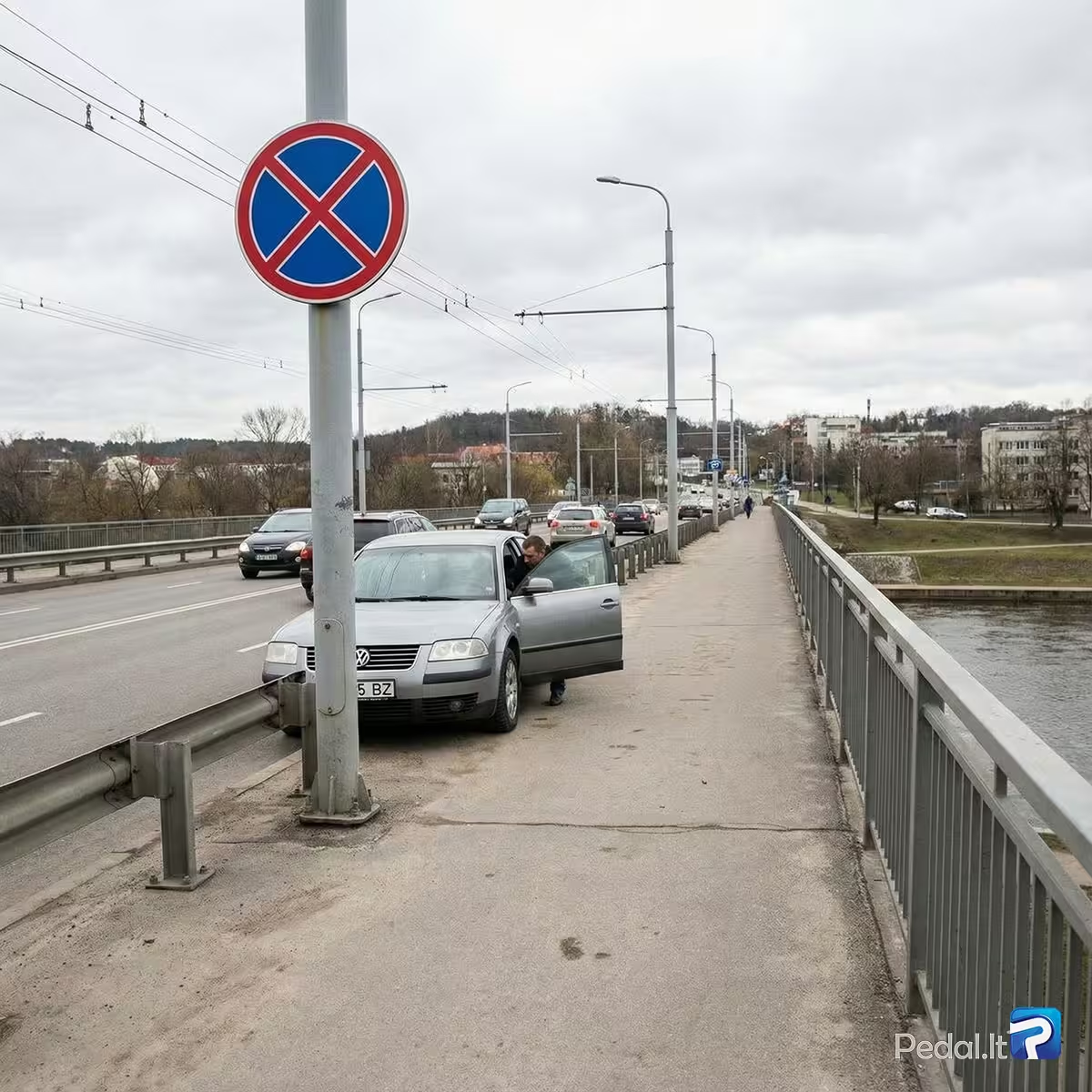
Are drivers permitted to stop or park their vehicles on a bridge if they do not obstruct traffic flow?
RTR – 150. Standing and parking are prohibited: 150.3 on and under bridges, viaducts and flyovers — except where parking is expressly permitted by road signs indicating a parking space — and in tunnels.
1. Yes — it is permitted.
2. Parking is permitted only where road signs explicitly designate a parking space.
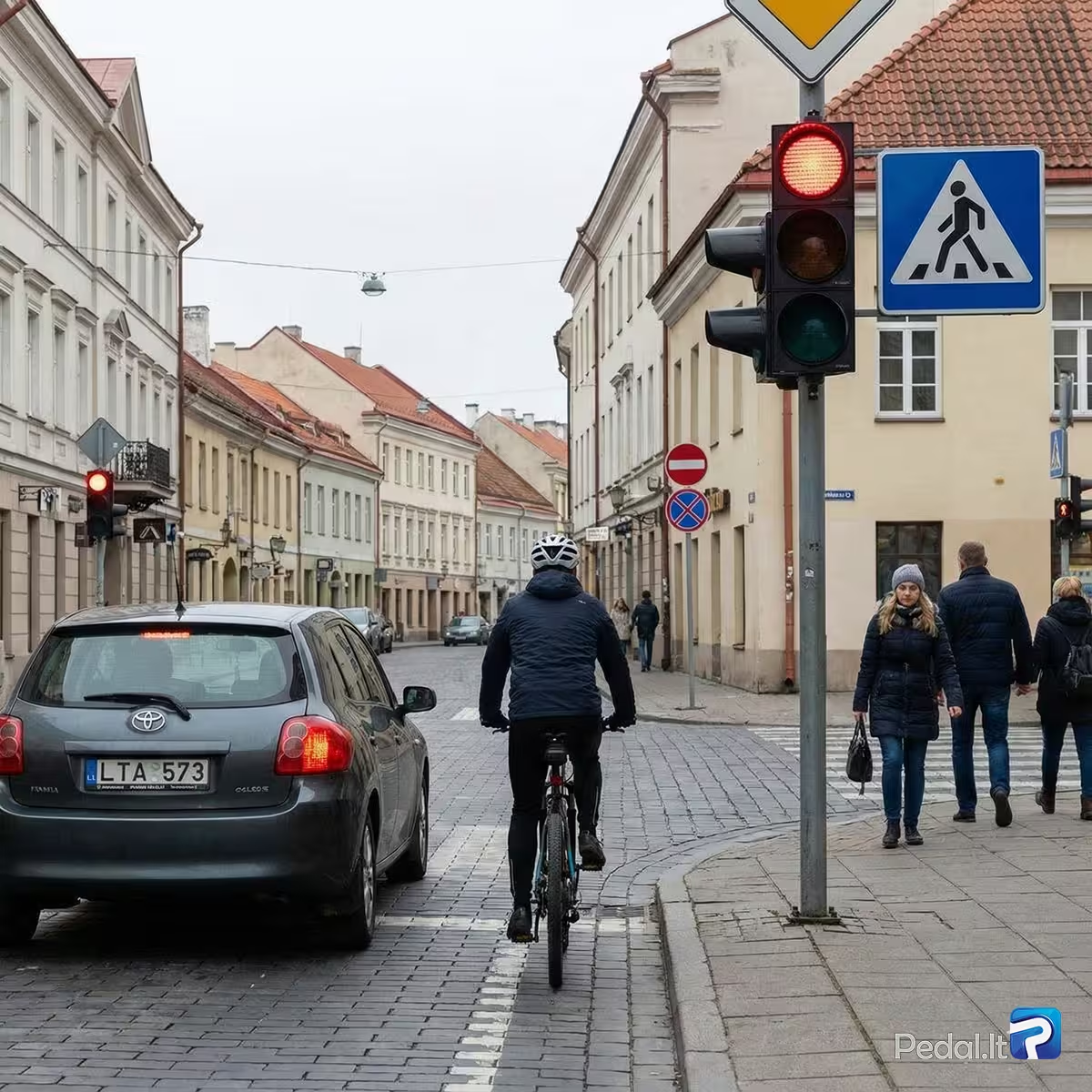
Road users are required to:
RTR 5. Road users must be familiar with the Law on Road Traffic Safety of the Republic of Lithuania, be acquainted with these Rules, and comply with them. JB
1. Be familiar with the directives of the General Commissioner of Police.
2. Know and comply with the traffic rules.
3. Be familiar with the Law on Road Traffic Safety.
4. Know the regulations of the Lithuanian Transport Safety Administration.
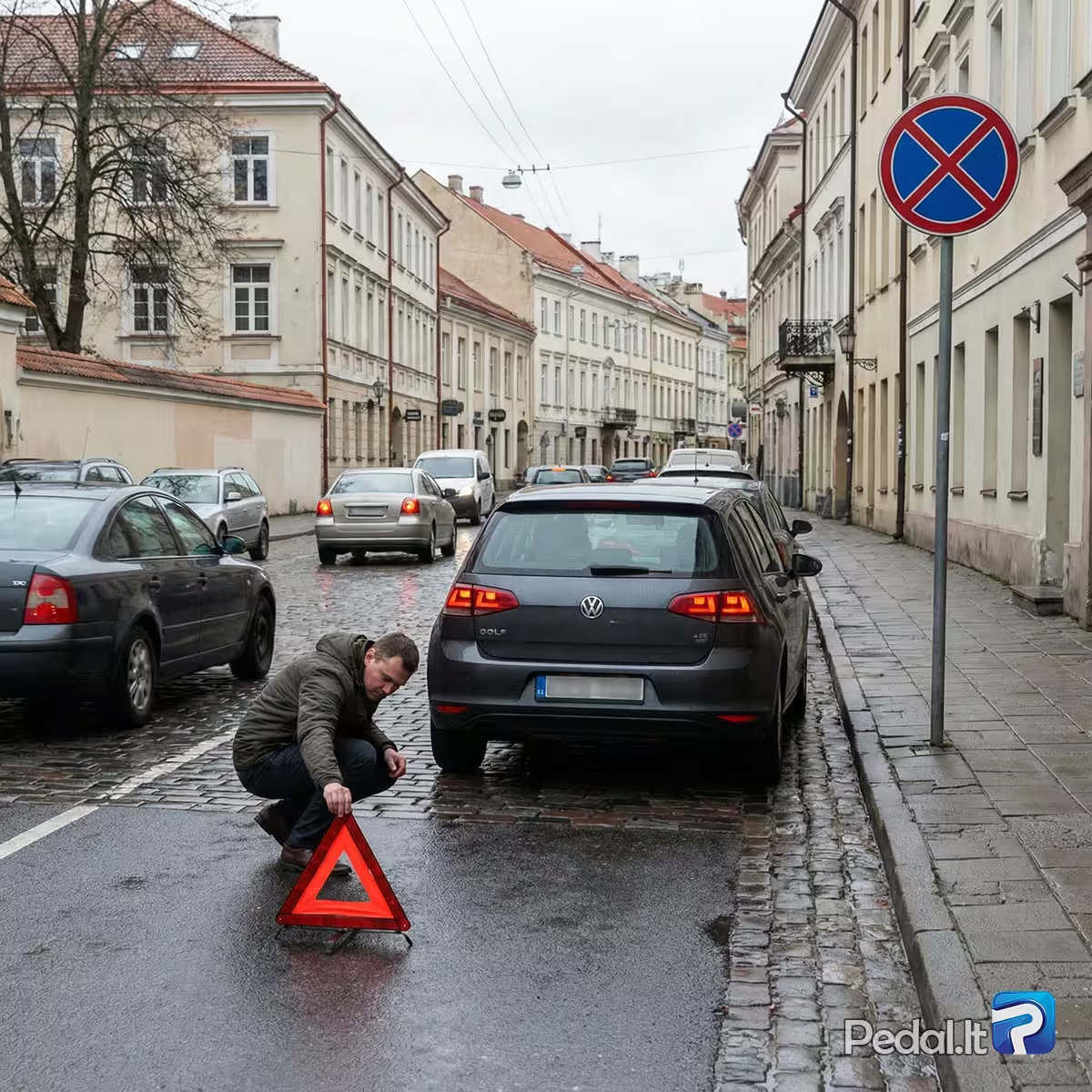
What must you do if you are forced to stop inside a settlement where stopping (parking) is prohibited and the hazard warning lights are not working?
RTR 92. If the emergency warning light system is not fitted or is defective and an emergency stop is required where stopping or parking is prohibited, in the event of an accident, or where the stopped vehicle would be visible to other road users from less than 100 metres, the driver of a motor vehicle (other than a motor moped or a motorcycle without a trailer), a tractor, or a self-propelled machine must immediately place an emergency stop sign on the carriageway side opposite to the direction of travel: in settlements, not closer than 25 m, and outside settlements, not closer than 50 m from the stopped vehicle. If at least one rear position lamp is defective and the hazard warning lights do not work while driving in darkness or poor visibility, an emergency stop sign must be attached to the rear of the vehicle in order to continue driving.
RTR 151. When a vehicle is forced to stop where standing or parking is forbidden, drivers must switch on hazard warning lights if available and/or place a warning triangle on the road as specified in Paragraph 92 of the Rules, and remove the vehicle from the road as soon as possible. If drivers intend to stop on unlit road sections at night or in poor visibility and hazard warning lights are unavailable or inoperable, the vehicle must be parked off the carriageway. If this is impossible, the place must be marked as specified in Paragraph 92 of the Rules. JB
1. Place a warning triangle at least 25 m from the stopped vehicle.
2. Attach a red flag to the vehicle.
3. Switch on the dipped headlights.
4. Stop another vehicle and ask for assistance.
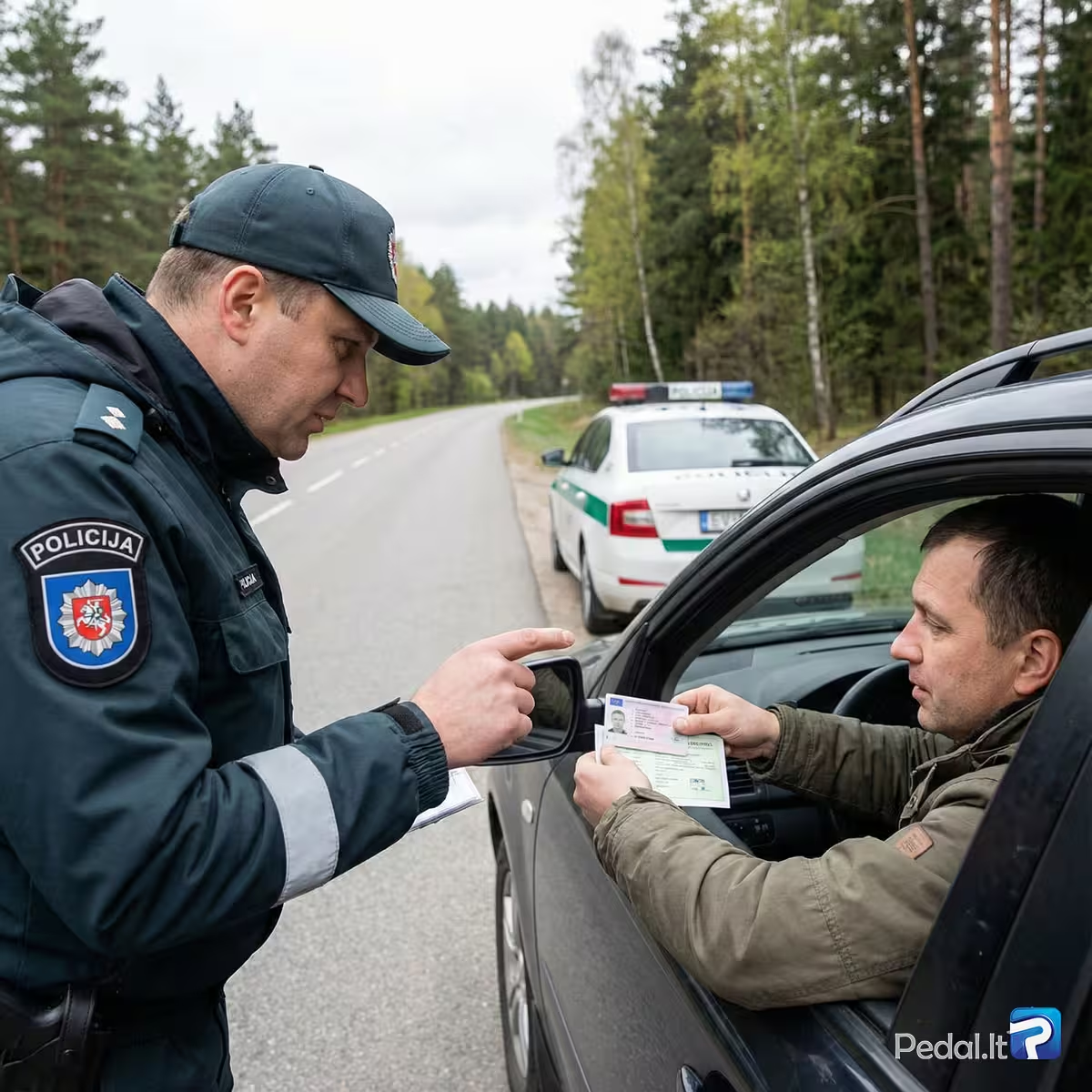
What checks must a driver allow when requested by a police officer?
RTR 17. At the request of a police officer, a driver must submit to tests for alcohol intoxication or for intoxication caused by narcotic drugs, psychotropic substances, or other psychoactive substances, in the manner prescribed by the Government of the Republic of Lithuania. RTR 14. It is prohibited to drive a vehicle if you are not authorized to do so, if you are under the influence of alcohol, narcotic drugs, psychotropic substances or other psychoactive substances. A person who is fatigued or ill must not drive if driving may endanger road safety. A vehicle must not be entrusted to a person who is under the influence of such factors or who is not authorized to drive that type of vehicle. When operating a vehicle, the driver must comply with the conditions specified on the driving licence. JB
1. Alcohol intoxication.
2. Irritability.
3. Fatigue.
4. Intoxication by narcotic drugs.
What must you do first before overtaking?
RTR 136. Drivers should avoid unnecessary overtaking maneuvers. Before overtaking, drivers must take extra precautions and ensure that: 136.1 no driver following has already begun to overtake them; 136.2 the driver of the vehicle to be overtaken is not signaling a left turn; 136.3 the portion of the lane required for overtaking is clear and the maneuver will not obstruct oncoming traffic or pedestrians on the carriageway; 136.4 a safe distance from the vehicle being overtaken will be maintained throughout the maneuver; 136.5 after overtaking, the driver can safely return to the original lane without obstructing the overtaken vehicle.
1. Ensure the road ahead is clear.
2. Shift to a lower gear.
3. Increase your speed.
4. Reduce your speed.
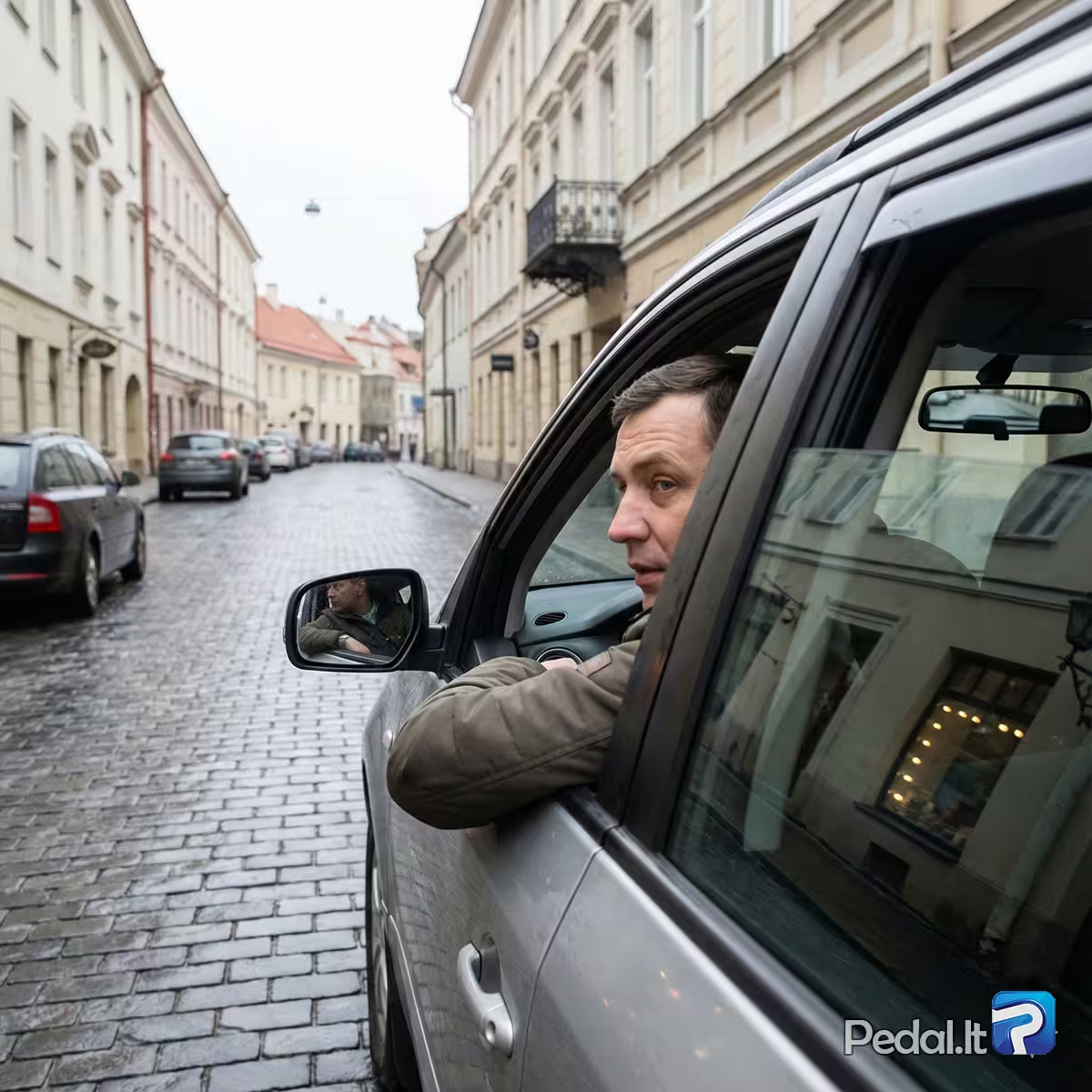
What must a driver do when reversing?
Note: If the steering wheel is turned sharply while reversing, the front of the vehicle can swing to the side and strike obstacles or other road users. When reversing, a driver must give way to other road users.
1. The driver must give way to other road users.
2. The driver must use the horn.
3. The driver must make sure that there are no obstructions behind the vehicle.
4. Do not obstruct other road users ahead.
1 of 30 Task
Time left: 00:00:00
1
2
3
4
5
6
7
8
9
10
11
12
13
14
15
16
17
18
19
20
21
22
23
24
25
26
27
28
29
30