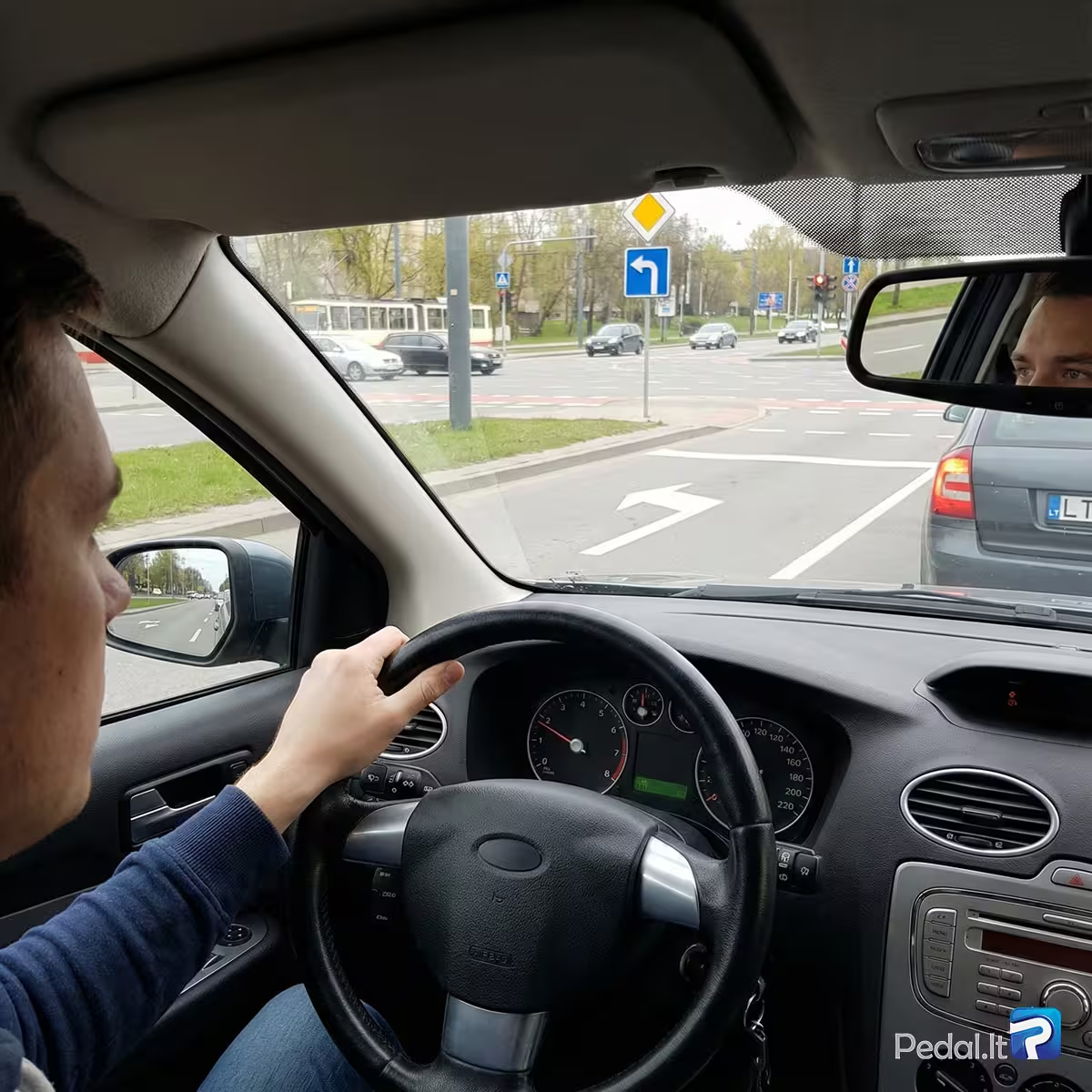
Where is it prohibited to make a U-turn?
RTR 116. U-turns are prohibited: 116.1 on pedestrian crossings; 116.2 on level crossings; 116.3 in tunnels; 116.4 on and beneath bridges, overpasses and viaducts; 116.5 where visibility in at least one direction is less than 100 metres; 116.6 on roads with a central reservation, except at locations designated and marked for U-turns by road signs and/or road markings. JB
1. On and beneath bridges, overpasses and viaducts.
2. In tunnels.
3. On level crossings (railway crossings).
4. On roads where the carriageway is less than 10 m wide.
When is the road surface most slippery?
The road surface is most slippery at the start of rain because accumulated dust and oil on the pavement combine with the first drops to form a slippery film.
1. When rain begins.
2. After heavy rain.
3. After puddles have formed on the road.
What is the minimum age at which a person is permitted to drive livestock or birds on a road?
Driving livestock or birds on a road is uncommon, but drivers should know the minimum permitted age because it is specified in the Road Traffic Rules. RTR 5. Road users must be familiar with the Law of the Republic of Lithuania on Road Traffic Safety, know the Rules, and comply with them. RTR 67. Only persons over the age of 14 may drive an animal-drawn vehicle, drive livestock or birds, or ride an animal on the road.
1. 8
2. 12
3. 14
4. 16
Are you allowed to drive across a level crossing when the traffic lights are switched off and the barrier is raised or absent?
Driving across a level crossing where the traffic lights are switched off and the barrier is raised or absent is permitted, but only if you obey traffic regulations and ensure that no train is approaching. 168. Before entering and crossing a level crossing, a road user must comply with road signs, road markings, the position of the barrier, traffic lights, audible warnings, and the signals given by level crossing attendants/controllers. Before entering a level crossing, a road user must always verify that no rail-borne vehicle is approaching the level crossing. It is recommended that children under 12 be accompanied when crossing a level crossing. 173. Drivers must not: 173.3. enter a level crossing after the barrier has been lowered or has begun to be lowered, willfully lift the barrier or manoeuvre around the barriers;
1. Yes — permitted, provided you follow road rules and confirm that no train is approaching.
2. No — not permitted.
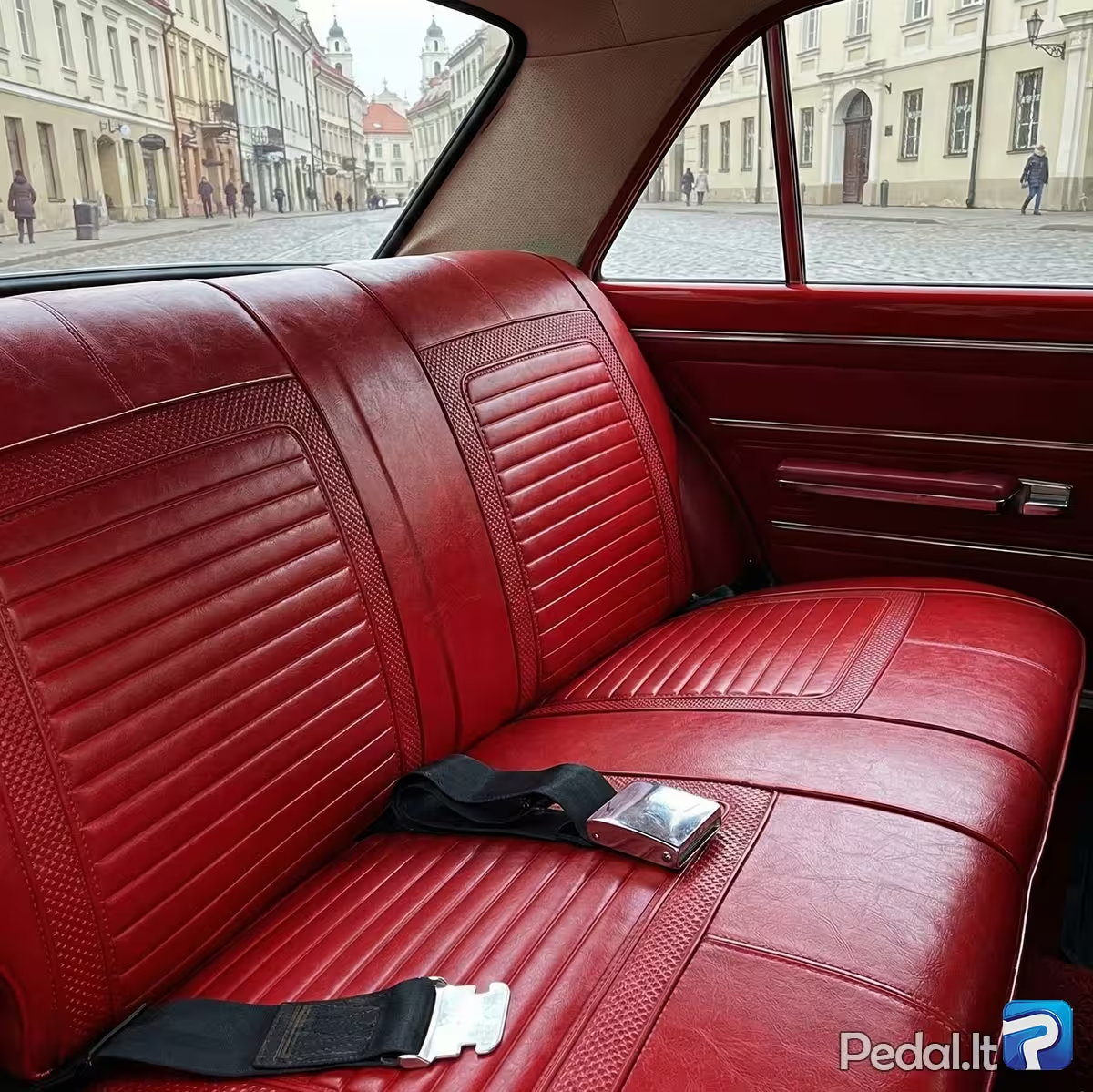
Must a rear-seat passenger wear a seat belt while the vehicle is in motion?
Drivers and all passengers must wear seat belts in vehicles that are equipped with them. In buses fitted with seat belts, a "Fasten Your Seat Belt" notice must be displayed in a clearly visible location in front of each seat, on the seat, or adjacent to it. It is recommended that all bus passengers be informed of the seat belt requirement — either verbally or by audiovisual means — before the journey begins.
1. Yes — you are required to wear a seat belt.
2. No — you are not required to wear a seat belt.
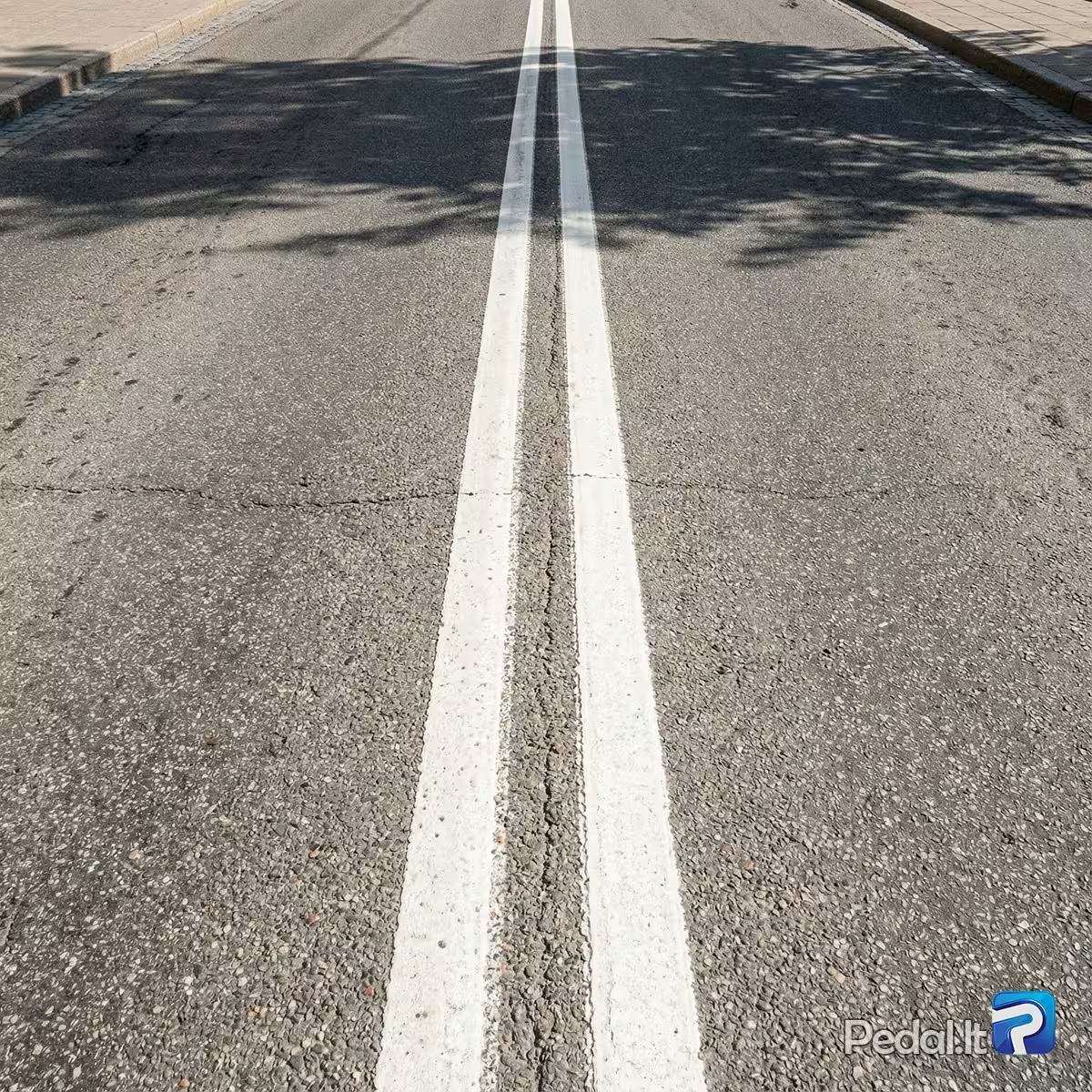
What does this road marking indicate?
On roads with four or more lanes, a double solid line separates opposing traffic flows. It prohibits driving in lanes that carry traffic in the opposite direction on the marked section; vehicles must not cross this line.
1. Crossing this line is prohibited.
2. Crossing the line is only permitted when making a U-turn.
3. Crossing this line is allowed.
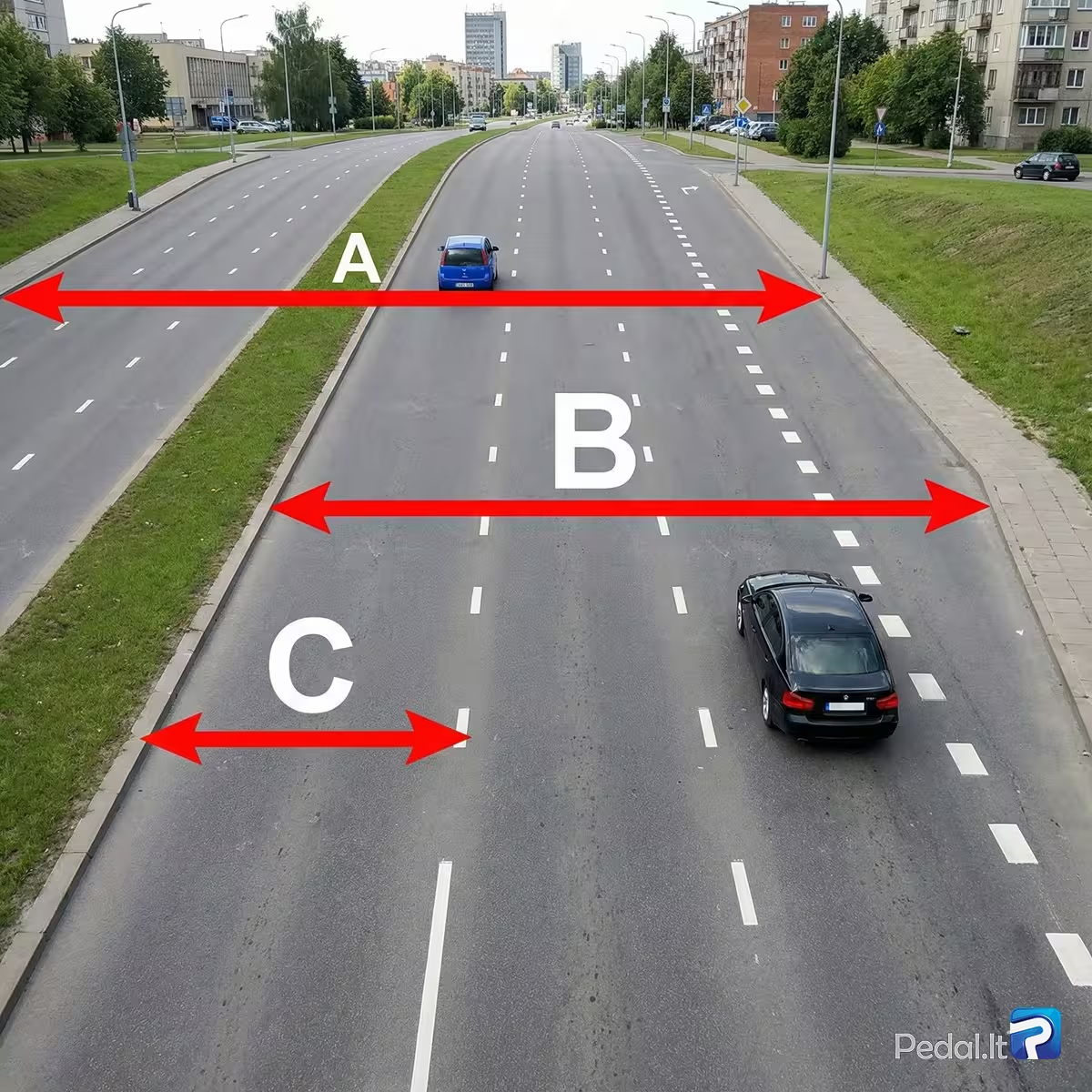
Which letter designates the entire carriageway of the road?
A central reservation is not part of the carriageway. A carriageway is the portion of a road intended for vehicular traffic.
1. A.
2. B.
3. C.
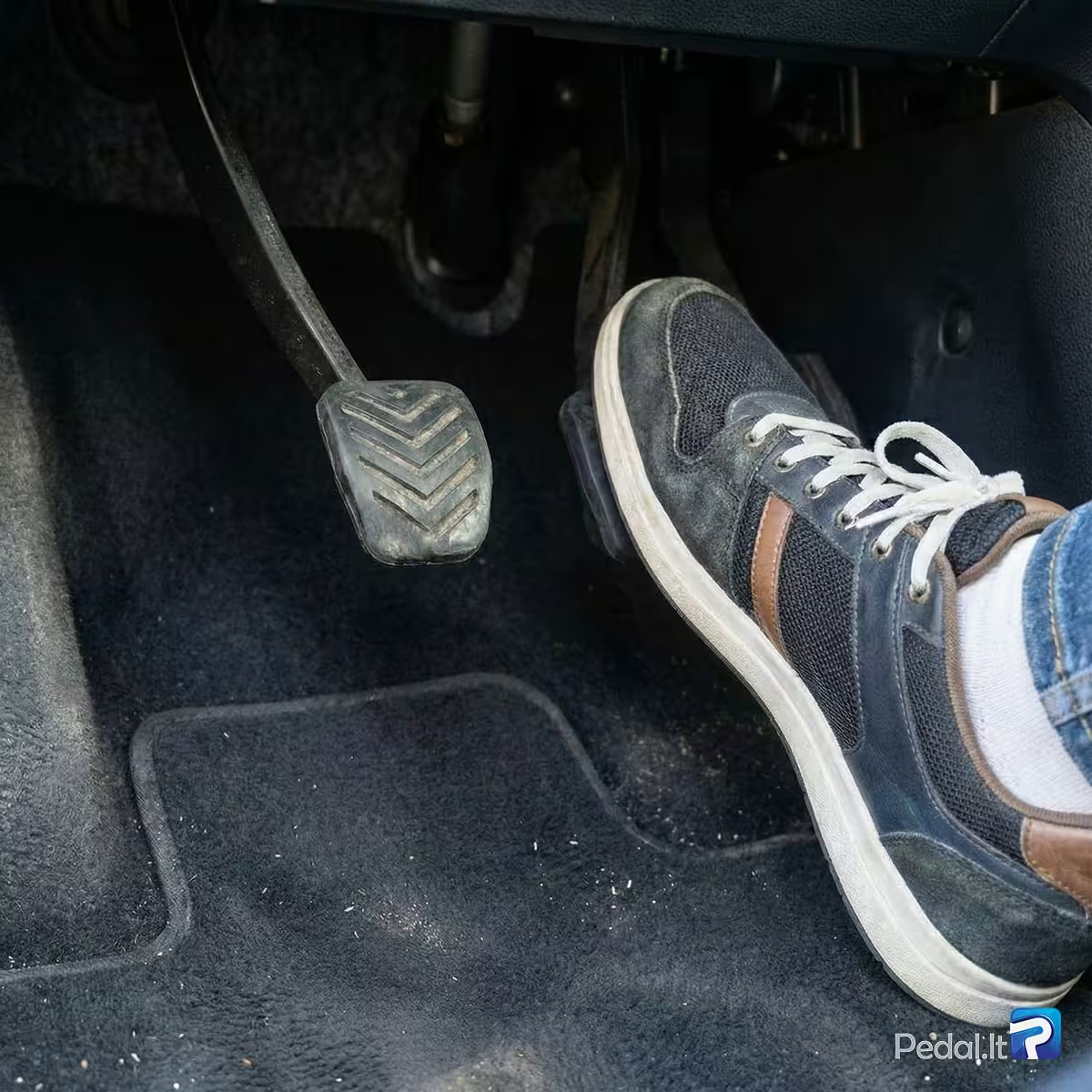
Which factors can cause the clutch to wear out more quickly?
Causes of premature clutch wear include an improperly adjusted clutch release mechanism, loose clutch mounting screws, weakened clutch springs, or a worn gearbox primary shaft.
1. Incorrectly adjusted clutch release mechanism.
2. Loose clutch mounting screws.
3. Weakened clutch springs.
Does a driver issuing a warning signal have the right of way?
RTR XI. WARNING SIGNALS (paras. 81–93). Paragraph 87: A driver who issues a warning signal does not have the right of way.
1. The driver does not have the right of way.
2. The driver has the right of way when initiating a manoeuvre.
3. The driver has the right of way when completing a manoeuvre.
4. The driver has the right of way in all situations.
How does alcohol affect a driver's abilities?
When driving under the influence of alcohol, attention and comprehension are reduced; critical thinking and memory are impaired; coordination of movements deteriorates; reflexes are weakened or lost; drivers take longer to perceive signals and interpret situations; overall driving performance declines, reaction times slow, and vehicle control worsens or may be lost.
1. Reaction time is delayed.
2. Reaction times become shorter.
3. Attention diminishes.
4. Alcohol has no effect on a driver's reactions.
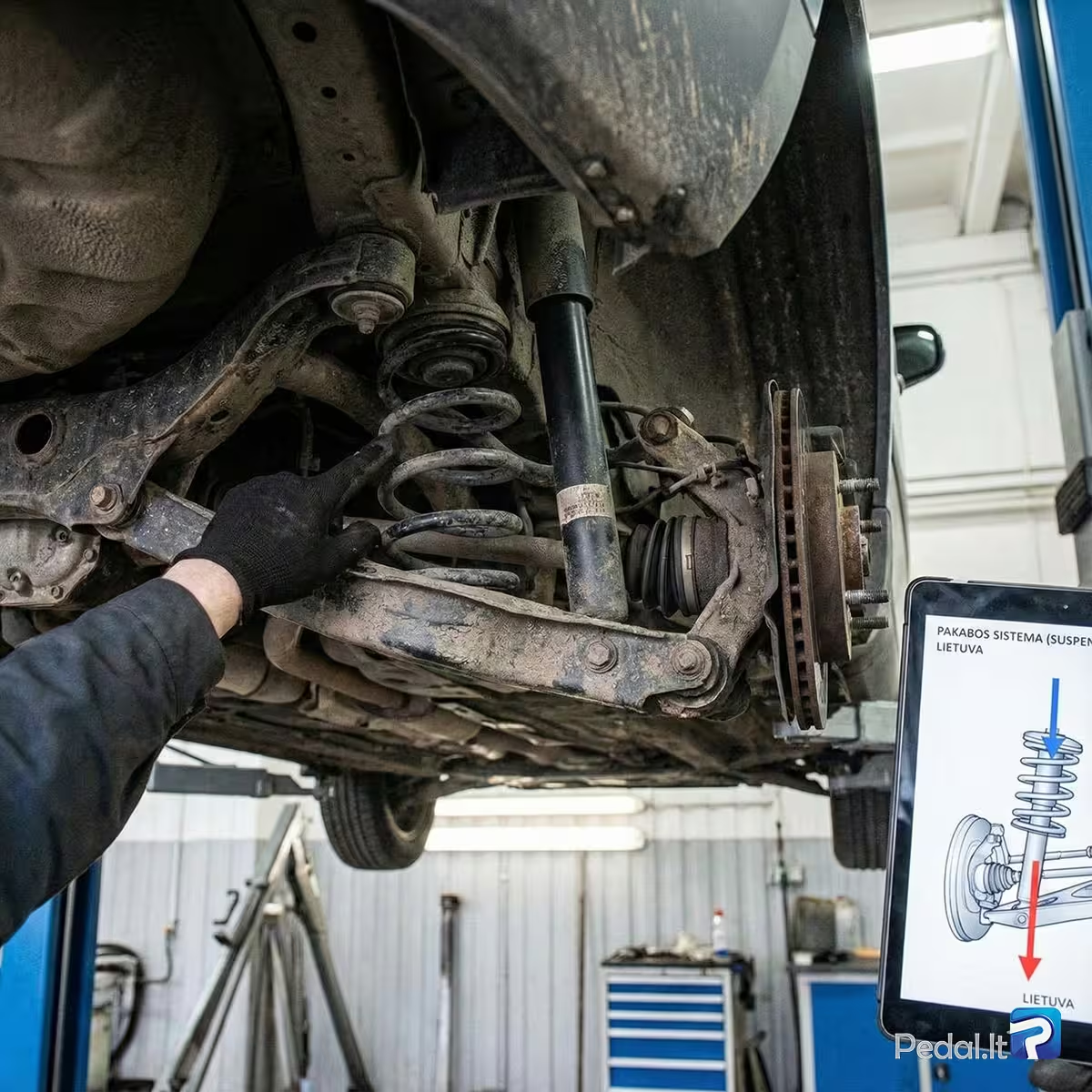
What is the function of a vehicle's suspension system?
The function of a vehicle suspension system is to convert bumps and shocks transmitted to the wheels, with the aid of shock absorbers, into minor oscillations of the vehicle body, providing comfort for driver and passengers. The suspension reduces body oscillations, and when functioning properly it enhances driving safety.
1. To improve ride comfort for the driver and passengers.
2. To convert bumps and shocks transmitted to the wheels into minor oscillations of the vehicle body.
What is the maximum permissible concentration of ethyl alcohol in the blood for a passenger car driver who has three years of driving experience?
LAW ON ROAD TRAFFIC SAFETY, Article 2, item 43. Intoxication — the state of a person who has consumed ethyl alcohol, when the concentration of that alcohol in the body's biological media (exhaled air, blood, urine, saliva or other bodily fluids) exceeds the legal limit. The maximum permitted concentration of ethyl alcohol in the exhaled air, blood, urine, saliva or other bodily fluids of persons driving vehicles is 0.4 per mille. Novice drivers, taxi drivers, and drivers of mopeds, motorcycles, tricycles, light quadricycles, four-wheel power quadricycles, vehicles with a maximum permissible weight over 3.5 t or with more than 9 seats, and drivers transporting dangerous goods are considered intoxicated when the concentration of ethyl alcohol in their exhaled air, blood, urine, saliva or other bodily fluids is greater than 0 per mille. JB
1. 0.2 ‰
2. 0.3 ‰
3. 0.4 ‰
4. 0 ‰
The effect of inertia on the vehicle (risk of sliding sideways) when cornering is reduced by:
The higher the vehicle's speed when cornering, the greater the effect of inertia and the higher the risk of the car sliding sideways. Lower speeds reduce inertia and the risk of sliding. A larger turning radius (a gentler curve) also reduces lateral inertial forces.
1. By decreasing the turning radius (making the turn tighter).
2. By reducing vehicle speed.
3. By increasing the turning radius (making the curve gentler).
What factors affect road surface quality and traffic safety?
Manhole covers for underground information and communication systems can be more slippery than the surrounding road surface and may also be uneven.
1. Potholes.
2. Manhole covers for underground information and communication systems.
3. Oil stains on the roadway.
4. Loose gravel or stone chippings on the road.
5. Wet road surface (slippery conditions).
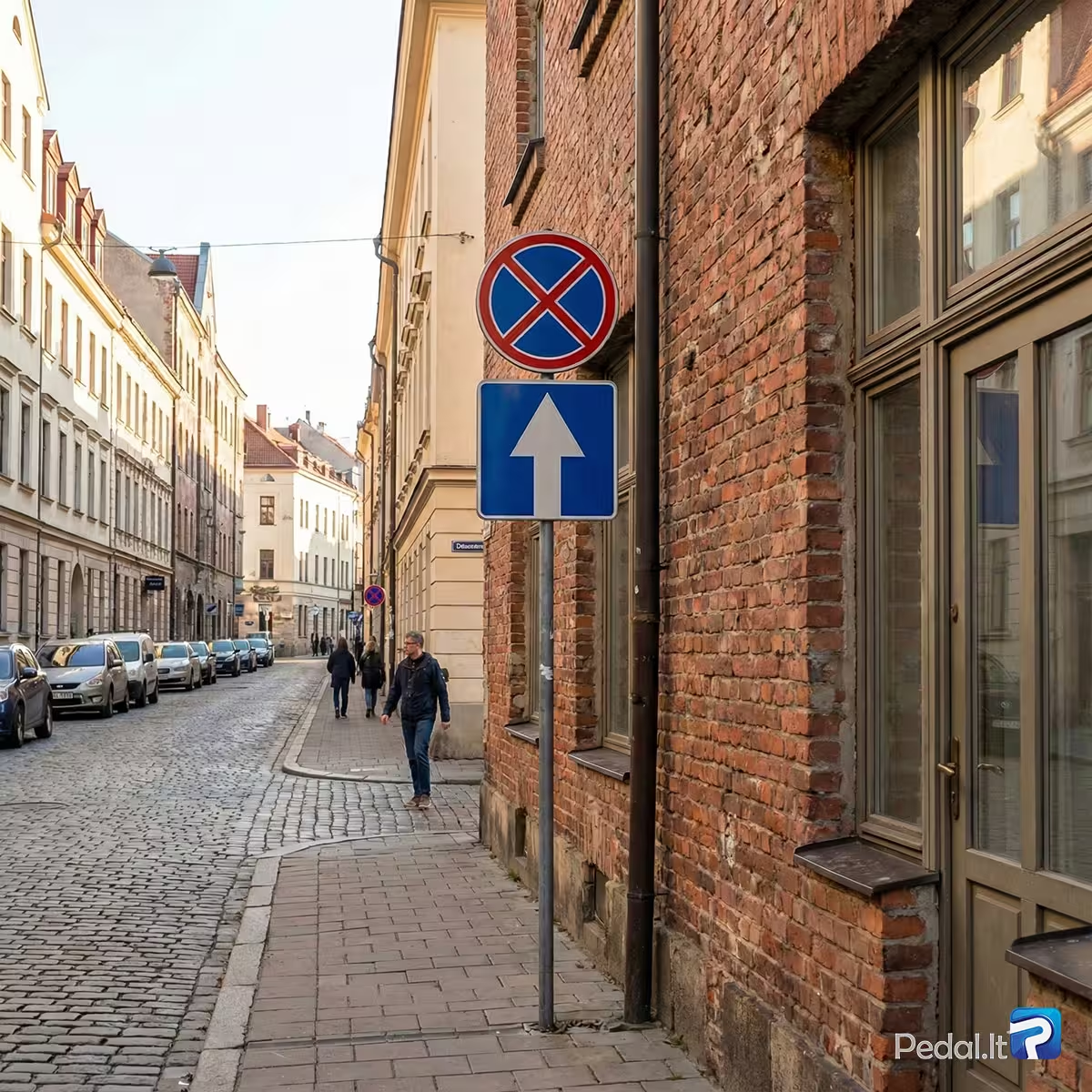
Which of the following actions are permitted on the road beyond these signs?
Traffic rules prohibit reversing only on motorways, expressways and in tunnels; otherwise reversing is allowed. U‑turns are prohibited here because they would require driving against the flow of traffic. RTR Annex 1, III — Restrictive signs: Road sign 332 'No stopping'. Vehicles must not stop or stand on the side of the road where this sign is placed, except for stopping at bus stops. The sign does not apply to vehicles displaying the distinguishing sign 'A person with a disability' or holding a parking card for people with disabilities. If the sign is used in combination with road marking 1.4, the prohibition applies until the end of that marking. RTR Annex 1, V — Special regulation signs: Road sign 503 'One-way traffic' — indicates a road or carriageway where vehicular traffic moves in one direction across the full width.
1. Proceed in one direction.
2. Park vehicles displaying the 'Person with a disability' badge.
3. Make a U‑turn.
4. Reverse (drive backward).
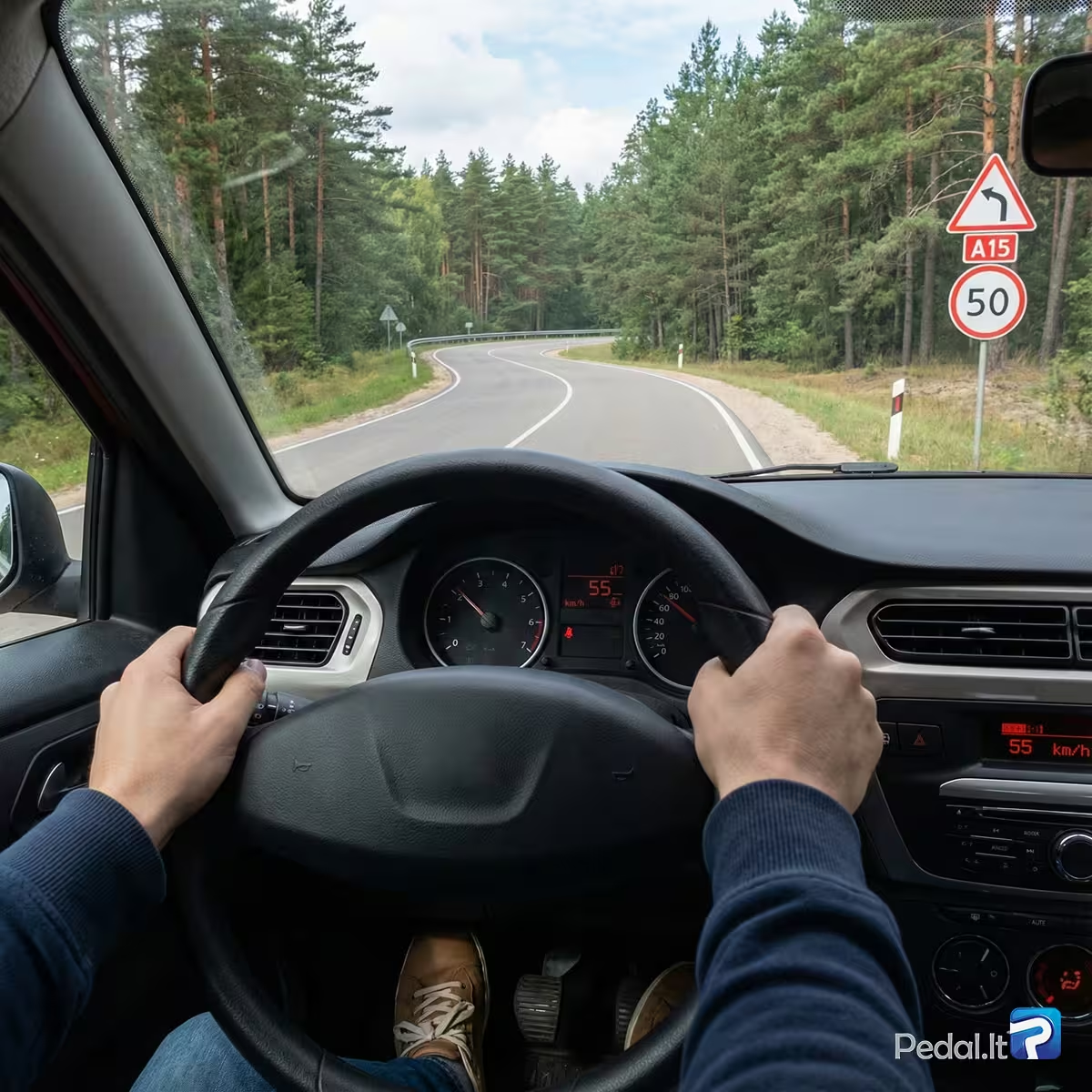
You are approaching a bend in the road. You should:
Drivers approaching a bend should be aware that the curve may be sharper than it appears. Therefore they must select a safe speed and adopt an appropriate position on the road to avoid entering the oncoming traffic lane. A safe speed depends on all circumstances: weather conditions, the technical condition of the road and the vehicle, the vehicle's load, the driver's experience and physical condition. RTR 127. Drivers must not exceed the permitted speed limit. When choosing a driving speed, drivers should consider the driving conditions — in particular the terrain — the condition of the road and the vehicle (including its load), weather conditions and traffic density so that they can stop safely before any foreseeable obstruction. Drivers must slow down or stop if circumstances require, especially when visibility is poor.
1. Reduce your speed.
2. Position your vehicle to avoid crossing into the oncoming traffic lane.
3. Use your turn signal.
When driving a motor vehicle equipped with seat belts, may a rear-seat passenger travel without wearing a seat belt?
Only the driver may be exempt from wearing a seat belt within built-up or residential areas (for example, when maneuvering in a parking lot). RTR 196. All drivers and passengers must wear seat belts when travelling in vehicles equipped with them. If a bus is fitted with seat belts, visible informational signs reading "Fasten Your Seat Belt" must be displayed in front of, on, or next to every seat. It is recommended that all bus passengers be informed of the seat belt requirement verbally or by audiovisual means before the journey begins. RTR 198. Persons driving a vehicle in reverse or manoeuvring in a parking area within a built-up area are exempt from wearing seat belts. RTR 205. Persons who, for serious medical reasons, hold special permits issued by competent authorities are exempt from wearing seat belts; these permits must include an expiry date. JB
1. Yes — but only if the passenger holds a special medical exemption certificate issued by the competent authorities.
2. Permitted when driving within built-up areas.
3. Permitted only with the driver's consent.
4. Permitted when driving in residential zones.
What should you do when you see a speed limit sign ahead in the distance?
Explanation of terms:
• To brake — press the brake pedal; the vehicle decelerates quickly and stops before the expected obstacle.
• To release the accelerator pedal — lift your foot off the gas; the vehicle will slow down gradually without stopping completely and will continue moving.
• To maintain your current speed — keep the accelerator pedal in the same position; the vehicle continues at a constant speed.
RTR 127. Drivers must not exceed the permissible speed limit. The driver must select a driving speed appropriate to the driving conditions, in particular the terrain, the condition of the road and the vehicle (including the load), weather conditions and traffic density, so that the vehicle can be stopped safely before any foreseeable obstacle. The driver must slow down and stop when driving circumstances require it, especially when visibility is poor.
RTR 135. Drivers must not:
135.2. exceed the speed limit specified on the vehicle marking plate;
135.3. drive unnecessarily slowly and impede the normal flow of traffic for other road users;
135.4. slow down abruptly for reasons other than safety.
1. I will apply the brakes.
2. I will release the accelerator pedal.
3. I will maintain my current speed.
Before making a turn, drivers must ensure that:
Before making a turn, drivers must reduce speed and ensure their vehicle does not enter the lane of oncoming traffic or that the rear wheels do not mount the pavement. RTR 108. The turning manoeuvre must be executed so that vehicles do not encroach on the oncoming-traffic lane when entering or leaving the intersection. If a turn is made from a single lane, the driver may choose any lane of the carriageway into which they are turning. If turning is permitted from multiple lanes, drivers must remain in their lane and must not obstruct a vehicle turning from an adjacent lane.
1. Their vehicle does not enter the lane designated for oncoming traffic.
2. The rear wheels of their vehicle do not mount the pavement.
What should drivers do when approaching an intersection where the green traffic light is flashing?
According to the Road Traffic Rules (RTR 73.3), a flashing green light permits traffic to proceed but indicates that the green phase is ending and that a prohibitive signal will soon appear. Drivers who try to speed through the intersection — by accelerating or overtaking — take unnecessary risks and may cause an accident. Other drivers may brake suddenly; therefore, to pass the intersection safely while the green light is flashing, drivers must ensure their actions will not obstruct other vehicles and must consider the behavior of drivers behind them, since sudden braking can also lead to collisions. Anticipating the need to stop before the intersection, drivers should reduce their speed.
1. Observe and take into account the actions of vehicles ahead.
2. Accelerate to the maximum allowable speed.
3. Be aware of and consider the actions of drivers behind you.
4. Reduce your speed.
You are driving on the road when a vehicle rapidly approaches from behind. The driver has switched on the left-turn indicator and is signaling by flashing the headlights. What will you do?
Even if another driver breaks the rules by overtaking or exceeding the speed limit, you must not endanger other road users — allow that driver to overtake you. 4. Road users shall follow the principle of mutual respect and safety.
1. You will accelerate to increase the distance between the vehicles.
2. You will maintain your speed and prevent the other driver from overtaking you.
3. You will allow the approaching vehicle to overtake you.
4. You will apply the brake pedal to activate the brake lights.
Which type of skid is most difficult to control?
Sudden braking on a slippery road can cause a vehicle to begin sliding. In such a situation the driver should stop braking and then take specific actions depending on which wheels are driven. For front-wheel-drive cars, the driver should gently apply the accelerator and correct the vehicle’s path with the steering wheel. For rear-wheel-drive cars, the driver should release the accelerator and, after a slight reduction in speed, steer into the direction of the slide to correct the trajectory. The most difficult situation is when both axles begin to slide; this requires very precise and decisive actions from the driver. JB
1. When the front axle is slipping.
2. When the rear axle is slipping.
3. When both axles are slipping.
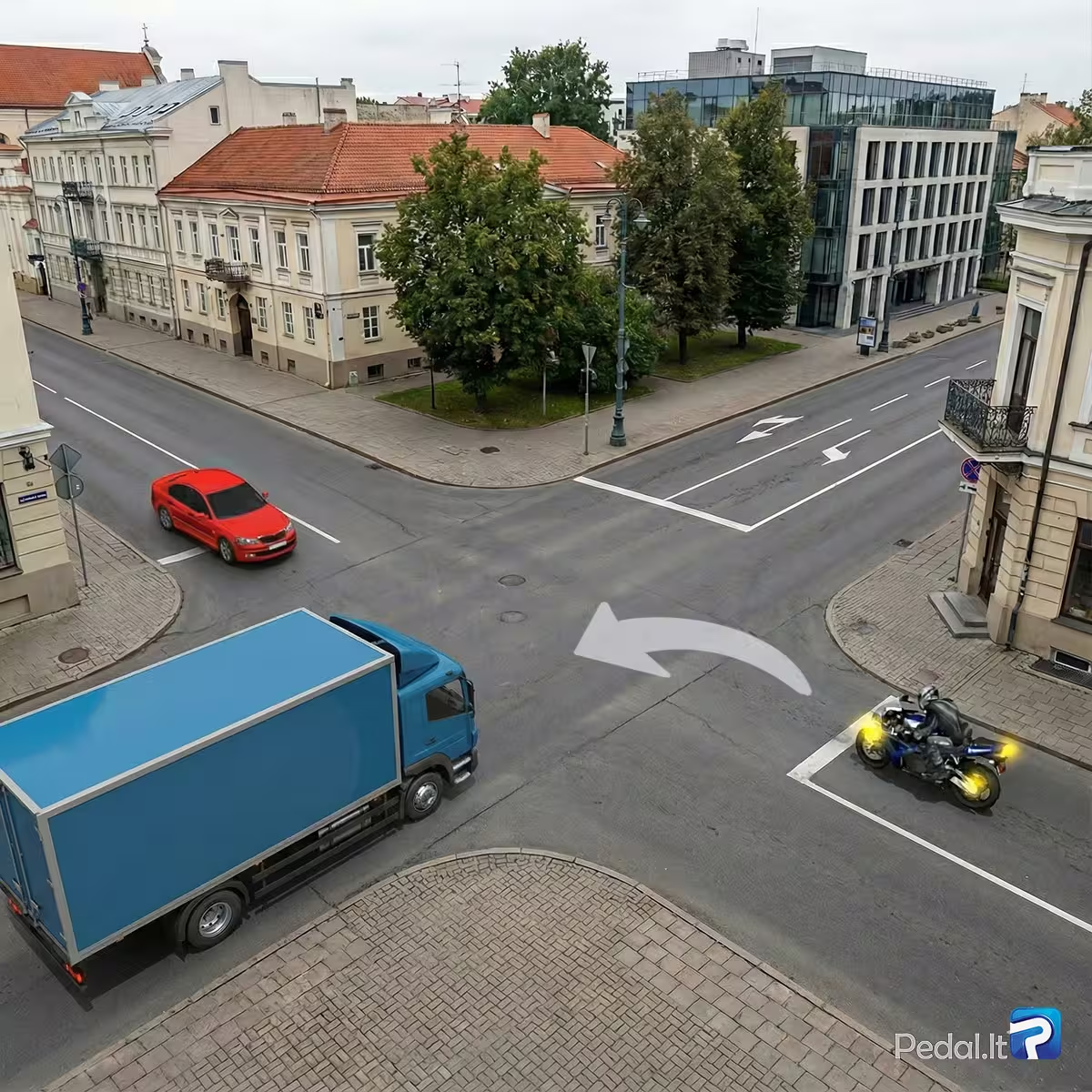
Which vehicle will be the last to pass through the intersection?
The motorcycle, being the only vehicle with no approaching traffic from the right, will enter the intersection first but will stop in the middle to give way to the passenger car (see Paragraph 157 of the Road Traffic Rules). After that, the goods vehicle will proceed through the intersection, as there will no longer be any vehicles approaching it from the right. The passenger car will go second, and the motorcycle will be last. A driver must comply with the requirement of Paragraph 155 of the Road Traffic Rules when driving straight ahead, turning left, or making a U-turn. RTR 155. At an uncontrolled intersection, drivers must give way to vehicles approaching from the right if the vehicle trajectories intersect. RTR 157. When turning left or making a U-turn, the driver shall give way to oncoming vehicles on a road of equal importance that are driving straight ahead or turning right, and—at an intersection where overtaking is allowed—to overtaking vehicles as well.
1. Passenger car.
2. Motorcycle.
3. Goods vehicle.
When should you release the throttle and rely on the vehicle's inertia to conserve fuel?
Note: Releasing the throttle is not the same as freewheeling. See 3.4 Control the throttle: 3.4.9 Release the throttle and use the vehicle's inertia before coming to a stop at a predetermined location (for example, at an intersection with a traffic light or at a stop sign) or in similar situations. JB
1. When approaching an intersection with a red traffic light.
2. When driving downhill on a steep slope.
3. When approaching a stop sign.
4. Before coming to a stop at a predetermined location.
Which vehicle(s) are classified as a public service vehicle?
A minibus is a vehicle with no more than eight passenger seats (excluding the driver’s seat) and a maximum permissible mass not exceeding 3.5 tonnes. It may be used for private or commercial purposes. A scheduled taxi (scheduled minibus) is a public transport vehicle that operates on a fixed route with designated stops and is marked with the sign "Regular transport." A public service vehicle is any public transport vehicle — for example a bus, trolleybus, or shuttle bus — that regularly carries passengers along a specified route with defined stops; the term also includes school buses.
1. Taxi.
2. Minibuses.
3. Public transport vehicles — for example buses, trolleybuses, and shuttle buses — that regularly carry passengers along a specified route with designated stops.
What is the lowest speed at which a collision can be fatal?
Even at 30 km/h, a collision can seriously endanger the health or life of drivers and passengers. For example, in a head-on collision between two vehicles travelling in opposite directions.
1. 50 km/h.
2. 30 km/h.
3. 80 km/h.
When cycling on the road, must the bicycle have a red rear reflector and orange reflectors attached to the wheel spokes on both sides?
RTR 56. Only bicycles equipped with functioning brakes and a working audible warning device may be ridden on the road. A bicycle must have a red rear reflector and orange reflectors or other reflective elements fixed to the spokes on both sides of each wheel. During hours of darkness or when visibility is poor, a bicycle ridden on the road must have white front and red rear lights switched on. The cyclist must wear a reflective vest or have other reflective accessories attached to clothing in a location clearly visible to other road users. JB
1. Yes — at all times.
2. Only during hours of darkness.
3. Not required if the cyclist wears a high-visibility vest with reflective elements.
4. No, it does not.
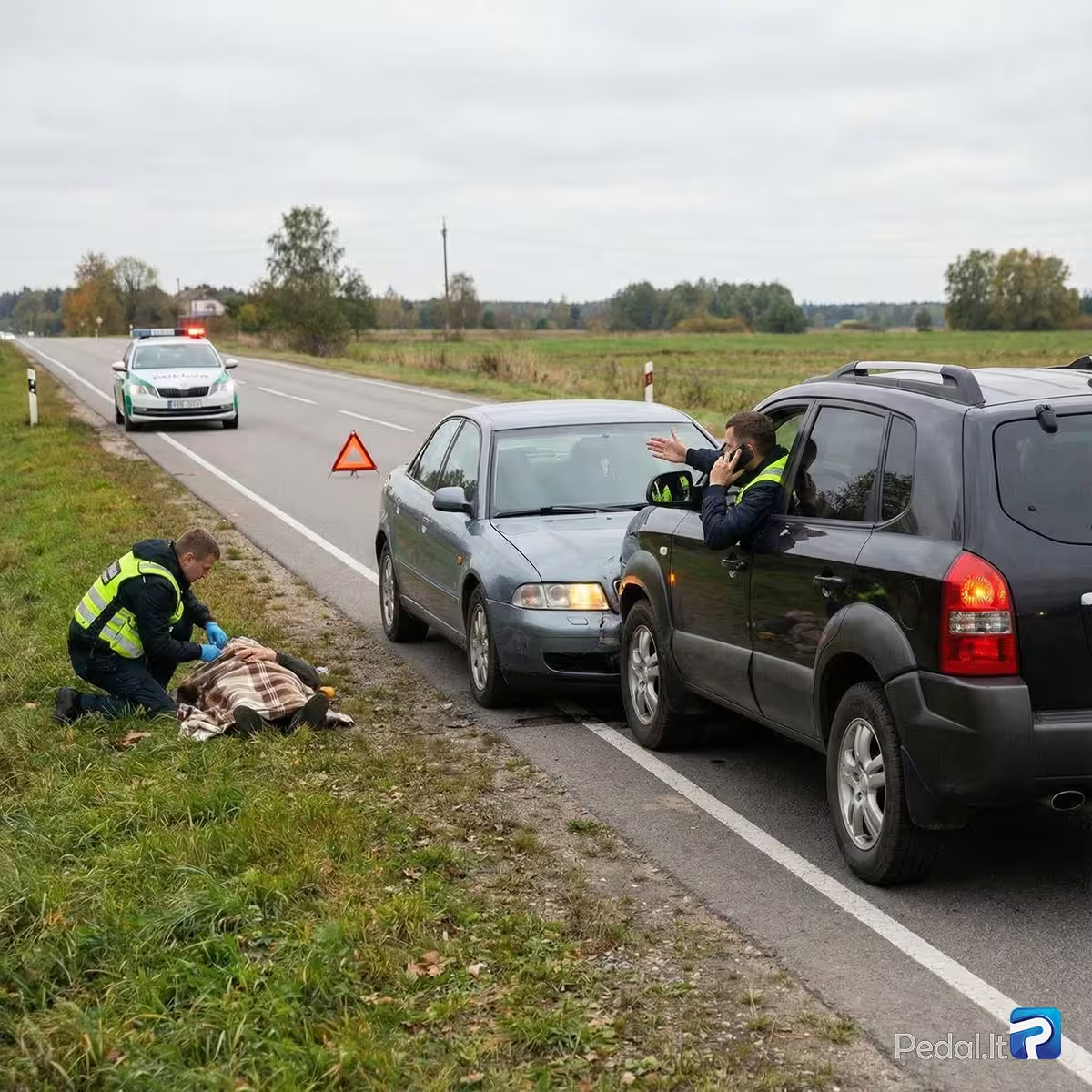
What must the drivers do if a person was injured in a road accident?
XXIX. Obligations of Road Users in the Event of a Road Accident (paras. 219–222)
219. In the event of a road accident, every driver involved or any other road user must:
219.4. if a person has died or been injured in the road accident, report the accident to the police and remain at the scene of the accident or, after notifying the police, return to the scene and wait for the police to arrive, except in cases where the police permit the road user to leave the scene, or where casualties or the person reporting the accident require urgent first aid;
220. If no deaths or injuries occurred in the road accident and the road users involved in the accident agree on the circumstances of the accident and do not call the police to the scene, the road users involved must draw the accident diagram on the Road Accident Report Form, describe the circumstances in writing, and have it signed by all involved road users. If none of the road users involved has the Road Accident Report Form, the circumstances may be described and the diagram drawn on a blank sheet of paper where all road users involved, their vehicles, and witnesses are listed, and all details and circumstances of the accident are confirmed by the signatures of the road users involved. Where the circumstances of the accident are disputed, the police must be called to the scene.
1. If all road users agree on the circumstances of the accident and there are no injuries, they do not need to complete any written report.
2. Drivers must describe the circumstances of the accident in writing, create a diagram of the scene, and list all involved road users, their vehicles, and any witnesses.
3. They must call the police.
Under what conditions is it prohibited to drive a vehicle?
It is prohibited to drive a vehicle if the main brake is inoperative, as this creates a danger to road safety. According to technical requirements, tyres mounted on the same axle must be of the same type and have identical tread patterns. Tyres with different tread patterns can cause instability under braking and reduce traction, creating a road safety risk; therefore driving such a vehicle is prohibited. RTR 234. A driver must not operate a motor vehicle, a tractor, or a self-propelled machine with: 234.1. a defective foot brake (the driver cannot stop the vehicle); 234.2. a defective steering mechanism (the driver cannot control the vehicle); 234.3. a defective coupling device between the vehicle and a trailer; 234.4. a defective windscreen wiper on the driver's side in snow, rain, or fog; 234.5. faulty front left-side lamps (dipped-beam headlamp and fog lamp) during hours of darkness or when visibility is poor, or if at least one rear position lamp has failed, hazard warning lights are not functioning (or are switched off), or a warning triangle is not affixed to the rear of the vehicle.
1. When the wheels on the same axle are fitted with different tread patterns.
2. When the engine oil level is too low.
3. When there is low air pressure in the tyres.
4. When the vehicle's foot (service) brake is defective.
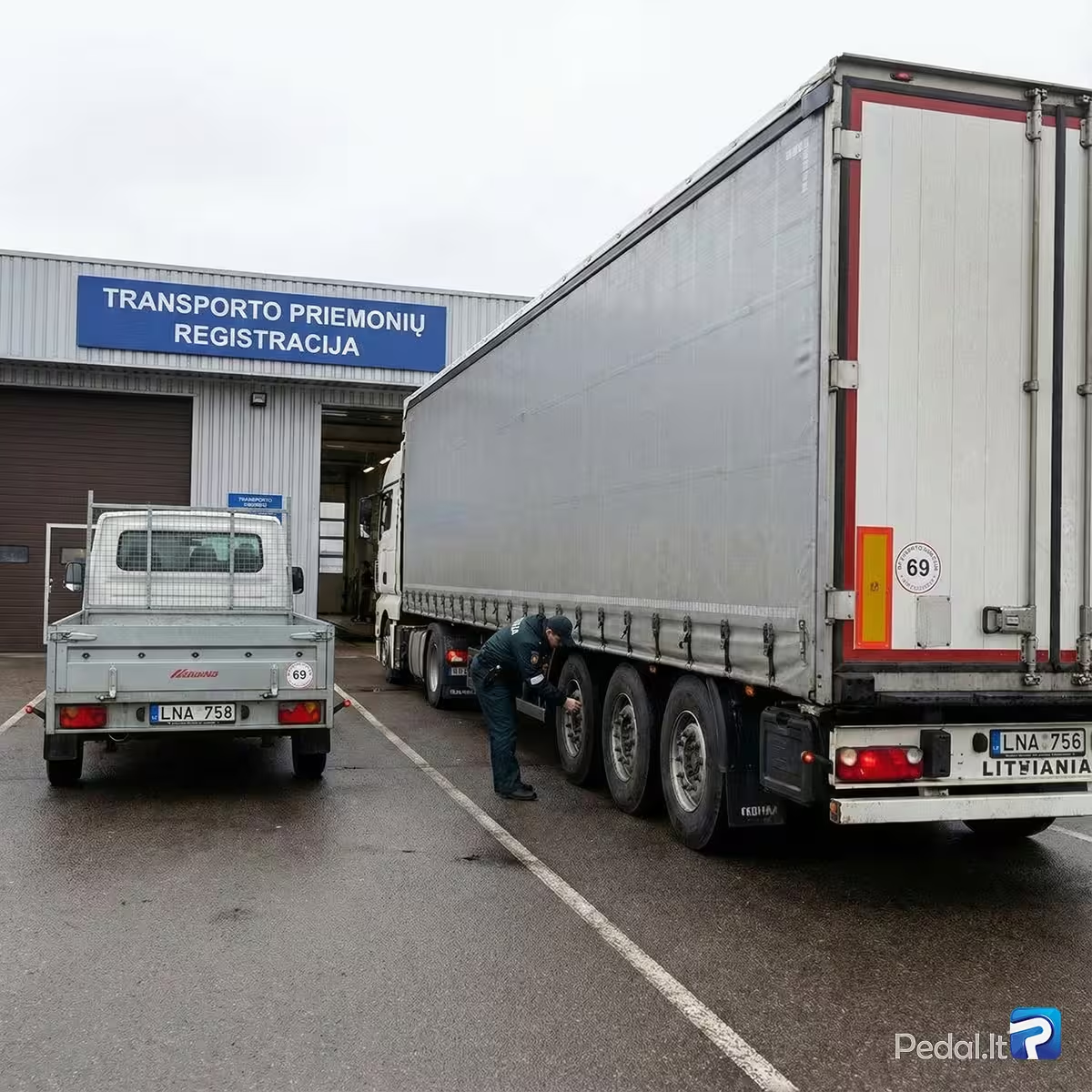
Are trailers and semi-trailers considered vehicles?
48. A trailer is a vehicle designed to be towed by a motor vehicle. Semi-trailers are also regarded as trailers. 52. A semi-trailer is a trailer coupled to a motor vehicle in such a way that part of its weight and the weight of its load are borne by the motor vehicle.
1. No.
2. Yes.
1 of 30 Task
Time left: 00:00:00
1
2
3
4
5
6
7
8
9
10
11
12
13
14
15
16
17
18
19
20
21
22
23
24
25
26
27
28
29
30