Which of the following can cause your vehicle to begin skidding while driving?
Worn tyres affect a vehicle's tendency to skid — even at low speeds they can cause the vehicle to skid. A faulty power steering can make the steering wheel harder to turn, but it does not directly cause skidding. Likewise, the parking brake only affects a parked vehicle and does not cause skidding while driving.
1. Faulty parking brake.
2. Faulty power steering.
3. Worn tyres.
When driving and you discover that a bend in the road is sharper than you anticipated, you should:
If a bend in the road is sharper than anticipated, you must reduce your speed.
1. You should reduce your speed.
2. You should attempt to decrease your turning radius.
3. You should accelerate.
4. You should maintain your current speed.
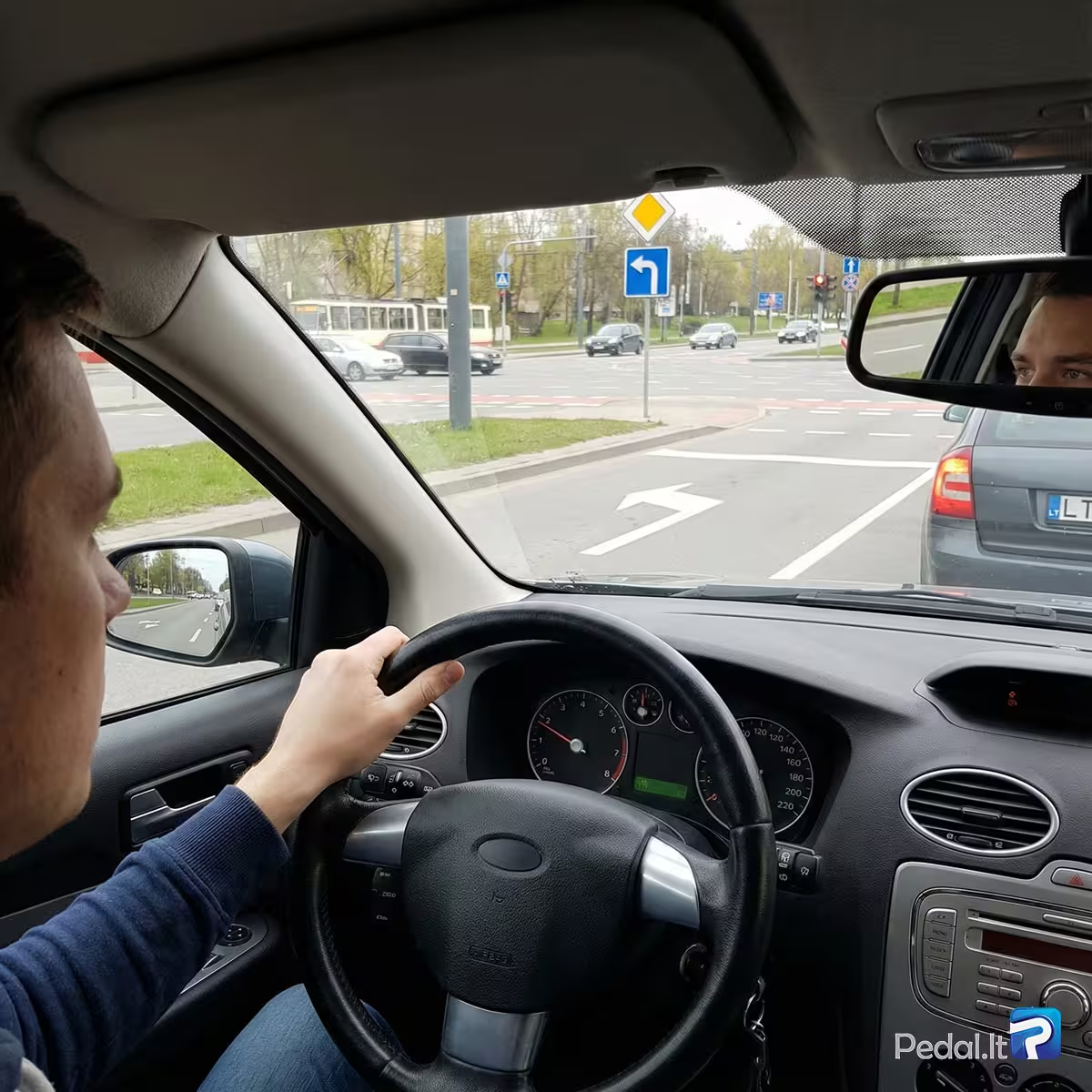
Where is it prohibited to make a U-turn?
RTR 116. U-turns are prohibited: 116.1 on pedestrian crossings; 116.2 on level crossings; 116.3 in tunnels; 116.4 on and beneath bridges, overpasses and viaducts; 116.5 where visibility in at least one direction is less than 100 metres; 116.6 on roads with a central reservation, except at locations designated and marked for U-turns by road signs and/or road markings. JB
1. On and beneath bridges, overpasses and viaducts.
2. In tunnels.
3. On level crossings (railway crossings).
4. On roads where the carriageway is less than 10 m wide.
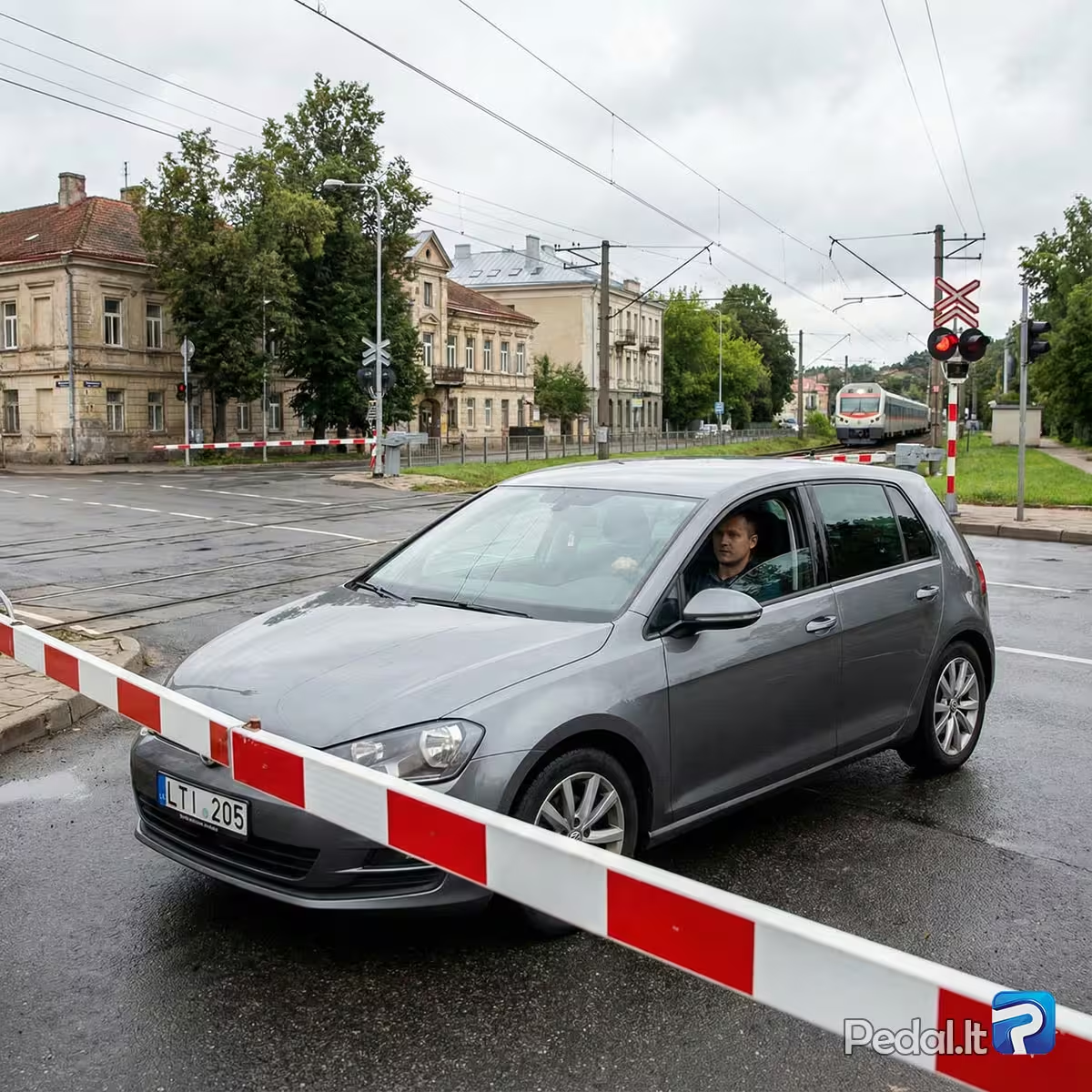
At a railway crossing, the vehicle driver must not:
Regulation RTR 173. Drivers must not: 173.3. enter a level crossing after the barrier has been lowered or is in the process of being lowered; deliberately lift the barrier; or drive around the barriers.
1. Deliberately lifting the barrier.
2. Entering the crossing after the barrier has been lowered or is in the process of being lowered.
3. Driving around the barrier.
Which vehicles may a driver with a category B driving licence operate?
LAW ON ROAD TRAFFIC SAFETY Article 23. Categories of motor vehicles and the minimum driving age: 1. Categories of motor vehicles and their combinations with trailers are as follows: 6) Category B: vehicles with a maximum permissible mass not exceeding 3,500 kg designed and constructed to carry no more than eight passengers, excluding the driver; these vehicles may be coupled with a trailer whose maximum permissible mass does not exceed 750 kg; they may also be coupled with a trailer whose maximum permissible mass exceeds 750 kg, provided that the maximum permissible mass of the combined vehicle does not exceed 4,250 kg; a vehicle combination with a maximum permissible mass exceeding 3,500 kg (including a trailer with a maximum permissible mass exceeding 750 kg) may be driven only after passing a skills and behaviour test at the state enterprise "Regitra". LAW ON ROAD TRAFFIC SAFETY Article 22. Granting the right to drive motor vehicles, tractors, self-propelled machines: 12. Persons who are at least 24 years old, who have at least 2 years of driving experience in category B vehicles and who have completed practical driving training for category A1 vehicles in accordance with the procedure established by the Ministry of Transport or its authorised institution, are granted the right to drive category A1 vehicles in the territory of the Republic of Lithuania. As a result, the driver's licence does not explicitly state entitlement to drive category A1 vehicles; instead, the national code set by the Ministry of the Interior is shown next to the category B marking.
1. Passenger cars and motorcycles.
2. Passenger cars only.
3. Any vehicle with a maximum permissible weight up to 3,500 kg designed and built to carry no more than eight passengers (excluding the driver).
4. A category A1 motorcycle after completion of the required practical training.
.avif)
A child is saying goodbye to a friend. What should you anticipate in this situation?
Children close to the road can behave unpredictably. Exercise extreme caution when driving near them — they may run into the carriageway without looking and may not respond to a horn.
1. The child may step into the carriageway without looking.
2. The child may be looking toward the road but still step into the carriageway.
3. The child may step into the carriageway even if you sound the horn to warn them.
You are on the right side of the road and are about to start moving. A goods vehicle is behind you. What should you take into consideration?
101. Before starting to move, changing lanes, or otherwise altering course, drivers must ensure the manoeuvre is safe and give way to other road users (i.e., avoid creating obstructions).
1. You may not notice vehicles traveling in the same direction that are approaching or about to overtake you.
2. Other drivers may fail to see your left‑turn indicator.
.avif)
In this situation, is the driver of the green vehicle permitted to cross the indicated double horizontal line when completing the overtaking maneuver?
He is allowed because the driver of the green vehicle must complete the overtaking maneuver. RTR Annex 3.1.10: A double line composed of two narrow parallel lines — one solid and one broken — separates traffic moving in opposite directions or in the same direction on road sections where lane changing is permitted only from one lane. It also marks locations for U-turns and the entrances and exits of parking areas where travel is allowed in only one direction. Drivers may cross this line from the side of the broken line, and they may also cross it from the side of the solid line only when finishing an overtaking or passing maneuver.
1. No — he is not allowed.
2. Yes — he is allowed.
Actions to take when driving in fog with visibility under 300 metres:
Selecting an appropriate heating/ventilation setting will reduce condensation on the windows; using the windscreen wipers will clear fogged windows and maintain good visibility; switching on the fog lamps will make the road more visible and help other road users notice you. RTR 98. Fog lamps may be used only when visibility is seriously reduced, and the front fog lamps may be used in the event of failure of the front left dipped‑beam headlamp. Poor visibility means a situation caused by weather conditions or other phenomena when road visibility is less than 300 metres, regardless of road parameters.
1. Select the appropriate heating/ventilation mode.
2. Occasionally use the windscreen wipers to clear fogged-up windows.
3. Switch on the fog lamps.
Your car begins to skid sideways while braking. What should you do?
If the wheels lock and the car begins to skid while braking, you must release the brake pedal. For example, if you brake hard before a bend and lock the wheels, the vehicle will continue moving in its original direction (straight ahead) despite steering input. That can cause you to run off the road or collide with an obstacle. In that situation you must stop braking — which can be difficult, especially for inexperienced drivers.
1. Press the clutch pedal.
2. Release the brake pedal (stop applying the brakes).
3. Apply the brakes more firmly.
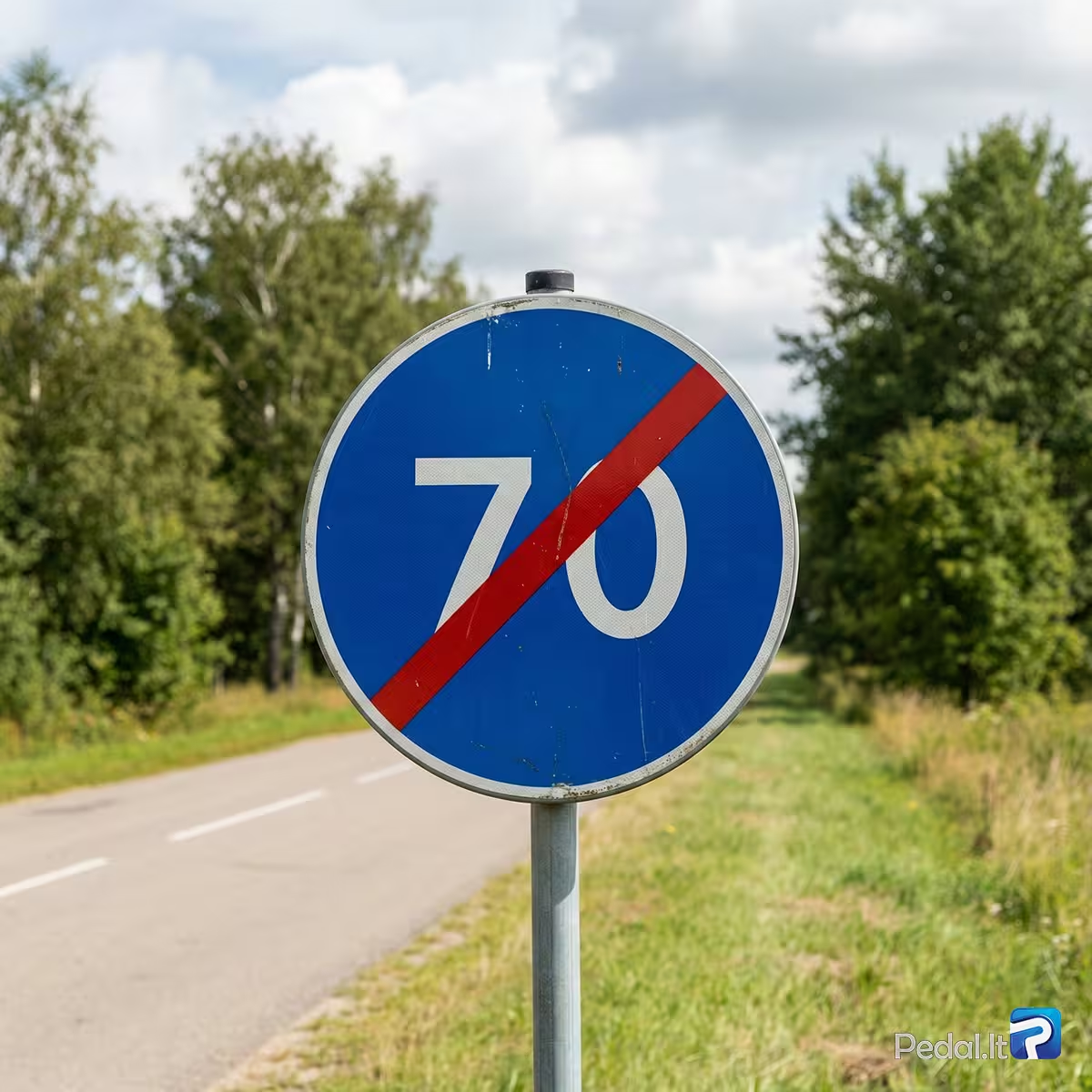
After this road sign:
This sign indicates the end of the minimum speed requirement; it does not specify a particular permitted speed. The applicable speed depends on other road signs, regulations and current driving conditions. Road sign 415 — End of minimum speed limit.
1. Driving at a maximum speed of 70 km/h is permitted.
2. Driving at a speed of at least 70 km/h is permitted.
3. The minimum speed limit has ended.
The service brake has failed while you are driving on a motorway. What should you do?
Maintain a speed that allows you to stop the vehicle with the parking brake if necessary. Switch on your hazard warning lights to warn other road users. Drive to the nearest safe place to stop and call roadside assistance.
1. Reduce your speed and switch on the hazard warning lights. If necessary, apply the parking brake gradually. Carefully drive to the nearest safe place to stop and call roadside assistance.
2. Reduce your speed and notify the road police. Continue driving cautiously to your destination. If possible, add brake fluid.
Must road users involved in a traffic accident refrain from consuming alcohol and other intoxicating substances?
RTR 221. Road users involved in a traffic accident must refrain from consuming alcoholic beverages, medications, narcotic drugs, or any other intoxicating substances immediately after the accident until they have either undergone, or formally refused, a test to determine drunkenness or impairment caused by a narcotic, psychotropic, or any other substance.
1. Yes — until the circumstances of the accident involving other road users have been clarified.
2. Yes — until the circumstances at the accident scene have been established and investigated.
3. No — they are not required to do so.
4. Yes — until the sobriety or intoxication of the road user involved in the accident has been determined by testing or they have formally refused the test.
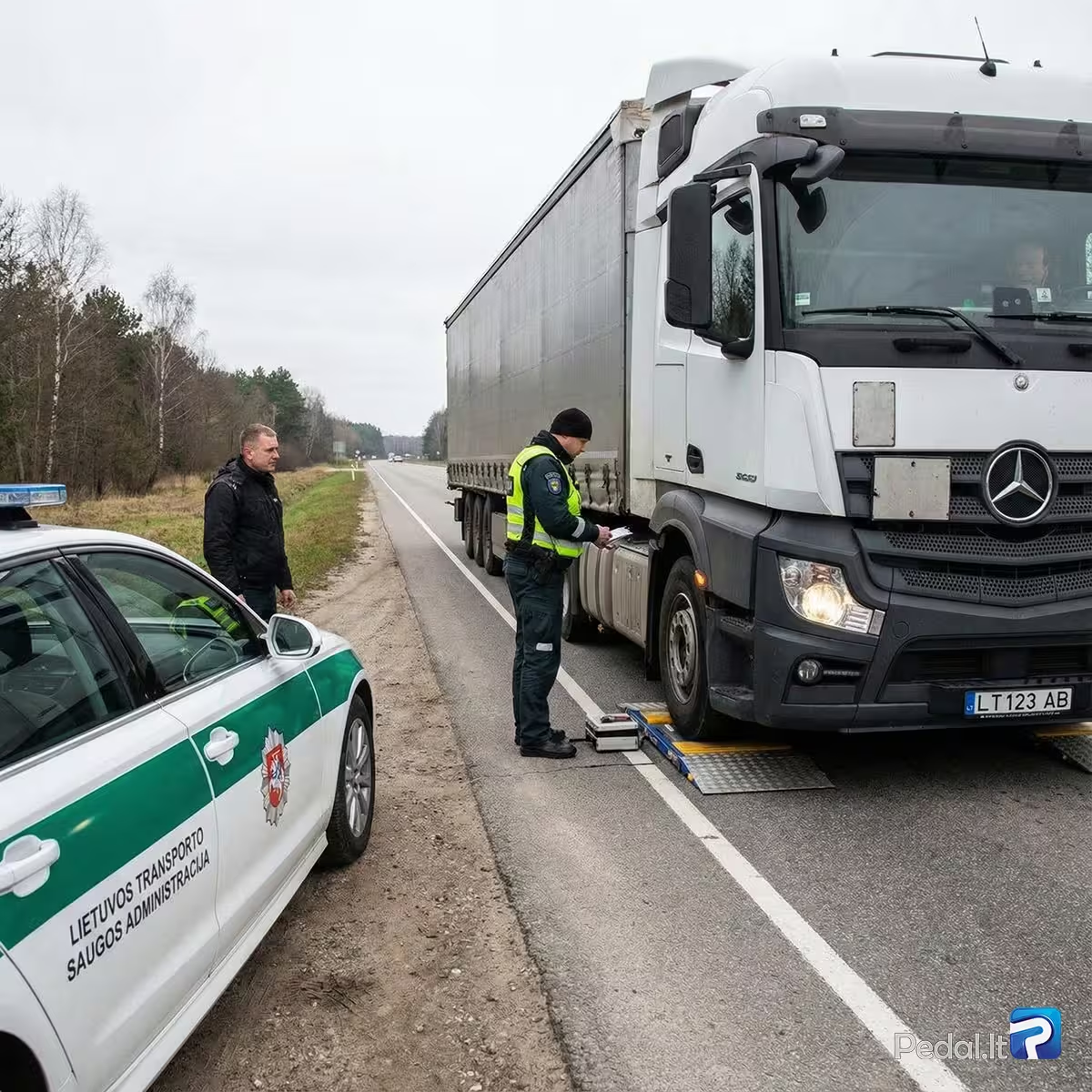
What is the permissible maximum weight for a combination of vehicles?
A vehicle's permissible maximum weight (hereinafter 'permissible maximum weight') means the maximum authorized operating weight of a fully laden vehicle or combination of vehicles, including the driver, passengers, and cargo, as specified by the vehicle manufacturer or the competent government authority.
1. The maximum authorized operating weight of a fully loaded vehicle or combination of vehicles.
2. The total payload of a vehicle and its trailer.
You are driving at the maximum permitted speed. A vehicle is approaching rapidly from behind and its driver is flashing their headlights. What should you do?
Even if the overtaking vehicle will exceed the speed limit while overtaking and thus violate the rules, you must not endanger yourself or others; you should allow the overtaking to take place. Road users must follow the principle of mutual respect and safety. 138. The driver of the vehicle being overtaken must not obstruct drivers who wish to overtake that vehicle by accelerating or by any other actions.
1. You will maintain your current speed and prevent the other driver from overtaking you.
2. You will apply the brake so that your brake lights illuminate.
3. You will accelerate to increase the gap to the vehicle behind you.
4. You will not obstruct a driver attempting to overtake you.
If your vehicle gets a flat tyre while crossing an intersection and vehicles are approaching from both directions, what should you do?
128. If there is an obstruction or traffic safety is endangered, the driver must reduce speed, stop if necessary, or avoid the obstruction (if it can be detected) without creating danger for other road users. 135. Drivers must not: 135.4. decelerate abruptly except for safety reasons.
1. You will stop in the middle of the intersection.
2. You will accelerate to clear the intersection quickly and then stop beyond it.
3. You will reduce your speed and stop beyond the intersection at a safe location.
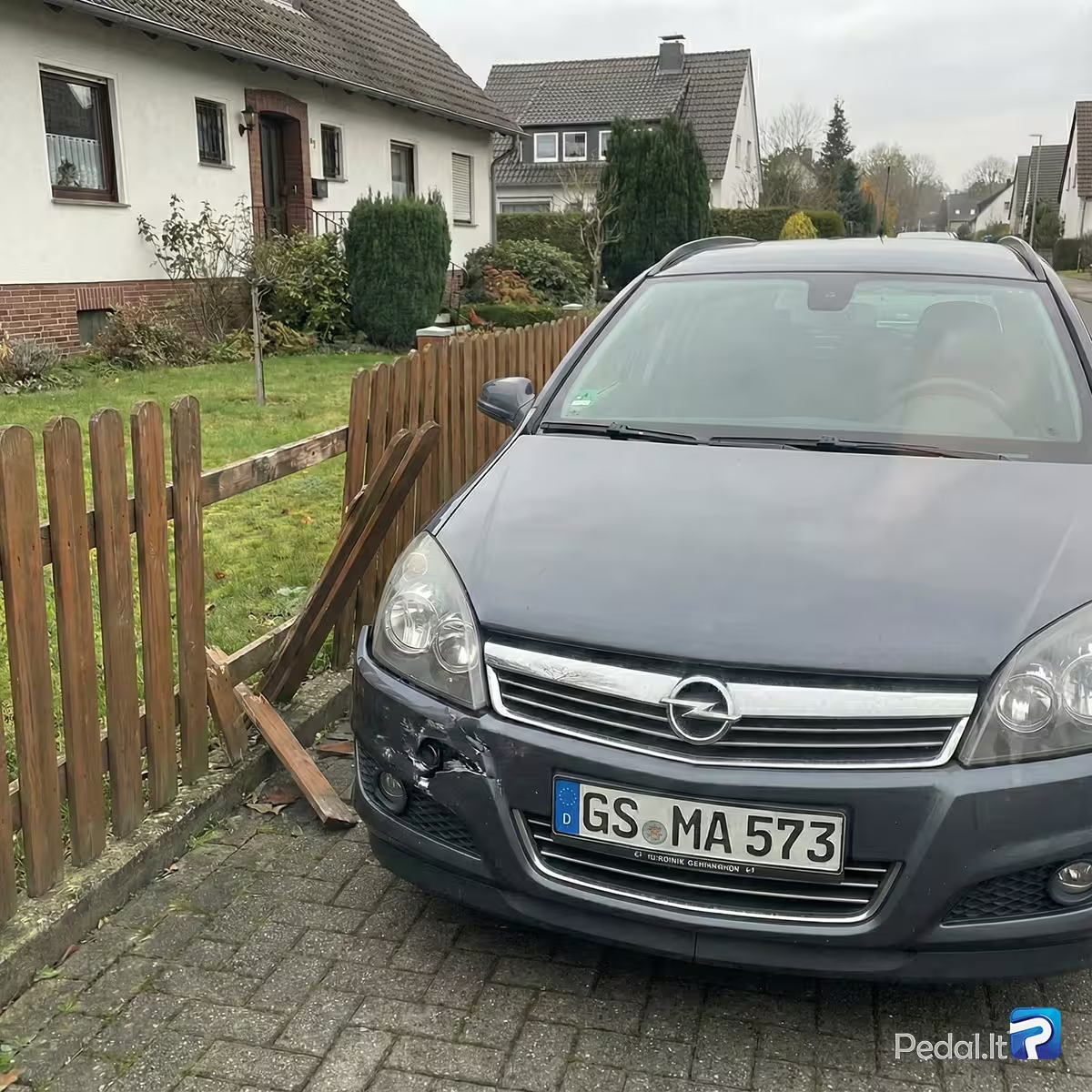
You have damaged the fence of a private property with your vehicle while the owner is absent. What must you do?
1. Leave a note with your contact information and then leave the scene.
2. Attempt to repair the damage yourself if it is safe and feasible.
3. Notify the police and remain at the scene until instructed otherwise.
4. Drive away from the scene because the property owner is absent.
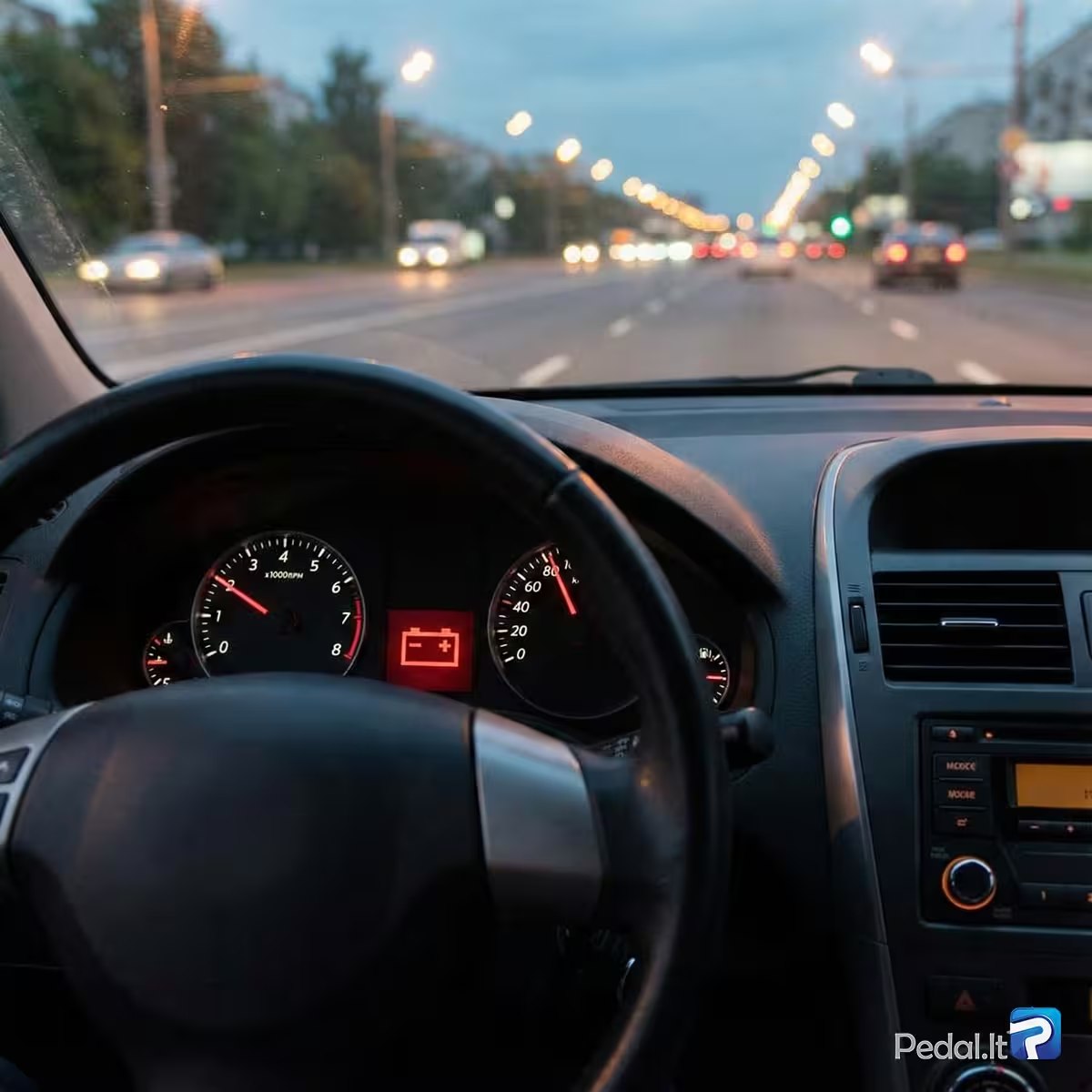
When the engine is running, a red battery warning light on the dashboard indicates:
If the red battery warning light illuminates while the engine is running, it indicates the alternator (generator) has failed and the battery is not being charged.
1. The battery is being overcharged.
2. The battery is completely discharged.
3. The battery is not being charged.
4. The battery's electrolyte level is too low.
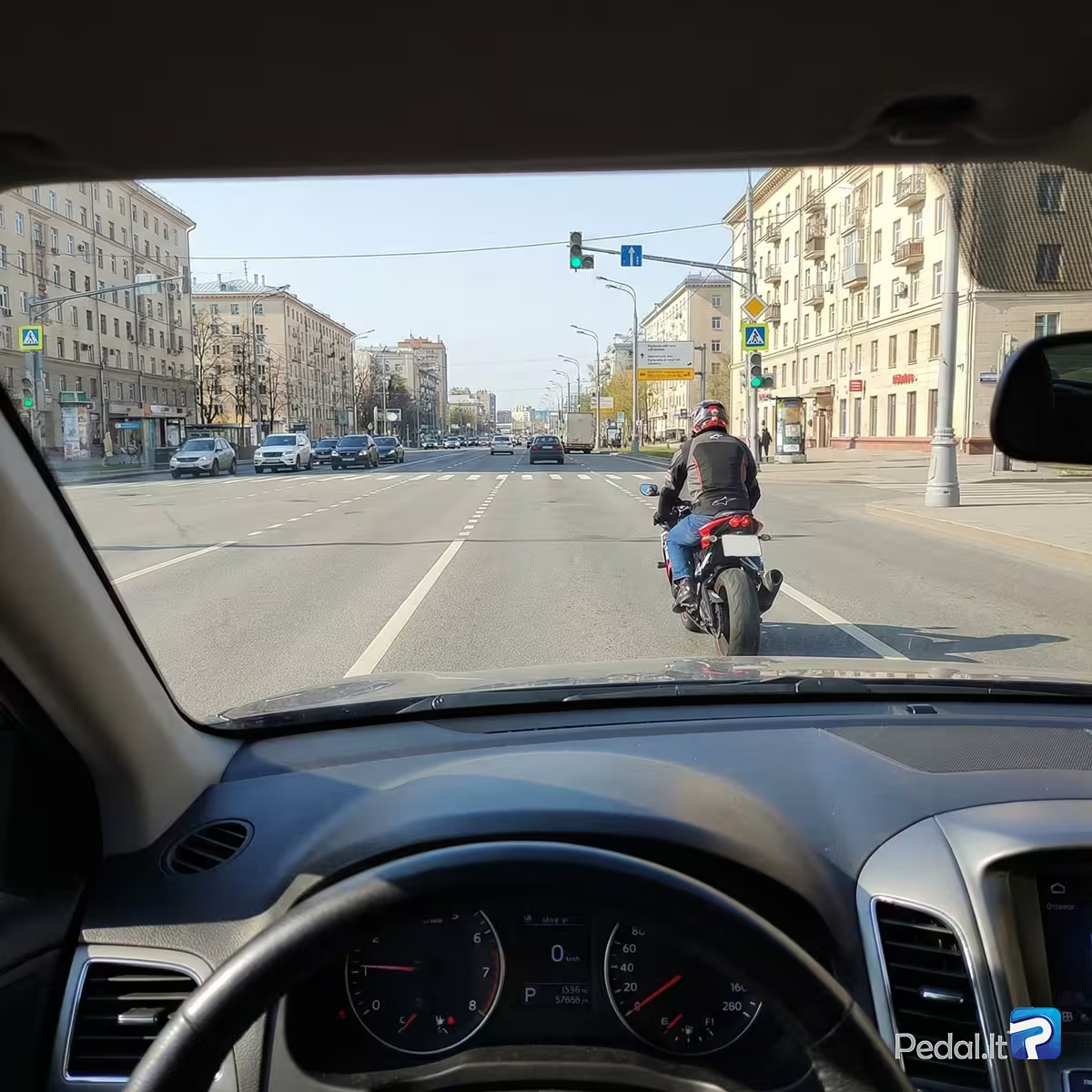
Are you allowed to ride a motorcycle with only a category B driving licence?
LAW ON ROAD TRAFFIC SAFETY — Article 22(12). Persons aged 24 or older who have at least two years' driving experience with a category B licence and who have completed practical training for category A1 vehicles in accordance with the procedure established by the Ministry of Transport and Communications or its authorised institution are granted the right to drive category A1 vehicles within the territory of the Republic of Lithuania.
1. Driving category A1 motorcycles is permitted for persons aged at least 24 who have held a category B licence for at least two years and have completed special practical motorcycle training at a driving school.
2. It is permitted to drive all motorcycles.
What or who provides a driver with useful information while driving on the road?
A driver obtains information from: - the road itself; - the surrounding environment; - moving road users (vehicles, pedestrians, road workers, etc.); - stationary objects on the road (central islands, speed bumps, road markings, etc.); - road signs; - traffic lights; - the condition of the road surface; - environmental and weather conditions. RTR 53: Passengers must not distract the driver or interfere with their driving.
1. From the road and the surrounding environment.
2. From moving and stationary objects on the road.
3. From road signs and traffic lights.
4. From passengers.
What is the minimum number of accompanying persons required to escort an organised group of children under the age of 16 walking along a hard shoulder?
RTR 40. An organised group of children consisting of persons under the age of 16 must be accompanied by at least two accompanying persons. Such a group should use pavements, footpaths or combined footpaths and cycle tracks (on the pedestrian side) if available; if these are not available, the group may use the hard shoulder but only in daylight, with good visibility, in no more than two abreast and against the flow of traffic when it is safe to do so. Accompanying persons must be positioned at the front and the rear of the column and wear high-visibility vests. It is recommended that all children in the organised group who walk along the hard shoulder also wear high-visibility vests.
1. One accompanying person.
2. Two accompanying persons.
3. Four accompanying persons.
4. Six accompanying persons.
Why is a slippery road surface hazardous?
A slippery road surface is hazardous because tyre grip on the pavement is greatly reduced. As a result, stopping distances increase and the vehicle may skid sideways when negotiating a bend.
1. Stopping distance increases.
2. Steering requires more effort.
3. Your vehicle is more likely to skid sideways when cornering.
Persons holding a school-issued certificate are permitted to ride bicycles on roads starting at what age?
Persons under 14 years of age are not permitted to ride bicycles on roads. However, those who complete an additional training course and obtain a school-issued certificate may ride on roads from age 12. Within residential areas, there is no minimum age restriction for cyclists.
1. 12 years of age.
2. 14 years of age.
3. 16 years of age.
Upon request by another road user involved in the accident:
RTR 219. In the event of a road accident, every driver involved or any other road user must: 219.3. upon the request of other road users involved in the accident, present a valid identity document or a valid driving licence, and a certificate (policy) of compulsory third‑party motor vehicle liability insurance in order to identify the insurer;
1. You must present a valid identity document and the certificate (policy) of compulsory motor third‑party liability insurance to identify the insurer.
2. You are required to present the documents only to the police.
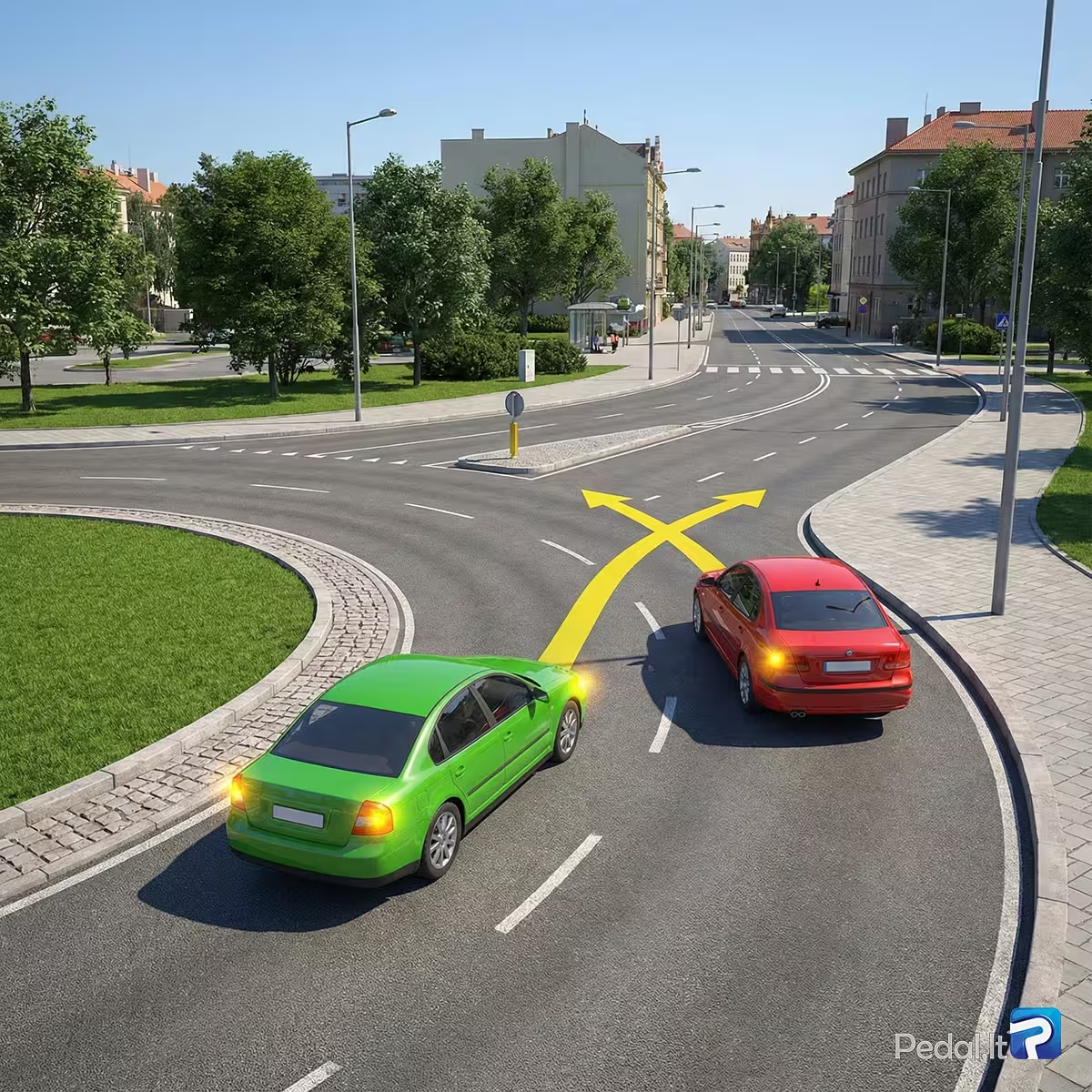
Which driver is violating the traffic rules?
There are no lane direction signs; therefore the driver of the red vehicle may go straight or turn right. When changing lanes, the driver of the green vehicle must yield. RTR 104. When changing lanes, a driver must yield to vehicles moving in the same direction in the adjacent lane. If vehicles moving in the same direction change lanes simultaneously, a driver must yield to the vehicle on the right, except in the cases specified in Paragraph 112 of the Rules. RTR 112. If an acceleration lane is provided for entering the road, the driver must use that lane and merge into the main traffic flow (change lanes and move into the adjacent lane), yielding to vehicles already in that flow or to vehicles changing lanes toward the deceleration lane. RTR 106. Before turning right, left, or making a U-turn (except when entering an intersection with circular traffic), a driver must move in advance to the edge of the carriageway designated for that direction. Road signs and/or road markings may indicate otherwise.
1. The driver of the red vehicle.
2. The driver of the green vehicle.
What is the colour of the road sign labelled 'Place of Interest'?
629. 'Place of Interest' sign. Indicates the name of a cultural or historical site of interest. The sign has a brown background.
1. Blue.
2. Green.
3. Yellow.
4. Brown.
What is the purpose of seat belts?
In a road accident, a seat belt keeps the driver and passengers restrained in their seats and prevents ejection from the vehicle, even during a rollover. Occupants who are not restrained are often ejected and may be crushed by an overturned vehicle, frequently suffering severe injuries or death. Seat belts also help reduce the severity of injuries by distributing crash forces across the body's stronger, less vulnerable areas.
1. Seat belts distribute the forces produced in a road crash across the body's less vulnerable areas.
2. In a road collision, seat belts keep the driver and passengers secured in their seats.
.avif)
Which driver will proceed through the intersection first?
RTR 154. At a controlled intersection, drivers on a side road must yield to vehicles on the priority road.
1. The driver of the blue car.
2. The driver of the red car.
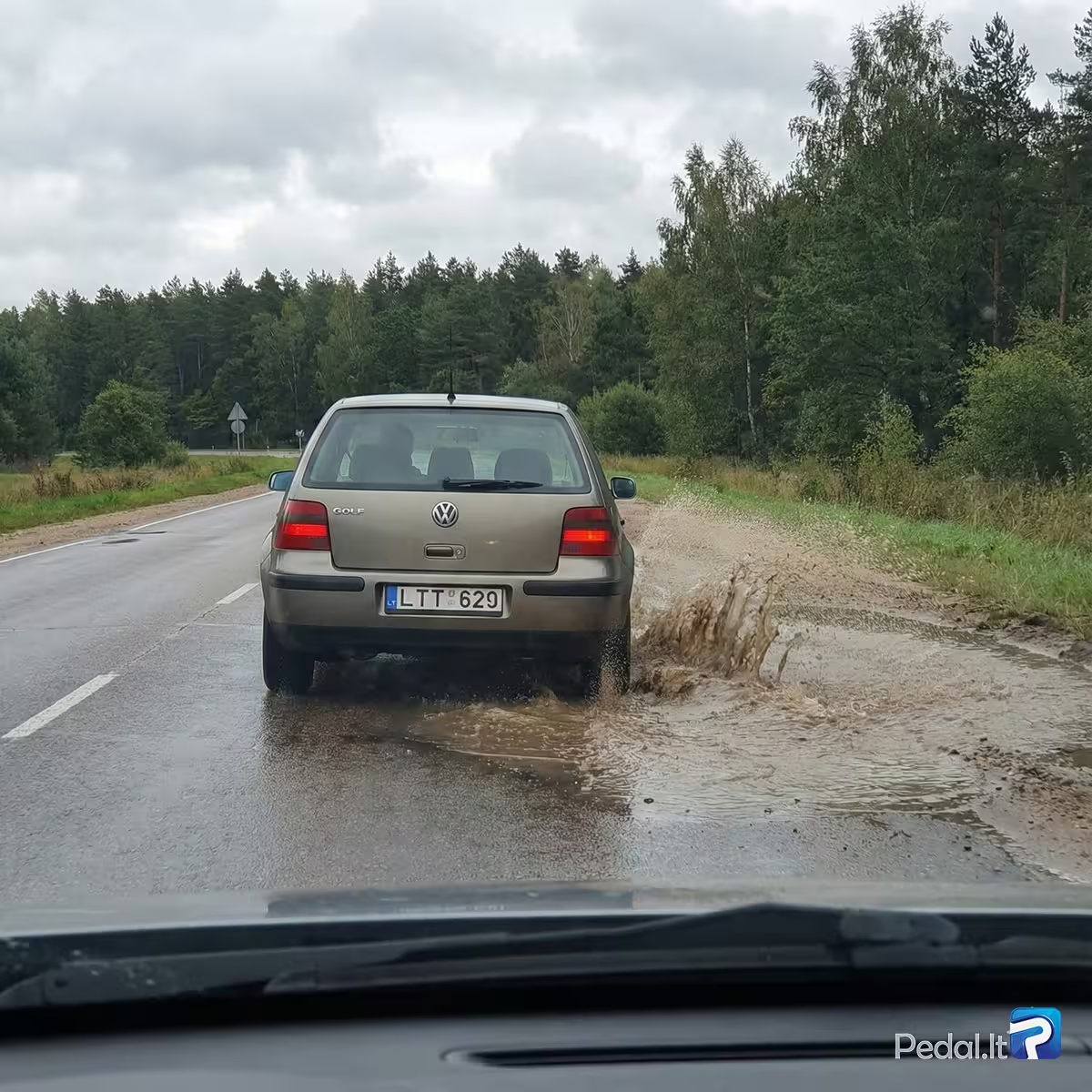
If either the left or right wheel of your vehicle has entered a body of water (for example, a puddle), you must:
When a wheel travels through standing water, the vehicle can aquaplane (ride on a layer of water), causing loss of traction and possible skidding. Hold the steering wheel firmly and gradually reduce speed to regain traction and maintain control.
1. Apply the brakes immediately.
2. Grip the steering wheel firmly.
3. Increase your speed.
Another person may drive your vehicle if:
A driving licence of categories B and BE entitles the holder to drive a passenger car (RTR 14). It is prohibited to operate a vehicle if you do not have the legal right to do so, or if you are under the influence of alcohol, narcotic drugs, psychotropic substances, or other psychoactive substances. A person who is fatigued or ill must not drive if driving could endanger road safety. A vehicle must not be entrusted to anyone who is under the influence of the aforementioned factors or who is not authorized to drive that type of vehicle. When operating a vehicle, the driver must comply with the restrictions and endorsements indicated on the driving licence.
1. The person is at least 18 years old but does not possess a driving licence.
2. The person holds a category BE driving licence.
3. The person holds a category B driving licence.
4. The person holds only a category A driving licence.
1 of 30 Task
Time left: 00:00:00
1
2
3
4
5
6
7
8
9
10
11
12
13
14
15
16
17
18
19
20
21
22
23
24
25
26
27
28
29
30