Are vehicles permitted to drive on the pavement (sidewalk)?
RTR 124. Drivers of motor vehicles, tractors, self‑propelled machines, and animal‑drawn vehicles must not drive or manoeuvre on lawns, pavements (sidewalks), footpaths, cycle tracks, or cycle lanes. An exception applies where road signs permit (partial) parking at the pavement edge and a cycle track or lane is delineated by the horizontal marking line 1.14. Driving on central reservations, embankment slopes, excavations, or in ditches is prohibited. Drivers must also not enter or leave the roadway except at locations designated for that purpose.
1. They may do so provided they do not obstruct pedestrians.
2. They are permitted only where road signs indicate that (partial) parking on the pavement edge is allowed.
3. Driving on pavements is prohibited.
Drivers may be arrested or imprisoned for up to one year if their blood alcohol concentration (BAC) is:
Criminal Code of the Republic of Lithuania, Article 281‑1: A person who, while operating a motor vehicle, tractor, or self-propelled machine, or instructing a learner driver, is under the influence of alcohol with a blood alcohol concentration of 1.51 per mille or higher; or who refused a sobriety test when showing signs of intoxication; or who consumed alcohol after a road accident before the circumstances were established and was found to have a blood alcohol concentration of 1.51 per mille or higher, shall be punished by a fine, arrest, or imprisonment for up to one year.
1. 0.41 per mille.
2. 2.51 per mille.
3. 1.51 per mille.
4. 0.2 per mille.
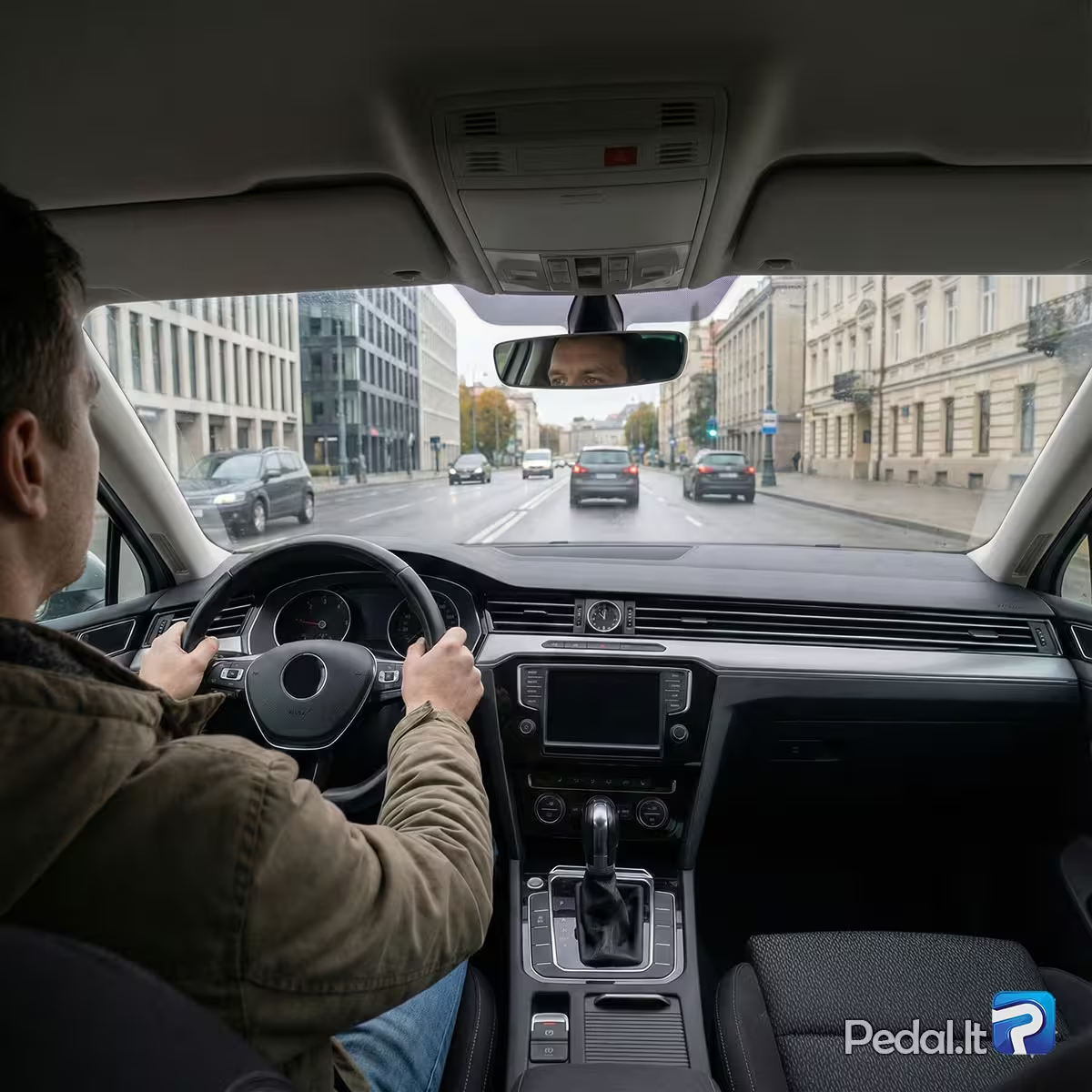
When should a driver move back into the right-hand lane after overtaking another vehicle?
RTR 136. Drivers should avoid unnecessary overtaking maneuvers. Before overtaking, drivers must take extra precautions and ensure that: 136.1. no driver behind them has already started to overtake; 136.2. the driver of the vehicle to be overtaken is not indicating a left turn; 136.3. the section of lane required for overtaking is clear, and the overtaking vehicle will not obstruct oncoming traffic or pedestrians on the roadway; 136.4. a safe distance from the vehicle being overtaken can be maintained during the maneuver; 136.5. after completing the overtaking maneuver, they will be able to return to the same lane safely without obstructing the overtaken vehicle.
1. Immediately after overtaking.
2. When the driver is more than 100 metres ahead of the overtaken vehicle.
3. When the overtaking driver can see the overtaken vehicle in the rear‑view mirror.
Who or what poses the greatest risk of causing road accidents?
According to the Lithuanian Road Administration, in 2017 drivers accounted for 68.83% of all traffic offenders. Although slippery roads are a traffic hazard, drivers can adapt to conditions, choose a safe speed, and thus reduce the risk of accidents.
1. Drivers.
2. Pedestrians.
3. Slippery road surfaces.
4. Road signs.
What is the minimum number of accompanying persons required to escort an organised group of children under the age of 16 walking along a hard shoulder?
RTR 40. An organised group of children consisting of persons under the age of 16 must be accompanied by at least two accompanying persons. Such a group should use pavements, footpaths or combined footpaths and cycle tracks (on the pedestrian side) if available; if these are not available, the group may use the hard shoulder but only in daylight, with good visibility, in no more than two abreast and against the flow of traffic when it is safe to do so. Accompanying persons must be positioned at the front and the rear of the column and wear high-visibility vests. It is recommended that all children in the organised group who walk along the hard shoulder also wear high-visibility vests.
1. One accompanying person.
2. Two accompanying persons.
3. Four accompanying persons.
4. Six accompanying persons.
How is a motorized bicycle defined?
Note that a motorized bicycle must have at least two wheels and an auxiliary internal combustion engine or an electric motor — it is not sufficient for it to have only an internal combustion engine. SEAK Art. 2.40. "Motorized bicycle" — a vehicle with at least two wheels that is powered by the rider’s muscular force using pedals or handlebars and is equipped with an auxiliary internal combustion engine or electric motor with a maximum net power of no more than 1 kW and a maximum design speed of no more than 25 km/h. The auxiliary engine stops providing power when the vehicle reaches 25 km/h. Wheelchairs for persons with disabilities are not classified as motorized bicycles.
1. A vehicle whose maximum net power does not exceed 1 kW and whose maximum design speed does not exceed 25 km/h.
2. A vehicle that is primarily propelled by the rider’s muscular power using pedals or handlebars and is equipped with an auxiliary internal combustion engine or an electric motor.
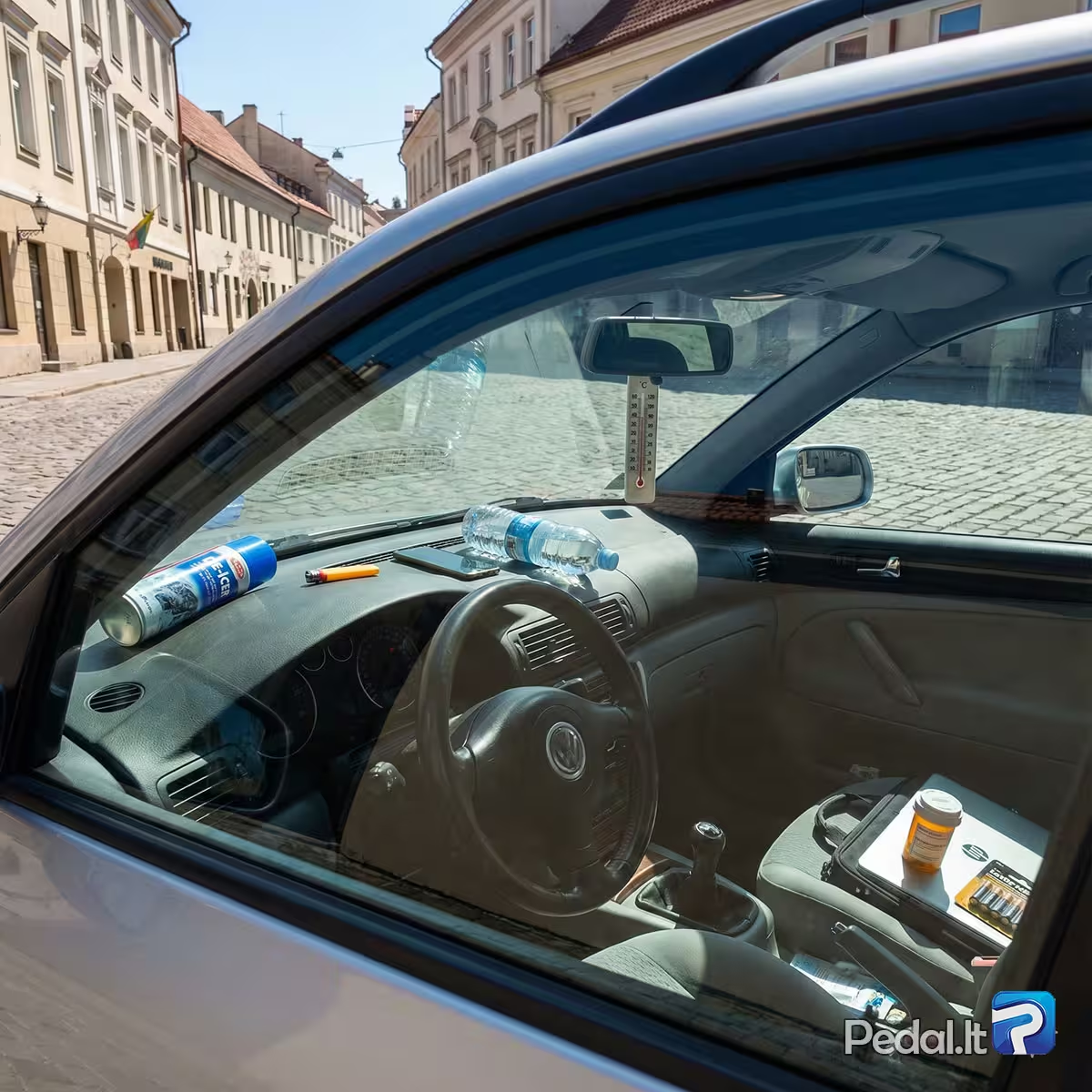
Which items must not be left in a vehicle?
Vehicle documents should not be left in the vehicle, as they can be readily used by thieves. Valuable items must not be left in plain view inside the vehicle because they may attract opportunistic burglaries. Leaving liquids, such as soft drinks, inside the vehicle does not compromise its safety. (RTR 147) A driver may leave the vehicle unattended only after ensuring it cannot move on its own and that unauthorised use is prevented.
1. Vehicle documents (registration and insurance papers).
2. Valuable items left in plain view inside the vehicle.
3. Liquids (e.g., soft drinks).
.avif)
What are the fundamental principles of driver conduct?
1. Responsibility and courtesy.
2. Aggressive behavior.
3. Anger.
4. Disrespect toward other road users.
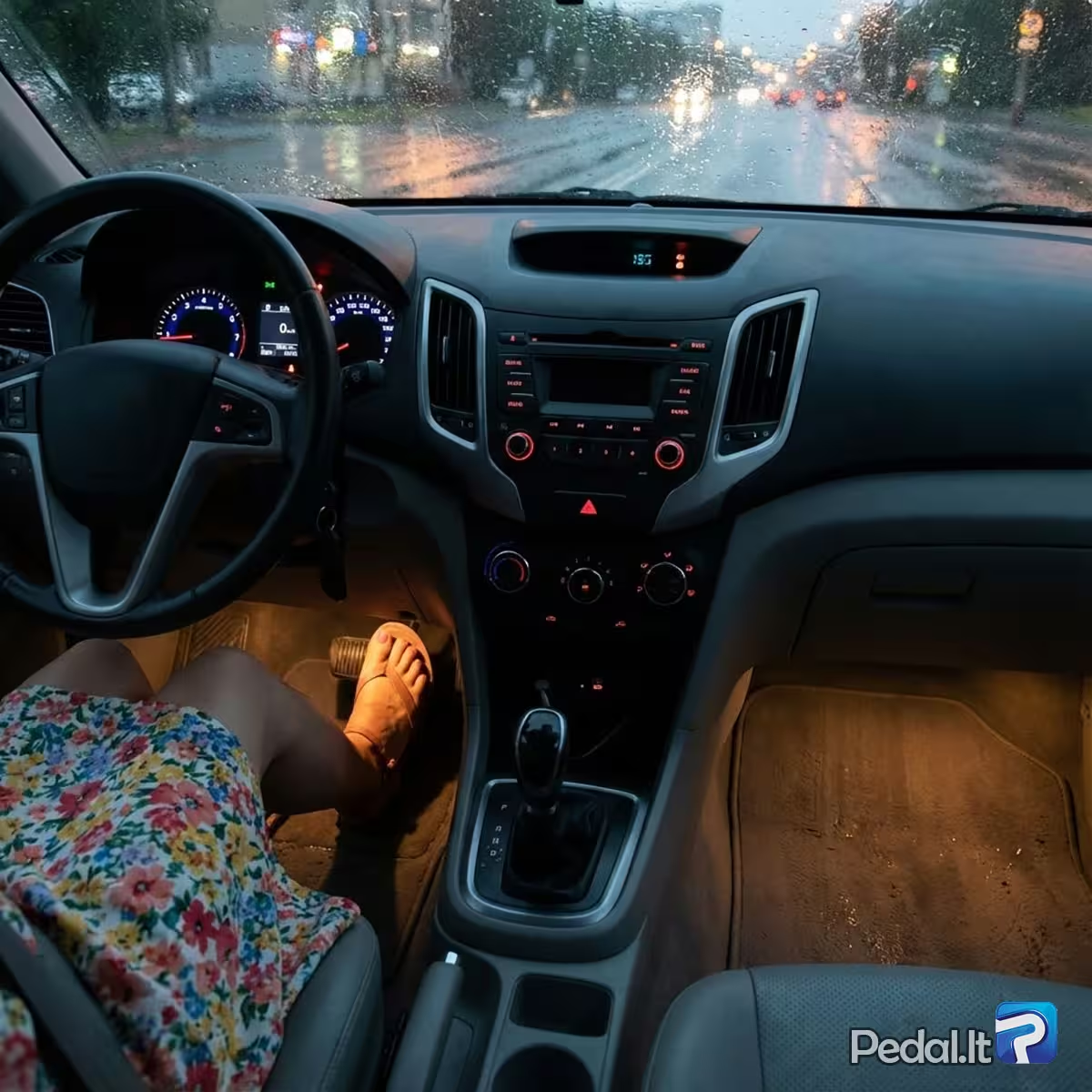
If water gets into the brake pads and reduces braking effectiveness, what will you do?
After driving through a deep puddle or a body of water, drive at low speed for a short while and gently apply the brakes several times to dry the brake discs or drums and the pads or shoes. Friction will heat the components, helping the water to evaporate and restoring braking performance.
1. You would repeatedly apply the brakes while the vehicle is stationary.
2. You would ignore it because they will dry on their own within a few minutes.
3. You would gently apply the brakes several times while driving slowly.
When cycling on the road, must the bicycle have a red rear reflector and orange reflectors attached to the wheel spokes on both sides?
RTR 56. Only bicycles equipped with functioning brakes and a working audible warning device may be ridden on the road. A bicycle must have a red rear reflector and orange reflectors or other reflective elements fixed to the spokes on both sides of each wheel. During hours of darkness or when visibility is poor, a bicycle ridden on the road must have white front and red rear lights switched on. The cyclist must wear a reflective vest or have other reflective accessories attached to clothing in a location clearly visible to other road users. JB
1. Yes — at all times.
2. Only during hours of darkness.
3. Not required if the cyclist wears a high-visibility vest with reflective elements.
4. No, it does not.
What should you do if you break another car's headlamp while manoeuvring in a car park?
This is considered a road traffic accident. First, try to locate the vehicle's owner and, together with them, complete the Road Accident Report Form. If you cannot find the owner, call the police — they can help locate the owner or come to the scene to record the accident. Also notify your insurance company of the accident as soon as possible. RTR 220. If there are no deaths or injuries and the involved road users agree on the circumstances and do not call the police to the scene, the parties must draw the accident sketch on the Road Accident Report Form, describe the circumstances in writing, and have the form signed by all involved. If none of the parties has the Road Accident Report Form, the circumstances and sketch may be recorded on a blank sheet of paper listing all involved road users, their vehicles and any witnesses, and confirmed by the signatures of all involved. If the circumstances are contested, the police must be called to the scene. RTR 221. Participants in a road accident must refrain from consuming alcoholic beverages, medicines, narcotic drugs or other intoxicating substances immediately after the accident until they have undergone, or have refused, testing for alcohol or impairment by narcotic, psychotropic or other substances. RTR 222. If the accident caused only property damage and the victim is not present at the scene, the person involved in the accident must immediately notify the victim, and if this is not possible — the police.
1. Locate the vehicle's owner; if you cannot find them, call the police.
2. If nobody notices, you may continue driving.
3. Fill in the Road Accident Report Form together with the car owner, if possible.
4. Notify your insurance company about the accident.
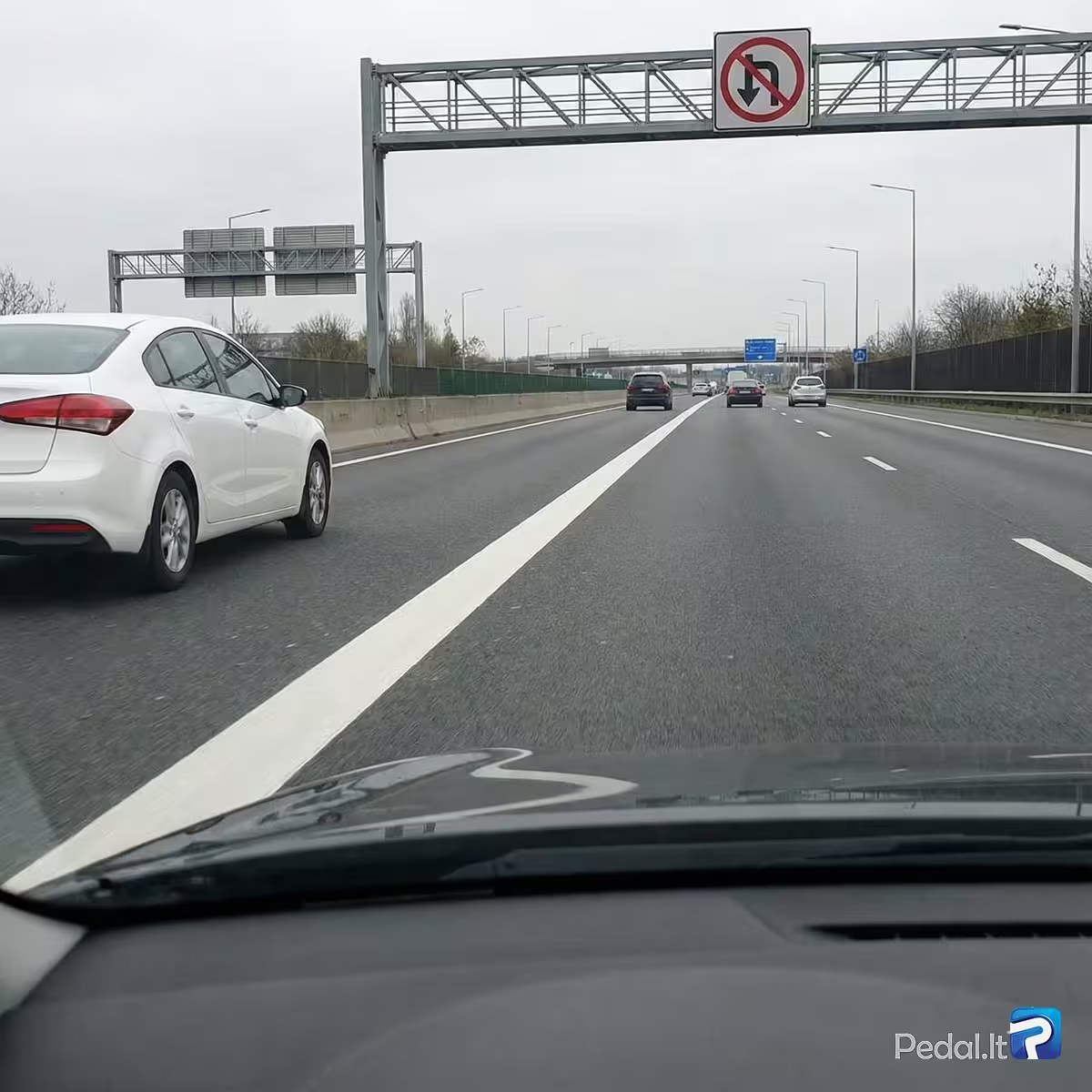
Is it permitted to cross a wide continuous road marking?
RTR 174. On roads designated as Motorway or Motor Vehicle Road the following are prohibited: 174.2 standing or parking except in designated parking areas; RTR Annex 3 1.2. A BROAD CONTINUOUS LINE marks the edge of the carriageway and the boundaries of sections where entry is prohibited on motorways and highways; it separates traffic lanes reserved for public-service vehicles and delineates lanes from bus stops. Vehicles must not cross this line unless it marks the edge of the carriageway. JB
1. Crossing is permitted.
2. Crossing is permitted only when the line denotes the edge of the carriageway.
3. Crossing is permitted to bypass an obstacle when the line separates a lane reserved for shuttle (route) transport.
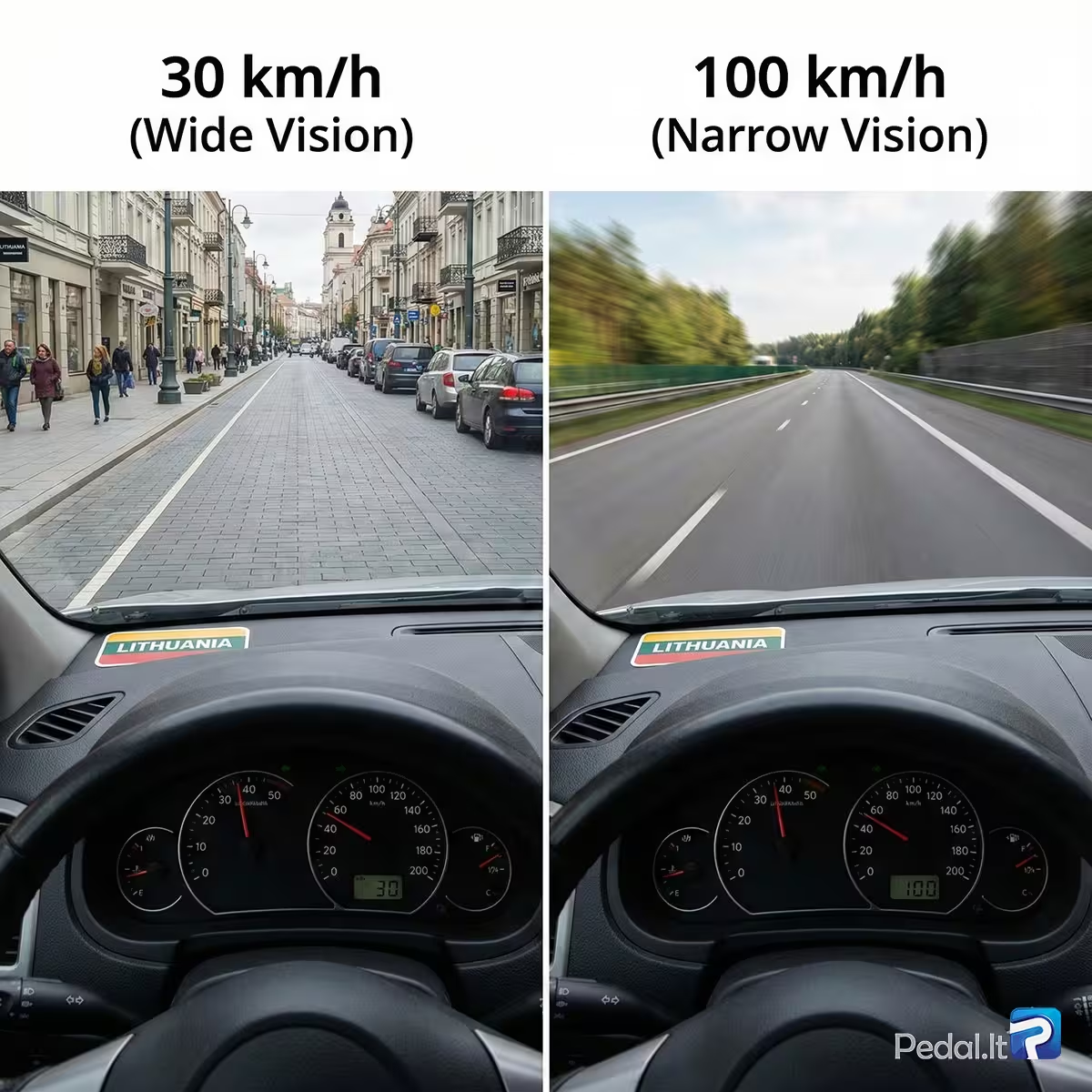
How does your field of vision change as your driving speed increases?
The field of vision is affected by driving speed, visual acuity (e.g., short-sightedness), fatigue, the color and brightness of objects, their contrast with the background, and other factors. As speed increases, a driver’s area of attention narrows and shifts forward: although drivers tend to look farther ahead, the effective dimensions of attention decrease inversely with speed. For example, at 50 km/h it is usually sufficient to focus about 150 m ahead to detect an obstacle; at 140 km/h an oncoming vehicle may not be noticed until it is only 15–20 m from the point of passing.
1. It becomes narrower.
2. It becomes wider.
3. It does not change.
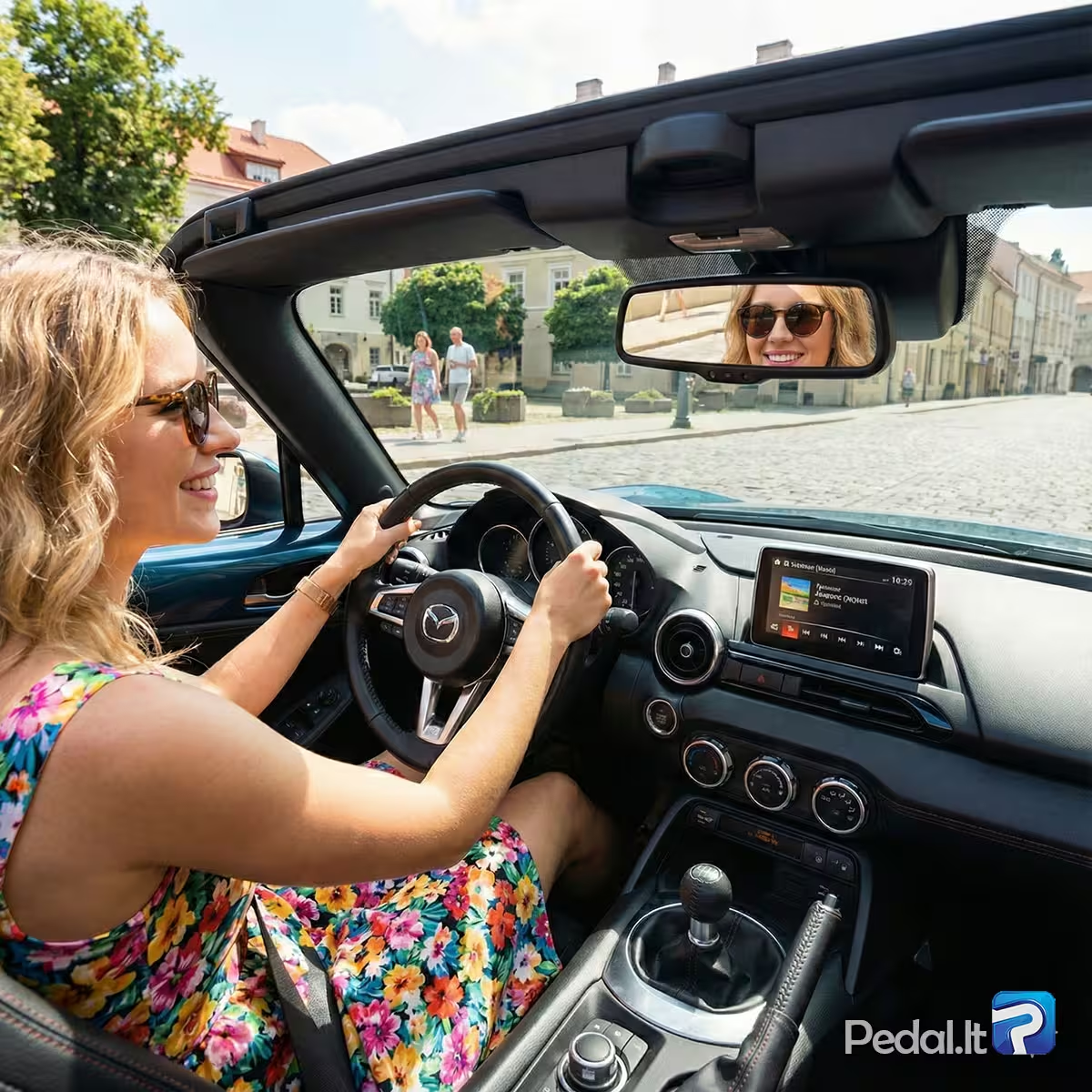
When driving safely, you must:
Always make safety your priority. That means thinking ahead, planning your actions, and anticipating the behavior of other road users.
1. Anticipate the actions of other road users.
2. Driving slightly above the speed limit.
3. Stay closer to the edge of the road.
4. Driving well below the maximum permitted speed.
What can cause the vehicle's cabin windows to fog up?
If the windows fog up (for example after washing the vehicle), the heating/ventilation setting may be incorrect.
1. Residual moisture remaining after washing the vehicle.
2. The engine coolant level is too high.
3. Incorrect heating/ventilation setting.
4. An excessive number of occupants in the cabin.
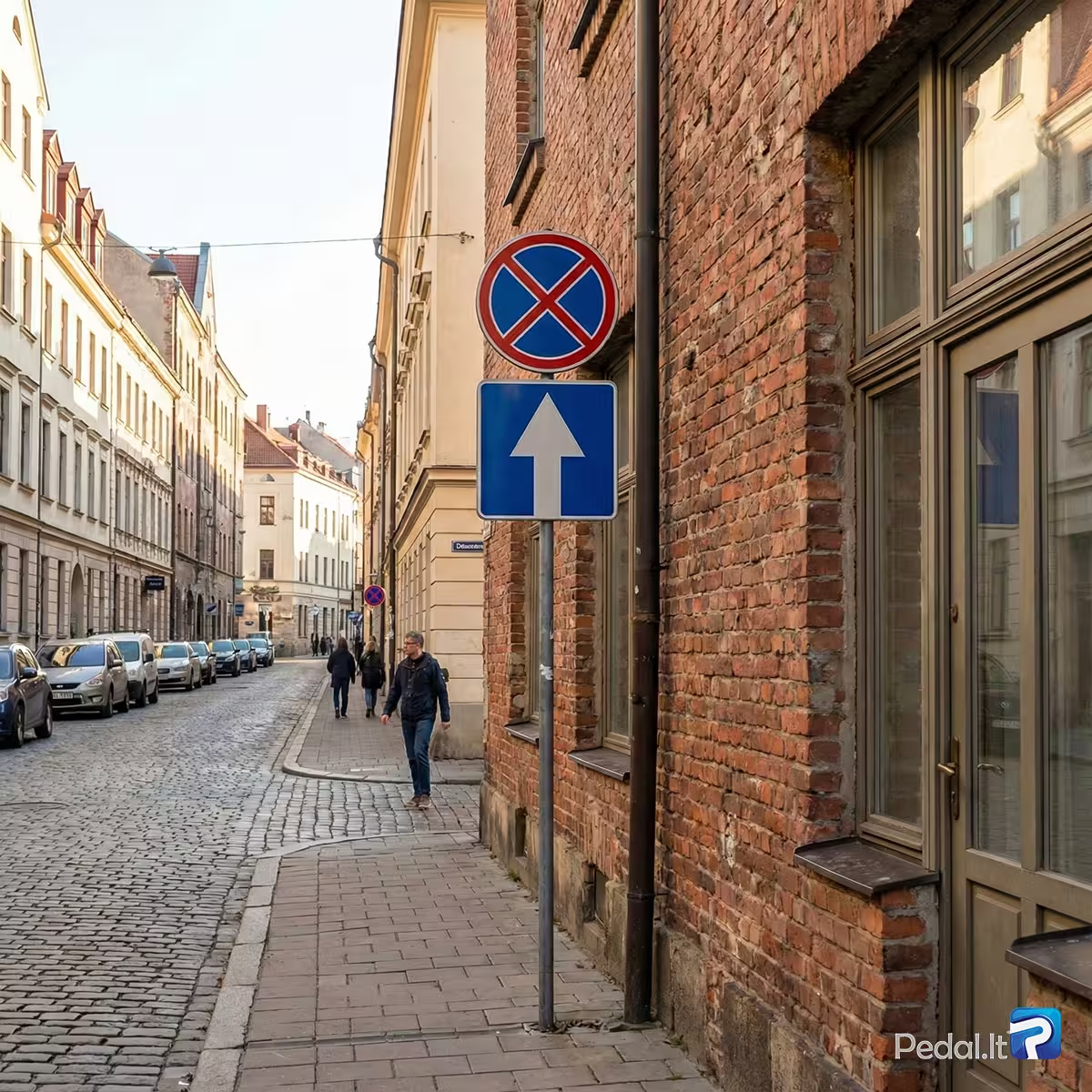
Which of the following actions are permitted on the road beyond these signs?
Traffic rules prohibit reversing only on motorways, expressways and in tunnels; otherwise reversing is allowed. U‑turns are prohibited here because they would require driving against the flow of traffic. RTR Annex 1, III — Restrictive signs: Road sign 332 'No stopping'. Vehicles must not stop or stand on the side of the road where this sign is placed, except for stopping at bus stops. The sign does not apply to vehicles displaying the distinguishing sign 'A person with a disability' or holding a parking card for people with disabilities. If the sign is used in combination with road marking 1.4, the prohibition applies until the end of that marking. RTR Annex 1, V — Special regulation signs: Road sign 503 'One-way traffic' — indicates a road or carriageway where vehicular traffic moves in one direction across the full width.
1. Proceed in one direction.
2. Park vehicles displaying the 'Person with a disability' badge.
3. Make a U‑turn.
4. Reverse (drive backward).
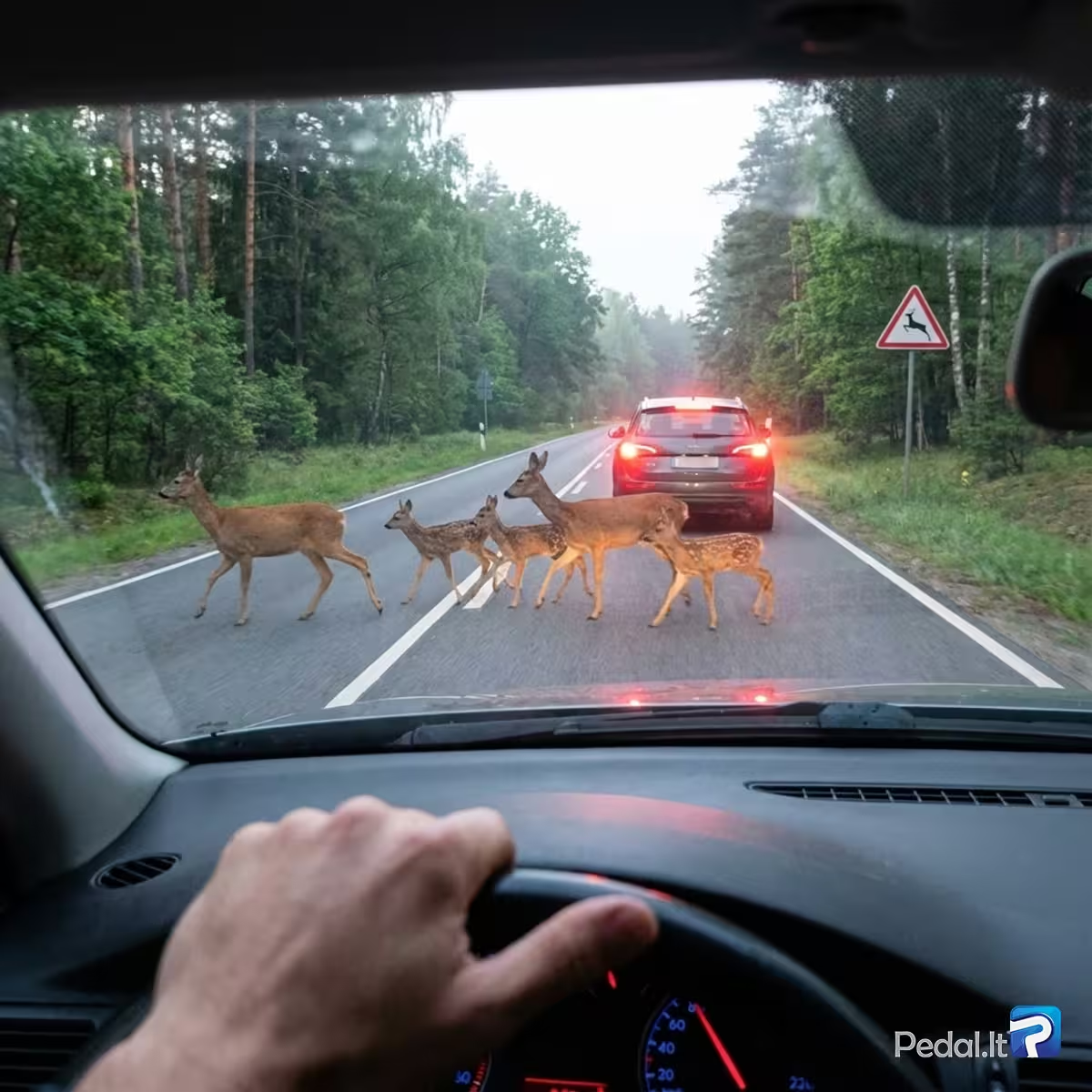
While driving, a group of roe deer crossed the road in front of your vehicle. What should you expect?
Wild animals typically travel in groups. If you see a lone roe deer, deer, or wild boar, others are likely nearby. Herding instincts lead animals to cross roads together rather than individually.
1. The animals may return to the road.
2. A solitary animal may follow the group.
3. It is unlikely that there will be any solitary animals.
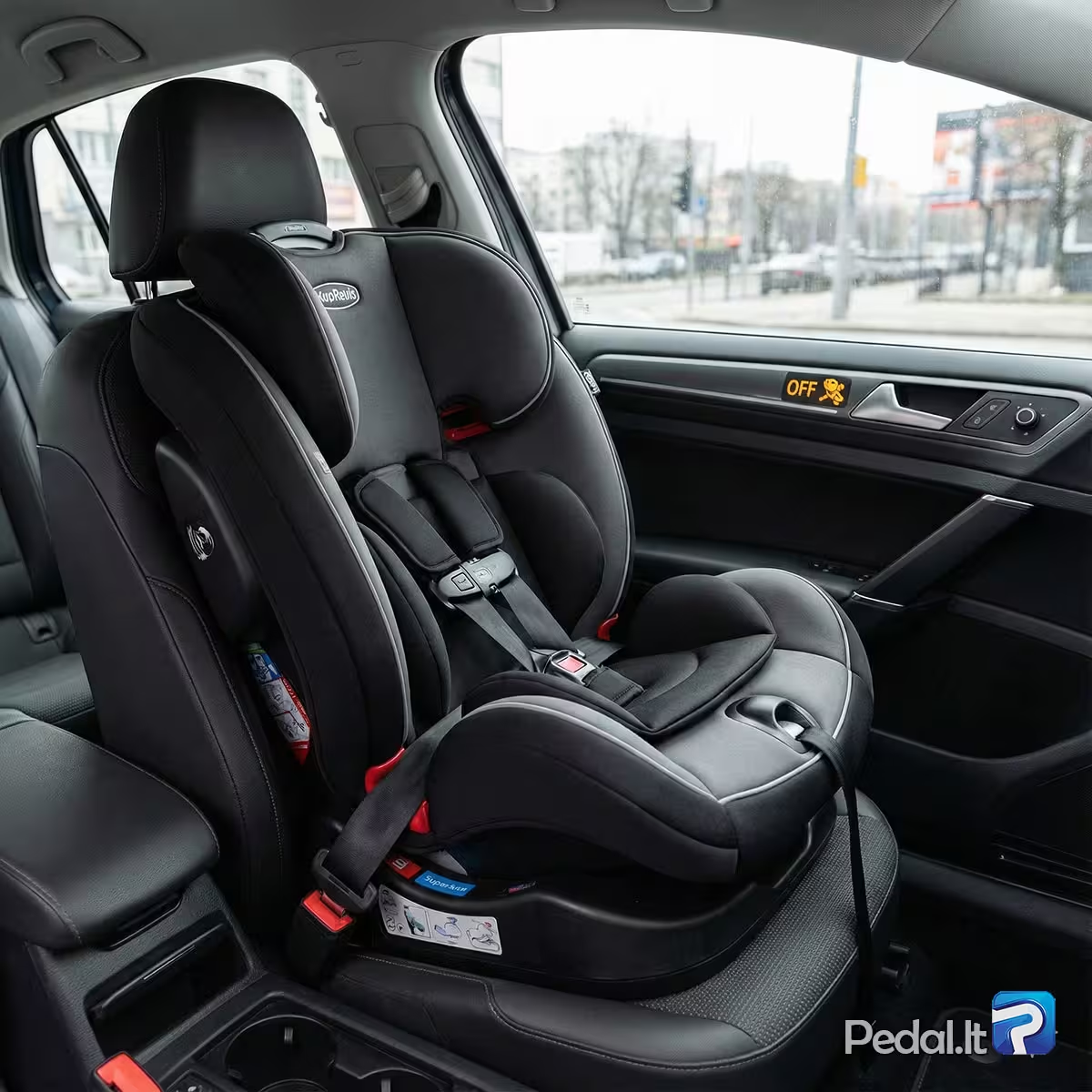
When is a child allowed to be transported in a child restraint (appropriate for their size and weight) on the front passenger seat of a motor vehicle?
RTR 201. Do not place a rear-facing child restraint suitable for the child's size on the front passenger seat if that seat is protected by an active airbag. This prohibition does not apply when the front passenger airbag is deactivated. It is recommended that children remain as long as possible in a rear-facing child restraint adapted to their height and weight, in accordance with the child seat manufacturer's instructions.
1. Only in a forward-facing child seat.
2. A child may be transported in a rear-facing child restraint on the front passenger seat if the vehicle has no front passenger airbag.
3. A child may be transported in a rear-facing child restraint on the front passenger seat if the front passenger airbag has been deactivated.
When may a driver leave the scene of a road accident?
XXIX. Obligations of Road Users in the Event of a Road Accident (paras. 219–222) 219. In the event of a road accident, every driver involved or any other road user must: 219.4. if a person has died or has been injured in the road accident, report the accident to the police and remain at the accident scene or, after notifying the police, return to the scene and wait for the police to arrive, except where the police permit the road user to leave the scene or when the casualties or the person who reported the accident require first aid; 220. If no deaths or injuries occurred in the road accident and the road users involved agree on the circumstances and do not call the police to the accident scene, the road users must draw the accident sketch on the Road Accident Report Form, describe the circumstances in writing, and have it signed by all road users involved. If none of the road users involved has the Road Accident Report Form, the circumstances may be described and the accident sketch drawn on a blank sheet of paper listing all road users involved, their vehicles, and witnesses, and all details and circumstances must be confirmed by the signatures of the road users involved. Where the circumstances of the accident are disputed, the police must be called to the scene.
1. If a person sustained only minor injuries.
2. If the driver requires first aid.
3. If an injured person requires first aid.
4. If the police have permitted the driver to leave the scene.
Upon request by another road user involved in the accident:
RTR 219. In the event of a road accident, every driver involved or any other road user must: 219.3. upon the request of other road users involved in the accident, present a valid identity document or a valid driving licence, and a certificate (policy) of compulsory third‑party motor vehicle liability insurance in order to identify the insurer;
1. You must present a valid identity document and the certificate (policy) of compulsory motor third‑party liability insurance to identify the insurer.
2. You are required to present the documents only to the police.
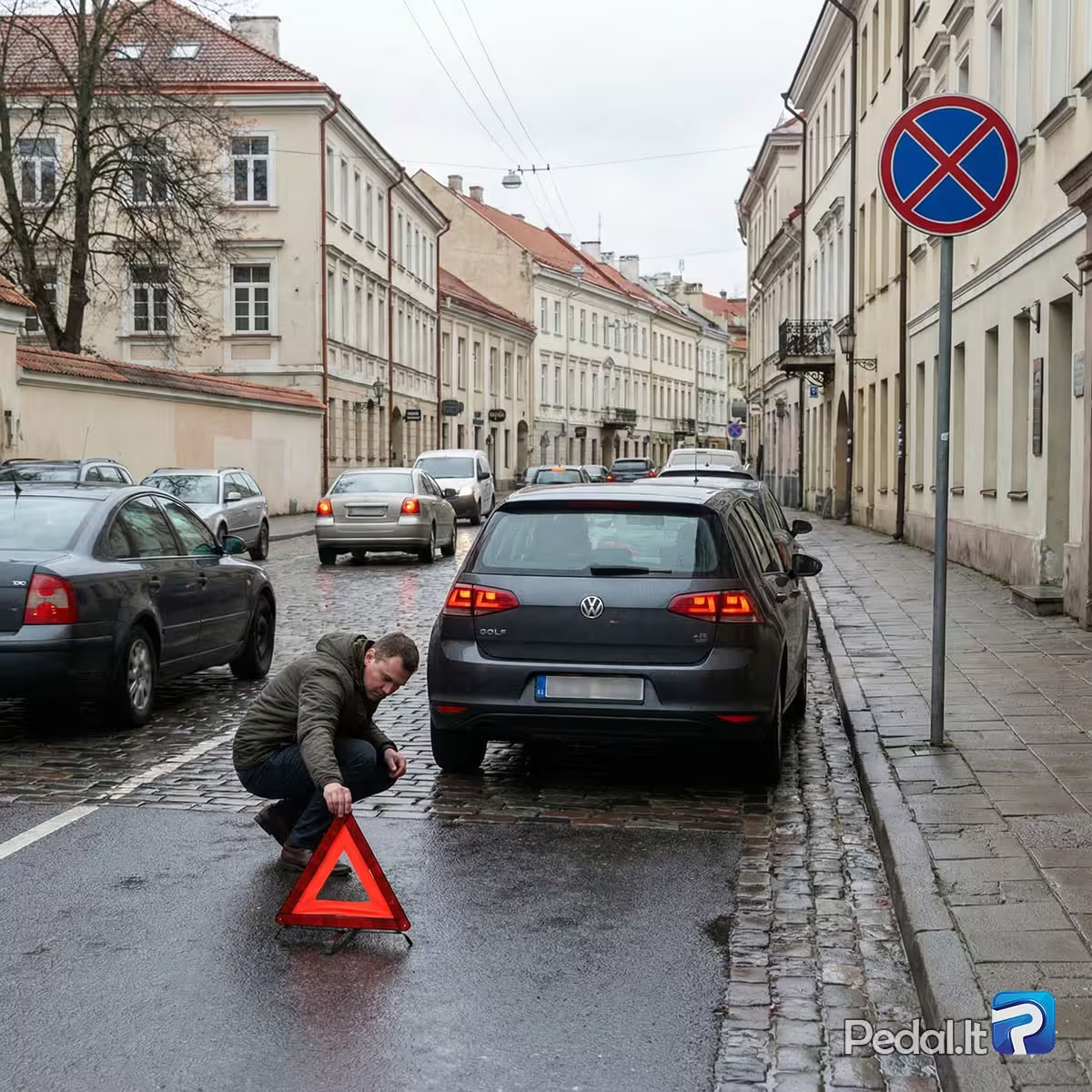
What must you do if you are forced to stop inside a settlement where stopping (parking) is prohibited and the hazard warning lights are not working?
RTR 92. If the emergency warning light system is not fitted or is defective and an emergency stop is required where stopping or parking is prohibited, in the event of an accident, or where the stopped vehicle would be visible to other road users from less than 100 metres, the driver of a motor vehicle (other than a motor moped or a motorcycle without a trailer), a tractor, or a self-propelled machine must immediately place an emergency stop sign on the carriageway side opposite to the direction of travel: in settlements, not closer than 25 m, and outside settlements, not closer than 50 m from the stopped vehicle. If at least one rear position lamp is defective and the hazard warning lights do not work while driving in darkness or poor visibility, an emergency stop sign must be attached to the rear of the vehicle in order to continue driving.
RTR 151. When a vehicle is forced to stop where standing or parking is forbidden, drivers must switch on hazard warning lights if available and/or place a warning triangle on the road as specified in Paragraph 92 of the Rules, and remove the vehicle from the road as soon as possible. If drivers intend to stop on unlit road sections at night or in poor visibility and hazard warning lights are unavailable or inoperable, the vehicle must be parked off the carriageway. If this is impossible, the place must be marked as specified in Paragraph 92 of the Rules. JB
1. Place a warning triangle at least 25 m from the stopped vehicle.
2. Attach a red flag to the vehicle.
3. Switch on the dipped headlights.
4. Stop another vehicle and ask for assistance.
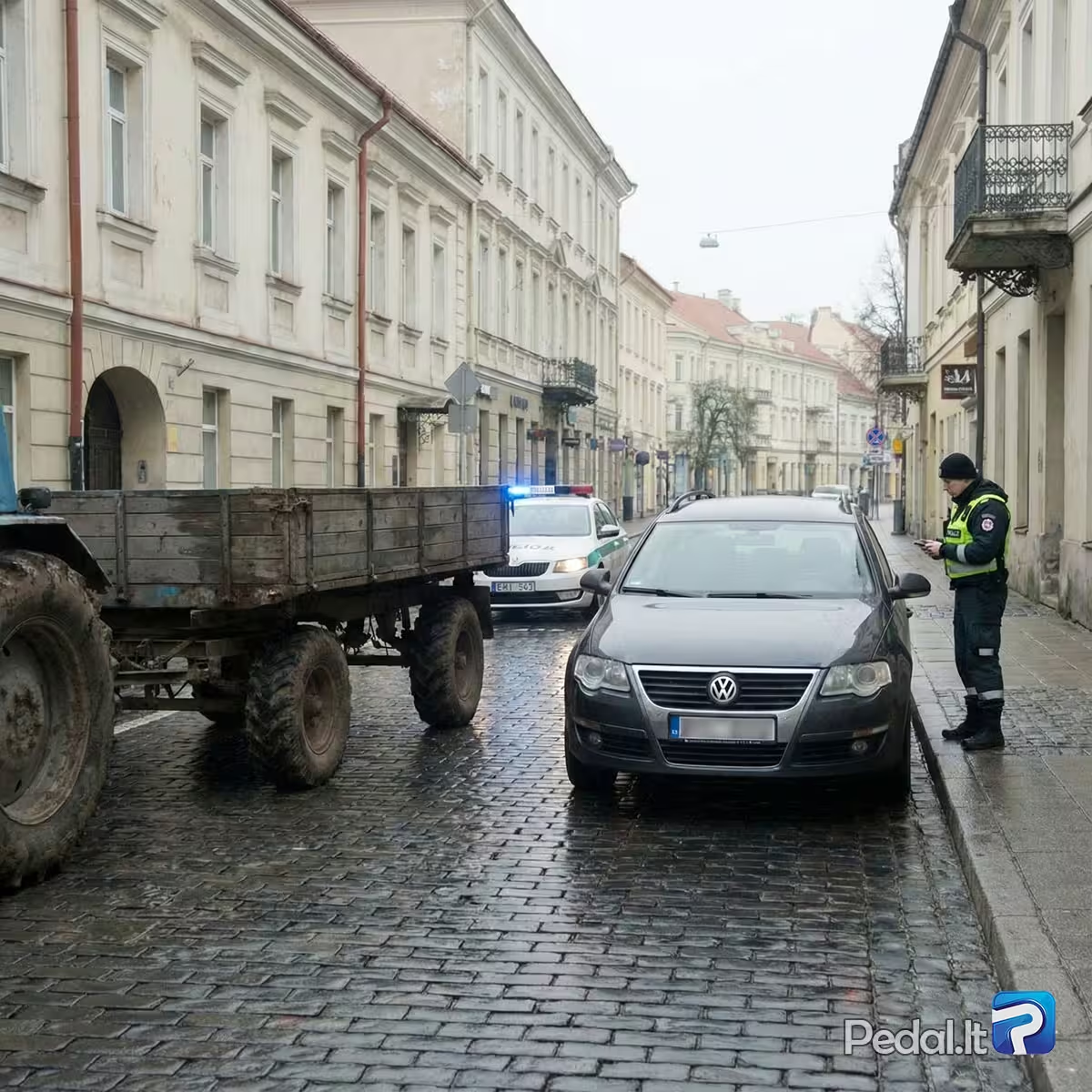
Are motor vehicles permitted to tow trailers intended for agricultural tractors?
Motor vehicles are not permitted to tow trailers intended for agricultural tractors due to safety requirements and technical incompatibilities. The term "motor vehicle" excludes non-road rail vehicles, tractors, and self-propelled machines. Per RTR 207, the total weight of carried cargo and passengers and the axle loads must not exceed the gross vehicle weight and axle load limits specified for that vehicle by the Ministry of Transport and Communications of the Republic of Lithuania and by the vehicle manufacturer. The gross weight of a towed trailer (laden or unladen) must not exceed the maximum permissible tow weight established by the Ministry and the manufacturer. Consequently, motor vehicles are prohibited from towing trailers of non-motor vehicles, and non-motor vehicles are prohibited from towing trailers of motor vehicles.
1. Only sport utility vehicles (SUVs) are permitted to tow trailers designed for agricultural tractors.
2. Motor vehicles are prohibited from towing trailers intended for agricultural tractors.
3. Only Category C commercial vehicles are permitted to tow trailers designed for agricultural tractors.
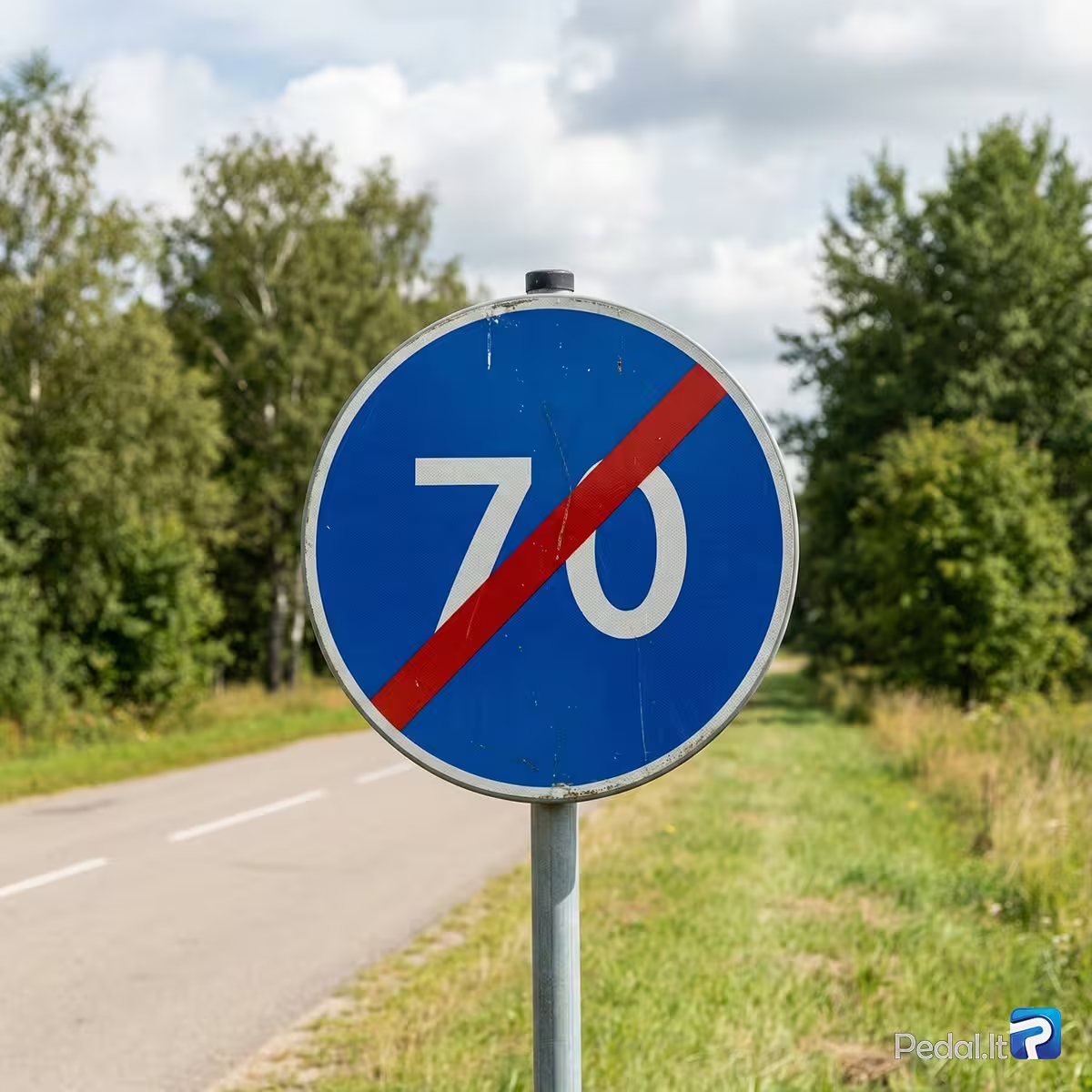
After this road sign:
This sign indicates the end of the minimum speed requirement; it does not specify a particular permitted speed. The applicable speed depends on other road signs, regulations and current driving conditions. Road sign 415 — End of minimum speed limit.
1. Driving at a maximum speed of 70 km/h is permitted.
2. Driving at a speed of at least 70 km/h is permitted.
3. The minimum speed limit has ended.
A road user must not:
Dipped-beam headlights are not required when daytime running lights are illuminated (not all vehicles have them). RTR 10. Road users must not deliberately move, cover, remove, or install traffic control devices that regulate traffic; obstruct the carriageway; leave objects on the road or otherwise interfere with traffic; damage the road surface, traffic control devices, outdoor emergency communication systems, or planted lawns; block access to a fire hydrant or other rescue equipment or otherwise prevent access to them; throw any items from a vehicle or litter; discharge lubricants in undesignated areas; or otherwise pollute the environment.
1. Discard litter from a moving vehicle.
2. Release oils or other lubricants in undesignated areas or otherwise pollute the environment.
3. Use dipped-beam (low-beam) headlights during daylight hours.
4. Drive at a speed significantly lower than the vehicle's specified limits when it does not obstruct traffic.
What size handcart carrying a load that is pushed or pulled at the roadside must be equipped with reflectors?
The option "More than 1 meter long" is incorrect because the RTR do not specify any marking requirement based on the cart's length. Under RTR 41: pedestrians moving along an unlit hard shoulder or along the edge of the carriageway, or standing there during hours of darkness or when visibility is poor, must carry a torch visible to other road users, wear a high-visibility vest, or carry a reflector visible to other road users. A pulled or pushed handcart wider than 1 m must have reflectors affixed on its left side: a white reflector at the front and a red reflector at the rear. JB
1. More than 1 meter wide.
2. More than 1 meter long.
Must road users involved in a traffic accident refrain from consuming alcohol and other intoxicating substances?
RTR 221. Road users involved in a traffic accident must refrain from consuming alcoholic beverages, medications, narcotic drugs, or any other intoxicating substances immediately after the accident until they have either undergone, or formally refused, a test to determine drunkenness or impairment caused by a narcotic, psychotropic, or any other substance.
1. Yes — until the circumstances of the accident involving other road users have been clarified.
2. Yes — until the circumstances at the accident scene have been established and investigated.
3. No — they are not required to do so.
4. Yes — until the sobriety or intoxication of the road user involved in the accident has been determined by testing or they have formally refused the test.
After depressing the clutch lever, you should hold it down only as long as necessary to:
3.3. Clutch control: 3.3.3. Keep the clutch lever depressed only for the time necessary to engage, change, or disengage a gear, to start moving, to stop, or to maneuver at low speed;
1. Engage a gear.
2. Engage or disengage a gear.
3. Start moving the vehicle.
4. Stop the vehicle or maneuver at low speed.
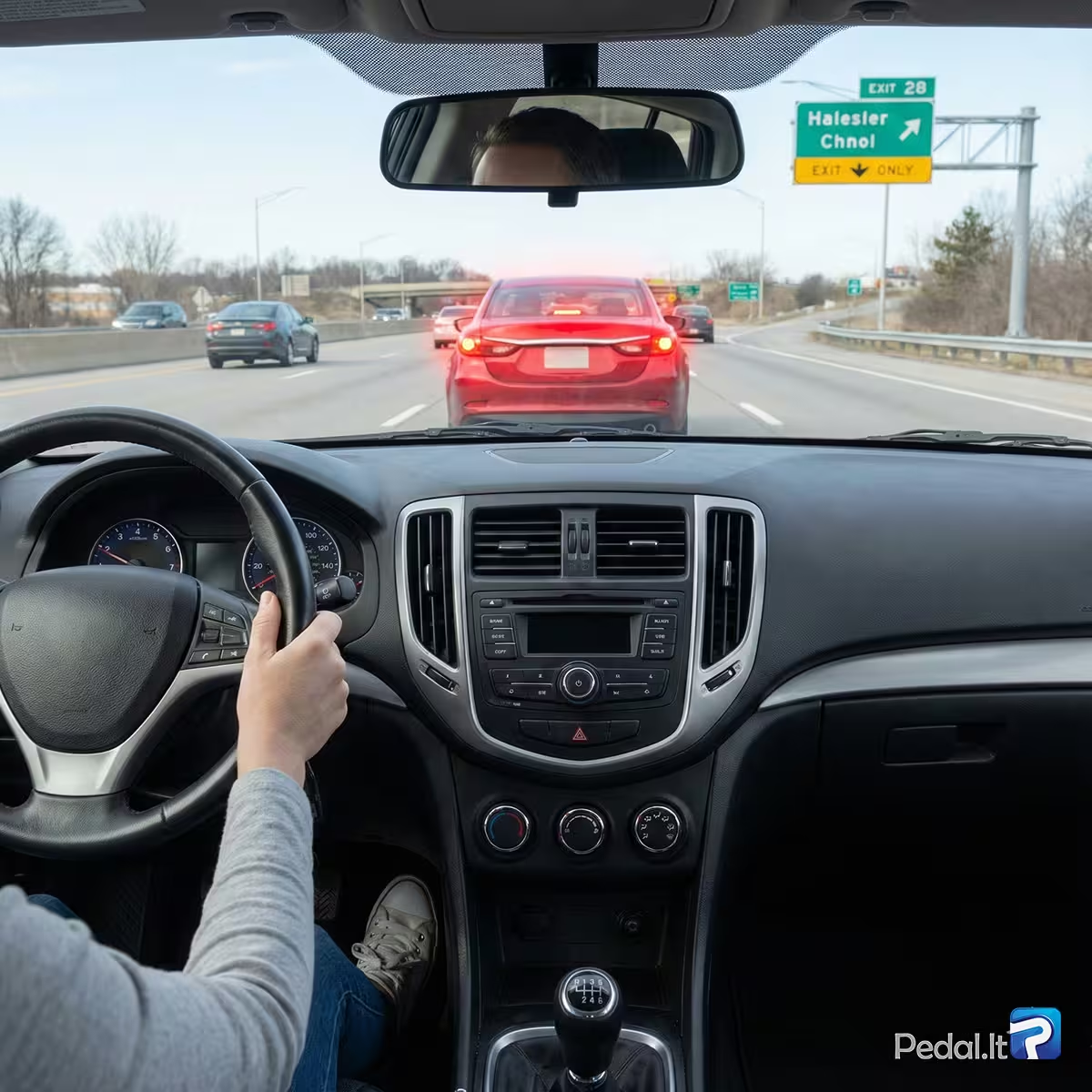
What should you do if you notice a vehicle braking in the distance ahead?
Explanation of terms: • To brake – press the brake pedal; the car slows down rapidly and stops before the expected obstacle. • To release the accelerator pedal – take your foot off the gas; the car gradually slows on its own but does not come to a complete stop and continues moving. • To drive without changing speed – keep the accelerator position the same; the car continues at a constant speed. RTR 128. If there is an obstruction or traffic safety is at risk, the driver must reduce speed or, if necessary, bring the vehicle to a complete stop or steer around the obstruction (if it can be seen) without creating a hazard for other road users.
1. Apply the brakes.
2. Take your foot off the accelerator and be prepared to brake.
3. Maintain your current speed.
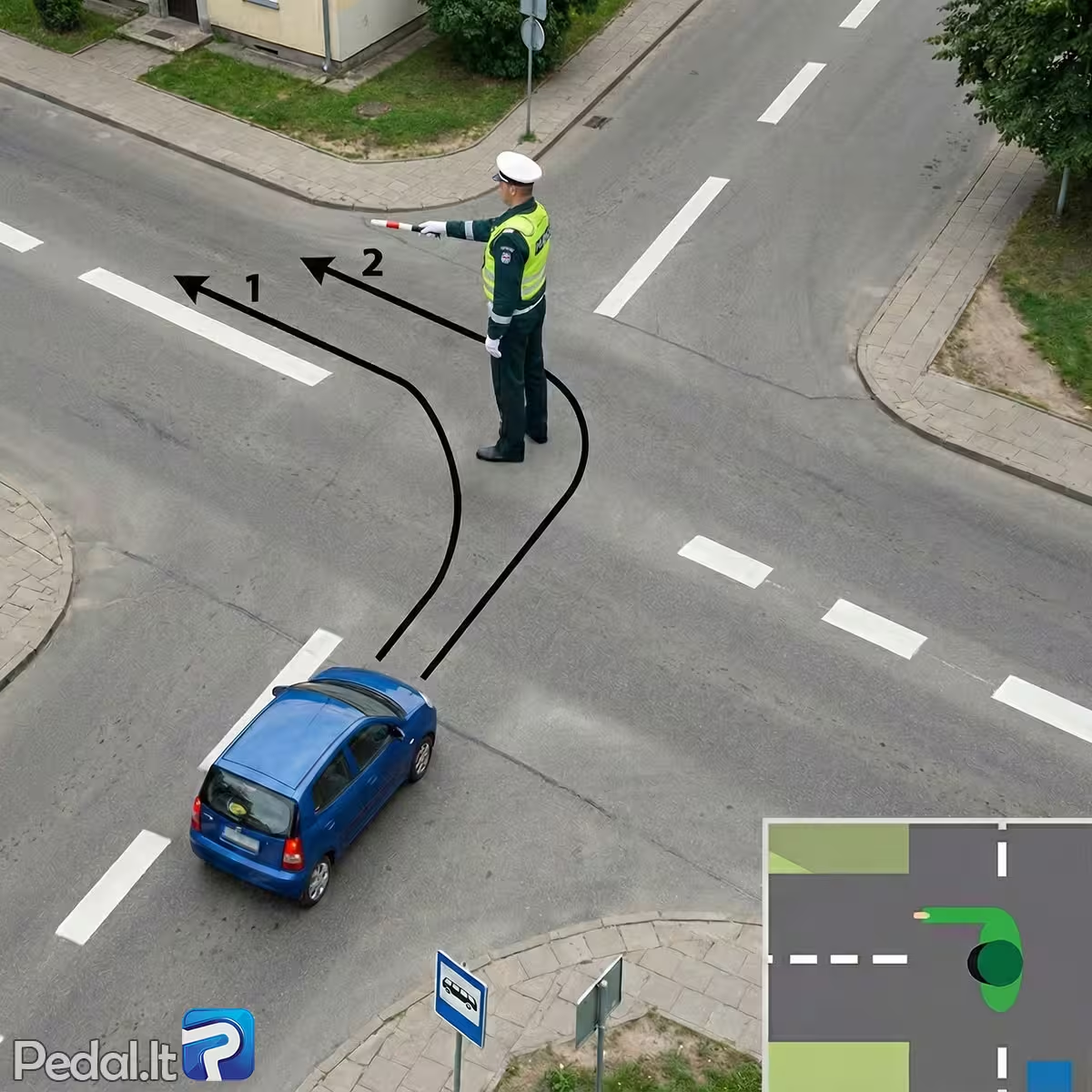
Is it permitted to make a left turn in this situation?
In this scenario the driver must complete the left turn before passing the traffic officer. Turning left after passing the officer would violate Road Traffic Rules requirement 77.2.3, which prohibits vehicles approaching from the rear and from the right from proceeding. RTR 77 — Signals given by traffic officers — are defined as follows: 77.1 Arms extended sideways or down: 77.1.1 Vehicles to the left and to the right may proceed straight ahead or turn right; pedestrians may cross the carriageway. 77.1.2 Vehicles and pedestrians in front of and behind the officer must not proceed. 77.2 Right arm extended forward: 77.2.1 Vehicles approaching from the left may proceed in any direction. 77.2.2 Vehicles from the front may proceed only to the right. 77.2.3 Vehicles from the rear and from the right must not proceed. 77.2.4 Pedestrians may cross the carriageway behind the officer. 77.3 Arm raised upwards: 77.3.1 All road users must not proceed in any direction. 77.3.2 Drivers must stop their vehicles without changing lanes.
1. Turning left is permitted, but only when following the first trajectory.
2. Turning left is permitted, but only when following the second trajectory.
3. Turning left is permitted in both cases.
4. Turning left is prohibited.
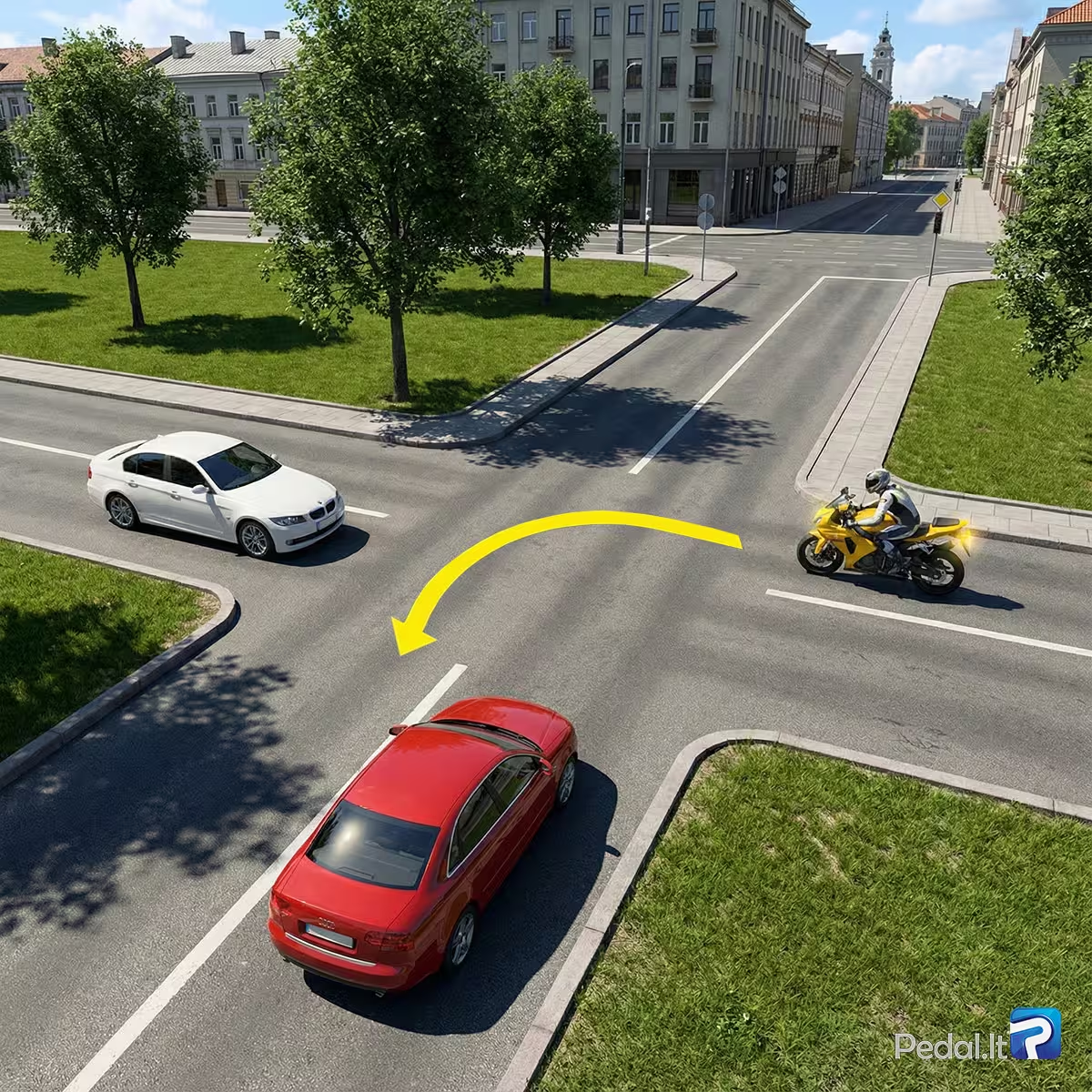
What is the motorcycle's order of passage through the intersection? The rider is turning left.
At an uncontrolled intersection of roads with equal priority, drivers must yield to vehicles approaching from the right when their paths intersect. A vehicle turning left must give way to oncoming traffic that is going straight or turning right. In this scenario, the red car goes first because the motorcycle, which had entered the intersection, stopped to yield. The white car proceeds next, since it no longer has a vehicle to its right, and finally the motorcyclist completes the maneuver — the motorcycle goes third. (RTR 155; RTR 157.)
1. First.
2. Third.
3. Second.
1 of 30 Task
Time left: 00:00:00
1
2
3
4
5
6
7
8
9
10
11
12
13
14
15
16
17
18
19
20
21
22
23
24
25
26
27
28
29
30