What is the primary purpose of a vehicle's main brakes?
A vehicle's braking system is intended to slow the vehicle, bring it to a complete stop, and hold it stationary. Braking distance should be kept as short as possible, and you must maintain control of the vehicle while braking.
1. Slow the vehicle to bring it to a complete stop and hold it stationary on a downhill slope.
2. Maintain a safe, controlled speed when driving downhill.
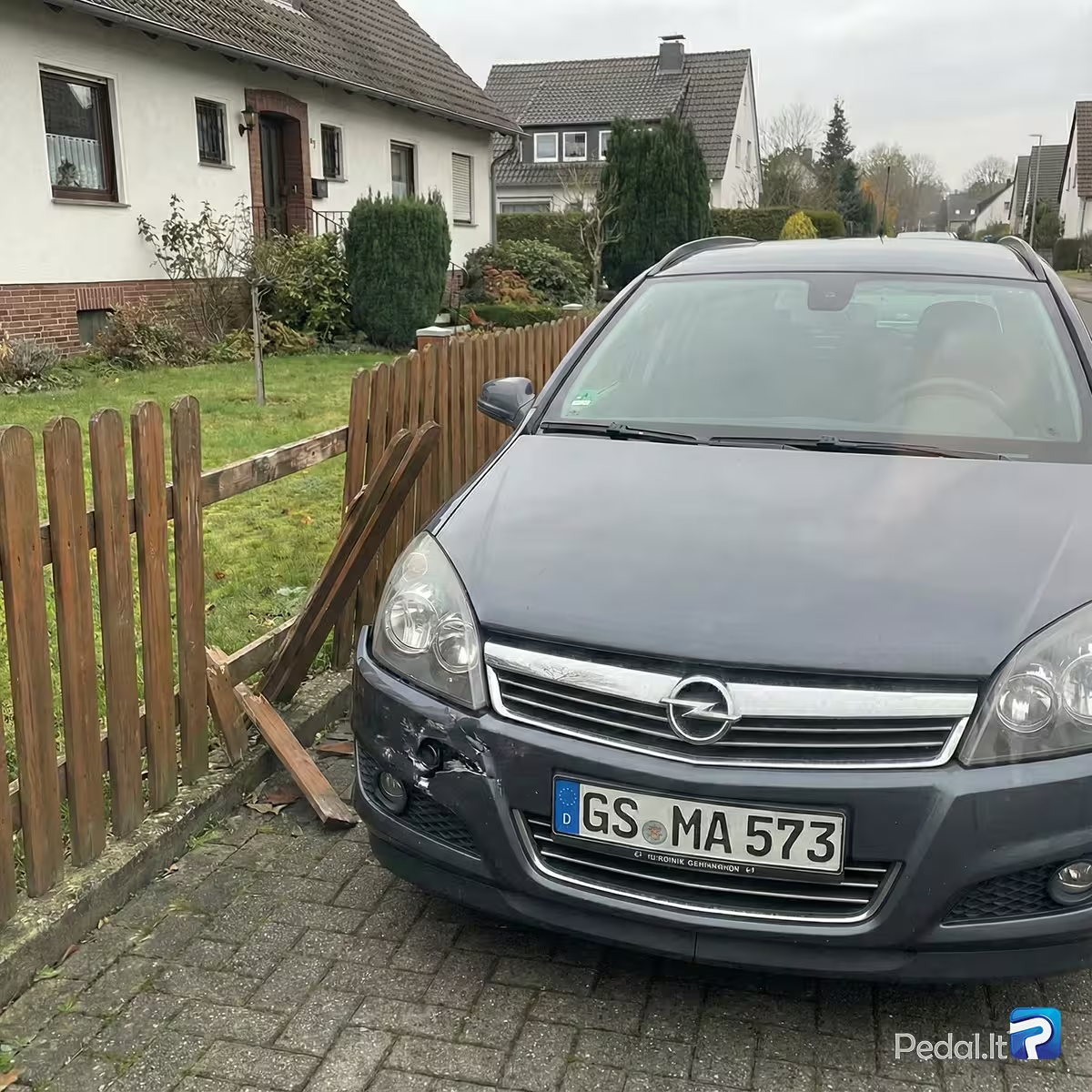
You have damaged the fence of a private property with your vehicle while the owner is absent. What must you do?
1. Leave a note with your contact information and then leave the scene.
2. Attempt to repair the damage yourself if it is safe and feasible.
3. Notify the police and remain at the scene until instructed otherwise.
4. Drive away from the scene because the property owner is absent.
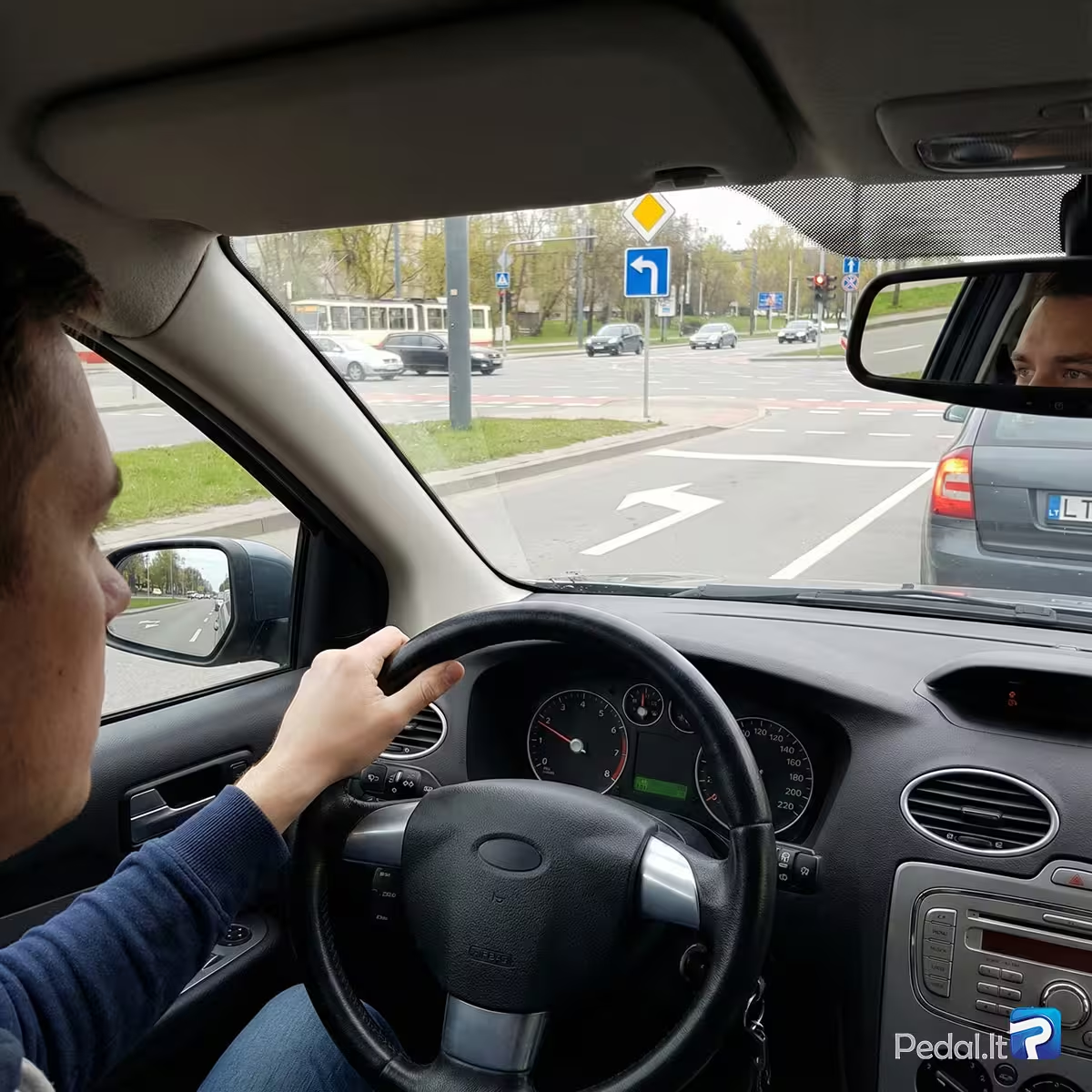
Where is it prohibited to make a U-turn?
RTR 116. U-turns are prohibited: 116.1 on pedestrian crossings; 116.2 on level crossings; 116.3 in tunnels; 116.4 on and beneath bridges, overpasses and viaducts; 116.5 where visibility in at least one direction is less than 100 metres; 116.6 on roads with a central reservation, except at locations designated and marked for U-turns by road signs and/or road markings. JB
1. On and beneath bridges, overpasses and viaducts.
2. In tunnels.
3. On level crossings (railway crossings).
4. On roads where the carriageway is less than 10 m wide.
Are you required to signal before starting to move?
RTR 82. A driver must indicate intended actions by using the right or left direction indicators, or by arm signals if the indicators are not available or are inoperative: 82.1 before starting to move off and before stopping; 82.2 before changing lanes, before and after overtaking, before and after bypassing an obstruction, before turning right or left, before making a U-turn, and before leaving a roundabout or an intersection where traffic circulates in a circle. JB
1. Yes — you must signal before starting to move.
2. No — you are not required to signal.
What is the minimum number of accompanying persons required to escort an organised group of children under the age of 16 walking along a hard shoulder?
RTR 40. An organised group of children consisting of persons under the age of 16 must be accompanied by at least two accompanying persons. Such a group should use pavements, footpaths or combined footpaths and cycle tracks (on the pedestrian side) if available; if these are not available, the group may use the hard shoulder but only in daylight, with good visibility, in no more than two abreast and against the flow of traffic when it is safe to do so. Accompanying persons must be positioned at the front and the rear of the column and wear high-visibility vests. It is recommended that all children in the organised group who walk along the hard shoulder also wear high-visibility vests.
1. One accompanying person.
2. Two accompanying persons.
3. Four accompanying persons.
4. Six accompanying persons.
A driver is operating a goods vehicle with a permissible maximum weight under 3,500 kg. Which driving‑licence category must the driver hold?
In this situation the driver must hold at least a category B driving licence; the driver is not required to hold a category C licence. LAW ON ROAD TRAFFIC SAFETY — Article 23. Categories of motor vehicles and the minimum driving age. 1. Categories of motor vehicles and their combinations with trailers are: 6) Category B: vehicles with a permissible maximum weight not exceeding 3,500 kg and designed and constructed to carry no more than eight passengers, excluding the driver; these vehicles may be combined with a trailer whose permissible maximum weight does not exceed 750 kg; they may also be combined with a trailer whose permissible maximum weight exceeds 750 kg, provided that the permissible maximum weight of the vehicle combination does not exceed 4,250 kg; a vehicle combination with a permissible maximum weight exceeding 3,500 kg (including a trailer with a permissible maximum weight exceeding 750 kg) may be driven only after passing a practical skills and behaviour test at the state enterprise "Regitra".
1. C.
2. B.
3. A.
On which road sections can exceeding the speed limit cause a road accident?
Exceeding the speed limit on any section of road is dangerous: it increases braking distance and thereby raises the likelihood of a road accident.
1. At pedestrian crossings.
2. On curves and turns.
3. At intersections.
How many motor vehicles are you permitted to tow at one time?
RTR 217. The following vehicle towing and transport practices are prohibited: 217.6. Towing more than one motor vehicle, tractor, or self-propelled vehicle.
1. One vehicle.
2. Two vehicles.
3. Three vehicles.
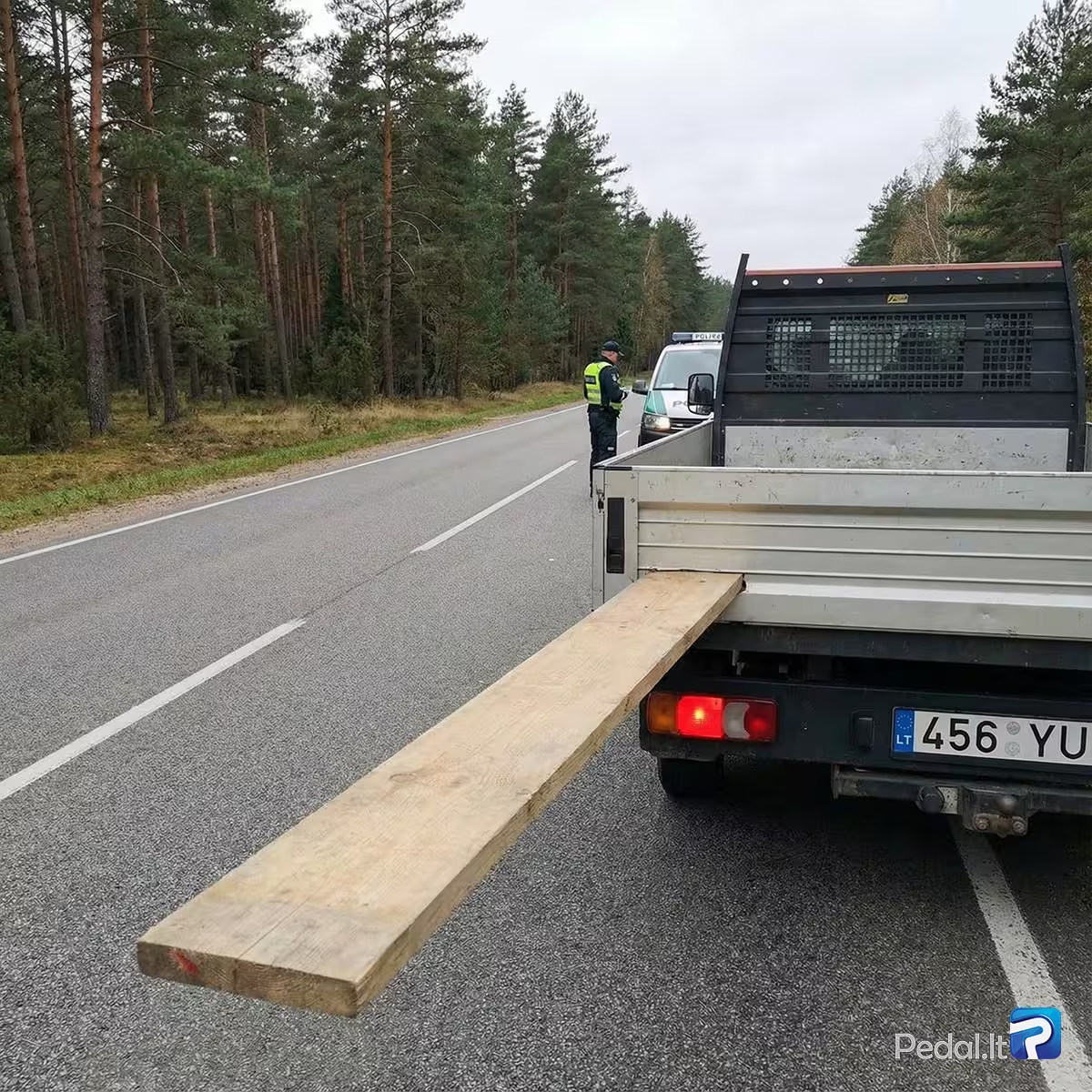
What is the maximum distance a load may extend beyond the rear of a vehicle without requiring marking?
Paragraph 210 of the Road Traffic Rules states that a load must be marked if it extends more than 1 metre beyond the front or rear of the vehicle. A load that extends up to and including 1 metre may remain unmarked; any extension beyond 1 metre must be marked. RTR 210: Any motor vehicle carrying a load which extends beyond the front and rear of the vehicle by more than 1 m or beyond the side of the vehicle must have the extremities of the load marked as provided for in Annex 4 to these Rules.
1. 0.5 m.
2. 1 m.
3. 1.5 m.
.avif)
What does a continuous yellow line painted along the edge of the carriageway indicate?
RTR Annex 3.1.4: A continuous yellow line along the carriageway edge indicates areas where stopping or parking is prohibited; it may also be used to mark lanes affected by roadworks. Vehicles must not cross this line. When a yellow continuous line is used together with white lane markings, drivers must obey the yellow line. RTR Annex 3.1.27: A yellow zigzag line marks a section or side of the road where stopping and parking are prohibited along the entire length of the zigzag.
1. Areas where only parking is prohibited.
2. Areas where both stopping (standing) and parking are prohibited.
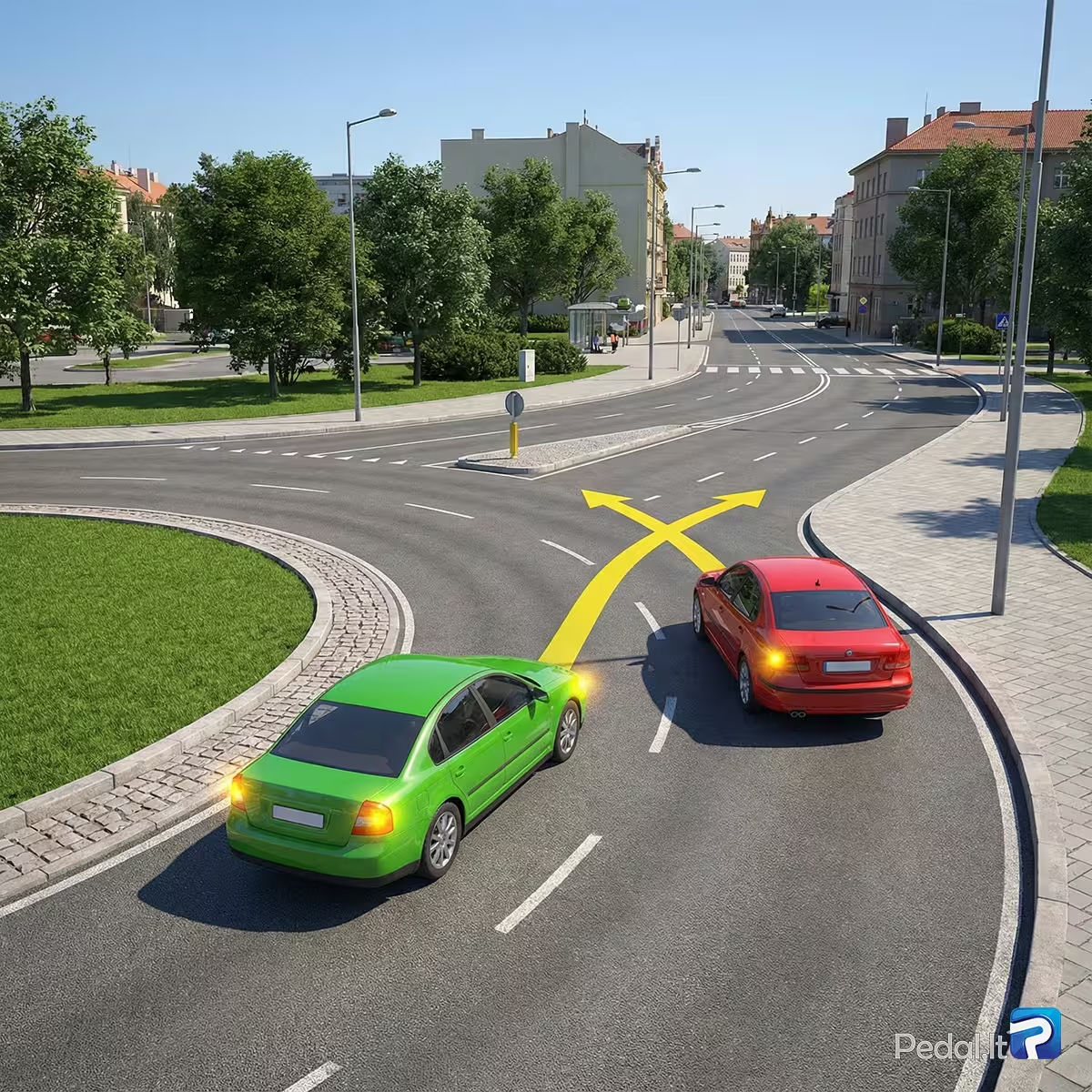
Which driver is violating the traffic rules?
There are no lane direction signs; therefore the driver of the red vehicle may go straight or turn right. When changing lanes, the driver of the green vehicle must yield. RTR 104. When changing lanes, a driver must yield to vehicles moving in the same direction in the adjacent lane. If vehicles moving in the same direction change lanes simultaneously, a driver must yield to the vehicle on the right, except in the cases specified in Paragraph 112 of the Rules. RTR 112. If an acceleration lane is provided for entering the road, the driver must use that lane and merge into the main traffic flow (change lanes and move into the adjacent lane), yielding to vehicles already in that flow or to vehicles changing lanes toward the deceleration lane. RTR 106. Before turning right, left, or making a U-turn (except when entering an intersection with circular traffic), a driver must move in advance to the edge of the carriageway designated for that direction. Road signs and/or road markings may indicate otherwise.
1. The driver of the red vehicle.
2. The driver of the green vehicle.
Why is driving at high speed dangerous?
Although driving at high speed increases fuel consumption and accelerates tire wear, those effects are not the primary danger asked about here and therefore should not be selected. Increasing speed lengthens the distance traveled during the driver's reaction time and increases the braking distance (braking distance grows roughly with the square of speed), which reduces the ability to stop before an obstacle. In addition, the centrifugal force acting on the vehicle toward the outside of a curve increases with the square of the speed and is inversely proportional to the curve's radius. As a result, at higher speeds the vehicle is more likely to skid or roll over.
1. Tire wear increases.
2. The risk of a traffic accident increases.
3. Fuel consumption rises.
Which car colors are most visible to other road users?
Light, bright-colored vehicles are most visible to other road users. (JB)
1. Black, gray, or blue.
2. White, orange, or red.
3. Purple or brown.
4. Vehicle color has no effect on visibility.
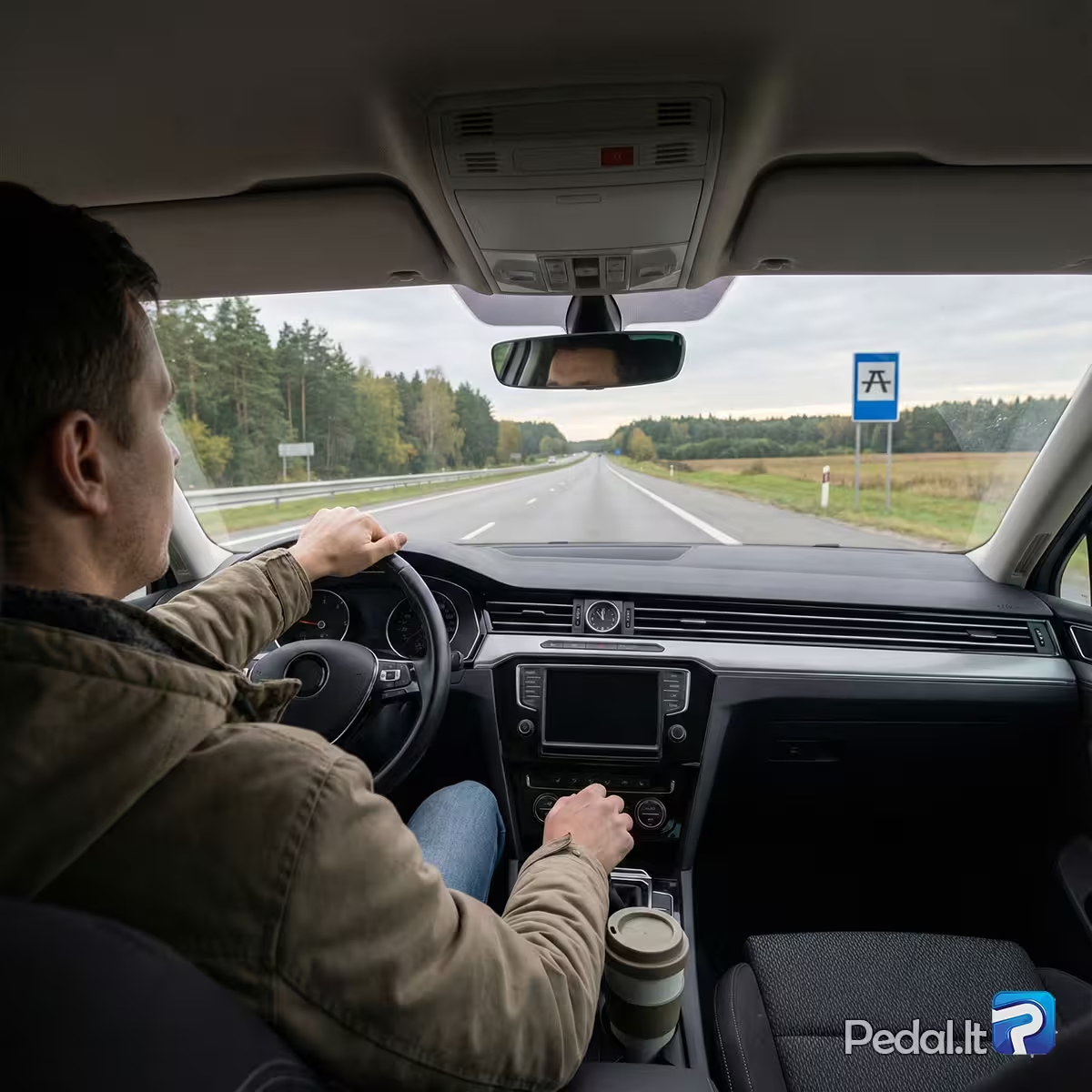
How should you behave during a long journey?
Long journeys can cause the driver to become distracted and fatigued for extended periods, which reduces reaction time and concentration and increases the risk of mistakes. It is recommended to take breaks every 1.5 to 2 hours or after driving approximately 200 kilometres. Sitting for long periods can lead to muscle tension and poor circulation, so getting out of the vehicle helps relax the body and improve well‑being. Exiting the car or opening a window to breathe fresh air can refresh the mind, restore energy and improve concentration.
1. Listen to loud music.
2. Maintain continuous conversation with your passengers to stay alert.
3. Leave the road or motorway and stop to rest; then exit the vehicle or open a window to breathe fresh air.
4. Routinely drink coffee to stay awake.
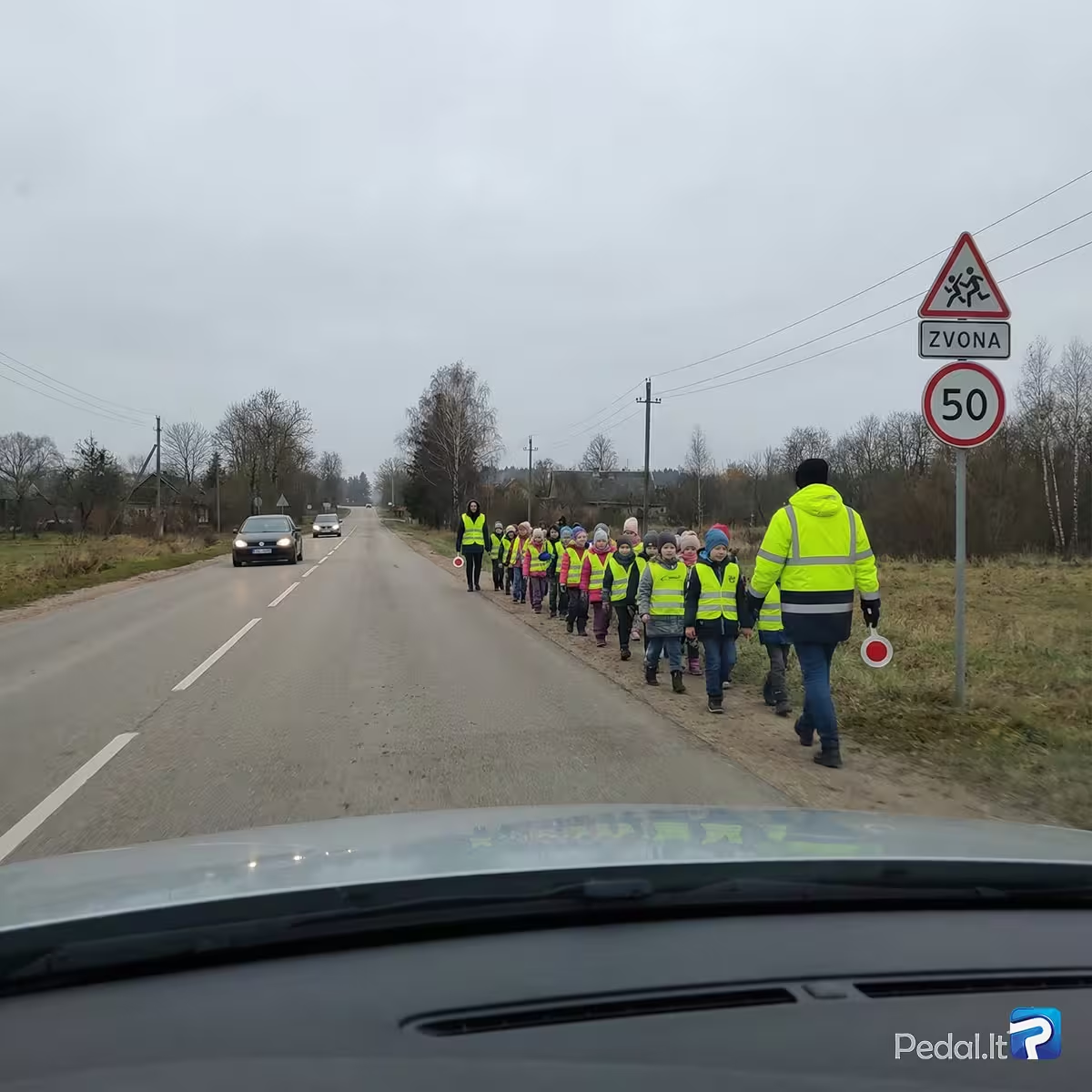
Under what conditions and at what times may an organised group of pedestrians composed of children under 16 be led along the roadside?
RTR 40. An organised group of children under 16, accompanied by at least two adults, may use pavements, footpaths, or the pedestrian side of shared footpath and cycle tracks if available. If none of these facilities are present, the group may walk along the hard shoulder, but only in daylight hours when visibility is good, in no more than two files walking against the flow of traffic, and only when it is safe to do so. Accompanying adults must be positioned at the front and rear of the column and wear high-visibility vests. It is recommended that all children in the organised group wear high-visibility vests when walking along the hard shoulder.
1. During daylight hours and only when visibility is good.
2. In no more than two files, walking against the flow of traffic.
3. At any time of day provided visibility is good.
What can cause a vehicle to skid?
Sudden steering wheel movements, improper use of the accelerator, or other actions that do not take the road surface and driving speed into account can cause a vehicle to skid. In general, it is the driver's own actions (for example, sudden braking), not the actions of another driver, that lead to skidding. The driver must choose an appropriate speed and following distance so that the actions of other road users do not endanger the vehicle. 126. The driver must maintain a distance appropriate to the speed, sufficient to avoid hitting the vehicle in front if it brakes, and must leave a lateral gap to ensure traffic safety. It is recommended that the distance to the vehicle ahead be at least the distance covered in two seconds or at least half the speedometer reading converted into metres (for example, at 70 km/h the distance should be at least 35 m), unless traffic conditions require otherwise. Drivers of motor vehicles, tractors and self-propelled machinery shall, when overtaking pedestrians or when overtaking or passing cyclists or drivers of electric micro-mobility vehicles, leave a lateral distance of at least 1.0 m when their speed does not exceed 50 km/h and at least 1.5 m when their speed exceeds 50 km/h. The requirement to maintain the specified lateral distance does not apply on a single-lane road.
1. The driver's actions.
2. An emergency caused by another driver.
How should you drive safely on a steep slope?
Driver competencies - category B: A vehicle will begin to skid when the tires lose traction with the road surface. This may occur on inclines, slopes, or in strong crosswinds.
1. Drive at maximum speed.
2. Drive with the engine turned off.
3. Drive slowly, avoiding sudden steering or braking movements.
Which of the following should you avoid to prevent unnecessary noise?
Driving smoothly and courteously helps prevent unnecessary noise. Sudden engine revving, hard braking or wheel lock-up produce loud sounds that disturb others. Slamming vehicle doors or using the horn without cause breaches public order. These actions not only create noise pollution but also demonstrate irresponsible driving behaviour.
1. Avoid sharply increasing engine revolutions (sudden revving).
2. Avoid slamming the vehicle door shut.
3. Avoid using the horn without a valid reason.
4. Avoid braking by locking the wheels.
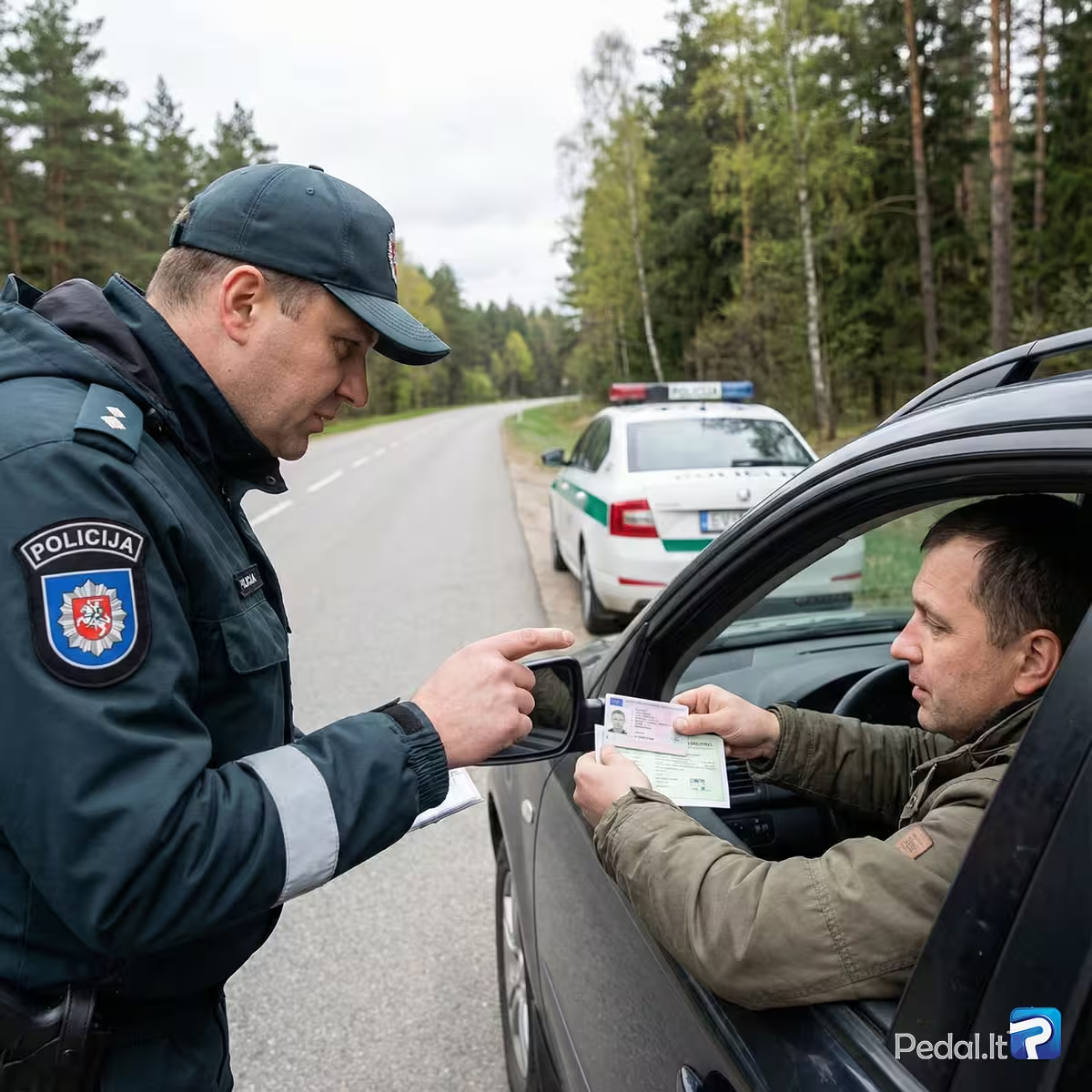
What checks must a driver allow when requested by a police officer?
RTR 17. At the request of a police officer, a driver must submit to tests for alcohol intoxication or for intoxication caused by narcotic drugs, psychotropic substances, or other psychoactive substances, in the manner prescribed by the Government of the Republic of Lithuania. RTR 14. It is prohibited to drive a vehicle if you are not authorized to do so, if you are under the influence of alcohol, narcotic drugs, psychotropic substances or other psychoactive substances. A person who is fatigued or ill must not drive if driving may endanger road safety. A vehicle must not be entrusted to a person who is under the influence of such factors or who is not authorized to drive that type of vehicle. When operating a vehicle, the driver must comply with the conditions specified on the driving licence. JB
1. Alcohol intoxication.
2. Irritability.
3. Fatigue.
4. Intoxication by narcotic drugs.
Is turning around permitted on the bridge?
Traffic Regulations (RTR) 116. Turning around is prohibited under clause 116.4: on and under bridges, overpasses, and viaducts. JB
1. Yes, it is permitted.
2. No, it is not permitted.
The effect of inertia on the vehicle (risk of sliding sideways) when cornering is reduced by:
The higher the vehicle's speed when cornering, the greater the effect of inertia and the higher the risk of the car sliding sideways. Lower speeds reduce inertia and the risk of sliding. A larger turning radius (a gentler curve) also reduces lateral inertial forces.
1. By decreasing the turning radius (making the turn tighter).
2. By reducing vehicle speed.
3. By increasing the turning radius (making the curve gentler).
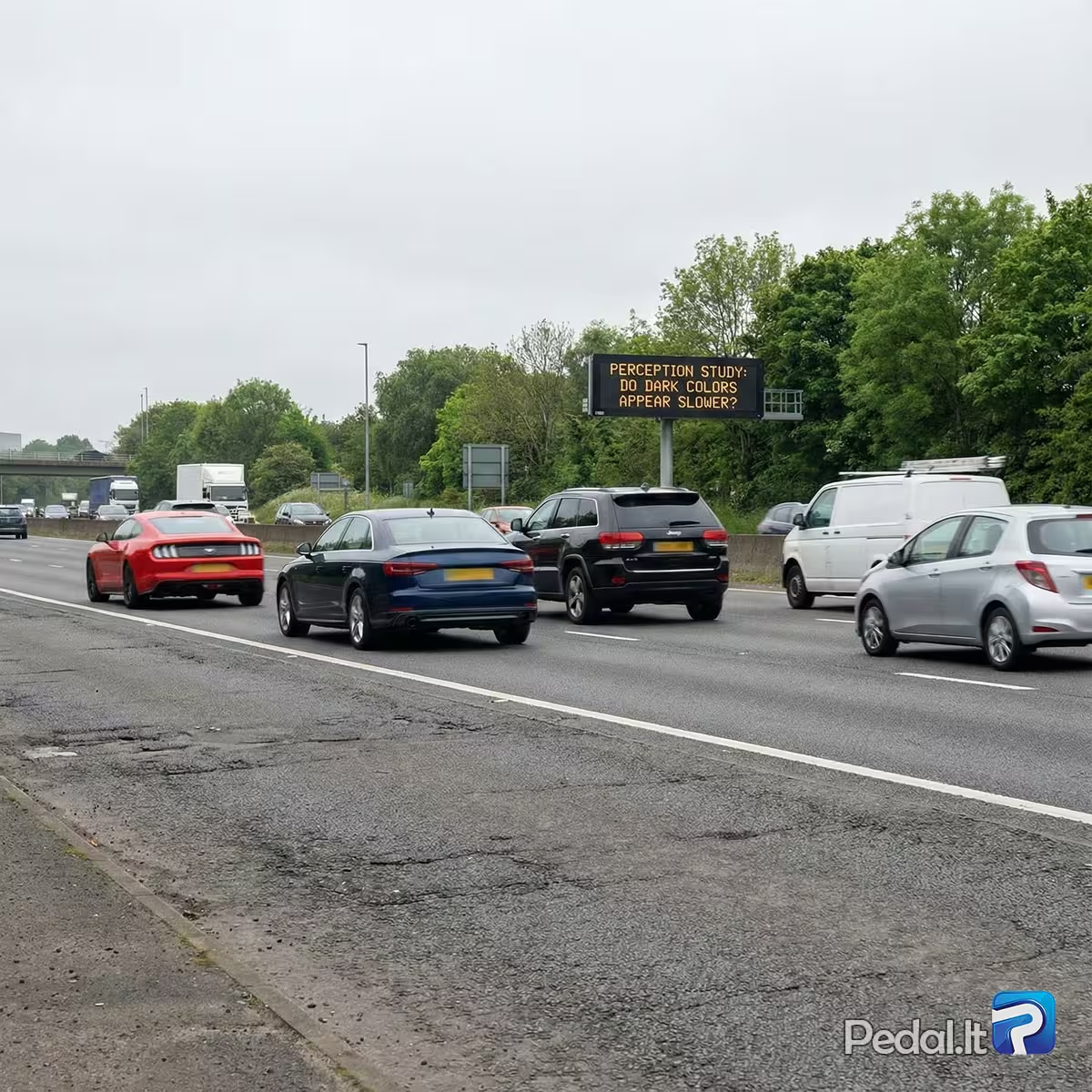
Which colour of vehicle tends to appear to be moving more slowly than it actually is?
Oncoming vehicles painted in dark colours often create the illusion that they are moving more slowly than they actually are.
1. Light-coloured vehicles.
2. Dark-coloured vehicles.
If you are forced to stop outside a built-up area where stopping is prohibited and your hazard warning lights are not working, what must you do?
RTR 92. If the vehicle's hazard warning lights are absent or defective and an emergency stop is required where stopping or parking is prohibited, in the event of an accident, or when the stopped vehicle would be visible to other road users from less than 100 metres, the driver of a motor vehicle (excluding a motor moped and motorcycles without a trailer), a tractor, or a self-propelled machine must immediately place an emergency stop sign on the side of the carriageway opposite the direction of travel: within settlements not less than 25 m, and outside settlements not less than 50 m from the stopped vehicle. If at least one rear position lamp is defective and the hazard warning signal is not working when driving in darkness or poor visibility, an emergency stop sign must be affixed to the rear of the vehicle in order to continue driving.
1. Attach a red flag to your vehicle.
2. Place a warning triangle 50 m behind the stopped vehicle.
3. Stop another vehicle and request assistance.
4. Turn on your dipped-beam headlights.
Upon request by another road user involved in the accident:
RTR 219. In the event of a road accident, every driver involved or any other road user must: 219.3. upon the request of other road users involved in the accident, present a valid identity document or a valid driving licence, and a certificate (policy) of compulsory third‑party motor vehicle liability insurance in order to identify the insurer;
1. You must present a valid identity document and the certificate (policy) of compulsory motor third‑party liability insurance to identify the insurer.
2. You are required to present the documents only to the police.
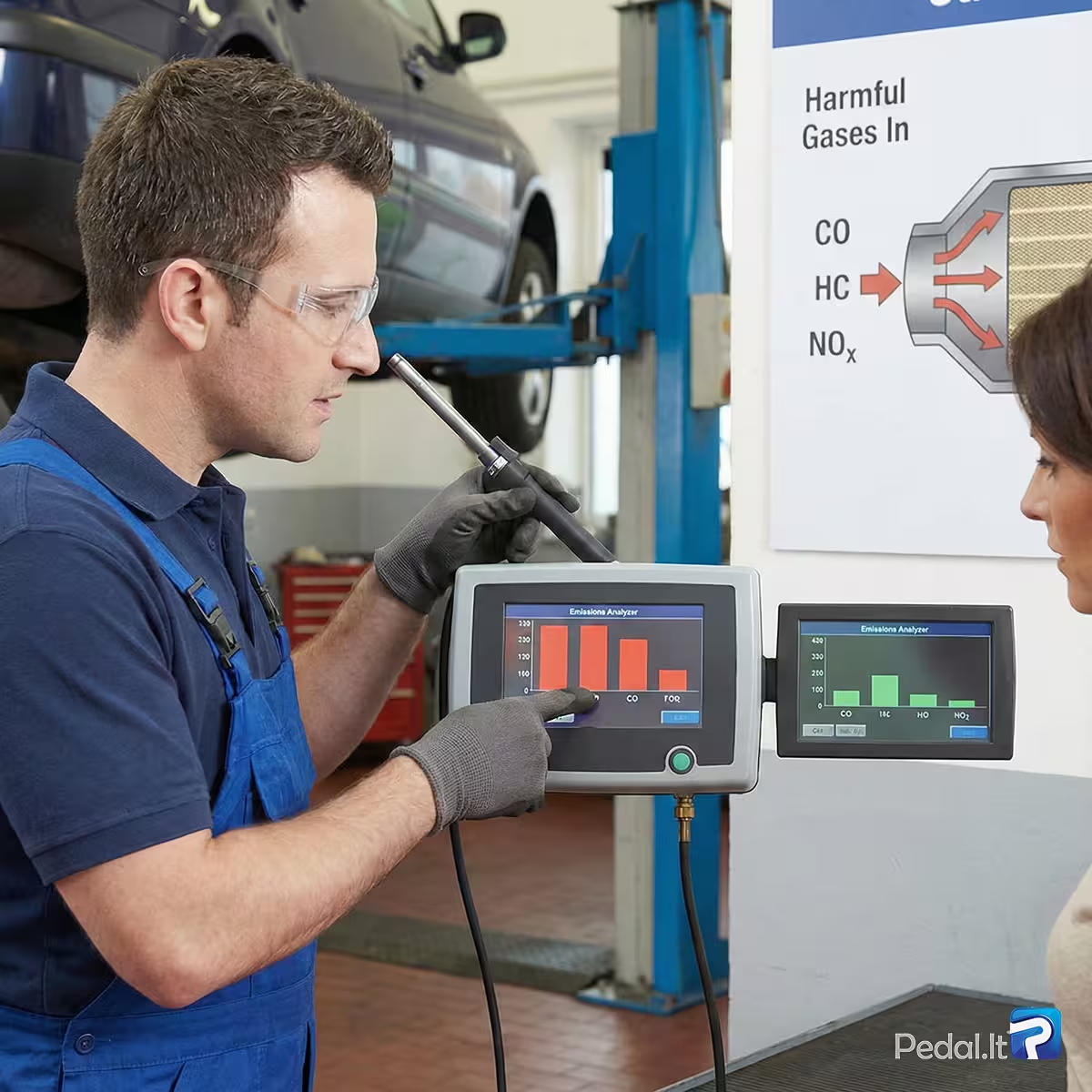
Why does a car need a catalytic converter in its exhaust system?
A catalytic converter neutralises (burns) harmful exhaust gases. It converts three toxic substances—carbon monoxide (CO), nitrogen oxides (NOx), and unburnt hydrocarbons (UHC)—into non-toxic substances through oxidation and reduction reactions. Its purpose is not to dampen engine noise; that is the role of the muffler (silencer). Removing a catalytic converter can alter the car's exhaust sound and often makes it louder or harsher, but this is only a side effect, not the converter's primary function.
1. To reduce engine noise.
2. To neutralise harmful pollutants in the exhaust gases.
3. To reduce fuel consumption.
Your car veers to one side only while braking (it travels straight when not braking). What is the likely cause?
Incorrect tyre pressure usually causes the vehicle to pull to one side during normal driving, not only when braking. If the car only pulls while braking, uneven braking is the likely cause — for example, a seized caliper, sticking pads, or poor adjustment causing one side to brake harder. Low brake fluid will reduce braking effectiveness or cause pedal problems, but it typically does not make the car swerve to one side only when braking.
1. Tire pressures are incorrect or uneven.
2. The wheel brakes are applying unevenly.
3. Brake fluid level is insufficient.
Why might a vehicle skid or move sideways during braking?
Braking with uneven tire wear between the left and right sides is dangerous because it can cause the vehicle to slide off the road and overturn.
1. Uneven wear between the vehicle's left and right tires.
2. Irregularities in the road surface.
3. A brake on one wheel is not working, or braking force is uneven between sides.
What must drivers do if stopped by an inspecting officer?
RTR 16. A driver must stop the vehicle when ordered by an inspecting officer. The driver of a motor vehicle, tractor or self-propelled vehicle shall carry, and upon request of the inspecting officer present, a valid driving licence or a document certifying the right to drive tractors and/or self-propelled vehicles or military equipment (including tactical and logistical vehicles) or their combinations with trailers; the vehicle registration documents; the certificate of the compulsory roadworthiness test and the report of the most recent technical inspection for vehicle categories M2, M3, N2, N3, O3, O4 and wheeled tractor categories T1b, T2b, T3b, T4.1b, T4.2b, T4.3b, T5; the certificate (policy) of compulsory motor third-party liability insurance; and any other documents required by the laws of the Republic of Lithuania and these Rules (except in cases where the Law on Road Traffic Safety exempts the driver from carrying certain documents). The driver must also allow the inspecting officer to check the readings of validated meters that record driving time and rest periods. Documents shall be presented without leaving the vehicle. The driver may leave the vehicle only with the inspecting officer's permission. RTR 91. If hazard warning lights are fitted in a vehicle, they must be switched on: 91.3. when the vehicle is stopped by an inspecting officer;
1. Exit the vehicle only with the inspecting officer's permission.
2. Present the requested documents to the inspecting officer without leaving the vehicle.
3. Exit the vehicle and deliver the documents to the inspecting officer.
4. Stop the vehicle at the location indicated.
5. Turn on the vehicle's hazard warning lights.
Is the term "Pavement" included within the definition of "Road"?
RTR 3.7. 'Road' means the surface of a strip of ground or a superstructure intended for, and used by, road traffic across its full width; this includes the carriageway, intersections, pavements, roadsides, pedestrian and bicycle paths, and dividing strips. RTR 3.8. 'Shoulder' means a road area adjacent to the carriageway (from the carriageway edge to the roadbed edge) that is paved with the same or different material as the carriageway and/or separated from the carriageway by an edge line, but is not regarded as a pavement or as a pedestrian or bicycle track. JB
1. Yes, it is.
2. No, it is not.
Can the parking brake be used to slow the vehicle while braking?
The parking brake may be used to help slow the vehicle if the service (main) brakes fail.
1. No — it cannot be used.
2. Yes — in any circumstance.
3. Yes — in an emergency, if the service (main) brakes fail.
1 of 30 Task
Time left: 00:00:00
1
2
3
4
5
6
7
8
9
10
11
12
13
14
15
16
17
18
19
20
21
22
23
24
25
26
27
28
29
30