Which of the following statements is correct?
During the summer season, it is permitted to drive on winter tyres that do not have studs. Such winter tyres are often used in summer when their tread depth is approximately 3 mm; during the winter season winter tyres may be used if their tread depth is at least 3 mm. The tread depth of tyres used in the summer season must not be less than 1.6 mm. RTR XXX. REQUIREMENTS FOR VEHICLES (p. 223-235) 229. Vehicles with studded tyres must not be used from April 10 to October 31. During the warm season, it is recommended to use vehicles with summer tyres. If winter conditions are prolonged, an order of the Minister of Transport and Communications may extend the permitted period for using studded tyres. 230. From November 10 to March 31, motor vehicles other than mopeds, motorcycles, tricycles, all types of quadricycles, and trailers must not be operated with summer tyres. Mopeds, motorcycles, tricycles, and all types of quadricycles fitted with summer tyres must not be operated in December–February, and also from March to November if any part of the carriageway is covered with snow or ice. JB
1. Summer tyres may be used in winter.
2. During the summer season, you may drive using winter tyres without studs.
3. You are only allowed to use summer tyres in summer and winter tyres in winter.
How must a load that projects more than 1 m beyond the front or rear of a vehicle's dimensions be marked?
According to RTR Annex 4.12: Any load whose extreme edge projects more than 1 m beyond the front or rear of the vehicle—or which projects even minimally to the side—or any vehicle wider than 2.6 m must be marked with distinctive signs: squares 400 mm on a side with diagonal alternating reflective white and red stripes 50 mm wide. These signs must be mounted between 0.4 m and 1.6 m above ground level. During hours of darkness or when visibility is poor, such vehicles must also display lights in designated positions: white at the front, amber (orange) on the sides, and red at the rear.
1. With reflectors or lights: white at the front, amber on the sides, and red at the rear.
2. With distinctive signs — squares with diagonal alternating reflective white and red stripes.
3. With high-visibility flags.
4. During hours of darkness or poor visibility: with white lights at the front, amber on the sides, and red at the rear.
Your car veers to one side only while braking (it travels straight when not braking). What is the likely cause?
Incorrect tyre pressure usually causes the vehicle to pull to one side during normal driving, not only when braking. If the car only pulls while braking, uneven braking is the likely cause — for example, a seized caliper, sticking pads, or poor adjustment causing one side to brake harder. Low brake fluid will reduce braking effectiveness or cause pedal problems, but it typically does not make the car swerve to one side only when braking.
1. Tire pressures are incorrect or uneven.
2. The wheel brakes are applying unevenly.
3. Brake fluid level is insufficient.
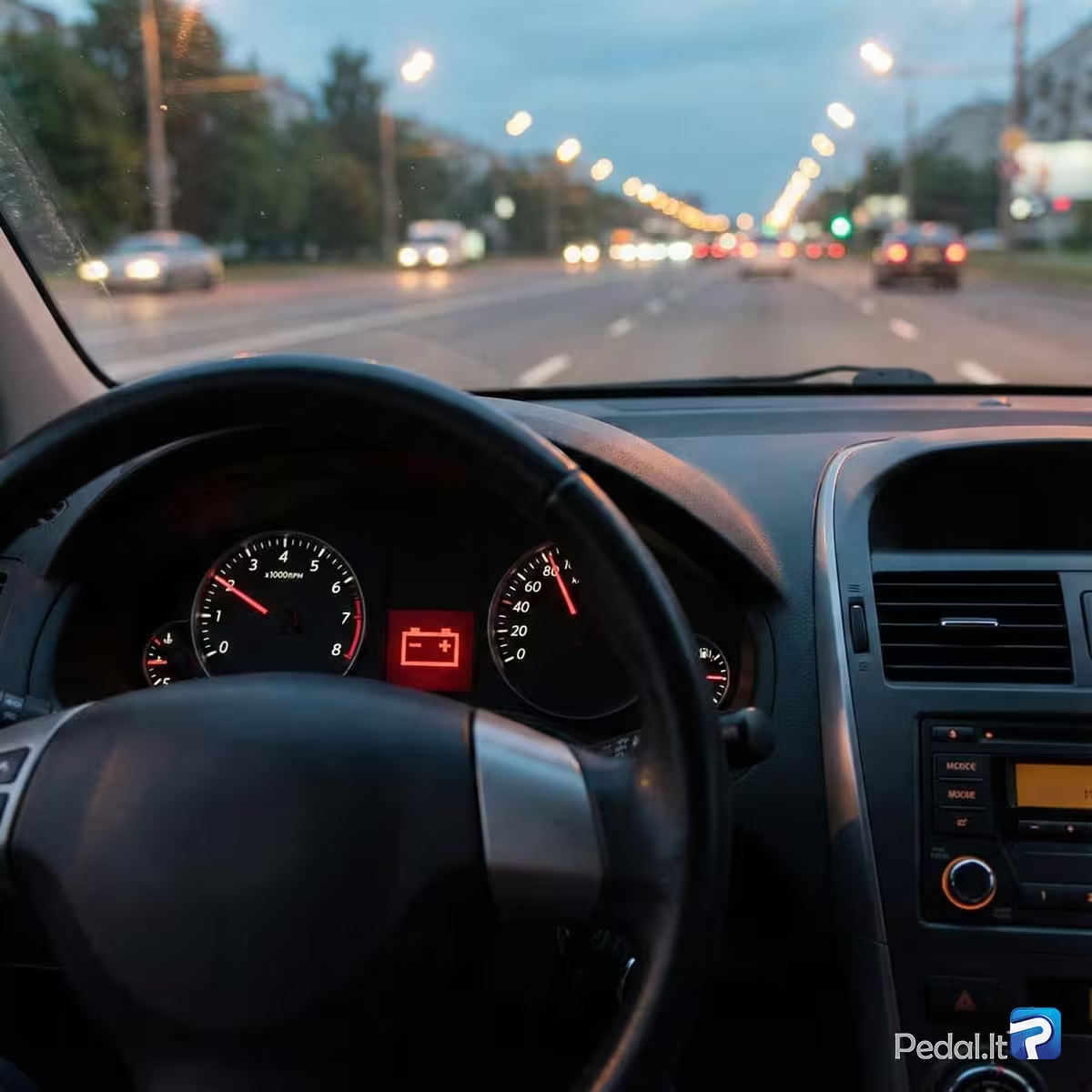
When the engine is running, a red battery warning light on the dashboard indicates:
If the red battery warning light illuminates while the engine is running, it indicates the alternator (generator) has failed and the battery is not being charged.
1. The battery is being overcharged.
2. The battery is completely discharged.
3. The battery is not being charged.
4. The battery's electrolyte level is too low.
It is prohibited to operate (permanently use) a vehicle if:
If you discover that the horn is not working, you may drive only to a parking area or a repair facility. However, it is prohibited to operate a vehicle permanently if it does not meet the technical requirements (for example, if the horn, speedometer, or other required systems are not functioning). RTR 223. Vehicles traveling on roads must comply with the technical requirements applicable in the Republic of Lithuania when undergoing mandatory technical inspection. RTR 224. Only motor vehicles and trailers that are in good repair, except in the cases provided for in these Rules, may participate in public traffic in the Republic of Lithuania. Short-term (one-day) participation in public traffic is allowed, pursuant to the prescribed procedure, for vehicles and trailers displaying temporary license plates whose registered owners (keepers) have obtained compulsory motor third-party liability insurance and have paid the applicable fees and taxes for the vehicle or road use. RTR 15. Driving vehicles that are not in proper condition and do not comply with technical requirements for vehicles is prohibited. Before starting to drive, the driver of a motor vehicle, tractor, or self-propelled vehicle must ensure that the vehicle is in good condition, that it carries a warning triangle, fire extinguisher, first aid kit, and any other items mandatory for that type of vehicle, and must monitor the vehicle's technical condition during the journey. If the vehicle breaks down while driving and therefore does not meet the technical requirements and cannot be repaired on site, the driver may proceed, taking all necessary precautions, to the nearest parking area or vehicle repair shop, except in the cases laid down in paragraph 234 of these Rules. JB
1. The horn (sound signal) is not functioning.
2. The speedometer is not functioning.
3. The windshield is cracked and obstructs the driver's view.
Are drivers permitted to take part in vehicle races that are organized illegally on streets and roads?
23. Drivers must not take part in vehicle races that are organized illegally.
1. Yes, they are permitted.
2. No, they are not permitted.
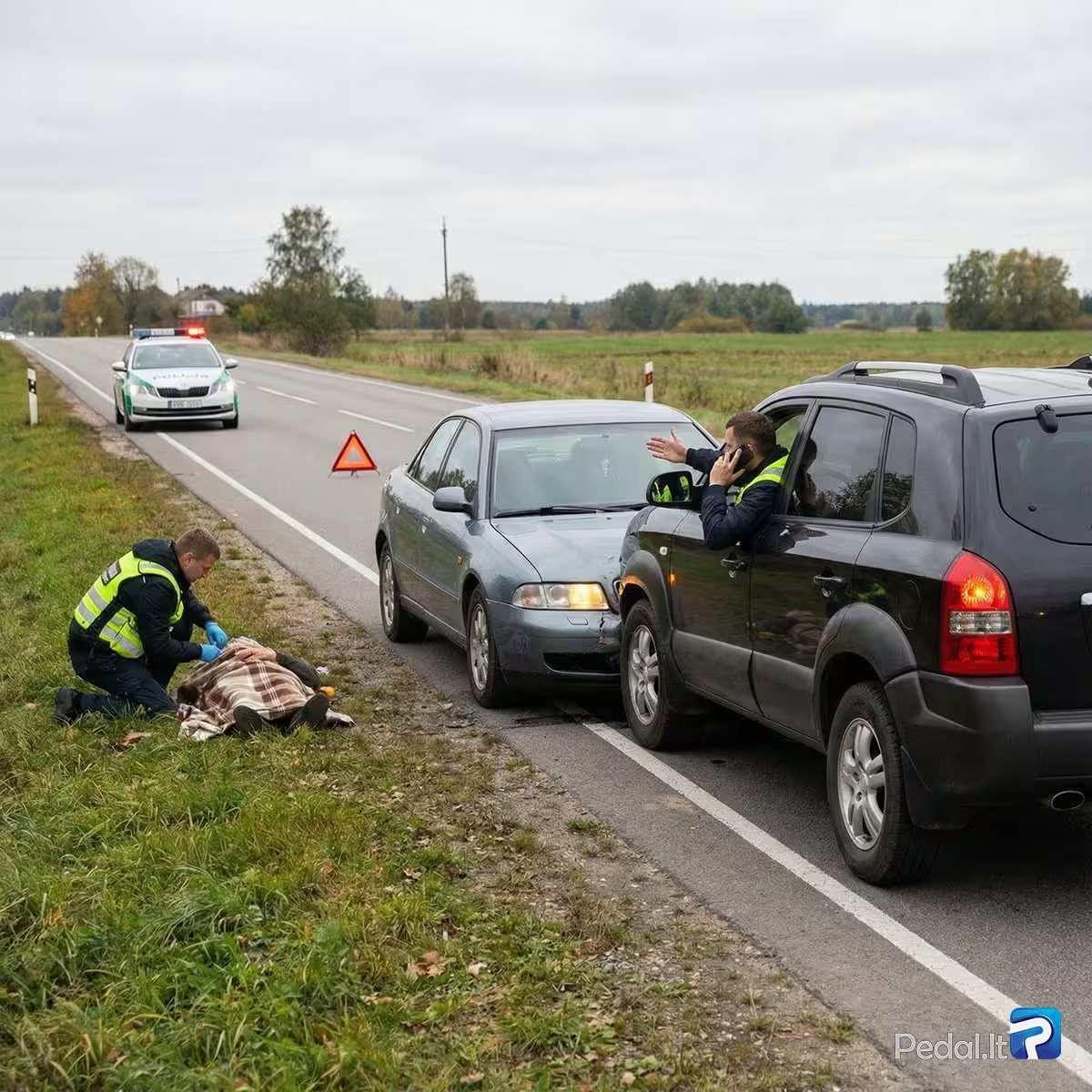
What must the drivers do if a person was injured in a road accident?
XXIX. Obligations of Road Users in the Event of a Road Accident (paras. 219–222)
219. In the event of a road accident, every driver involved or any other road user must:
219.4. if a person has died or been injured in the road accident, report the accident to the police and remain at the scene of the accident or, after notifying the police, return to the scene and wait for the police to arrive, except in cases where the police permit the road user to leave the scene, or where casualties or the person reporting the accident require urgent first aid;
220. If no deaths or injuries occurred in the road accident and the road users involved in the accident agree on the circumstances of the accident and do not call the police to the scene, the road users involved must draw the accident diagram on the Road Accident Report Form, describe the circumstances in writing, and have it signed by all involved road users. If none of the road users involved has the Road Accident Report Form, the circumstances may be described and the diagram drawn on a blank sheet of paper where all road users involved, their vehicles, and witnesses are listed, and all details and circumstances of the accident are confirmed by the signatures of the road users involved. Where the circumstances of the accident are disputed, the police must be called to the scene.
1. If all road users agree on the circumstances of the accident and there are no injuries, they do not need to complete any written report.
2. Drivers must describe the circumstances of the accident in writing, create a diagram of the scene, and list all involved road users, their vehicles, and any witnesses.
3. They must call the police.
What types of liability apply to reckless driving while intoxicated?
Drivers with a blood alcohol concentration (BAC) exceeding 1.5 per mille are subject to a fine, arrest, or imprisonment for up to one year (since 01/01/2017). Drink-driving may give rise to both criminal and administrative liability. The applicable type of liability depends on the specific circumstances and the seriousness of the offence:
- Administrative liability: applies when the offences are of lesser severity.
- Criminal liability: applies when the offence is particularly serious or when driving endangers road safety, or the health or life of others.
Code of Administrative Offences of the Republic of Lithuania, Article 420(2): Reckless driving, i.e. a violation of the Road Traffic Rules that endangers road safety or the safety of oneself or others for hooligan motives, incurs a fine ranging from EUR 450 to EUR 550 for drivers and from EUR 750 to EUR 1,000 for persons not entitled to drive vehicles.
Code of Administrative Offences of the Republic of Lithuania, Article 420(4): The acts referred to in paragraph 2 committed by an intoxicated person (mild intoxication: more than 0.4 per mille but not exceeding 1.5 per mille), by a person under the influence of drugs, psychotropic or other psychoactive substances, by a person who avoided performing a field sobriety test, or by a person who consumed alcohol, drugs, psychotropic or other psychoactive substances before the test, shall incur a fine ranging from EUR 850 to EUR 1,200 for drivers.
Criminal Code of the Republic of Lithuania, Article 281(7): Persons who drive a road vehicle or instruct a learner driver while under the influence of alcohol with a BAC exceeding 1.5 per mille shall be punished by a fine, arrest, or imprisonment for up to one year.
1. Criminal liability.
2. Administrative liability.
3. Civil liability.
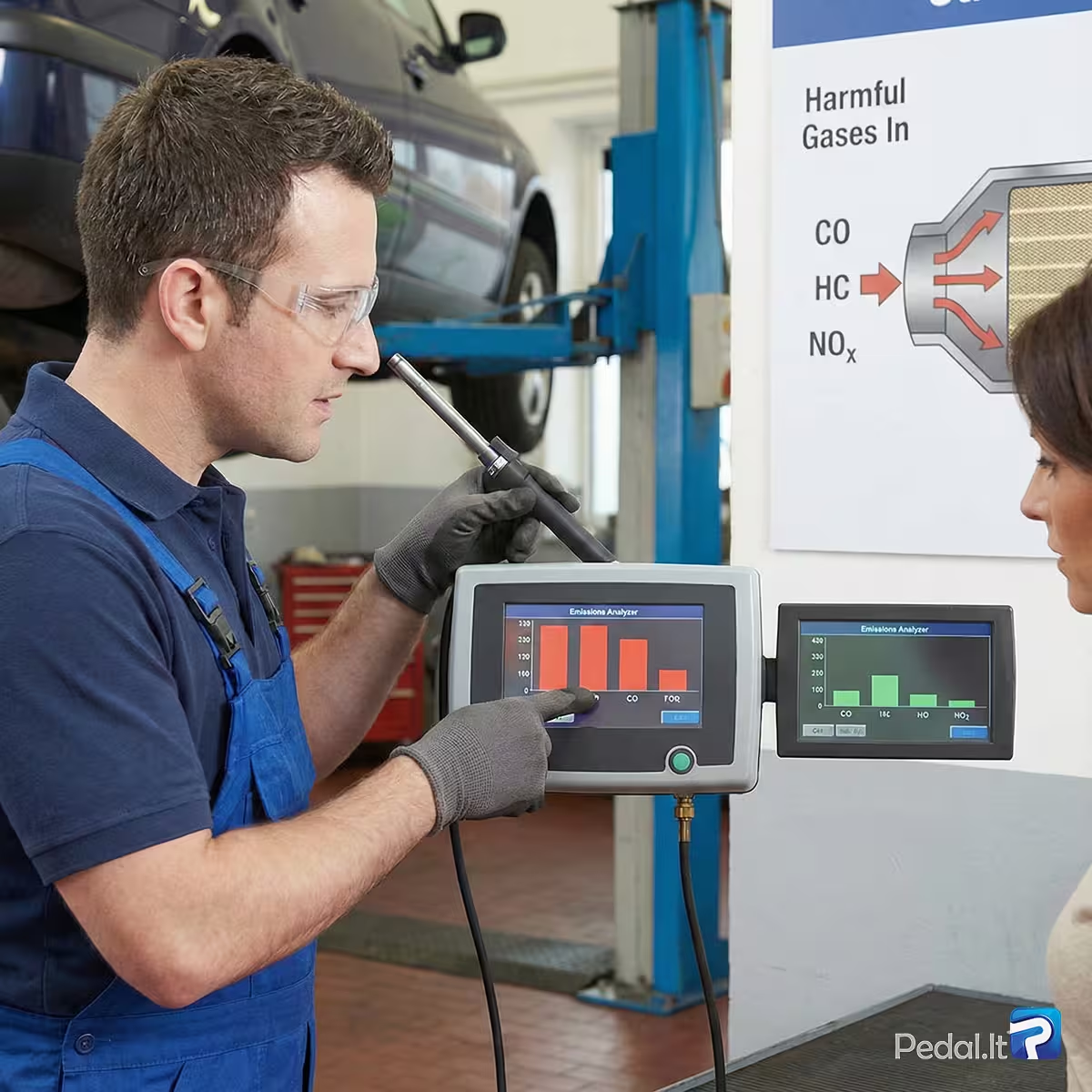
Why does a car need a catalytic converter in its exhaust system?
A catalytic converter neutralises (burns) harmful exhaust gases. It converts three toxic substances—carbon monoxide (CO), nitrogen oxides (NOx), and unburnt hydrocarbons (UHC)—into non-toxic substances through oxidation and reduction reactions. Its purpose is not to dampen engine noise; that is the role of the muffler (silencer). Removing a catalytic converter can alter the car's exhaust sound and often makes it louder or harsher, but this is only a side effect, not the converter's primary function.
1. To reduce engine noise.
2. To neutralise harmful pollutants in the exhaust gases.
3. To reduce fuel consumption.
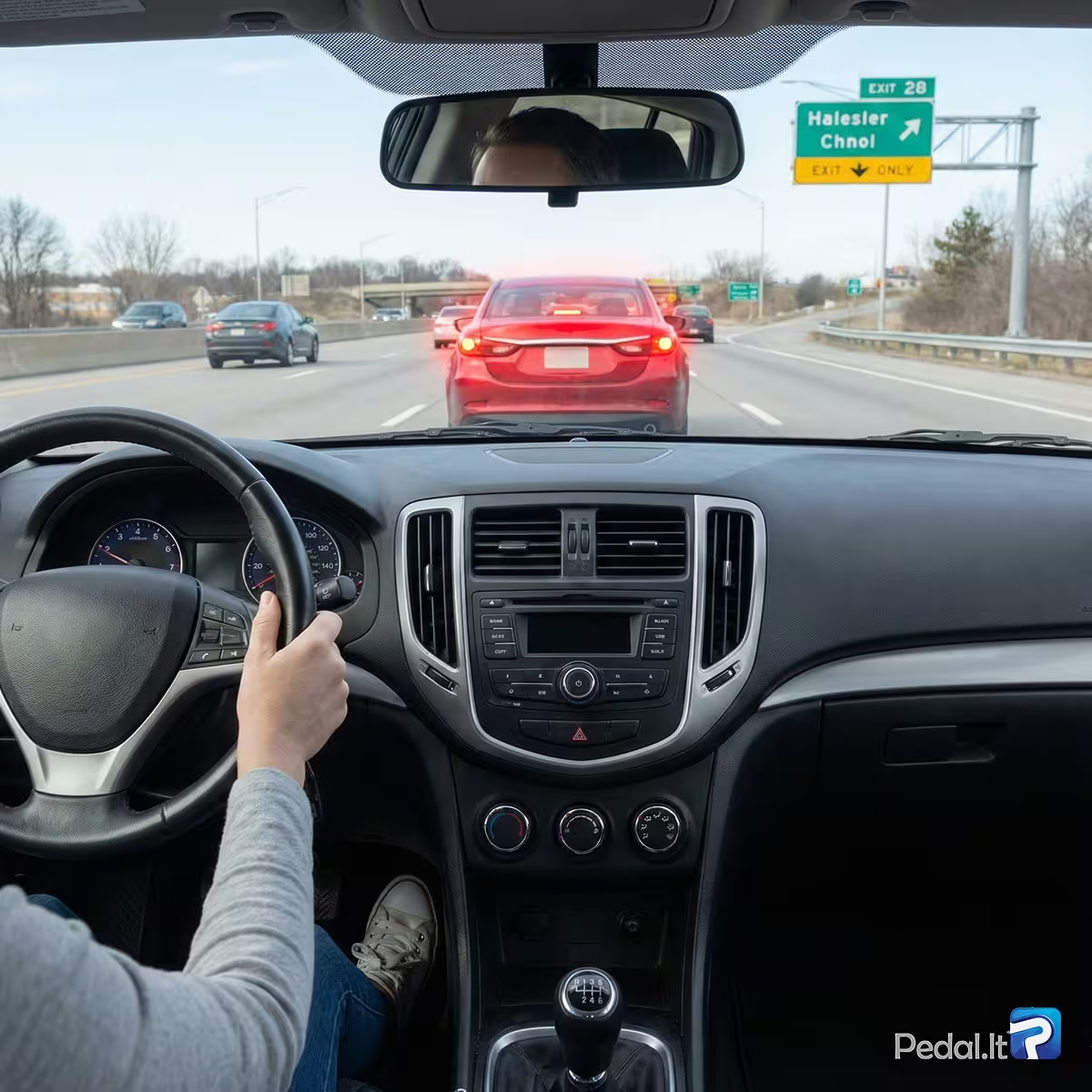
What should you do if you notice a vehicle braking in the distance ahead?
Explanation of terms: • To brake – press the brake pedal; the car slows down rapidly and stops before the expected obstacle. • To release the accelerator pedal – take your foot off the gas; the car gradually slows on its own but does not come to a complete stop and continues moving. • To drive without changing speed – keep the accelerator position the same; the car continues at a constant speed. RTR 128. If there is an obstruction or traffic safety is at risk, the driver must reduce speed or, if necessary, bring the vehicle to a complete stop or steer around the obstruction (if it can be seen) without creating a hazard for other road users.
1. Apply the brakes.
2. Take your foot off the accelerator and be prepared to brake.
3. Maintain your current speed.
When driving at night, a car's dipped-beam (low-beam) headlamps may dazzle oncoming drivers if:
Your vehicle may dazzle oncoming drivers for one or more of the following reasons: the headlamps are incorrectly aimed (too high); the headlamps are improperly fitted (not seated correctly in their sockets or the wrong type has been fitted); or the vehicle is carrying a heavy load in the boot or is fully loaded and the headlamps have not been lowered using the headlamp aiming/levelling control (if fitted).
1. The vehicle's headlamps are incorrectly adjusted (aimed too high).
2. The headlamps are improperly installed or the wrong type has been fitted.
3. The vehicle is carrying a heavy load in its boot.
Who has the right of way in residential areas?
RTR 175. In residential areas, pedestrians are permitted to walk on the roadway but must not obstruct vehicle traffic. Vehicles are required to yield to pedestrians in these areas.
1. Vehicles.
2. Pedestrians.
Which device is used to measure the level of alcohol in the human body?
Alcohol levels in the human body are measured using a breathalyser.
1. A breathalyser.
2. A manometer.
What is the colour of the road sign labelled 'Place of Interest'?
629. 'Place of Interest' sign. Indicates the name of a cultural or historical site of interest. The sign has a brown background.
1. Blue.
2. Green.
3. Yellow.
4. Brown.
.avif)
If, when starting to move, your vehicle's wheels spin while the vehicle remains stationary:
To drive a motor vehicle economically and sensibly, begin moving smoothly and steadily. Where possible, reduce your speed gradually and avoid unnecessary abrupt actions unless they are essential (e.g., emergency braking because of an unexpected obstacle on the road).
1. It is uneconomical — it increases fuel consumption and accelerates tyre wear.
2. The tyre squeal or wheel spin disturbs other road users.
3. It is regarded as normal and acceptable.
Upon request by another road user involved in the accident:
RTR 219. In the event of a road accident, every driver involved or any other road user must: 219.3. upon the request of other road users involved in the accident, present a valid identity document or a valid driving licence, and a certificate (policy) of compulsory third‑party motor vehicle liability insurance in order to identify the insurer;
1. You must present a valid identity document and the certificate (policy) of compulsory motor third‑party liability insurance to identify the insurer.
2. You are required to present the documents only to the police.
When is it mandatory to renew or replace a driver's license?
Order No. 1V-328 of the Minister of Internal Affairs of the Republic of Lithuania, dated 10 September 2008, "On Approval of the Rules for Issuing Motor Vehicle Driver's Licences", ch. II, p. 7: A new driver's licence shall be issued when: 7.1 the previous licence expires or has expired; 7.2 the previous licence is lost (misplaced, stolen, etc.); 7.3 the licence is worn out or damaged; 7.4 the personal data entered in the licence has changed; 7.5 the driver's medical condition has changed; 7.6 the applicant wishes to obtain a licence for driving vehicles of another category(ies) or to acquire the right to drive motor vehicles for the first time; 7.7 the applicant wishes to replace an old-model licence with a new model; 7.8 the applicant wishes to obtain a licence in place of one issued by another state; 7.9 the applicant wishes to obtain a licence in place of a destroyed one. SEAK Art. 22(4): Driver's licences are issued for a period not exceeding 10 years, and the right to drive vehicles of categories C1, C1E, C, CE, D1, D1E, D, DE is issued for no longer than 5 years from the date of licence issuance. SEAK Art. 22(5): Novice drivers receive a licence valid for 3 years; after 2 years from issuance they have the right to replace it with a licence valid for 10 years, pursuant to the procedure established by the Minister of the Interior or an authorized institution, without additional driver training, provided that within those 2 years they did not commit traffic offences requiring additional training under the Law on Road Traffic or cause a traffic accident that harmed a road user's health (except where the accident occurred under circumstances excluding criminal liability or where the person is not subject to administrative sanction). A novice driver who committed such an offence or caused such an accident must complete the required additional driver training within one year from the date the relevant resolution (court verdict) takes effect or from the date of enforcement of the administrative order issued after the offence. If the court verdict or criminal order imposes arrest or imprisonment and the sentence is not suspended, the additional training must be completed within one year after completion of the imposed sentence. JB
1. When the personal data on the licence has changed (for example, a change of name or surname).
2. If your place of residence has changed.
3. If you are going abroad.
4. If you drive more than one vehicle.
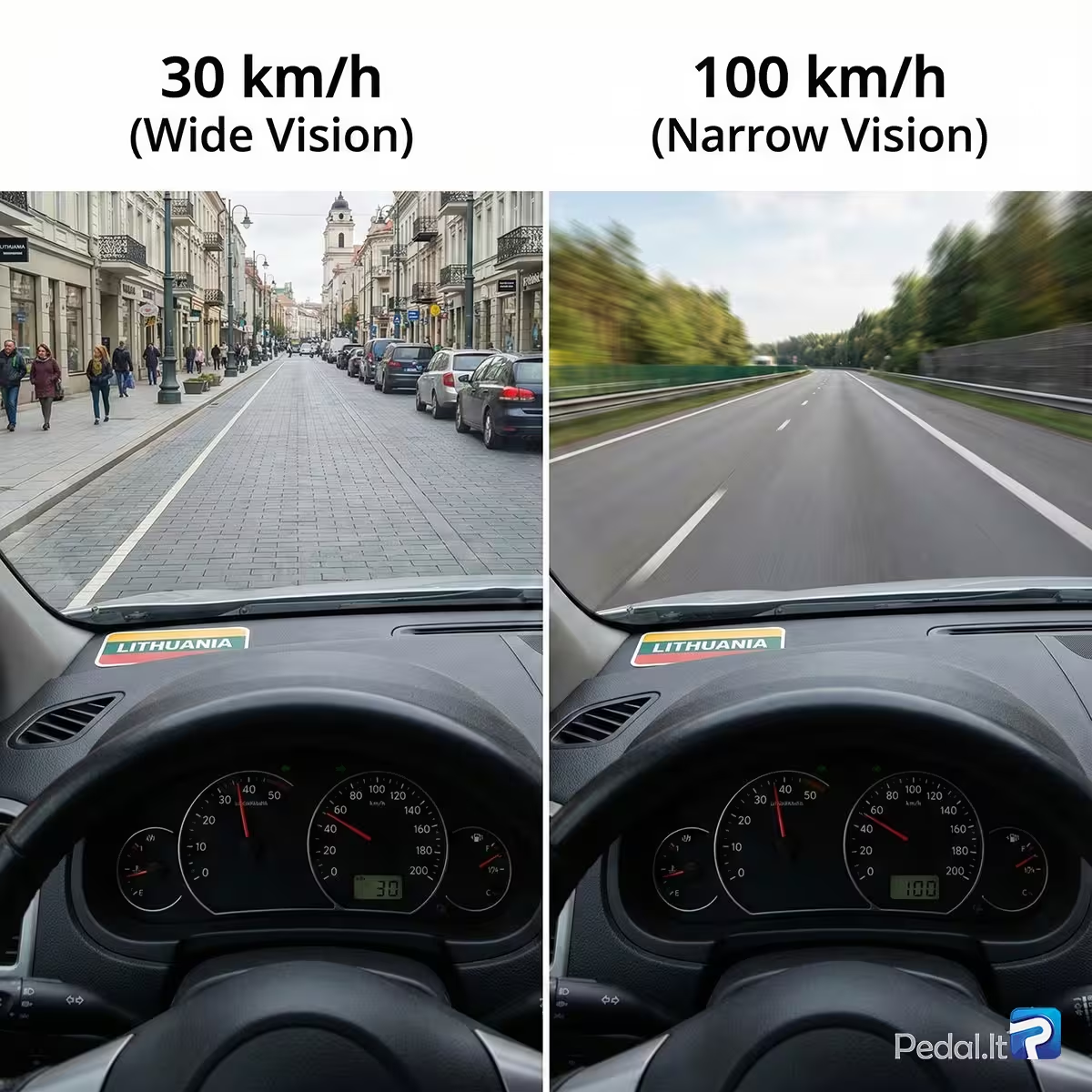
How does your field of vision change as your driving speed increases?
The field of vision is affected by driving speed, visual acuity (e.g., short-sightedness), fatigue, the color and brightness of objects, their contrast with the background, and other factors. As speed increases, a driver’s area of attention narrows and shifts forward: although drivers tend to look farther ahead, the effective dimensions of attention decrease inversely with speed. For example, at 50 km/h it is usually sufficient to focus about 150 m ahead to detect an obstacle; at 140 km/h an oncoming vehicle may not be noticed until it is only 15–20 m from the point of passing.
1. It becomes narrower.
2. It becomes wider.
3. It does not change.
What documents must the driver of a motor vehicle bring when summoned by the police to appear at the specified time?
8. After receiving a summons from the police, the road user must appear at the police station at the specified time. He must bring an identity document and any other documents listed in the summons. JB
1. In all cases, the person must present an identity document. Additionally, if specified in the summons, they should bring the vehicle's state technical inspection certificate, the compulsory civil insurance policy for the vehicle, and the driver's licence.
2. A driver's licence in every case.
3. A valid medical fitness certificate for driving.
4. A certificate of completion of the mandatory first-aid training.
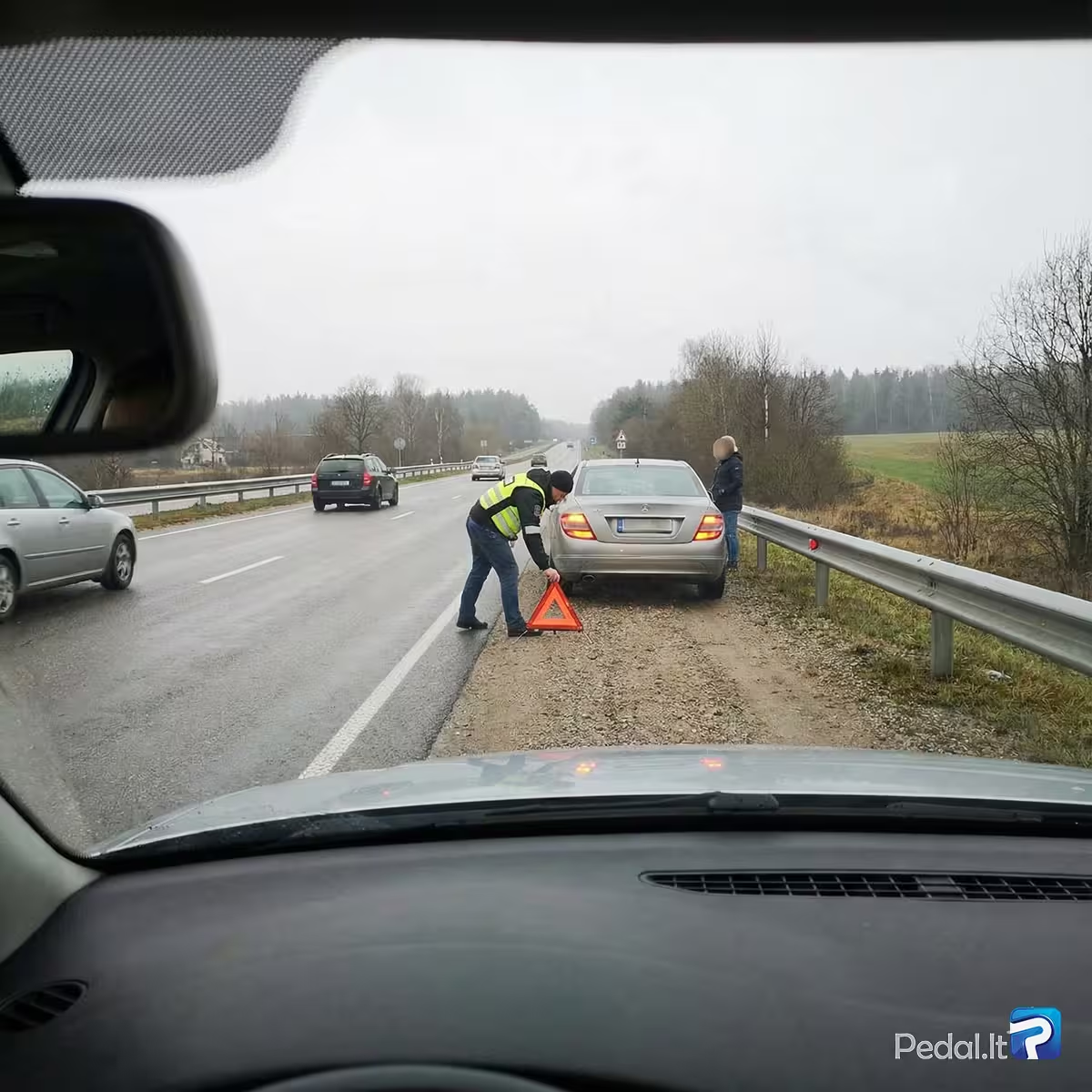
A vehicle has broken down on the road. What is the safest action to take?
1. Have the vehicle removed from the roadway as soon as possible using a tow truck (rigid towing).
2. Turn on your hazard lights and wait beside the vehicle.
3. Try to push the vehicle to the side of the road.
4. Stop and attempt to repair the vehicle while still on the roadway.
Who must give way on a signed slope when an obstruction is present?
On slopes marked with the appropriate road signs, the vehicle traveling downhill must give way when an obstruction is present, regardless of which side the obstruction occupies (RTR 139). However, if it is difficult for two vehicles to pass each other, the driver whose side has the obstruction should give way.
1. The driver traveling uphill.
2. The driver whose side of the road has an obstruction.
3. The driver traveling downhill.
4. The driver whose side of the road has no obstruction.
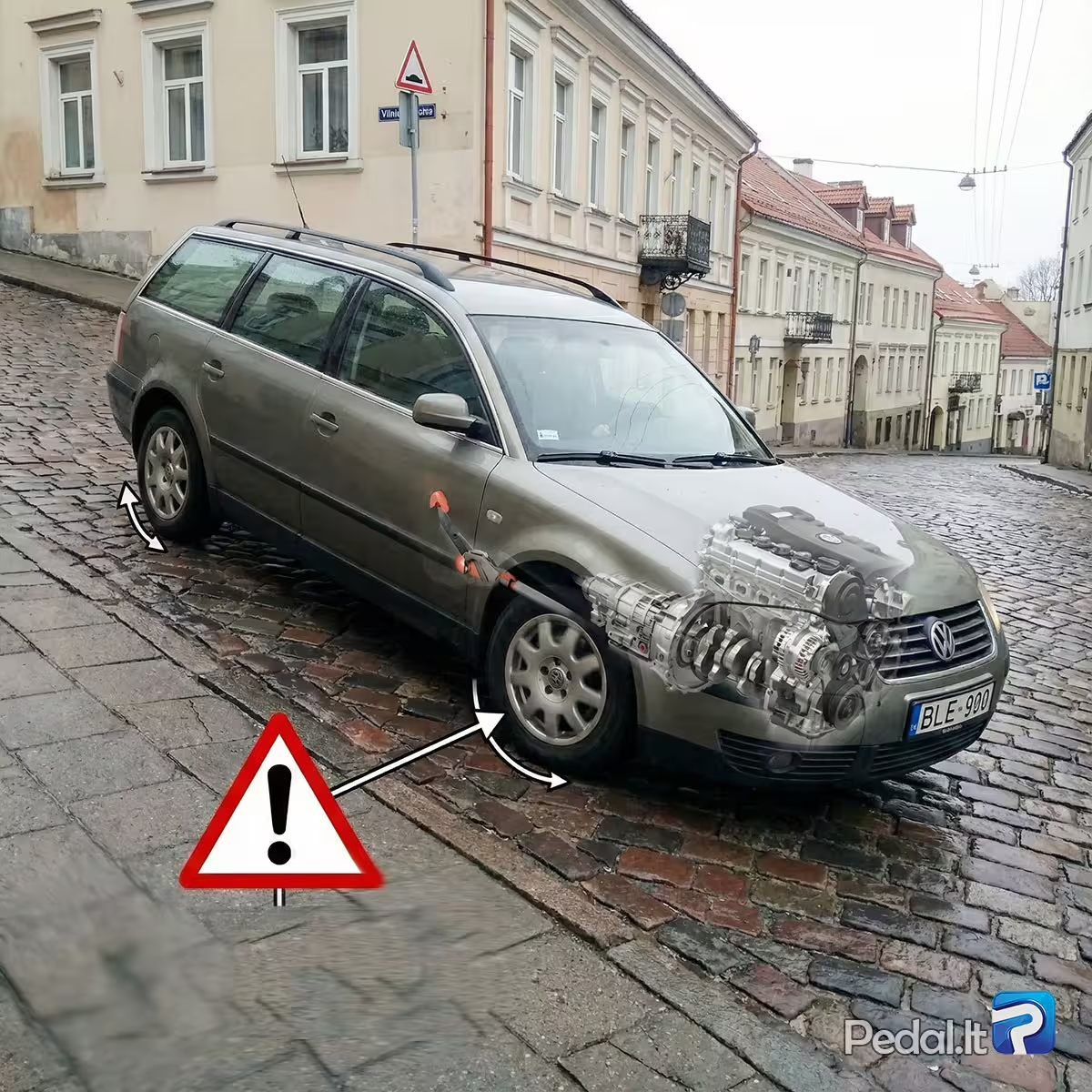
When parked on a downhill slope, leaving a diesel vehicle in gear is hazardous because:
If a vehicle is left in gear and begins to roll downhill, certain older diesel engines may rotate and start automatically.
1. The transmission or gearshift mechanism can be damaged.
2. An older diesel engine may start automatically.
3. There is no danger.
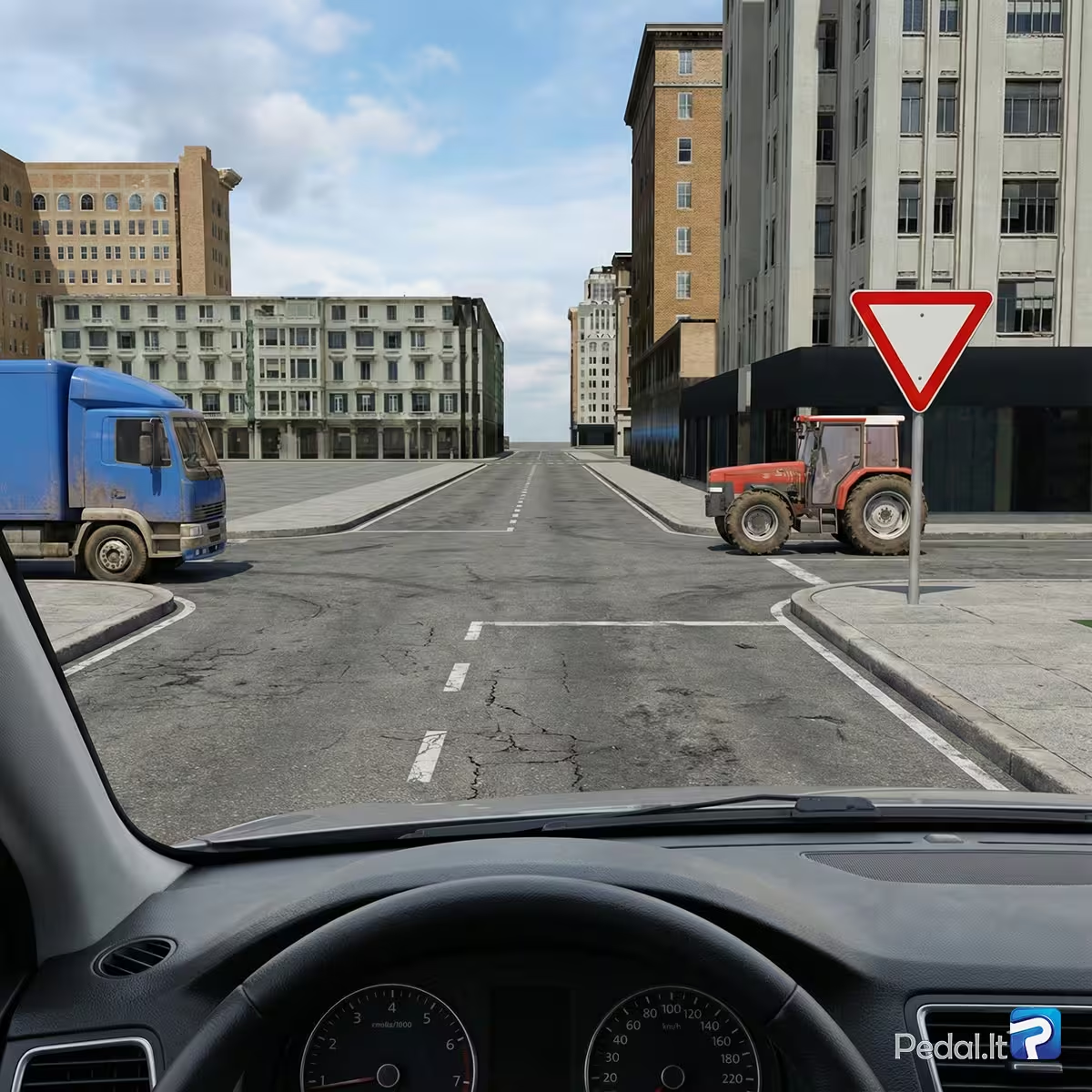
You intend to drive straight through the junction. In this situation:
1. I will yield to the commercial vehicle.
2. I will yield to the tractor.
3. I will proceed through the junction first.
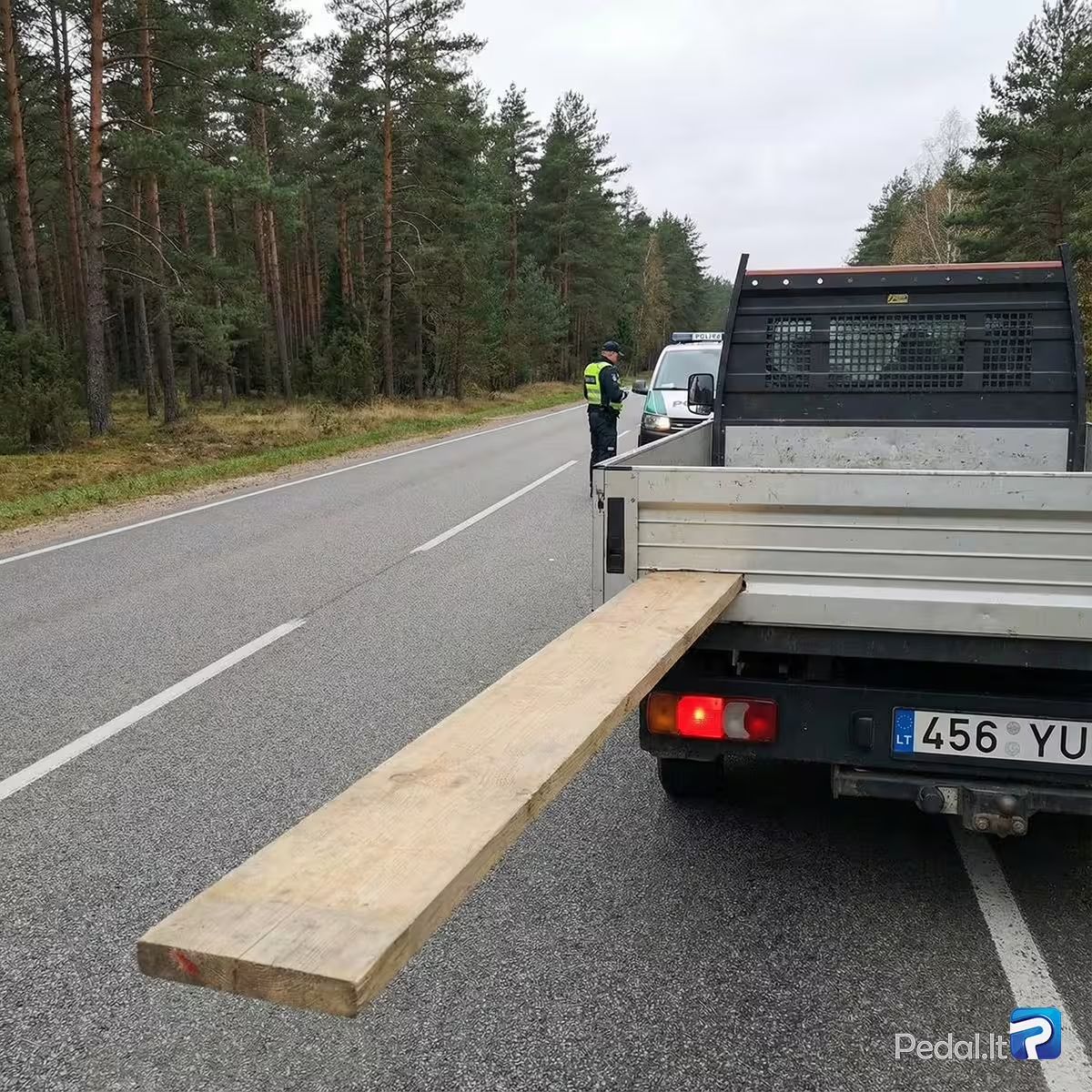
What is the maximum distance a load may extend beyond the rear of a vehicle without requiring marking?
Paragraph 210 of the Road Traffic Rules states that a load must be marked if it extends more than 1 metre beyond the front or rear of the vehicle. A load that extends up to and including 1 metre may remain unmarked; any extension beyond 1 metre must be marked. RTR 210: Any motor vehicle carrying a load which extends beyond the front and rear of the vehicle by more than 1 m or beyond the side of the vehicle must have the extremities of the load marked as provided for in Annex 4 to these Rules.
1. 0.5 m.
2. 1 m.
3. 1.5 m.
After you pass your first driving test for category B, the driving licence you receive will be valid for:
LAW ON ROAD TRAFFIC SAFETY Article 22.5. Novice drivers are issued a driving licence valid for three years. In accordance with the procedure established by the Minister of the Interior or their authorised institution, this licence may be replaced with a 10-year licence after two years from the date of issue without completing additional driver training, provided that during those two years the driver has not committed any violations of the Road Traffic Rules (RTR) that would require additional driver training under this Law and has not caused a road traffic accident resulting in bodily injury to road users (except where the accident occurred under circumstances that exclude criminal liability or where the person is not subject to administrative liability). A novice driver who commits any RTR violation that triggers additional driver training under this Law, or who causes a road traffic accident resulting in bodily injury to road users (except as noted above), must complete additional driver training within one year from the date a court judgment (or order) recognising the person as having committed an offence takes effect, or from the date of execution of an administrative order issued after the administrative offence. If a court judgment or penal order imposes arrest or a term of imprisonment and the execution of the sentence is not suspended, the additional driver training must be completed within one year after serving the imposed sentence.
1. 10 years.
2. 15 years.
3. Unlimited validity.
4. 3 years.
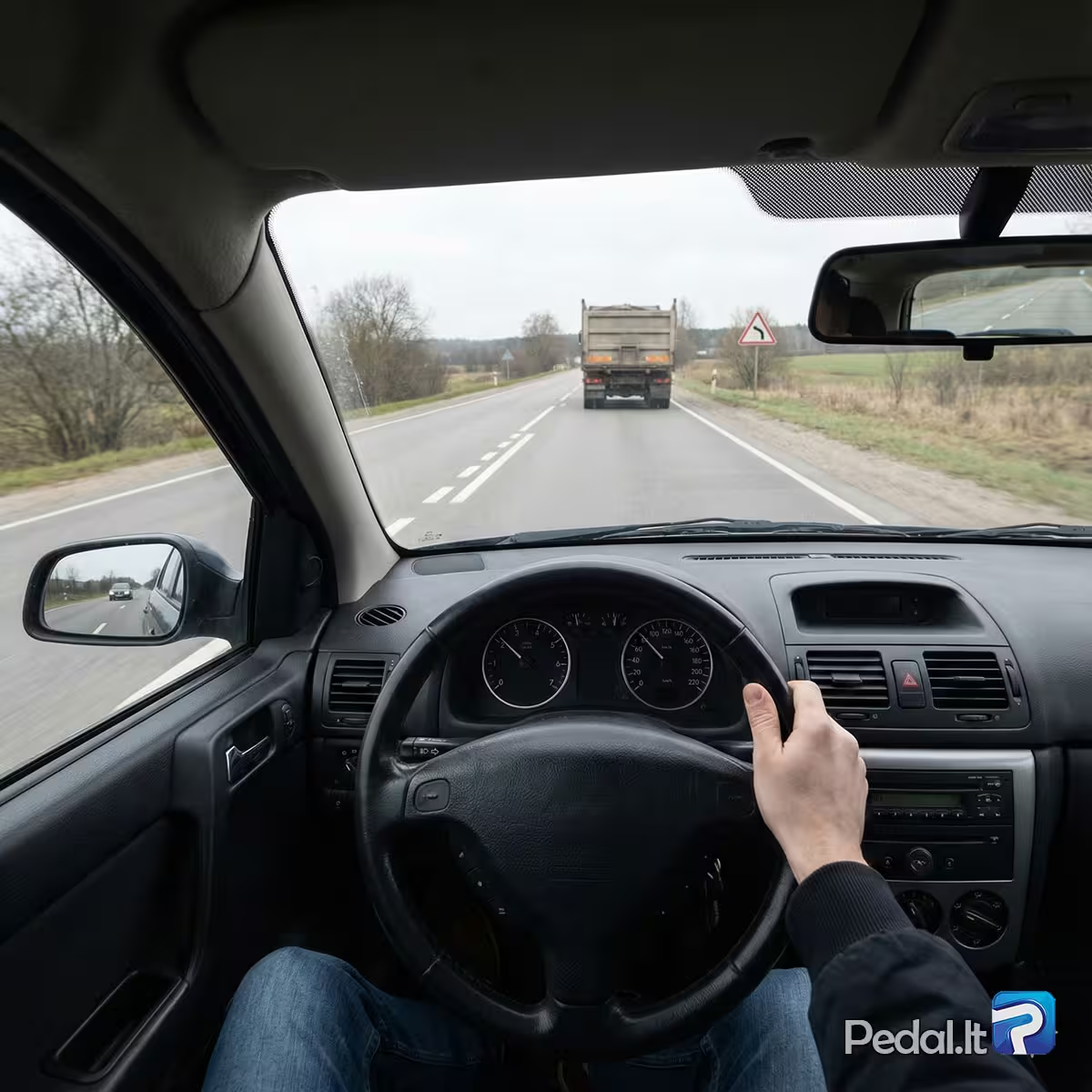
Before overtaking, drivers must ensure that:
RTR 136. Drivers should avoid unnecessary overtaking manoeuvres. Before overtaking, drivers must exercise extra caution and ensure that: 136.1 no driver following has already begun to overtake them; 136.2 the driver of the vehicle to be overtaken is not indicating a left turn; 136.3 the section of lane required for the overtaking manoeuvre is clear and the manoeuvre will not obstruct oncoming traffic or pedestrians on the carriageway; 136.4 a safe distance from the vehicle being overtaken can be maintained during the manoeuvre; 136.5 after completing the overtaking manoeuvre they will be able to return safely to the original traffic lane without obstructing the overtaken vehicle.
1. The road ahead is clear and the overtaking manoeuvre can be completed safely
2. No vehicle is approaching from the opposite direction
3. No vehicle behind has already begun overtaking
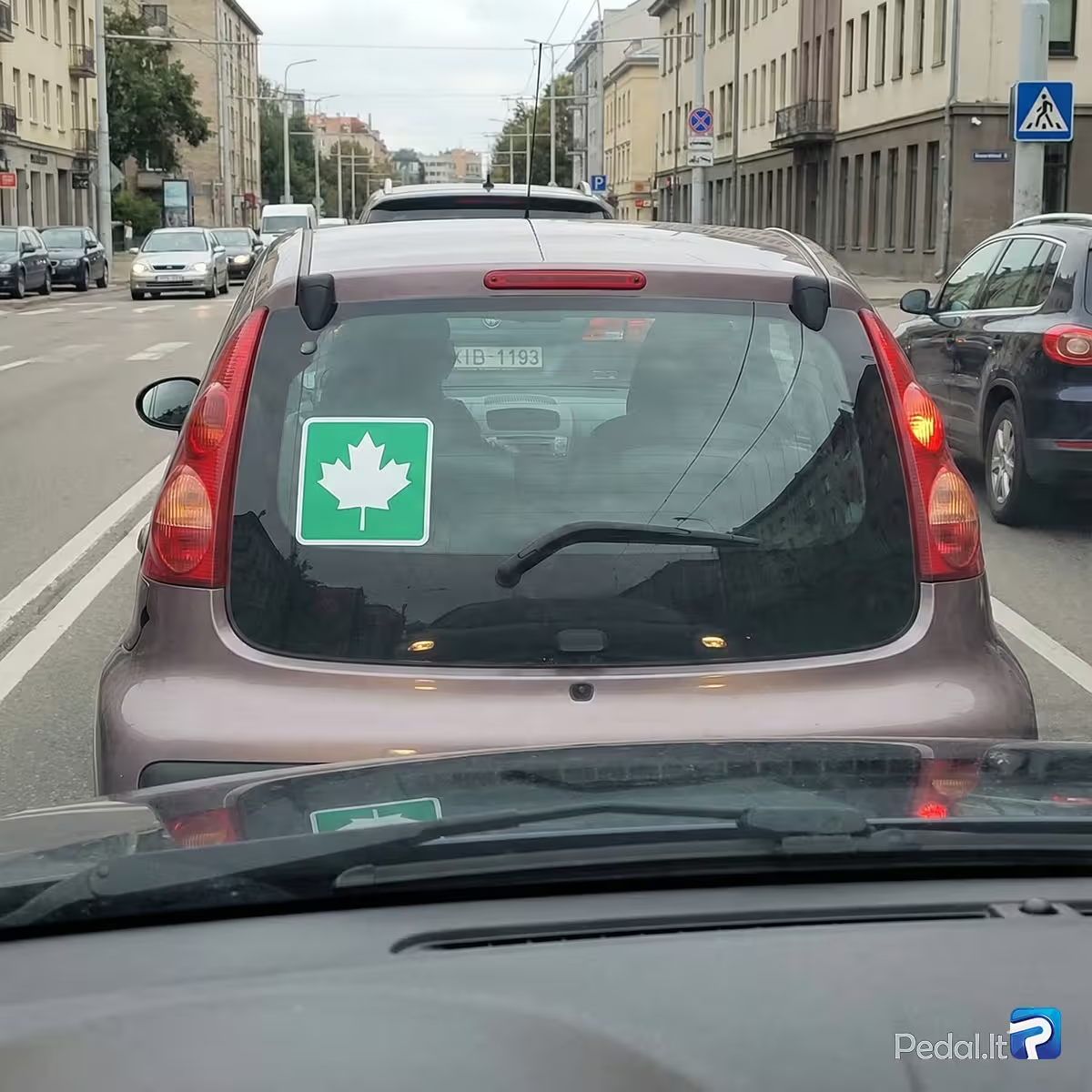
What size distinguishing sign (maple leaf) is permitted on a vehicle driven by a novice driver?
The side length of the 'Maple Leaf' sign must be between 100 mm and 150 mm. Therefore, the correct answers are 100×100 mm and 150×150 mm. A vehicle driven by a novice driver must display, on the left side of the rear, a white square distinguishing sign with a green border and a green maple leaf in the centre. The side length of the square must be between 100 mm and 150 mm, and the border width must be one-tenth (1/10) of the side length.
1. 100 × 100 mm.
2. 150 × 150 mm.
3. 200 × 200 mm.
4. The size of the sign does not matter.
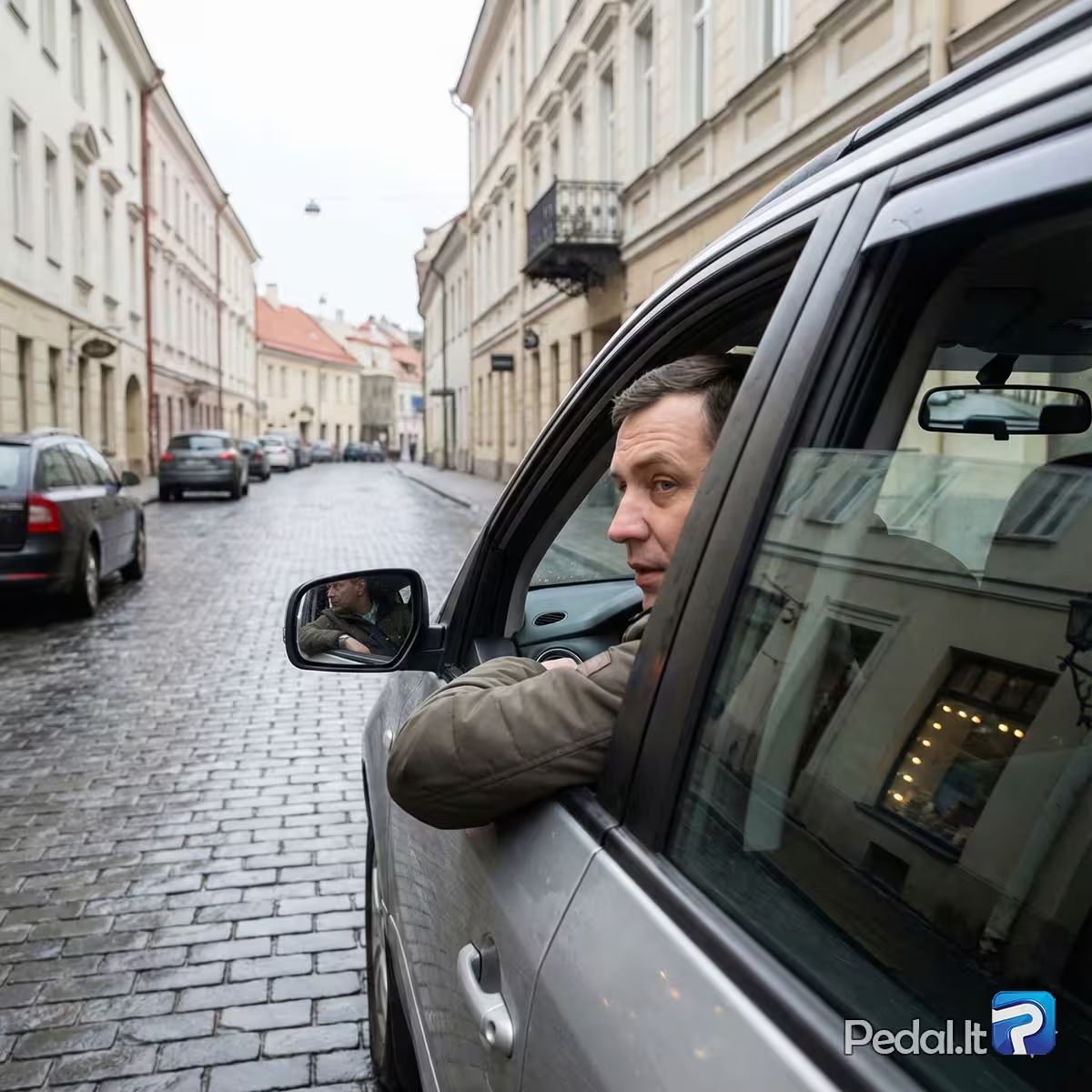
What must a driver do when reversing?
Note: If the steering wheel is turned sharply while reversing, the front of the vehicle can swing to the side and strike obstacles or other road users. When reversing, a driver must give way to other road users.
1. The driver must give way to other road users.
2. The driver must use the horn.
3. The driver must make sure that there are no obstructions behind the vehicle.
4. Do not obstruct other road users ahead.
What can cause the vehicle's cabin windows to fog up?
If the windows fog up (for example after washing the vehicle), the heating/ventilation setting may be incorrect.
1. Residual moisture remaining after washing the vehicle.
2. The engine coolant level is too high.
3. Incorrect heating/ventilation setting.
4. An excessive number of occupants in the cabin.
In which situations must a driver report a road accident to the police?
If a road accident results only in property damage and the owner of the damaged property is not present at the scene and cannot be contacted, the road user involved must immediately notify the owner or, if that is not possible, report the accident to the police.
XXIX. Obligations of Road Users in the Event of a Road Accident (paras. 219–222)
219. In the event of a road accident, every driver involved or any other road user must:
219.1. stop immediately without creating further danger to other road users and mark the accident scene as required by subparagraph 91.2 and paragraph 92 of these Rules;
219.2. take all possible measures to ensure safety at the scene, and if the police are called, avoid (without endangering traffic) altering the circumstances of the accident and preserve the traces and evidence of the collision;
219.3. at the request of other road users involved, present a valid identity document or driving licence and a certificate (policy) of compulsory motor third-party liability insurance to identify the insurer;
219.4. if a person has been injured or has died in the accident, report the accident to the police and remain at the scene, or after notifying the police return and wait for them, except where the police permit departure or where the casualties or the person reporting the accident require immediate first aid;
219.5. take all necessary measures to provide first aid to the casualties, call an ambulance or, if calling an ambulance or transporting casualties to a medical facility by other means is impossible, carry them to the nearest medical facility in a private vehicle unless such transport would endanger their life or health.
222. If a road accident causes only property damage and the victim is not present at the scene, the road user involved must immediately notify the victim or, if that is not possible, the police.
1. When the accident caused only property damage and the owner of the damaged property is not present at the scene and cannot be reached.
2. When there is a dispute or disagreement about the circumstances of the accident.
3. When a person has been injured as a result of the accident.
4. When a person has died as a result of the accident.
1 of 30 Task
Time left: 00:00:00
1
2
3
4
5
6
7
8
9
10
11
12
13
14
15
16
17
18
19
20
21
22
23
24
25
26
27
28
29
30