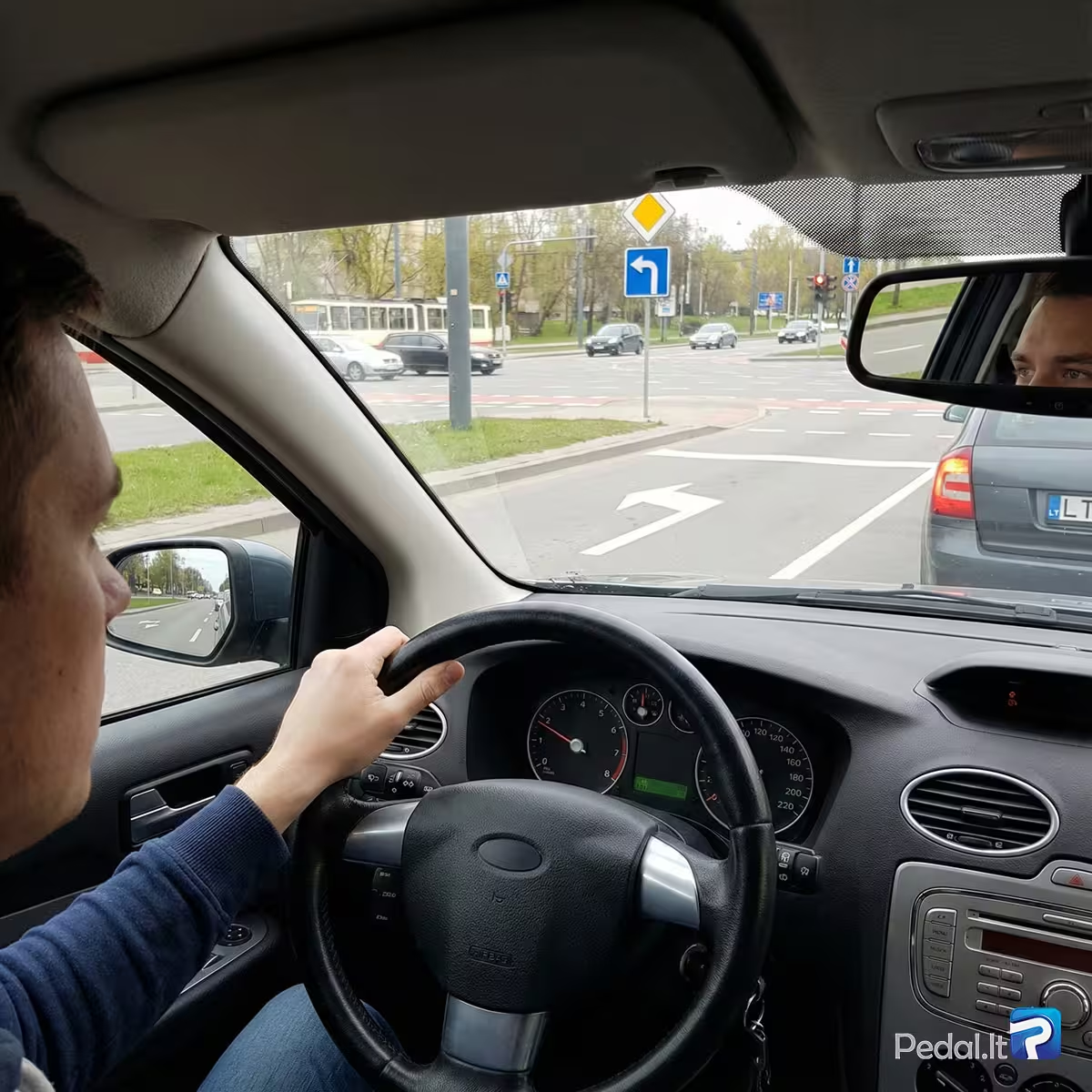
Where is it prohibited to make a U-turn?
RTR 116. U-turns are prohibited: 116.1 on pedestrian crossings; 116.2 on level crossings; 116.3 in tunnels; 116.4 on and beneath bridges, overpasses and viaducts; 116.5 where visibility in at least one direction is less than 100 metres; 116.6 on roads with a central reservation, except at locations designated and marked for U-turns by road signs and/or road markings. JB
1. On and beneath bridges, overpasses and viaducts.
2. In tunnels.
3. On level crossings (railway crossings).
4. On roads where the carriageway is less than 10 m wide.
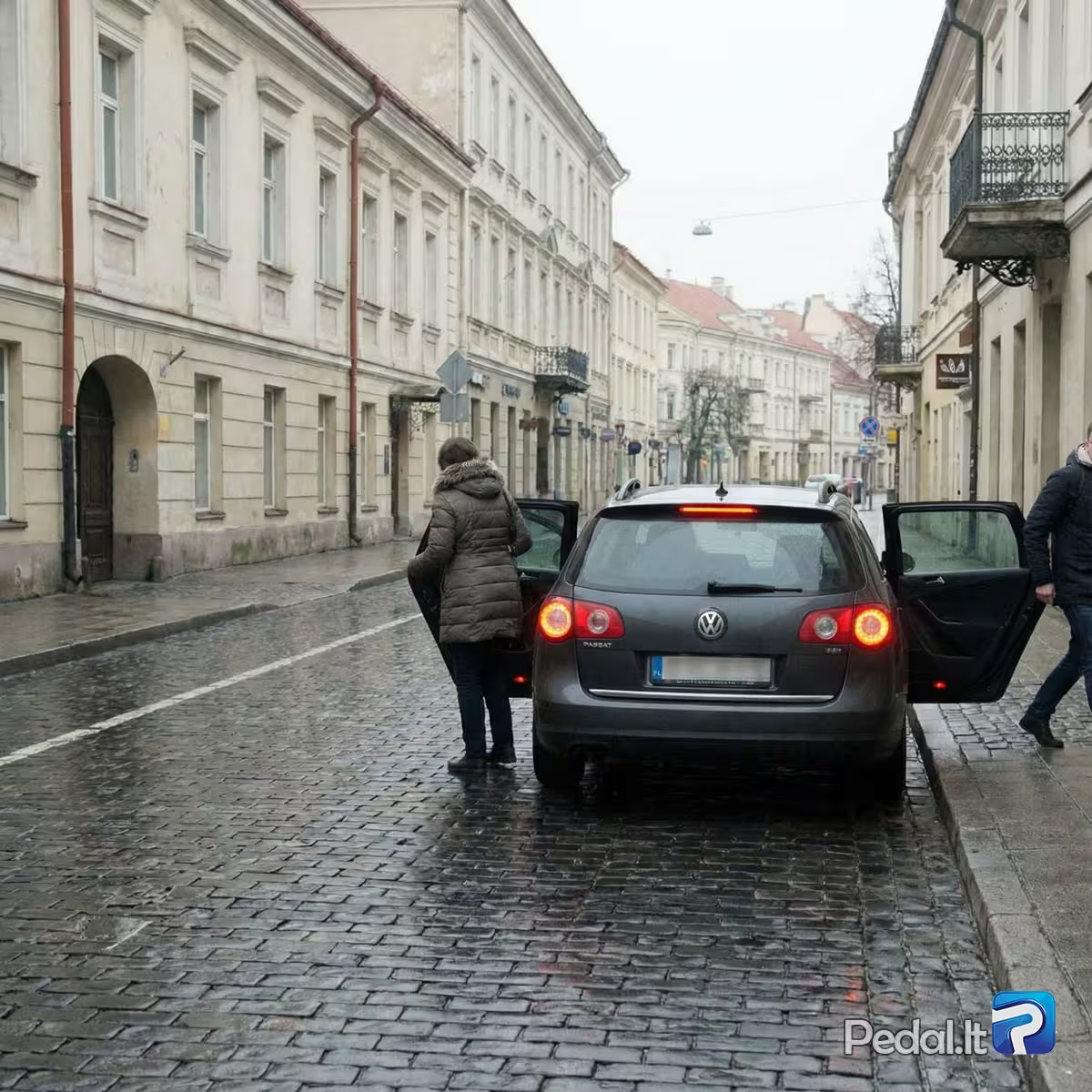
Is it permitted for passengers to board or alight from a vehicle from the roadway side?
Passengers may board or alight from the roadway side only when it is impossible to do so from the pavement (sidewalk) or hard shoulder, and only if it can be done safely without obstructing other road users.
1. It is prohibited.
2. It is allowed.
3. Yes — permitted only when boarding or alighting from the pavement (sidewalk) or hard shoulder is not possible.
Why is it safer to brake without depressing the clutch while driving downhill?
After releasing the accelerator (engine braking), place your foot on the brake pedal and stop without pressing the clutch. This is the most effective braking method, especially in winter when roads are slippery. Braking with the clutch disengaged reduces stopping effectiveness and vehicle stability, increasing the risk of skidding to the side. JB
1. Braking is more effective.
2. The vehicle remains more stable during braking.
3. The tires will not wear out as quickly.
You are driving in heavy rain and the steering wheel suddenly becomes very light to turn. What should you do?
If the steering wheel becomes very easy to turn, the vehicle's tyres have likely lost traction on the slippery road surface. In this situation, you must reduce your speed gradually — abrupt throttle changes or hard braking can cause the vehicle to skid or lose control.
1. You will slightly increase your speed.
2. You will gradually release the accelerator.
3. You will brake suddenly to reduce your speed.
4. You will move towards the hard shoulder.
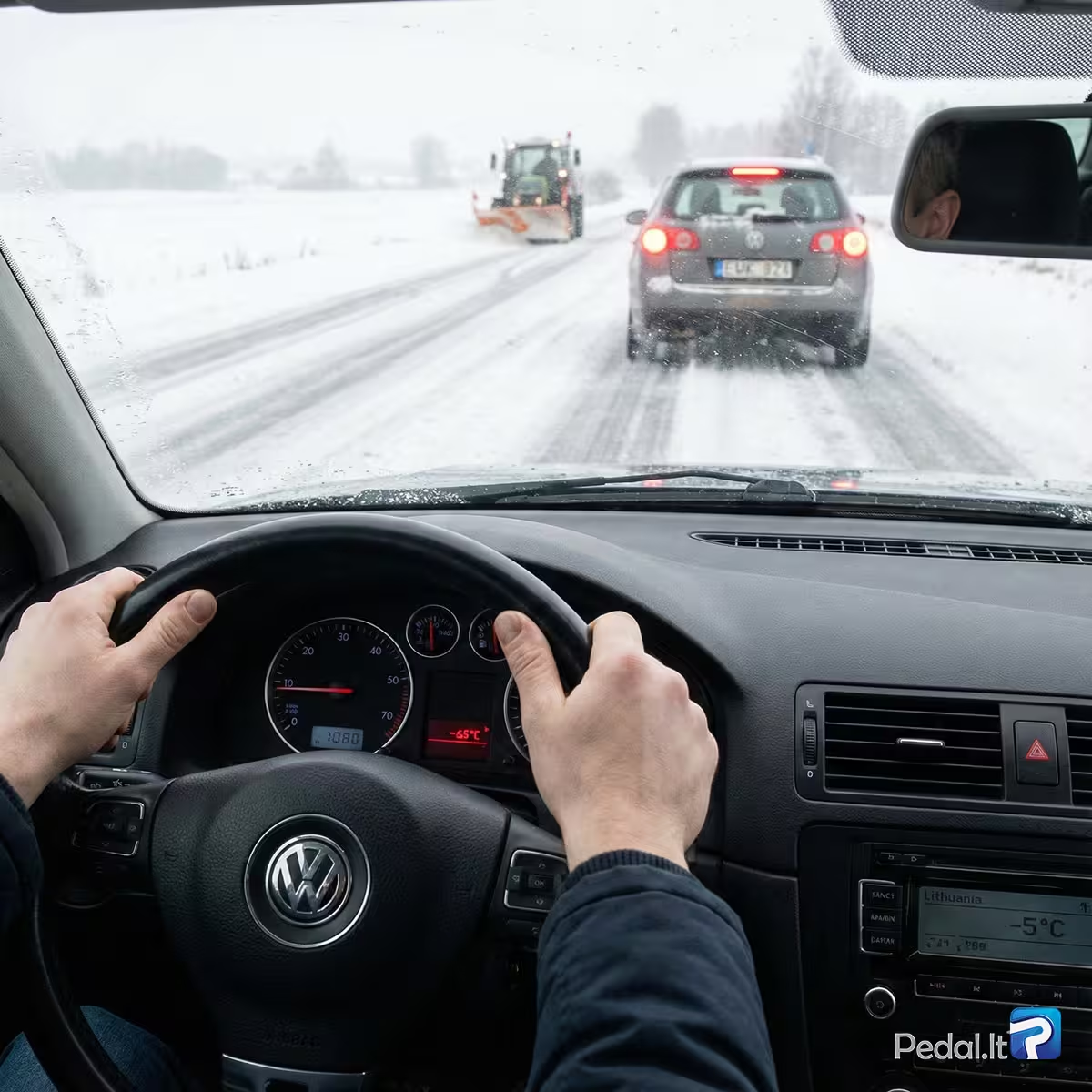
Which factor is considered the primary risk when driving on snowy roads?
1. Driver error (human factor)
2. Adverse weather conditions
3. Slippery road surface
What is the colour of the road sign labelled 'Place of Interest'?
629. 'Place of Interest' sign. Indicates the name of a cultural or historical site of interest. The sign has a brown background.
1. Blue.
2. Green.
3. Yellow.
4. Brown.
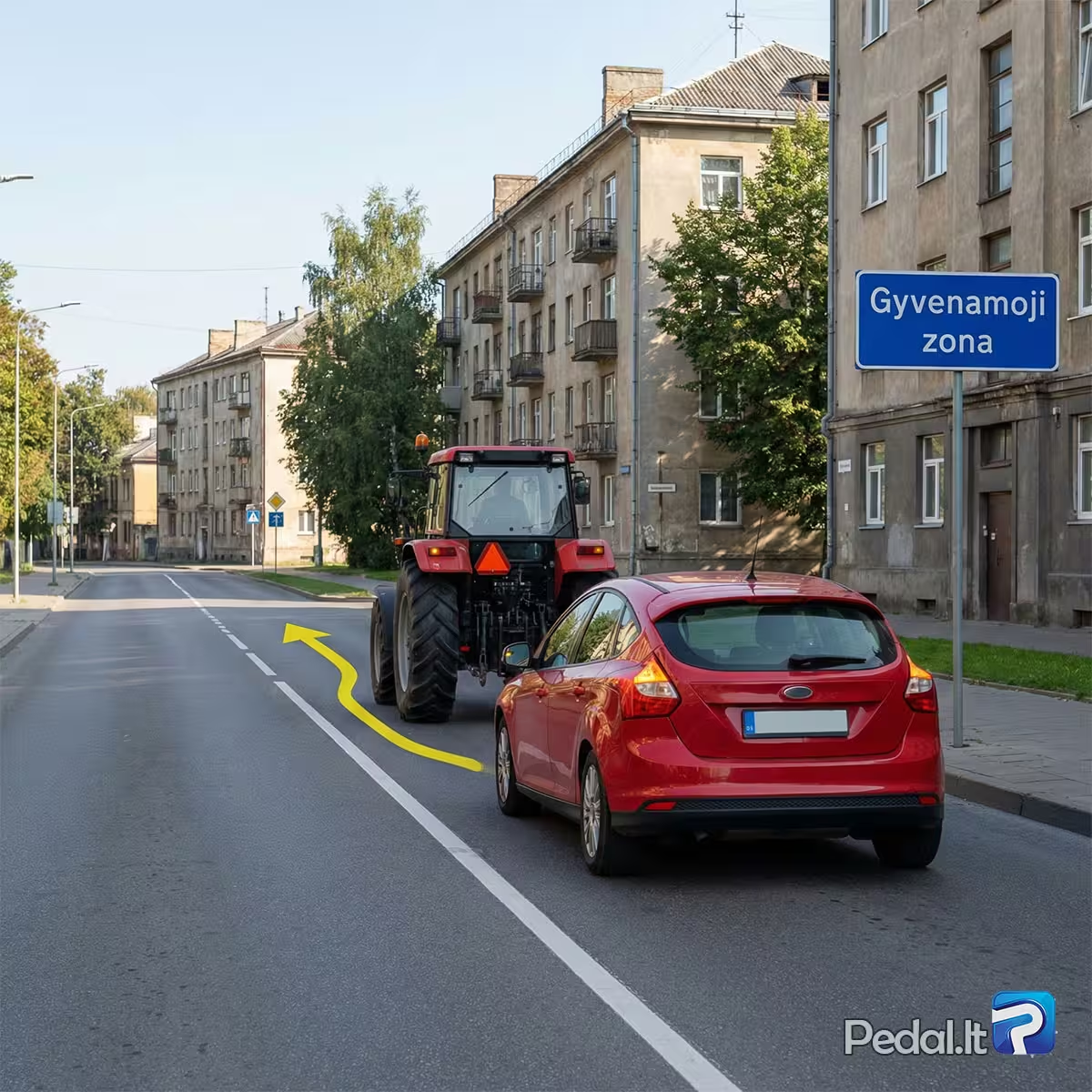
Is overtaking permitted in this situation?
A narrow continuous (solid) line prohibits overtaking. There is an exception when the road has both a narrow solid line and the road sign "Overtaking Prohibited" (RTR Annex 1.325): that sign indicates overtaking is prohibited except for single vehicles or single-vehicle combinations traveling slower than 30 km/h, which means very slow-moving vehicles (e.g., tractors) may be passed. In the pictured case there is no such sign—only a continuous line—so overtaking, even of a very slowly moving tractor, is not permitted.
RTR Annex 1.805 "The Validity Zone Ahead" indicates the length of the zone to which a sign applies beyond the sign itself.
Horizontal Marking 1.1: A narrow solid line separates opposing traffic and forbids drivers from using the oncoming lane on the marked section; it also marks lane boundaries, carriageway areas vehicles are prohibited from entering, parking-space limits, and the carriageway edge. Vehicles must not cross this line except where it marks the edge of the carriageway or a parking space.
1. Overtaking is prohibited.
2. Overtaking is permitted.
Are other vehicles permitted to enter the space between a motorcyclist and the driving instructor who is accompanying the motorcyclist in a car?
RTR 26. Drivers of other vehicles must not enter the space between a learner driver—who is learning to operate a moped, motorcycle, tricycle, or any type of quadricycle—and the driving instructor who is accompanying the learner in a vehicle. During the training period the learner must wear a high-visibility vest marked with the distinguishing sign 'M' on both the front and the back. A driving instructor who accompanies the learner on a motorcycle must also wear a vest of the same type bearing the words 'DRIVING INSTRUCTOR'. If the instructor accompanies the learner in a car, the car must display the identifying marking specified in Annex 4 of these Rules.
1. It is permitted.
2. It is prohibited.
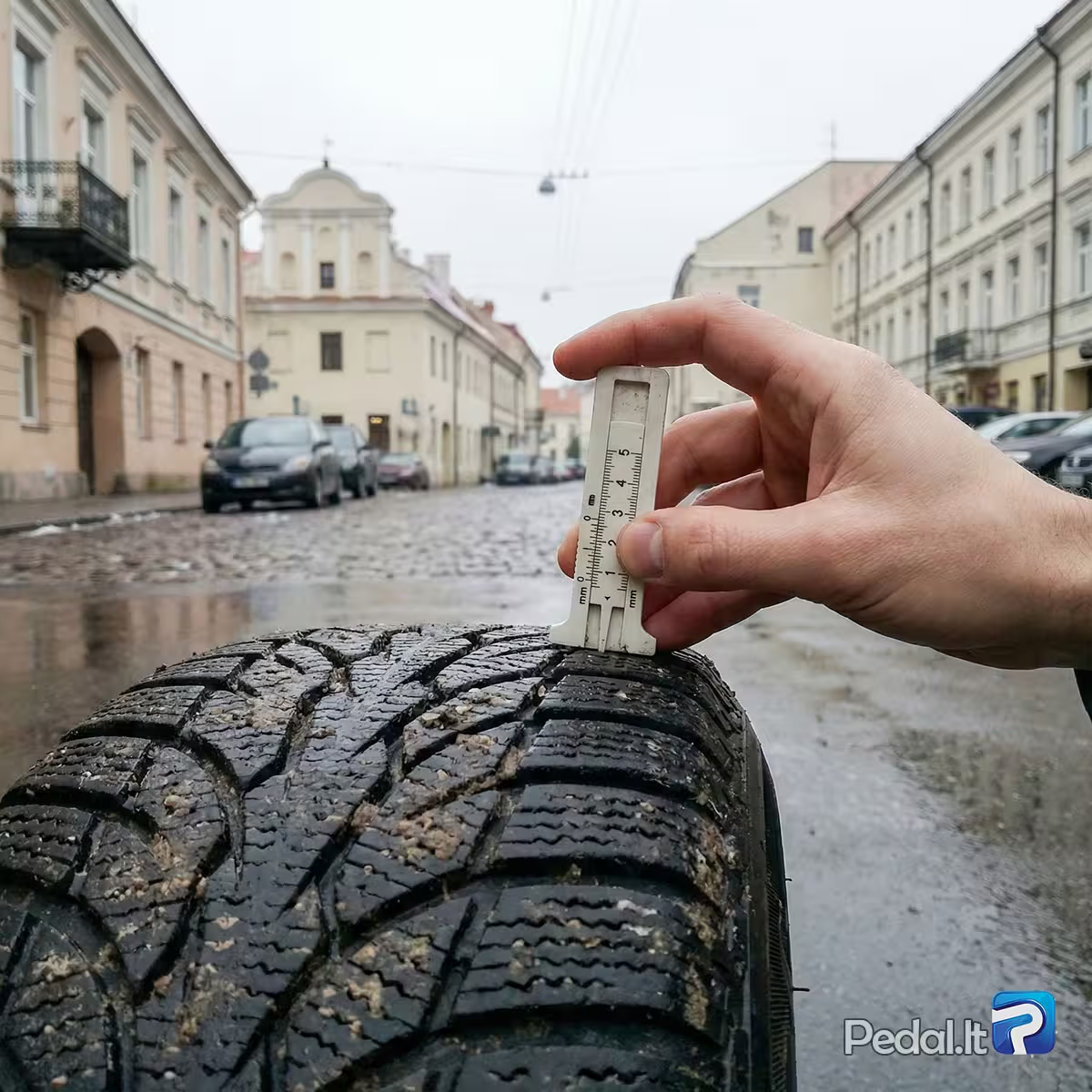
What is the minimum allowable winter tread depth for a passenger car tyre?
Passenger car tyre tread depth must be at least 1.6 mm in general and 3.0 mm during the winter period. Source: Technical requirements for motor vehicles and their trailers — Section V: Vehicle axles, wheels, tyres and suspension. 5.7. The tread depth of the tyres used must be at least: 5.7.1. M1 category — 1.6 mm (from November 10 to March 31 — 3.0 mm); JB
1. 1.6 mm.
2. 2.0 mm.
3. 3.0 mm.
Who or what poses the greatest risk of causing road accidents?
According to the Lithuanian Road Administration, in 2017 drivers accounted for 68.83% of all traffic offenders. Although slippery roads are a traffic hazard, drivers can adapt to conditions, choose a safe speed, and thus reduce the risk of accidents.
1. Drivers.
2. Pedestrians.
3. Slippery road surfaces.
4. Road signs.
What should you do if you break another car's headlamp while manoeuvring in a car park?
This is considered a road traffic accident. First, try to locate the vehicle's owner and, together with them, complete the Road Accident Report Form. If you cannot find the owner, call the police — they can help locate the owner or come to the scene to record the accident. Also notify your insurance company of the accident as soon as possible. RTR 220. If there are no deaths or injuries and the involved road users agree on the circumstances and do not call the police to the scene, the parties must draw the accident sketch on the Road Accident Report Form, describe the circumstances in writing, and have the form signed by all involved. If none of the parties has the Road Accident Report Form, the circumstances and sketch may be recorded on a blank sheet of paper listing all involved road users, their vehicles and any witnesses, and confirmed by the signatures of all involved. If the circumstances are contested, the police must be called to the scene. RTR 221. Participants in a road accident must refrain from consuming alcoholic beverages, medicines, narcotic drugs or other intoxicating substances immediately after the accident until they have undergone, or have refused, testing for alcohol or impairment by narcotic, psychotropic or other substances. RTR 222. If the accident caused only property damage and the victim is not present at the scene, the person involved in the accident must immediately notify the victim, and if this is not possible — the police.
1. Locate the vehicle's owner; if you cannot find them, call the police.
2. If nobody notices, you may continue driving.
3. Fill in the Road Accident Report Form together with the car owner, if possible.
4. Notify your insurance company about the accident.
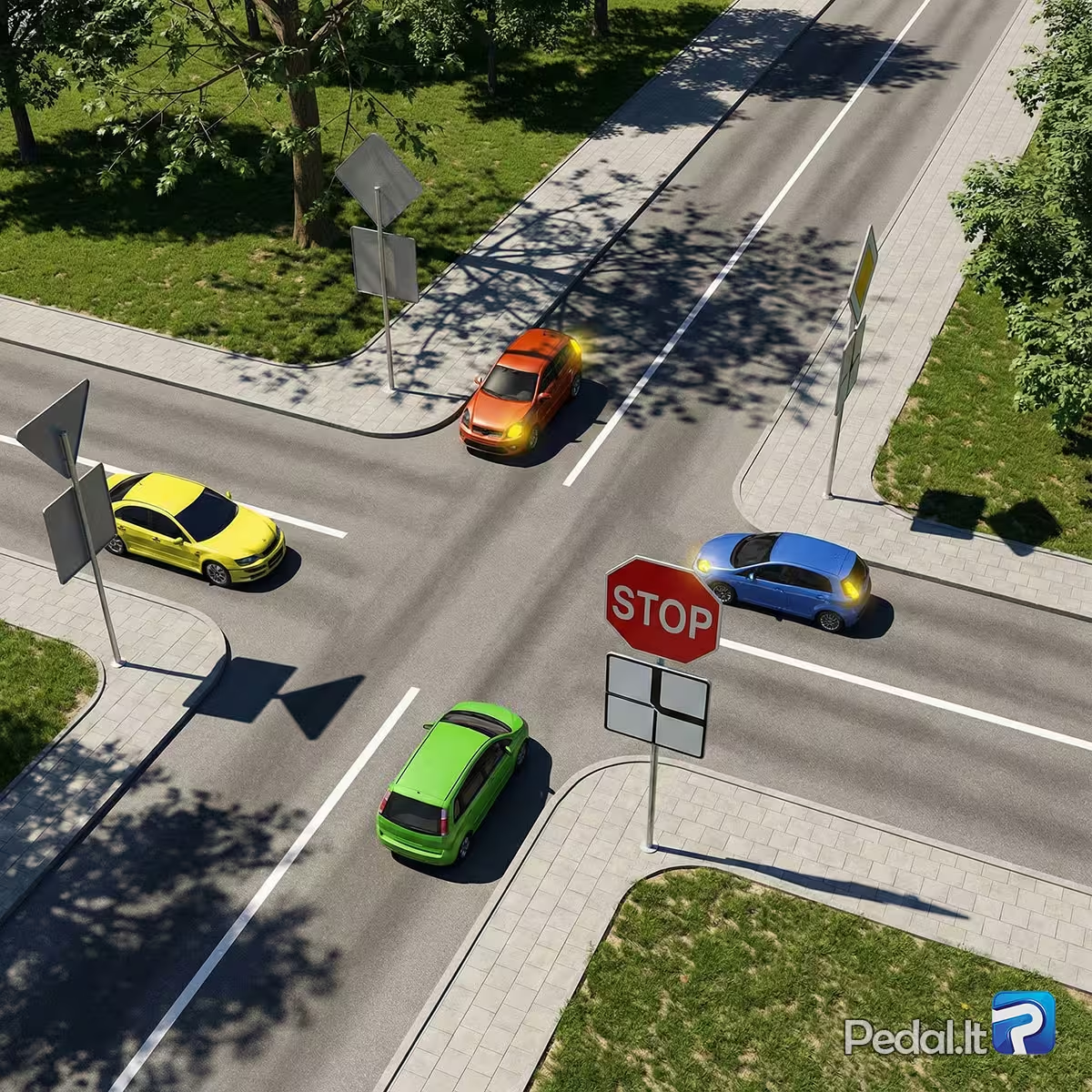
What is the correct sequence in which the vehicles will pass through the intersection?
The red and blue vehicles are on the priority (main) road, so they proceed first. Between them the priority-to-the-right rule applies: the red vehicle goes first because no vehicle is approaching from its right, followed by the blue vehicle. Vehicles on the side road follow: the green vehicle goes next (it has no vehicle to its right), and last is the yellow vehicle. RTR 154. At a controlled intersection, drivers on a side road must yield to vehicles on the priority road. RTR 156. If the main road’s direction changes at the intersection, drivers on the main road must, with respect to one another, follow the rules for intersections of roads of equal importance; drivers on the side road must apply those same rules among themselves. RTR Annex 2.204. 'STOP' — drivers must not proceed without stopping before the stop line or, if there is no line, before the sign. A driver must yield to vehicles traveling on the road he or she is about to cross. If panel No. 843 'Direction of Priority Road' is installed below the sign, the driver must yield to vehicles on the priority road.
1. Red, then blue, then yellow, and finally green.
2. Red, then blue, then green, and finally yellow.
3. Blue, then red, then green, and finally yellow.
4. Green, then blue, then yellow, and finally red.
Upon request by another road user involved in the accident:
RTR 219. In the event of a road accident, every driver involved or any other road user must: 219.3. upon the request of other road users involved in the accident, present a valid identity document or a valid driving licence, and a certificate (policy) of compulsory third‑party motor vehicle liability insurance in order to identify the insurer;
1. You must present a valid identity document and the certificate (policy) of compulsory motor third‑party liability insurance to identify the insurer.
2. You are required to present the documents only to the police.
How should you drive to minimize fuel consumption and maximize range?
Driving uphill requires more power than driving on level ground. Therefore, maintain a steady speed and avoid accelerating on climbs. It is reasonable to increase speed on level sections or when driving downhill. At a constant speed, using a higher gear reduces engine revolutions; lower revolutions mean the engine works less and uses less fuel. Do not coast in neutral when descending — this is not only uneconomical but also unsafe. While coasting downhill, vehicle systems may cut fuel supply, so the instrument reading can show 0.0 l/100 km (if you do not press the accelerator). It is most economical to start moving immediately after you start the engine. Idling a stationary vehicle consumes fuel and emits pollutants; the engine will warm up and reach normal operating temperature during driving (unless there is a malfunction).
1. Shift into neutral and coast when descending a hill.
2. Avoid accelerating when driving uphill.
3. Use the highest appropriate gear possible.
4. Delay driving until the engine reaches normal operating temperature.
After you pass your first driving test for category B, the driving licence you receive will be valid for:
LAW ON ROAD TRAFFIC SAFETY Article 22.5. Novice drivers are issued a driving licence valid for three years. In accordance with the procedure established by the Minister of the Interior or their authorised institution, this licence may be replaced with a 10-year licence after two years from the date of issue without completing additional driver training, provided that during those two years the driver has not committed any violations of the Road Traffic Rules (RTR) that would require additional driver training under this Law and has not caused a road traffic accident resulting in bodily injury to road users (except where the accident occurred under circumstances that exclude criminal liability or where the person is not subject to administrative liability). A novice driver who commits any RTR violation that triggers additional driver training under this Law, or who causes a road traffic accident resulting in bodily injury to road users (except as noted above), must complete additional driver training within one year from the date a court judgment (or order) recognising the person as having committed an offence takes effect, or from the date of execution of an administrative order issued after the administrative offence. If a court judgment or penal order imposes arrest or a term of imprisonment and the execution of the sentence is not suspended, the additional driver training must be completed within one year after serving the imposed sentence.
1. 10 years.
2. 15 years.
3. Unlimited validity.
4. 3 years.
Your car begins to skid sideways while braking. What should you do?
If the wheels lock and the car begins to skid while braking, you must release the brake pedal. For example, if you brake hard before a bend and lock the wheels, the vehicle will continue moving in its original direction (straight ahead) despite steering input. That can cause you to run off the road or collide with an obstacle. In that situation you must stop braking — which can be difficult, especially for inexperienced drivers.
1. Press the clutch pedal.
2. Release the brake pedal (stop applying the brakes).
3. Apply the brakes more firmly.
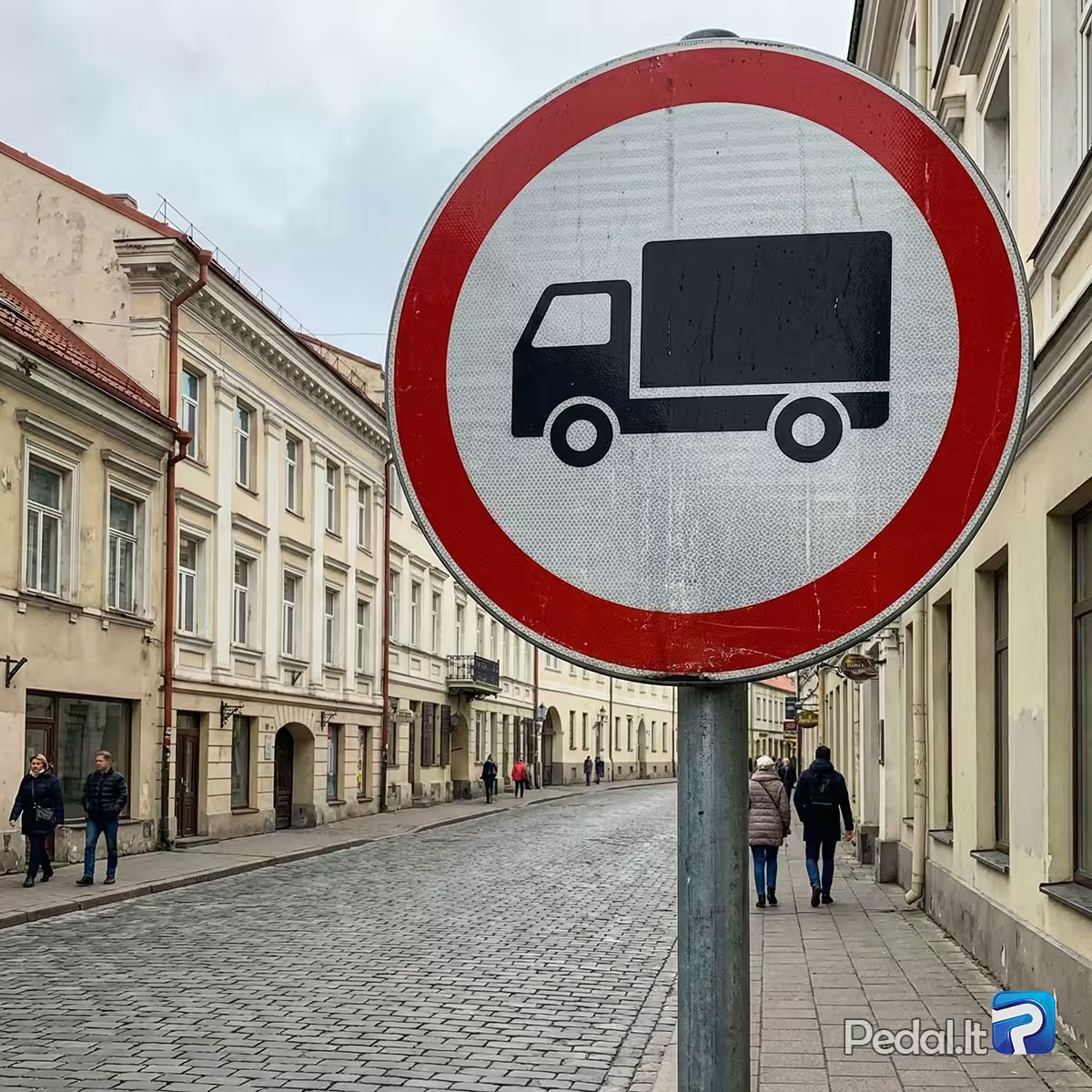
Are tractors or self-propelled vehicles permitted to pass this road sign?
Road sign 304 — "No entry for goods vehicles." Entry is prohibited for goods vehicles and vehicle combinations whose permissible maximum mass exceeds 3.5 tonnes or the weight shown on the sign. Tractors and self‑propelled vehicles are also prohibited, except for service vehicles.
1. Yes — passage is permitted.
2. No — passage is prohibited.
3. Passage is allowed only on working days.
Which features ensure a vehicle's active safety?
Difference between active and passive safety:
- Active safety: systems and features that help prevent accidents by improving vehicle control, handling and stability before a collision occurs. These measures operate before an impact and commonly include technologies such as Anti-lock Braking System (ABS), Electronic Brakeforce Distribution (EBD), traction control, correct tyre pressure and adequate tread depth, among others. Active safety also depends on the driver’s condition and behavior — for example, poor ventilation or heating can cause drowsiness or nausea and reduce attention on the road.
- Passive safety: systems and equipment designed to reduce injury and damage during or after a collision. These features are activated in a crash to protect occupants and other road users and include seat belts, airbags, motorcycle helmets, seat-belt reminders, head restraints, crumple zones and other structural or restraint systems that absorb impact and lower the risk of injury.
1. Proper ventilation and heating.
2. Tyre pressure and tread depth.
3. Anti-lock Braking System (ABS).
4. Electronic Brakeforce Distribution (EBD).
How is a "built-up area" defined?
Law on Road Traffic Safety, Article 2, Clause 19: A "built-up area" means an area containing buildings whose roads are marked at the entrances with the road sign "Beginning of Built-Up Area" and at the exits with the road sign "End of Built-Up Area".
1. An area containing buildings whose roads are marked at the entrances with the regulatory sign "Residential Area".
2. An area containing buildings to which additional traffic rules apply and whose roads are marked at the entrances with the sign "Beginning of Built-Up Area" and at the exits with the sign "End of Built-Up Area".
What is the primary purpose of a vehicle's main brakes?
A vehicle's braking system is intended to slow the vehicle, bring it to a complete stop, and hold it stationary. Braking distance should be kept as short as possible, and you must maintain control of the vehicle while braking.
1. Slow the vehicle to bring it to a complete stop and hold it stationary on a downhill slope.
2. Maintain a safe, controlled speed when driving downhill.
When driving a passenger car with a trailer, what should you take into account when descending a hill?
The stopping distance increases when towing a trailer downhill because the trailer’s mass pushes the towing vehicle forward, adding momentum. Conversely, when driving uphill the trailer’s weight helps slow the vehicle and reduces the stopping distance.
1. A trailer will help the car stop more quickly.
2. The stopping distance will be reduced.
3. The stopping distance will increase.
4. The stopping distance will remain unchanged.
The effect of inertia on the vehicle (risk of sliding sideways) when cornering is reduced by:
The higher the vehicle's speed when cornering, the greater the effect of inertia and the higher the risk of the car sliding sideways. Lower speeds reduce inertia and the risk of sliding. A larger turning radius (a gentler curve) also reduces lateral inertial forces.
1. By decreasing the turning radius (making the turn tighter).
2. By reducing vehicle speed.
3. By increasing the turning radius (making the curve gentler).
It is prohibited to operate (permanently use) a vehicle if:
If you discover that the horn is not working, you may drive only to a parking area or a repair facility. However, it is prohibited to operate a vehicle permanently if it does not meet the technical requirements (for example, if the horn, speedometer, or other required systems are not functioning). RTR 223. Vehicles traveling on roads must comply with the technical requirements applicable in the Republic of Lithuania when undergoing mandatory technical inspection. RTR 224. Only motor vehicles and trailers that are in good repair, except in the cases provided for in these Rules, may participate in public traffic in the Republic of Lithuania. Short-term (one-day) participation in public traffic is allowed, pursuant to the prescribed procedure, for vehicles and trailers displaying temporary license plates whose registered owners (keepers) have obtained compulsory motor third-party liability insurance and have paid the applicable fees and taxes for the vehicle or road use. RTR 15. Driving vehicles that are not in proper condition and do not comply with technical requirements for vehicles is prohibited. Before starting to drive, the driver of a motor vehicle, tractor, or self-propelled vehicle must ensure that the vehicle is in good condition, that it carries a warning triangle, fire extinguisher, first aid kit, and any other items mandatory for that type of vehicle, and must monitor the vehicle's technical condition during the journey. If the vehicle breaks down while driving and therefore does not meet the technical requirements and cannot be repaired on site, the driver may proceed, taking all necessary precautions, to the nearest parking area or vehicle repair shop, except in the cases laid down in paragraph 234 of these Rules. JB
1. The horn (sound signal) is not functioning.
2. The speedometer is not functioning.
3. The windshield is cracked and obstructs the driver's view.
Your vehicle's dipped-beam headlamps are on during daylight. Drivers in the oncoming lane keep switching their main beams to dipped beams (flashing their headlights). What does this indicate?
If other drivers switch their headlights from high beam to low beam (flash) during the day, it may indicate that your low beams are excessively bright or misaligned and are dazzling other road users. This is dangerous because dazzled drivers can become disoriented and cause accidents. If you notice that drivers often flash their lights as they pass you, it is a sign to have your vehicle's lighting checked and, if necessary, adjusted. 81. The warning signals are as follows: using turn and brake light signals (signals may also be indicated by hand); sounding the horn; switching headlights on and off; using hazard warning lights; turning on flashing orange hazard lights; and placing a warning triangle on the road or attaching it to a vehicle.
1. You must switch on your main-beam (high) headlamps.
2. You must switch on your position (parking) lamps.
3. Your vehicle's headlamps are misaligned or aimed too high and are dazzling other road users.
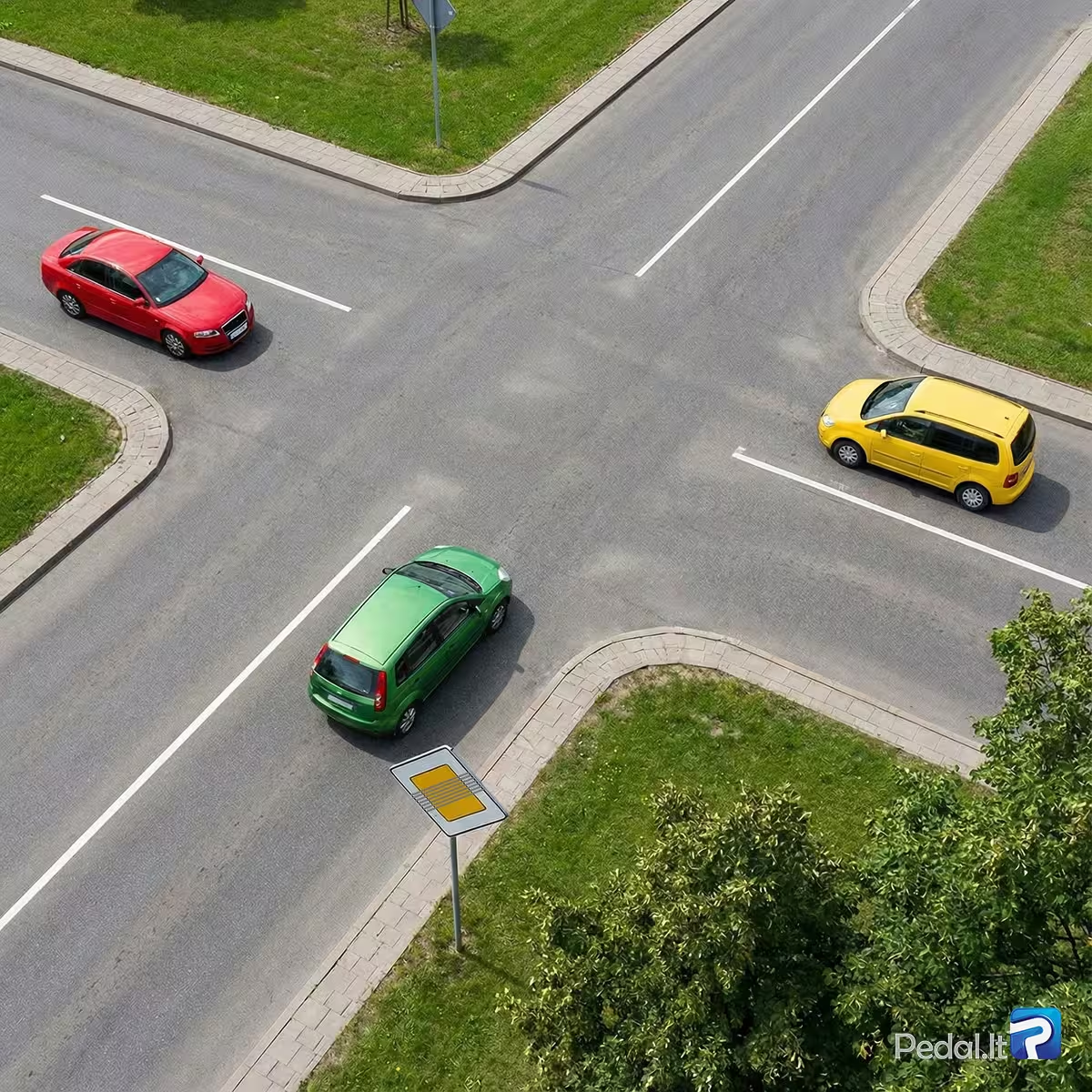
In what order will the vehicles pass through the intersection?
The yellow vehicle goes first because it is the only one without a vehicle to its right obstructing its path. Next comes the green vehicle, and last is the red vehicle. RTR 155. At an uncontrolled intersection, drivers must yield to vehicles approaching from the right when their trajectories intersect.
1. The yellow vehicle first, followed by the green vehicle, and finally the red vehicle.
2. The green vehicle first, then the red vehicle, and finally the yellow vehicle.
3. The red and yellow vehicles together first, followed by the green vehicle.
4. The green vehicle first, then the red and yellow vehicles together.
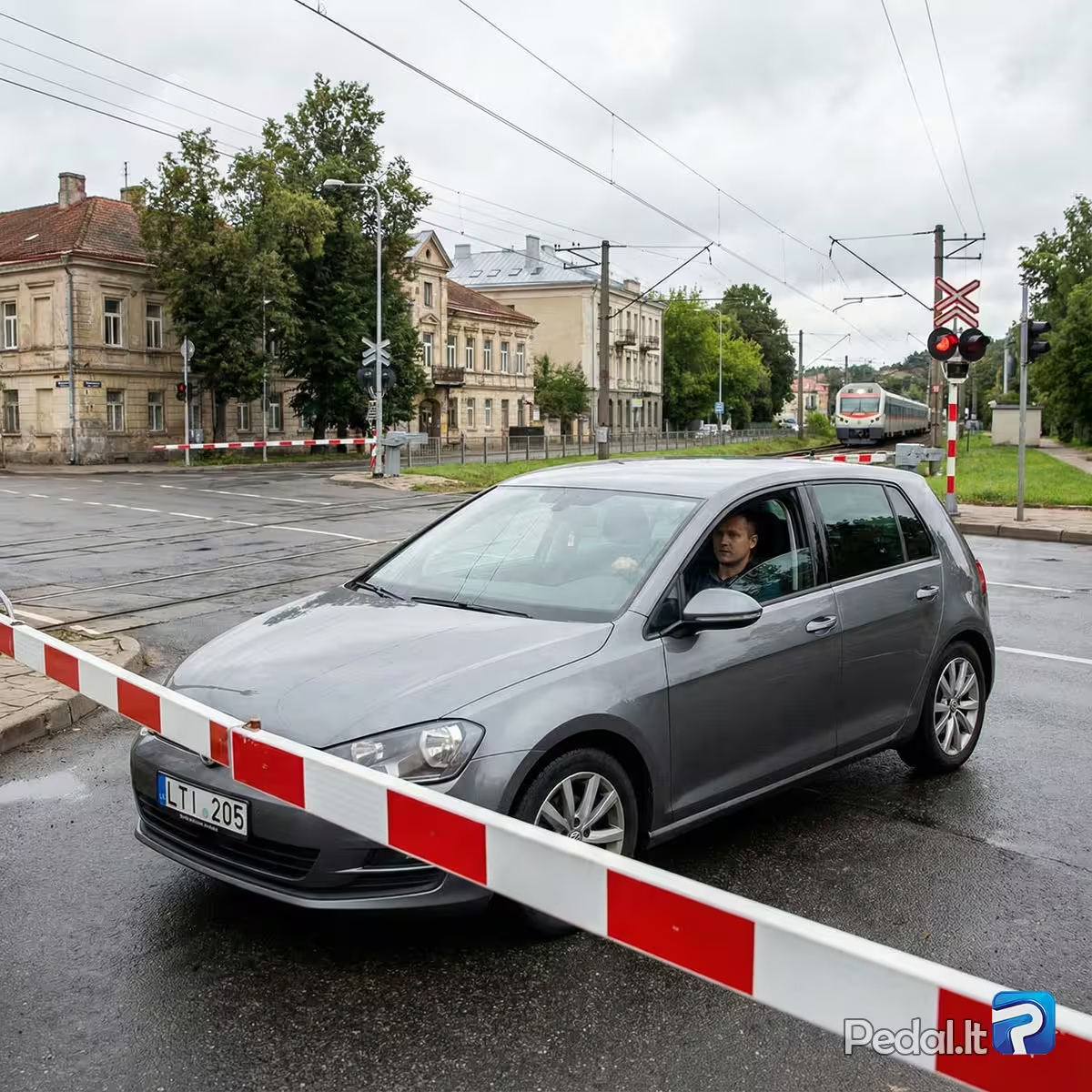
At a railway crossing, the vehicle driver must not:
Regulation RTR 173. Drivers must not: 173.3. enter a level crossing after the barrier has been lowered or is in the process of being lowered; deliberately lift the barrier; or drive around the barriers.
1. Deliberately lifting the barrier.
2. Entering the crossing after the barrier has been lowered or is in the process of being lowered.
3. Driving around the barrier.
Where should you stop when you must give way to an approaching rail vehicle?
RTR 170. When yielding to an approaching rail vehicle, or whenever crossing a level crossing is prohibited, drivers must stop at the STOP line, the 'Stop' traffic sign, traffic lights, or barriers. If none of these are present, drivers must stop no nearer than 10 metres from the first rail. When a STOP line is used together with a 'Stop' sign, the driver must stop at the STOP line; if the STOP line is absent, stop at the 'Stop' sign even if a flashing white traffic light is displayed. JB
1. At the traffic lights.
2. At the first rail of the crossing.
.avif)
In what order will the vehicles pass through the intersection?
If a 'STOP' road sign is present, drivers must stop before the sign and yield to vehicles traveling on the road they are about to cross. RTR 154. At a controlled intersection, drivers entering from a side road must yield to vehicles on the priority road. RTR Annex 1. 204. 'STOP'. Drivers must not proceed without stopping before the stop line or, if there is no stop line, before the sign. A driver must give way to vehicles on the road being crossed. If additional plate No. 843 'Direction of Priority Road' is mounted below the sign, the driver must yield to vehicles on the priority road.
1. Yellow and red vehicles proceed together, followed by the blue vehicle.
2. Blue and red vehicles proceed together, followed by the yellow vehicle.
3. Blue vehicle first, then the red vehicle, and finally the yellow vehicle.
4. Yellow vehicle first, then the blue vehicle, and finally the red vehicle.
Braking distance depends on:
Braking distance depends on the condition of the tyres, the vehicle's speed, the road surface, the vehicle's weight, the force applied to the brake pedal, and the condition of the braking system. Less worn tyres provide more effective braking. Lower speeds reduce stopping distance. Heavier vehicles require a longer distance to stop. Rougher road surfaces increase traction and therefore shorten stopping distance. Applying greater pressure to the brake pedal generally shortens stopping distance, provided you avoid locking the wheels.
1. The condition of the tyres and the vehicle's speed.
2. Whether the vehicle is front-wheel drive or rear-wheel drive.
3. The condition of the brake pads.
4. The condition of the road surface.
Does a category B driving licence permit the holder to drive a light quadricycle?
A category B driving licence entitles the holder to drive vehicles of category AM (mopeds and light quadricycles). LAW ON ROAD TRAFFIC SAFETY Article 23. 1. Categories of motor vehicles and their combinations with trailers are as follows: 1) Category AM: mopeds and light quadricycles; 5) Category B1: quadricycles. 4. A driving licence that entitles a person to drive: 1) vehicles referred to in Subparagraphs 2–16 of Paragraph 2 of this Article also entitles the holder to drive vehicles of category AM; 4) vehicles of categories B, C, or D also entitle the holder to drive vehicles of categories B1, C1, or D1.
1. Yes. A category B driving licence allows the holder to drive a light quadricycle.
2. No. A category B driving licence does not permit driving a light quadricycle.
1 of 30 Task
Time left: 00:00:00
1
2
3
4
5
6
7
8
9
10
11
12
13
14
15
16
17
18
19
20
21
22
23
24
25
26
27
28
29
30