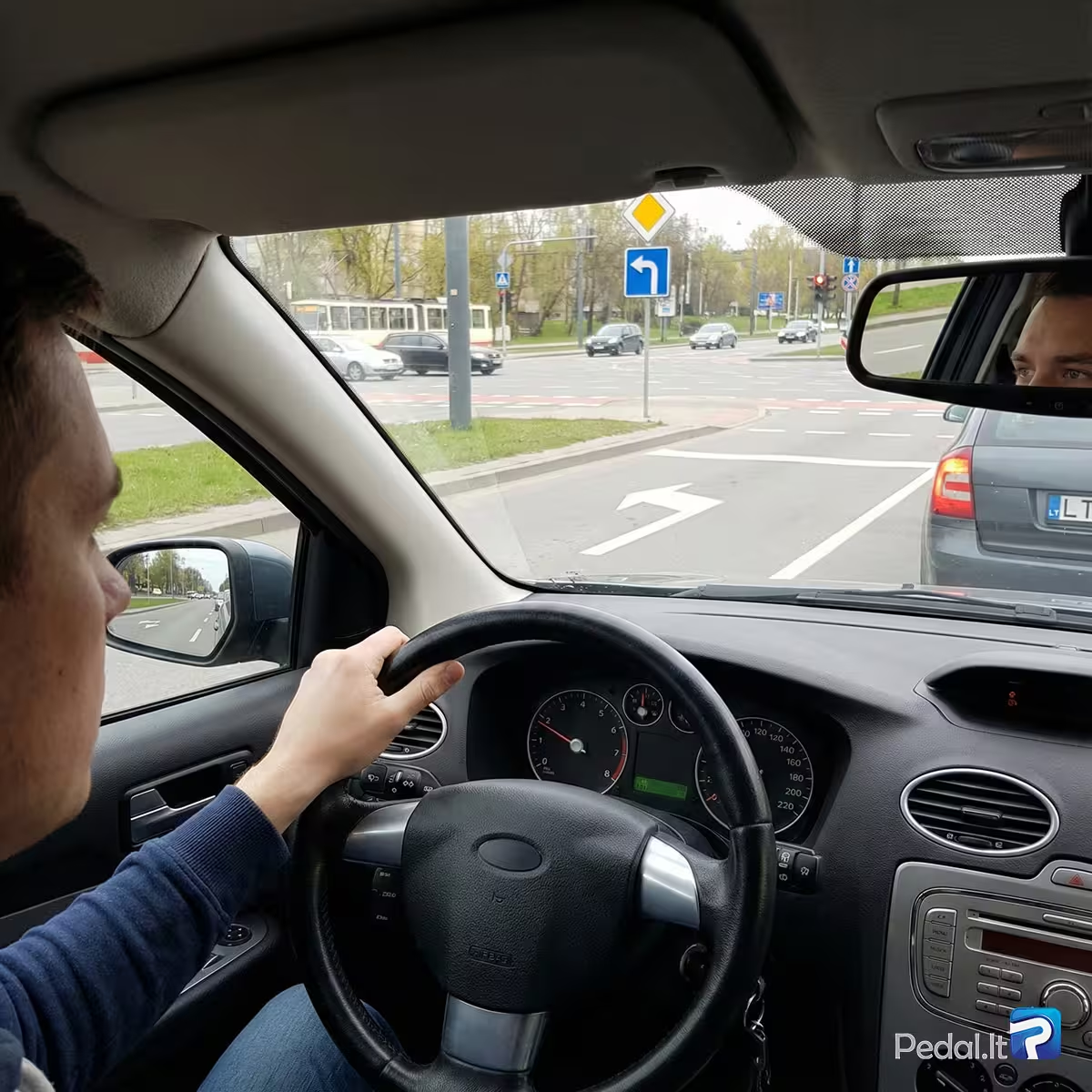
Where is it prohibited to make a U-turn?
RTR 116. U-turns are prohibited: 116.1 on pedestrian crossings; 116.2 on level crossings; 116.3 in tunnels; 116.4 on and beneath bridges, overpasses and viaducts; 116.5 where visibility in at least one direction is less than 100 metres; 116.6 on roads with a central reservation, except at locations designated and marked for U-turns by road signs and/or road markings. JB
1. On and beneath bridges, overpasses and viaducts.
2. In tunnels.
3. On level crossings (railway crossings).
4. On roads where the carriageway is less than 10 m wide.
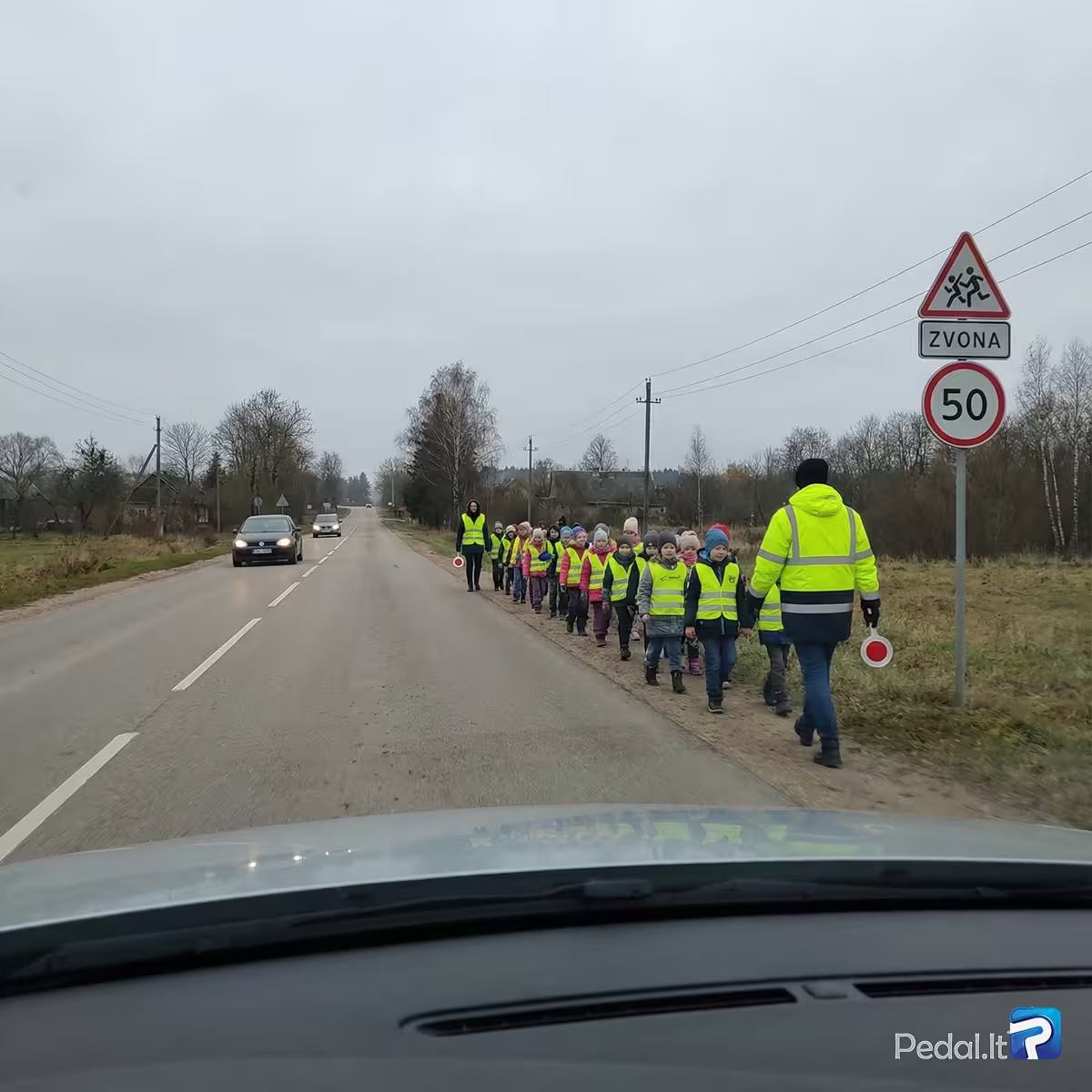
Under what conditions and at what times may an organised group of pedestrians composed of children under 16 be led along the roadside?
RTR 40. An organised group of children under 16, accompanied by at least two adults, may use pavements, footpaths, or the pedestrian side of shared footpath and cycle tracks if available. If none of these facilities are present, the group may walk along the hard shoulder, but only in daylight hours when visibility is good, in no more than two files walking against the flow of traffic, and only when it is safe to do so. Accompanying adults must be positioned at the front and rear of the column and wear high-visibility vests. It is recommended that all children in the organised group wear high-visibility vests when walking along the hard shoulder.
1. During daylight hours and only when visibility is good.
2. In no more than two files, walking against the flow of traffic.
3. At any time of day provided visibility is good.
A load projects up to 1 metre beyond the front or rear of a vehicle. It will be transported at night or in conditions of poor visibility. How should this load be marked?
If the load projects less than 1 m beyond the front or rear of the vehicle, marking is not required (RTR 2.10). Any motor vehicle carrying a load that extends more than 1 m beyond the front or rear, or beyond the sides of the vehicle, must have the extremities of the load marked as specified in Annex 4 to these Rules (RTR 4.12). The extremities of loads protruding more than 1 m in front or rear, any projection to the side, and extremities of vehicles wider than 2.6 m must bear distinguishing marks — 400 mm square plates covered with alternating diagonal reflective white and red stripes 50 mm wide. These plates must be mounted not lower than 0.4 m and not higher than 1.6 m above ground level. During hours of darkness or when visibility is poor, such vehicles must have lights at the projecting points: white at the front, amber at the sides and red at the rear. JB
1. Using brightly coloured flags.
2. Distinctive markers — square plates with alternating diagonal reflective white and red stripes.
3. Marked with lights: white at the front, amber at the sides and red at the rear.
4. Marking is not required.
What should drivers do when approaching an intersection where the green traffic light is flashing?
According to the Road Traffic Rules (RTR 73.3), a flashing green light permits traffic to proceed but indicates that the green phase is ending and that a prohibitive signal will soon appear. Drivers who try to speed through the intersection — by accelerating or overtaking — take unnecessary risks and may cause an accident. Other drivers may brake suddenly; therefore, to pass the intersection safely while the green light is flashing, drivers must ensure their actions will not obstruct other vehicles and must consider the behavior of drivers behind them, since sudden braking can also lead to collisions. Anticipating the need to stop before the intersection, drivers should reduce their speed.
1. Observe and take into account the actions of vehicles ahead.
2. Accelerate to the maximum allowable speed.
3. Be aware of and consider the actions of drivers behind you.
4. Reduce your speed.
What must the driver do when stopped by a police officer?
RTR 16. A driver must stop the vehicle when ordered by the inspecting officer. The driver of a motor vehicle, tractor, self-propelled vehicle or military vehicle (including tactical and logistical vehicles and combinations with trailers) must carry and, upon request of the inspecting officer, present a valid driving licence or a document certifying the right to drive tractors and/or self‑propelled vehicles or military equipment; the vehicle registration documents and proof of the compulsory roadworthiness test (including the report of the most recent technical inspection for vehicle categories M2, M3, N2, N3, O3, O4 and wheeled tractor categories T1b, T2b, T3b, T4.1b, T4.2b, T4.3b, T5); the certificate (policy) of compulsory motor third‑party liability insurance; and other documents required by the laws of the Republic of Lithuania and these Rules (except where the Law on Road Traffic Safety exempts the driver from carrying certain documents). The driver must also allow the inspecting officer to check the readings of validated tachographs or other devices that record driving time and rest periods. Documents shall be presented to the inspecting officer without leaving the vehicle. The driver may exit the vehicle only with the inspecting officer’s permission. RTR 91. If the vehicle is equipped with hazard warning lights, they must be switched on: 91.3 when the vehicle is stopped by an inspecting officer. JB
1. If requested by a police officer, present the required documents without leaving the vehicle.
2. After stopping, switch on the vehicle’s hazard warning lights.
3. Exit the vehicle and hand the documents to the officer without waiting for them to approach.
4. Pull over as far to the right as possible, onto the road shoulder or verge.
Are vehicles permitted to drive on the pavement (sidewalk)?
RTR 124. Drivers of motor vehicles, tractors, self‑propelled machines, and animal‑drawn vehicles must not drive or manoeuvre on lawns, pavements (sidewalks), footpaths, cycle tracks, or cycle lanes. An exception applies where road signs permit (partial) parking at the pavement edge and a cycle track or lane is delineated by the horizontal marking line 1.14. Driving on central reservations, embankment slopes, excavations, or in ditches is prohibited. Drivers must also not enter or leave the roadway except at locations designated for that purpose.
1. They may do so provided they do not obstruct pedestrians.
2. They are permitted only where road signs indicate that (partial) parking on the pavement edge is allowed.
3. Driving on pavements is prohibited.
Upon request by another road user involved in the accident:
RTR 219. In the event of a road accident, every driver involved or any other road user must: 219.3. upon the request of other road users involved in the accident, present a valid identity document or a valid driving licence, and a certificate (policy) of compulsory third‑party motor vehicle liability insurance in order to identify the insurer;
1. You must present a valid identity document and the certificate (policy) of compulsory motor third‑party liability insurance to identify the insurer.
2. You are required to present the documents only to the police.
Under which conditions does a car battery's capacity decrease?
Battery capacity decreases as ambient temperature falls. A fully charged battery that measures 100% capacity at +25 °C will typically drop to about 80% at 0 °C and to roughly 60% at −25 °C.
1. When ambient temperature rises.
2. When ambient temperature falls.
3. It does not change with temperature.
Why is a slippery road surface hazardous?
A slippery road surface is hazardous because tyre grip on the pavement is greatly reduced. As a result, stopping distances increase and the vehicle may skid sideways when negotiating a bend.
1. Stopping distance increases.
2. Steering requires more effort.
3. Your vehicle is more likely to skid sideways when cornering.
If you are forced to stop outside a built-up area where stopping is prohibited and your hazard warning lights are not working, what must you do?
RTR 92. If the vehicle's hazard warning lights are absent or defective and an emergency stop is required where stopping or parking is prohibited, in the event of an accident, or when the stopped vehicle would be visible to other road users from less than 100 metres, the driver of a motor vehicle (excluding a motor moped and motorcycles without a trailer), a tractor, or a self-propelled machine must immediately place an emergency stop sign on the side of the carriageway opposite the direction of travel: within settlements not less than 25 m, and outside settlements not less than 50 m from the stopped vehicle. If at least one rear position lamp is defective and the hazard warning signal is not working when driving in darkness or poor visibility, an emergency stop sign must be affixed to the rear of the vehicle in order to continue driving.
1. Attach a red flag to your vehicle.
2. Place a warning triangle 50 m behind the stopped vehicle.
3. Stop another vehicle and request assistance.
4. Turn on your dipped-beam headlights.
In which situations may drivers of emergency vehicles exercise priority when operating with blue and red flashing lights and special audible signals?
Drivers of special (emergency) vehicles — such as ambulances, police, and fire service vehicles — may use blue and red (or only blue) flashing lights and special audible signals when necessary to: (1) save human life or health; (2) protect property; (3) ensure public order and traffic safety; (4) apprehend persons suspected of offences; or (5) escort or accompany official delegates and protected persons. Flashing lights must be visible in all directions (360°). While using these signals, drivers of special vehicles may disregard certain traffic rules specified in the Regulations, provided they do not jeopardize traffic safety and only after ensuring that other road users are giving way. They must drive cautiously and avoid creating danger to other road users. Other road users are required to give way immediately to such vehicles so they can pass safely and quickly. The right of way also applies to drivers of vehicles being escorted by special vehicles.
1. When doing so does not endanger traffic safety.
2. After confirming that other road users are yielding to them.
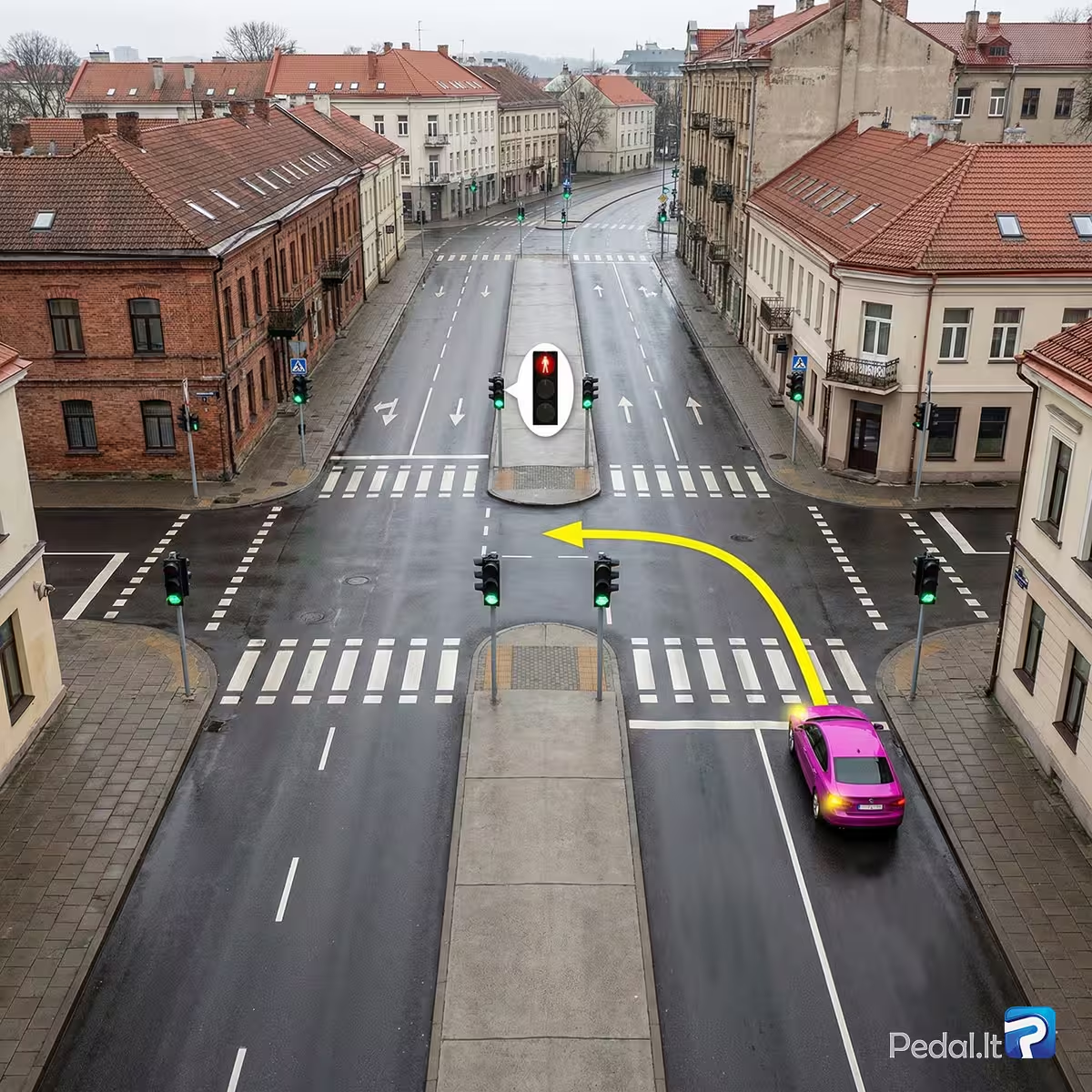
What must the driver do when turning left at the intersection?
RTR 73.11. A red light or two alternately flashing red lights prohibit traffic; if the light displays black arrow(s), it prohibits traffic in the direction(s) indicated by the arrow(s) and indicates which directions road users may proceed when the green arrow appears. RTR 162. Drivers who entered the intersection in accordance with a traffic light signal permitting them to proceed may continue in their intended direction regardless of the traffic light signal shown when the vehicle is leaving the intersection. However, if the 'STOP' sign and/or a 'Stop' line is present at the intersection before other traffic lights on the route, the driver must obey every traffic light signal. RTR 165. If traffic light signals or traffic officers prohibit driving, drivers must stop before the 'STOP' sign and/or the 'Stop' line if present; if not, they must stop before the traffic lights, before the carriageway they are about to cross or join, or before a pedestrian or bicycle crossing so as not to obstruct vehicular or pedestrian traffic.
1. The driver must turn left and then proceed straight ahead without stopping.
2. The driver must turn left and then proceed straight ahead without stopping, provided this does not obstruct other road users.
3. The driver must turn left, stop before the 'Stop' line, and when the traffic light displays a signal permitting movement, proceed straight ahead.
Are drivers permitted to take part in vehicle races that are organized illegally on streets and roads?
23. Drivers must not take part in vehicle races that are organized illegally.
1. Yes, they are permitted.
2. No, they are not permitted.
Is it permitted to transport dogs in a motor vehicle?
206. The driver must ensure the safety of pets in the vehicle and make sure they are transported in a way that does not interfere with driving and does not cause injury to the animals or to vehicle occupants if the vehicle stops suddenly.
1. Permitted, provided the animals are secured or restrained so they do not interfere with driving and do not pose a risk of injury to themselves or to the vehicle’s occupants in the event of a sudden stop.
2. Permitted only when the dogs are placed on the vehicle’s front seat.
3. Permitted only when the dogs are placed on the vehicle’s rear seat.
4. Prohibited.
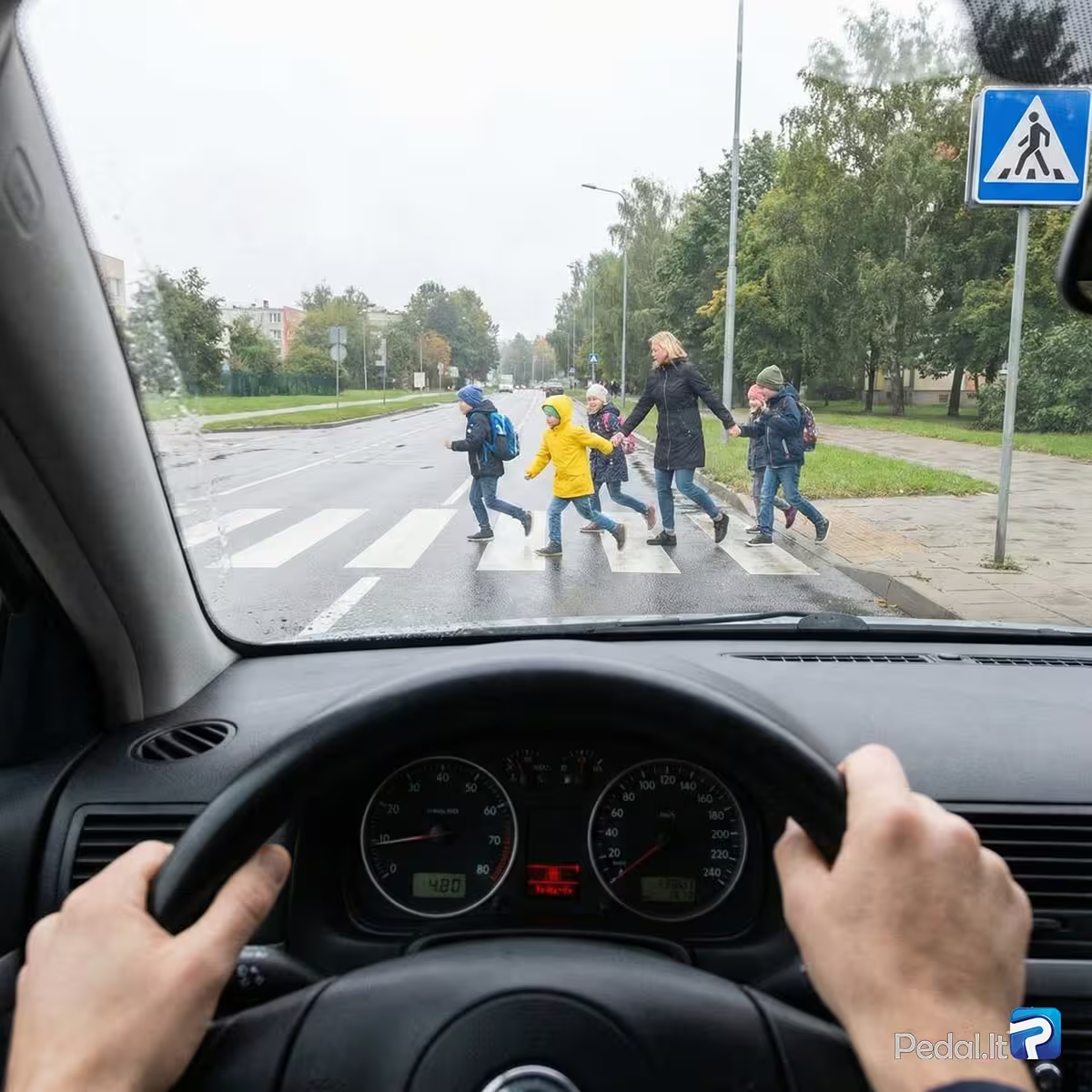
What should a driver be aware of about children's behavior when they cross a pedestrian crossing?
Drivers should be prepared for unexpected behavior from children at pedestrian crossings. When children act predictably and responsibly, it improves road safety.
1. Children may suddenly step onto the pedestrian crossing.
2. Children may stop or hesitate while on the pedestrian crossing.
3. Children behave predictably and in an orderly manner.
Why is it dangerous to drive fast on an asphalt road during heavy rain?
Heavy rain creates a layer of water on the asphalt surface (especially in longitudinal ruts) that cannot drain quickly to the roadside. At high speeds, a tire's tread cannot displace this water from beneath the wheel, and aquaplaning (hydroplaning) can occur. In other words, the wheels lose contact with—or have reduced grip on—the road surface, and the vehicle may become uncontrollable.
1. Water will enter the engine and cause it to stall.
2. The vehicle may lose control due to aquaplaning.
3. The windshield wipers will stop working.
Which of the following statements is correct?
During the summer season, it is permitted to drive on winter tyres that do not have studs. Such winter tyres are often used in summer when their tread depth is approximately 3 mm; during the winter season winter tyres may be used if their tread depth is at least 3 mm. The tread depth of tyres used in the summer season must not be less than 1.6 mm. RTR XXX. REQUIREMENTS FOR VEHICLES (p. 223-235) 229. Vehicles with studded tyres must not be used from April 10 to October 31. During the warm season, it is recommended to use vehicles with summer tyres. If winter conditions are prolonged, an order of the Minister of Transport and Communications may extend the permitted period for using studded tyres. 230. From November 10 to March 31, motor vehicles other than mopeds, motorcycles, tricycles, all types of quadricycles, and trailers must not be operated with summer tyres. Mopeds, motorcycles, tricycles, and all types of quadricycles fitted with summer tyres must not be operated in December–February, and also from March to November if any part of the carriageway is covered with snow or ice. JB
1. Summer tyres may be used in winter.
2. During the summer season, you may drive using winter tyres without studs.
3. You are only allowed to use summer tyres in summer and winter tyres in winter.
Which vehicle is considered an automobile?
Law on Road Traffic Safety, Article 2, paragraph 2. An automobile is a motor vehicle designed to travel on roads to carry goods and/or passengers or to tow other vehicles, excluding motorcycles, light quadricycles, quadricycles, power quadricycles, mopeds, tricycles, tractors, and self-propelled machines. Automobiles also include trolleybuses, which are non-rail vehicles powered by overhead electric cables. JB
1. Designed for towing other vehicles.
2. Designed for road use and for transporting goods.
3. Designed for road use and for transporting passengers.
4. Motorcycles, tractors, and self-propelled machines.
5. Non-rail electric vehicles powered by overhead electric cables — trolleybuses.
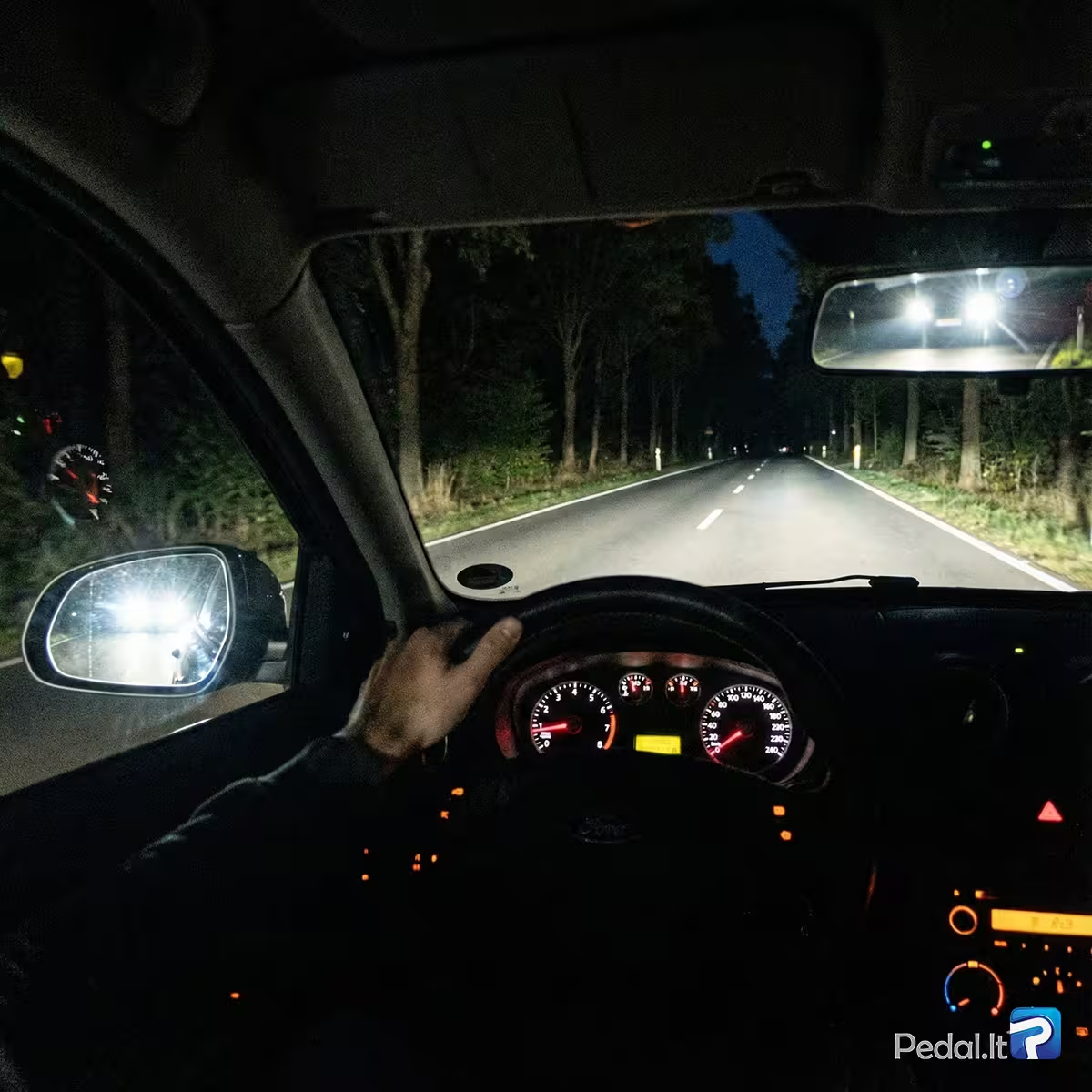
What must the drivers do if one vehicle catches up to the other while both are driving outside a settlement with their headlights on high beam?
The driver of the following vehicle must dip their headlights so as not to dazzle the driver ahead. The vehicle in front should switch to low beam only if the following vehicle begins to overtake, to avoid dazzling that driver. RTR 95. During darkness or in poor visibility, main beam headlights must be switched to low beam: 95.1 on illuminated roads; 95.2 when the distance to a vehicle approaching from the opposite direction is at least 150 m; 95.3 in other cases when main beam lights can dazzle other drivers (even travelling in the same direction). JB
1. The driver of the vehicle ahead must switch from high beam to low beam when the following vehicle begins to overtake.
2. The driver of the vehicle ahead must activate the hazard warning lights.
3. The driver of the following vehicle must switch from high beam to low beam.
What is the maximum permitted speed for a truck with a permissible maximum mass of up to 3.5 tonnes on a gravel road?
RTR 131. The following speed limits apply outside built-up areas: 131.1. For passenger cars, goods vehicles with a maximum permissible mass up to 3.5 tonnes, motorcycles and tricycles the maximum permitted speeds are: on motorways — 130 km/h from April to October and 110 km/h from November to March; on highways — 120 km/h from April to October and 110 km/h from November to March; 90 km/h on roads with asphalt or concrete pavement; and 70 km/h on other roads. JB
1. 90 km/h.
2. 60 km/h.
3. 70 km/h.
Which vehicle(s) are classified as a public service vehicle?
A minibus is a vehicle with no more than eight passenger seats (excluding the driver’s seat) and a maximum permissible mass not exceeding 3.5 tonnes. It may be used for private or commercial purposes. A scheduled taxi (scheduled minibus) is a public transport vehicle that operates on a fixed route with designated stops and is marked with the sign "Regular transport." A public service vehicle is any public transport vehicle — for example a bus, trolleybus, or shuttle bus — that regularly carries passengers along a specified route with defined stops; the term also includes school buses.
1. Taxi.
2. Minibuses.
3. Public transport vehicles — for example buses, trolleybuses, and shuttle buses — that regularly carry passengers along a specified route with designated stops.
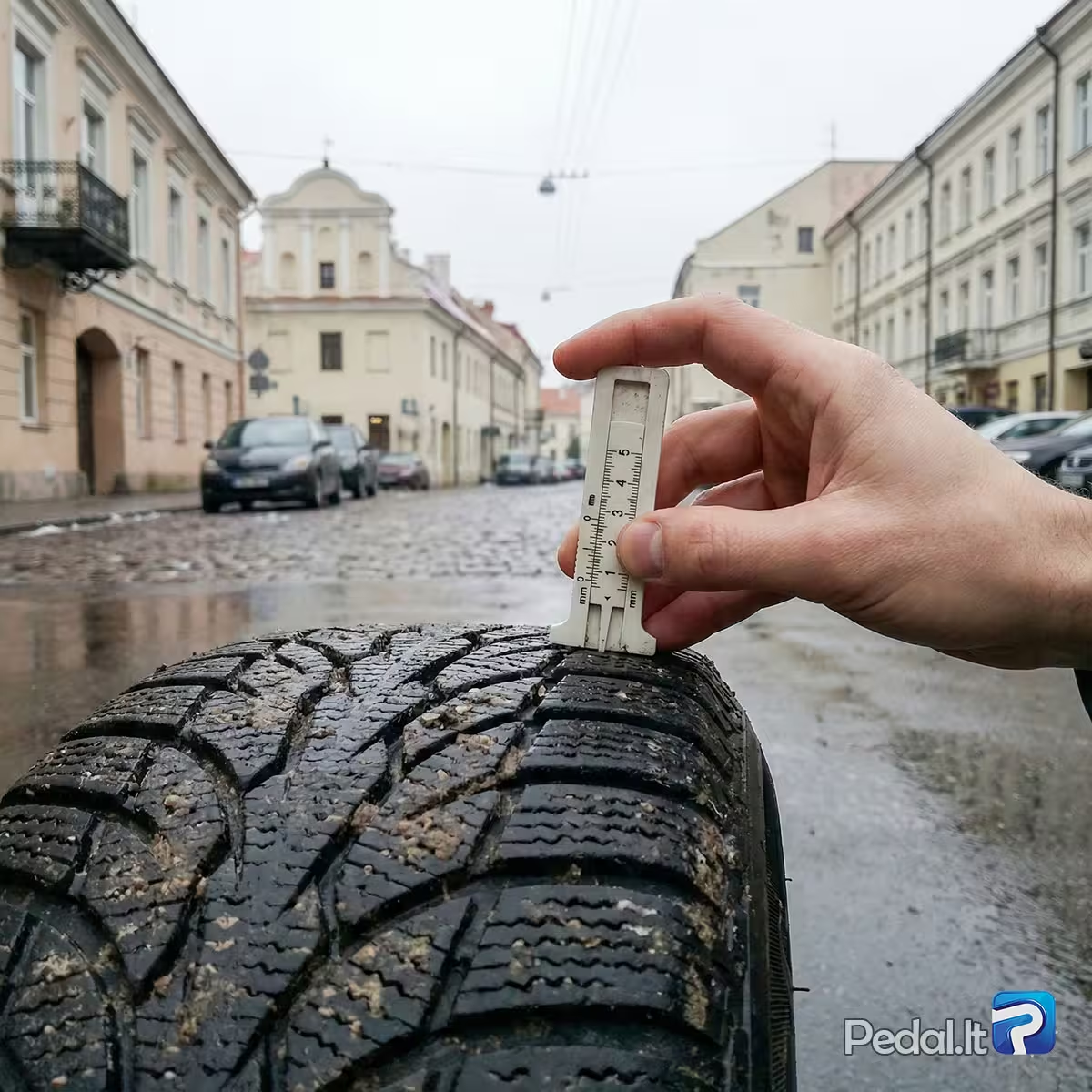
What is the minimum allowable winter tread depth for a passenger car tyre?
Passenger car tyre tread depth must be at least 1.6 mm in general and 3.0 mm during the winter period. Source: Technical requirements for motor vehicles and their trailers — Section V: Vehicle axles, wheels, tyres and suspension. 5.7. The tread depth of the tyres used must be at least: 5.7.1. M1 category — 1.6 mm (from November 10 to March 31 — 3.0 mm); JB
1. 1.6 mm.
2. 2.0 mm.
3. 3.0 mm.
You are driving on a road with speed bumps and the vehicle ahead is travelling slightly more slowly than you. What should you do:
Remain patient and keep a safe following distance. As a general rule, do not overtake where traffic is intentionally slowed (for example by speed bumps). Overtaking in such places may force you to exceed a safe speed for the road and would undermine the purpose of traffic‑calming measures.
1. Sound your horn.
2. Increase your speed to overtake whenever possible.
3. Flash your headlights to signal the driver.
4. Reduce your speed and follow at a safe distance.
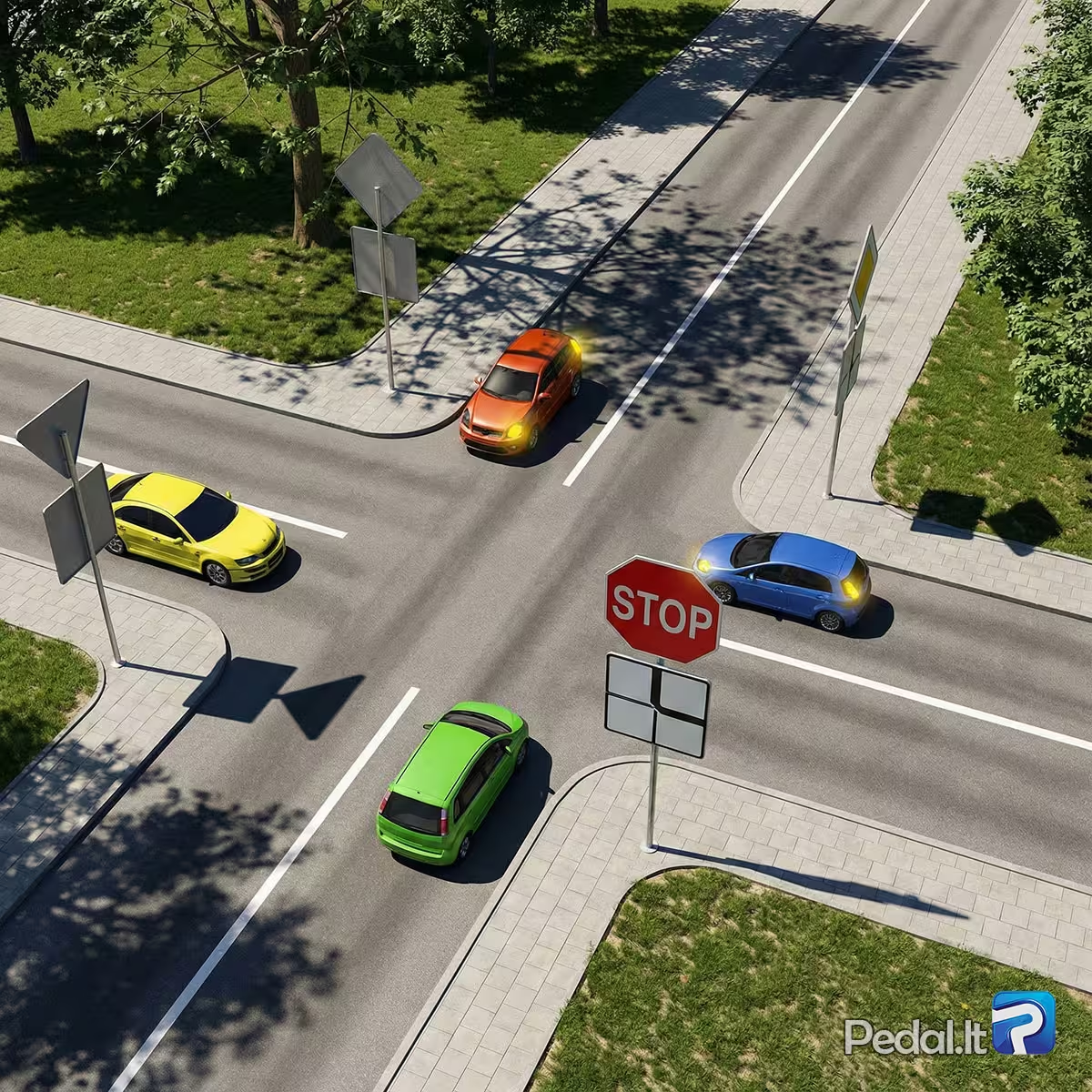
What is the correct sequence in which the vehicles will pass through the intersection?
The red and blue vehicles are on the priority (main) road, so they proceed first. Between them the priority-to-the-right rule applies: the red vehicle goes first because no vehicle is approaching from its right, followed by the blue vehicle. Vehicles on the side road follow: the green vehicle goes next (it has no vehicle to its right), and last is the yellow vehicle. RTR 154. At a controlled intersection, drivers on a side road must yield to vehicles on the priority road. RTR 156. If the main road’s direction changes at the intersection, drivers on the main road must, with respect to one another, follow the rules for intersections of roads of equal importance; drivers on the side road must apply those same rules among themselves. RTR Annex 2.204. 'STOP' — drivers must not proceed without stopping before the stop line or, if there is no line, before the sign. A driver must yield to vehicles traveling on the road he or she is about to cross. If panel No. 843 'Direction of Priority Road' is installed below the sign, the driver must yield to vehicles on the priority road.
1. Red, then blue, then yellow, and finally green.
2. Red, then blue, then green, and finally yellow.
3. Blue, then red, then green, and finally yellow.
4. Green, then blue, then yellow, and finally red.
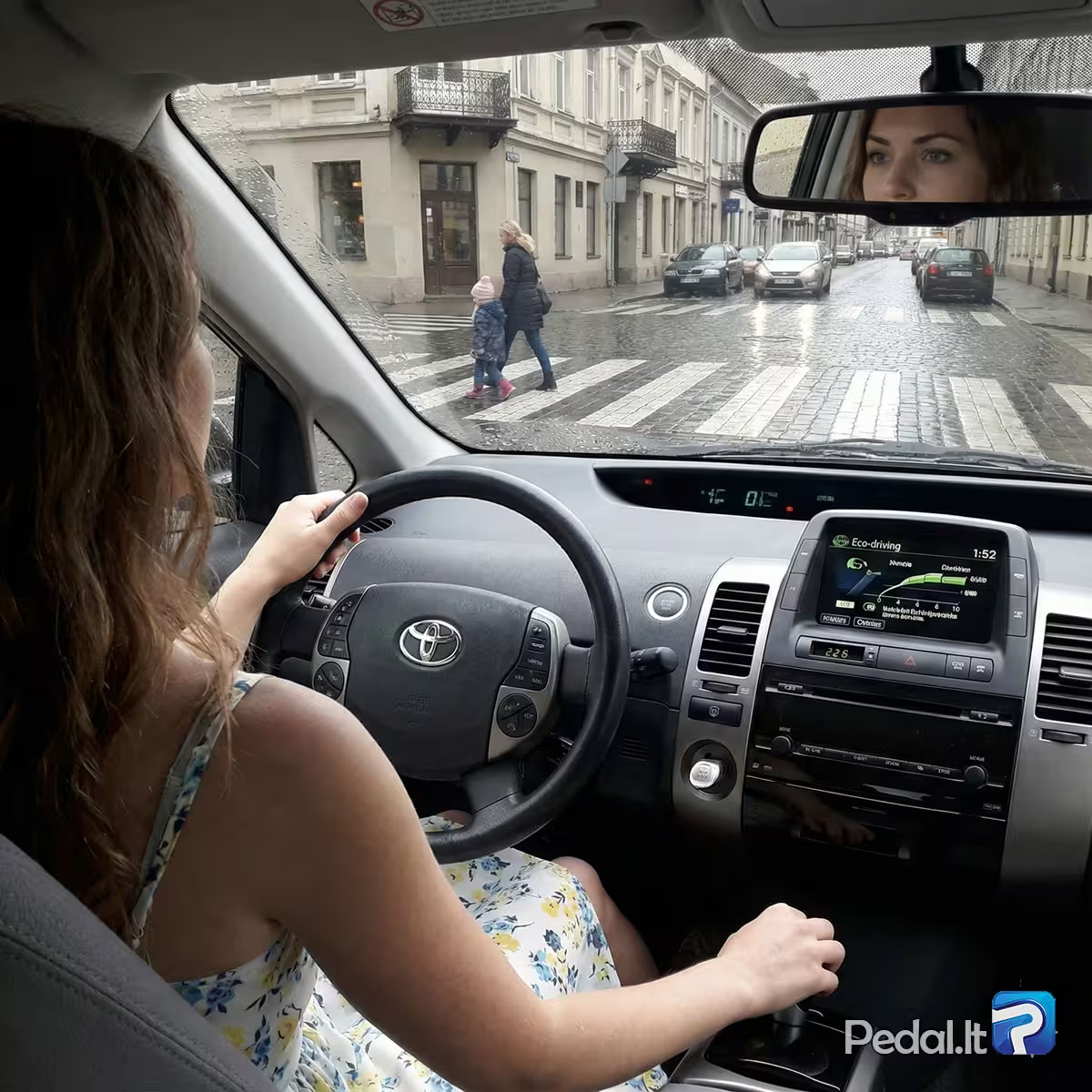
What should you do when approaching the pedestrian crossing?
Stationary vehicles positioned before a pedestrian crossing restrict visibility. Drivers must exercise extra caution and may continue only after confirming that no pedestrians entitled to right of way are at the crossing. (RTR 30.) When approaching an uncontrolled pedestrian crossing, a driver must reduce speed or stop before the crossing to give way to pedestrians who have already entered any lane, are walking in any lane, or were standing immediately at the carriageway edge waiting to step into a lane in the direction of the vehicle’s travel—or into any lane on a road with one lane in each direction. Drivers must be especially careful at night, in poor visibility, or whenever the crossing is not clearly visible from the driver’s position, and must ensure there are no pedestrians who should be given way.
1. You should reduce your speed.
2. If necessary to verify that no pedestrians are present, you will stop before the crossing.
3. You will pass the stationary vehicle at the permitted speed because you do not see any pedestrians on the crossing.
Which factors can reduce a driver's attention while driving?
1. Engaging in a heated or intense conversation with a passenger.
2. Experiencing strong emotions (e.g., joy, anger, or hatred).
3. Listening to an engaging radio programme.
You should select a speed so that the stopping distance is:
If the stopping distance is longer than the visible portion of the road, you may collide with an obstacle. Therefore, the distance visible ahead must always exceed the stopping distance.
1. Longer than the visible distance ahead.
2. Shorter than the visible distance ahead.
Where may drivers park their vehicles on unlit sections of road during hours of darkness?
RTR 143. Stopping on unlit sections of road during hours of darkness or when visibility is poor is permitted only with hazard warning lights activated. Parking is allowed only in designated car parks or in areas off the carriageway.
1. On the hard shoulder.
2. On the carriageway.
3. In car parks.
4. In off-road areas.
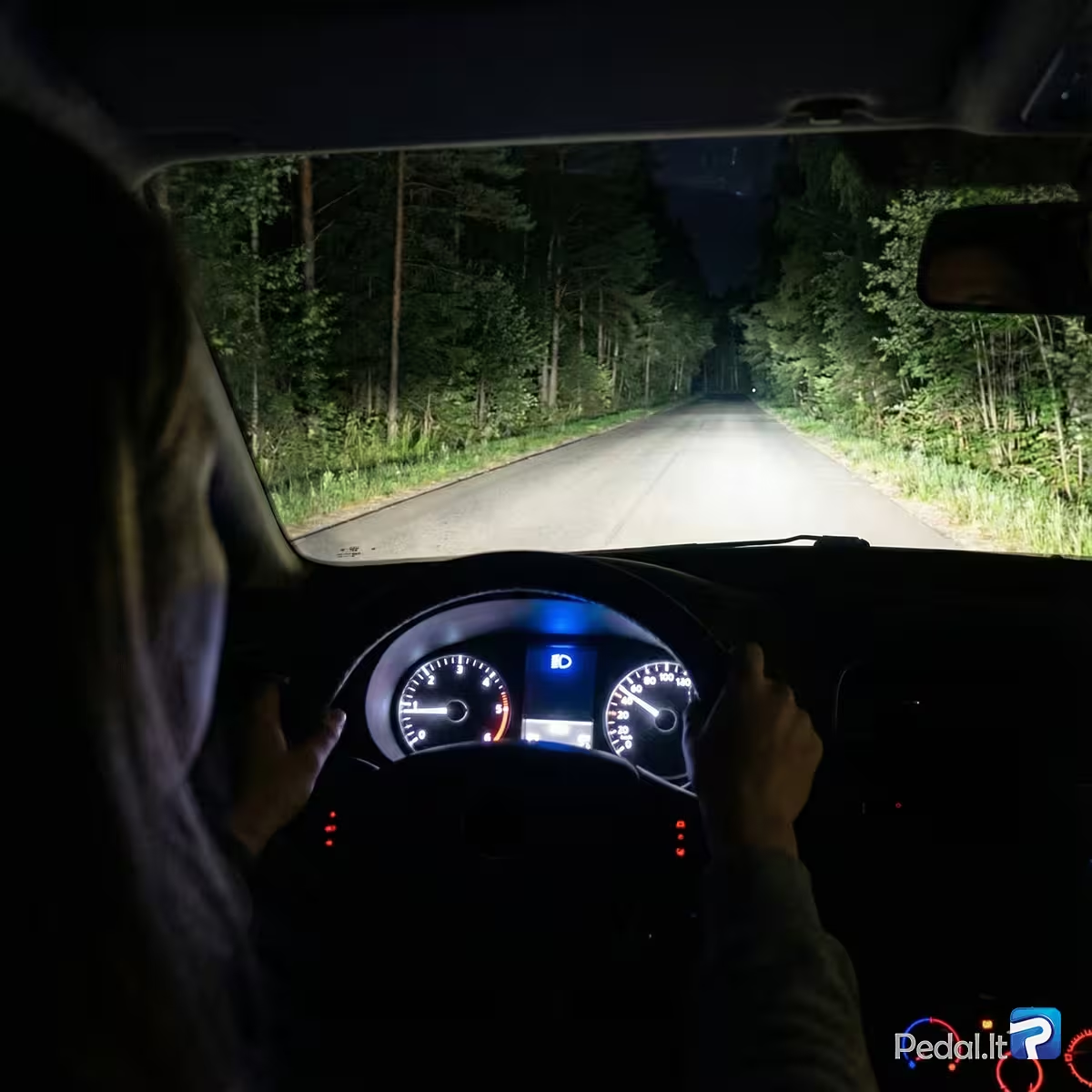
When driving at night on unlit stretches of road, a vehicle driver must drive with:
RTR 94. When traveling on roads at night or in conditions of poor visibility, motor vehicles, tractors, and self‑propelled vehicles must be driven with either dipped (low‑beam) or main (high‑beam) headlamps switched on.
1. Only the main (high‑beam) headlamps are switched on.
2. Only the dipped (low‑beam) headlamps are switched on.
3. Either the dipped (low‑beam) or the main (high‑beam) headlamps must be switched on.
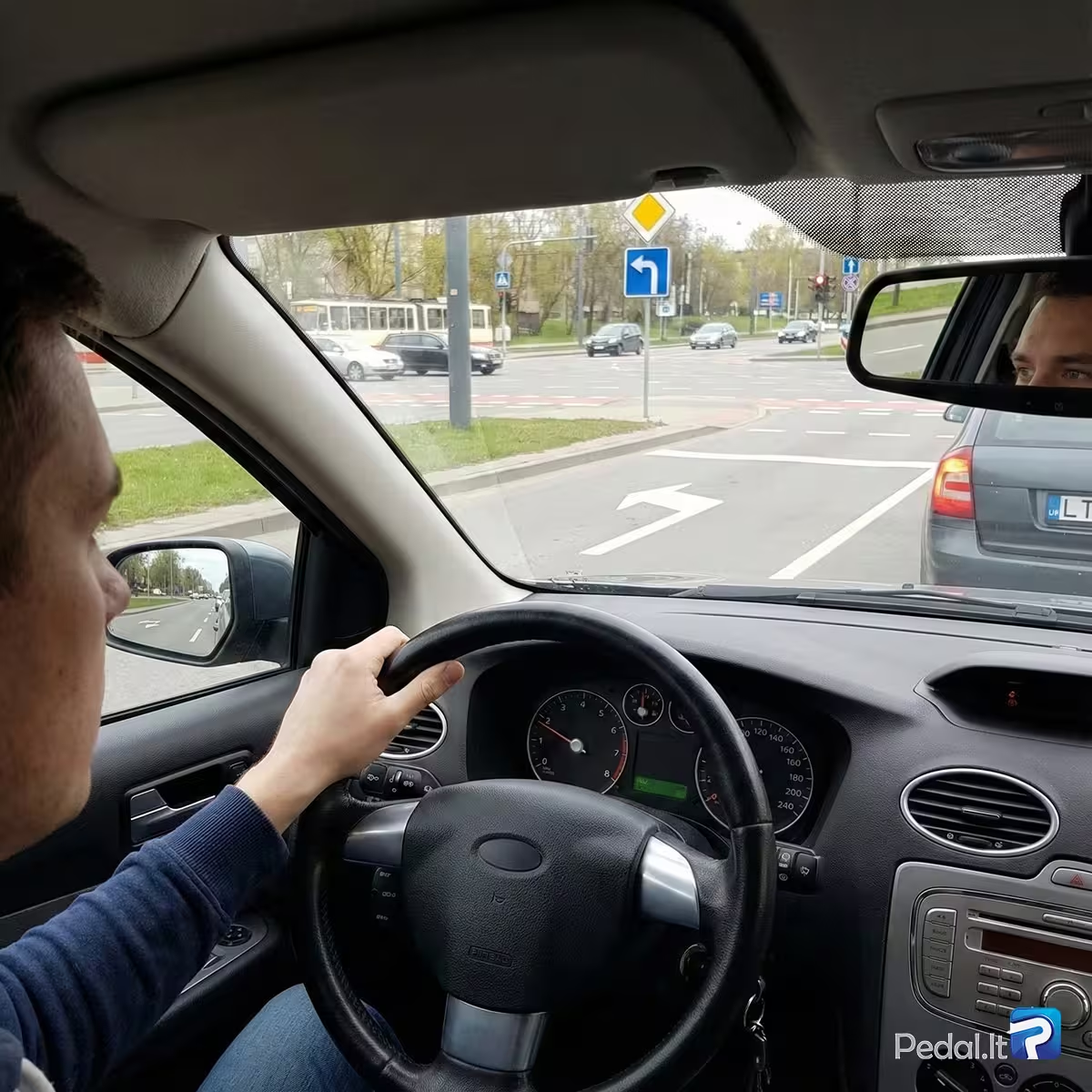
You are approaching a bend in the road:
Drivers approaching a road bend should be aware the bend may be sharper than it appears. Choose a safe speed and the correct road position to avoid entering the oncoming lane. A safe speed depends on all circumstances: weather, road and vehicle condition (including load), driver experience and fitness. According to RTR 127, drivers must not exceed the legal speed limit. When selecting speed, consider the terrain, road and vehicle condition, load, weather and traffic density so you can stop safely for any foreseeable obstacle. Drivers must slow down and stop when conditions require, especially if visibility is poor.
1. You will increase your speed midway through the bend.
2. You will reduce your speed before the bend.
3. You will reduce your speed while in the middle of the bend.
4. You will not change your speed.
1 of 30 Task
Time left: 00:00:00
1
2
3
4
5
6
7
8
9
10
11
12
13
14
15
16
17
18
19
20
21
22
23
24
25
26
27
28
29
30