How should you drive when the road is covered with ice?
High speed is unsafe on icy roads because the slippery surface increases braking distance; therefore you should drive slowly. On slippery roads, also try to prevent excessive wheel slip by keeping engine revolutions low — a higher gear results in lower engine RPM. Select a gear appropriate for your speed, but ensure it is as high as possible. If you feel the vehicle beginning to skid, immediately and gently release the accelerator and do not change the clutch pedal position.
1. Drive at a low speed while using the highest gear possible.
2. Drive at a low speed while using the lowest gear.
3. Drive at a high speed while using the highest gear.
4. Drive at a high speed while using the lowest gear.
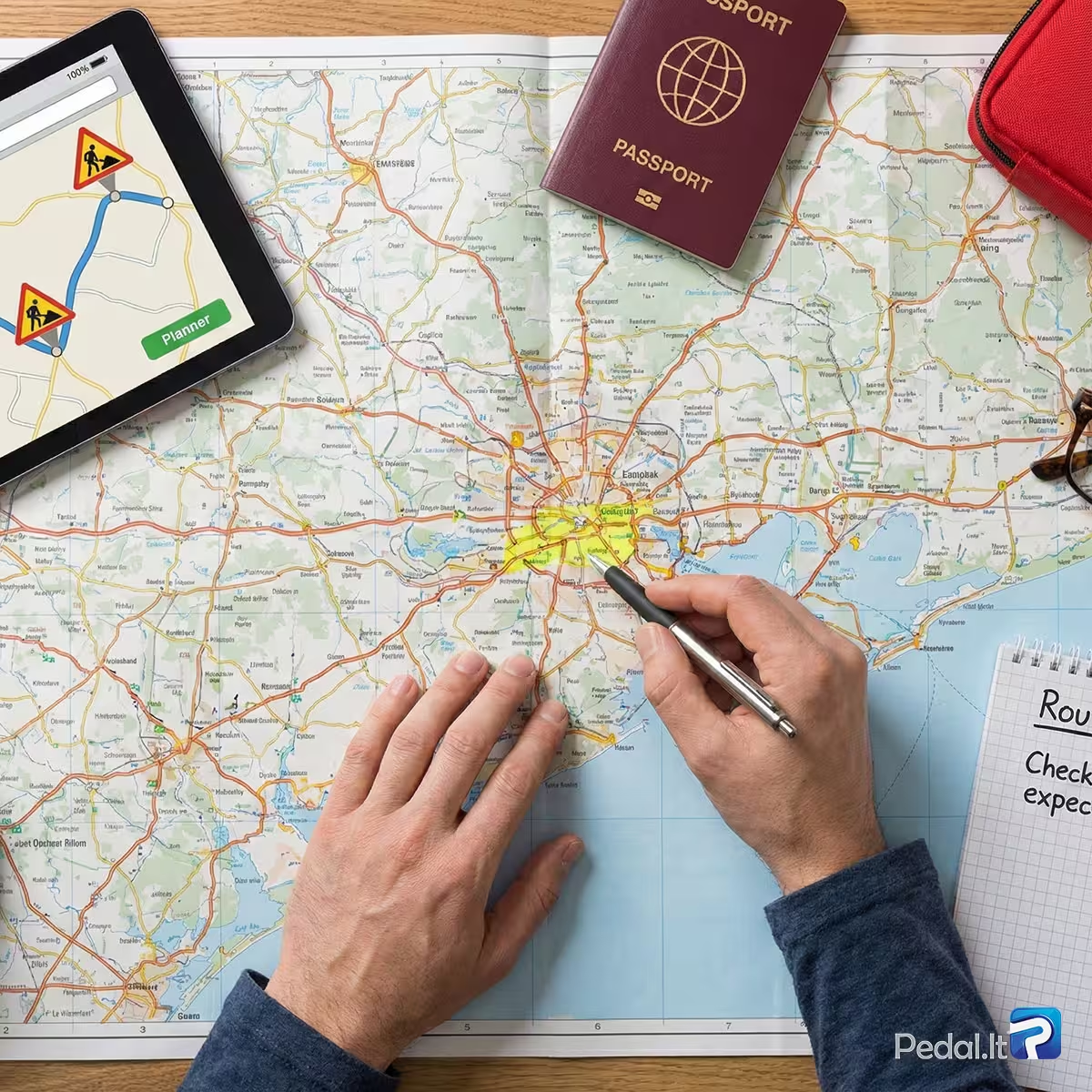
How should you plan your route when travelling a long distance that may include roadworks, border crossings and unexpected events?
JB
1. Estimate the additional fuel required for your journey and plan appropriate refuelling stops.
2. No planning is necessary.
3. Plan your departure time, stops and rest breaks, parking arrangements, and the route your vehicle will follow to the destination.
4. Check the traffic laws and legal requirements of any countries you will pass through.
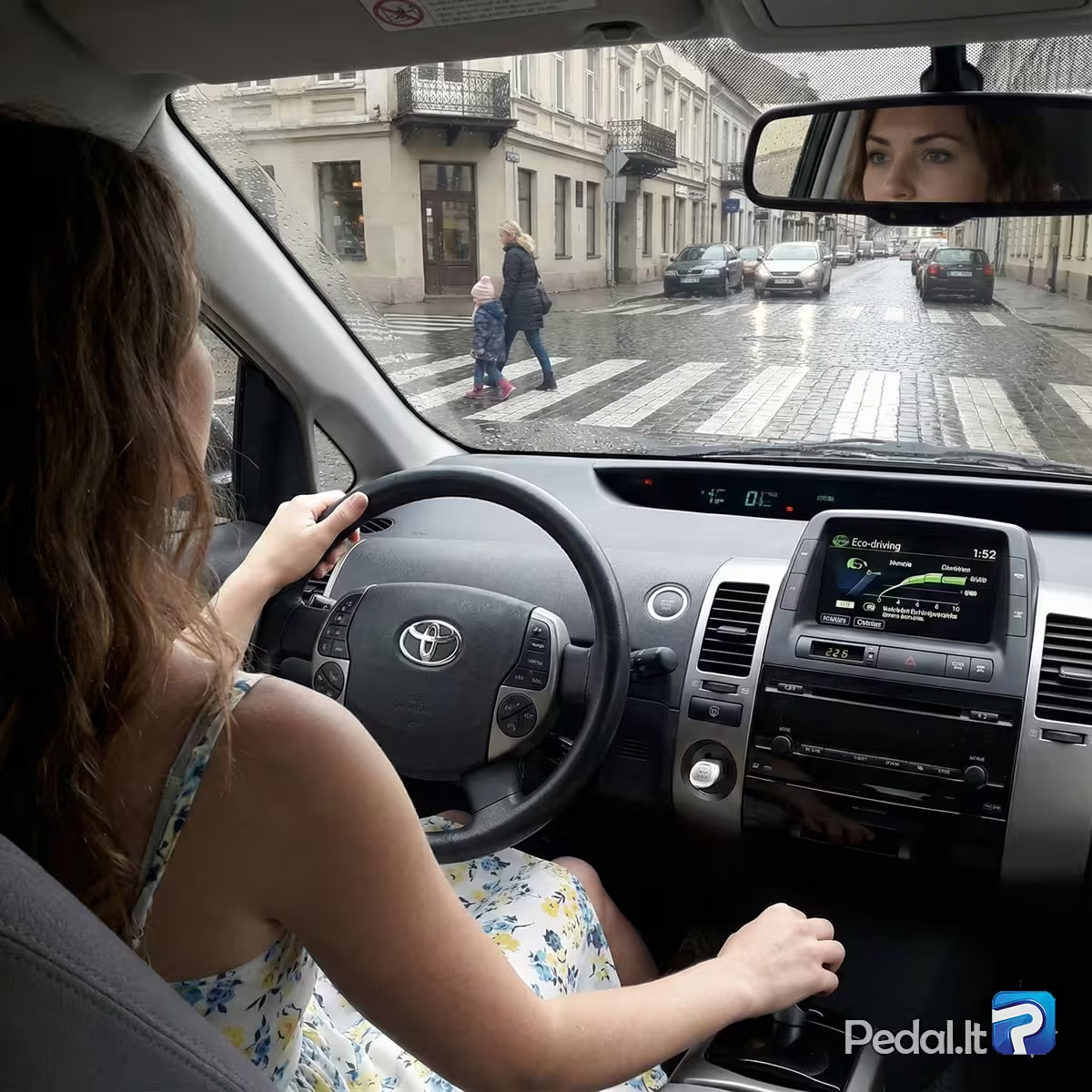
What should you do when approaching the pedestrian crossing?
Stationary vehicles positioned before a pedestrian crossing restrict visibility. Drivers must exercise extra caution and may continue only after confirming that no pedestrians entitled to right of way are at the crossing. (RTR 30.) When approaching an uncontrolled pedestrian crossing, a driver must reduce speed or stop before the crossing to give way to pedestrians who have already entered any lane, are walking in any lane, or were standing immediately at the carriageway edge waiting to step into a lane in the direction of the vehicle’s travel—or into any lane on a road with one lane in each direction. Drivers must be especially careful at night, in poor visibility, or whenever the crossing is not clearly visible from the driver’s position, and must ensure there are no pedestrians who should be given way.
1. You should reduce your speed.
2. If necessary to verify that no pedestrians are present, you will stop before the crossing.
3. You will pass the stationary vehicle at the permitted speed because you do not see any pedestrians on the crossing.
When must passengers fasten their seat belts?
RTR 196. All passengers and the driver must wear seat belts when traveling in vehicles equipped with them. If a bus is fitted with seat belts, visible signs reading "Fasten Your Seat Belt" must be displayed in front of every seat, on the seat, or next to it. It is recommended that all bus passengers be informed of the requirement to wear seat belts verbally or by audio-visual means before the journey begins. 198. Within built-up areas, a driver is permitted not to fasten the seat belt while reversing or when in parking areas. 205. Persons who, for serious medical reasons, hold special permits issued by competent authorities are exempt from wearing seat belts. These permits must include an expiry date.
1. Only when traveling on mountain roads.
2. At all times when traveling in a vehicle.
3. Only when traveling outside built-up areas.
4. Only when traveling on motorways.
When approaching a traffic-light-controlled intersection and you notice the green light has been on for a long time, what should you do?
A green light that has been lit for an extended period may change to yellow shortly. You may proceed, but remain vigilant and be prepared to stop safely. 73. Traffic light signals mean: 73.1. A steady circular green light permits movement in all directions (straight ahead, to the right, to the left, or a U-turn); 73.3. A flashing green light permits movement but warns that its time is ending and the signals are about to change.
1. Stop immediately.
2. Increase your speed.
3. Continue driving but be prepared to stop.
Upon request by another road user involved in the accident:
RTR 219. In the event of a road accident, every driver involved or any other road user must: 219.3. upon the request of other road users involved in the accident, present a valid identity document or a valid driving licence, and a certificate (policy) of compulsory third‑party motor vehicle liability insurance in order to identify the insurer;
1. You must present a valid identity document and the certificate (policy) of compulsory motor third‑party liability insurance to identify the insurer.
2. You are required to present the documents only to the police.
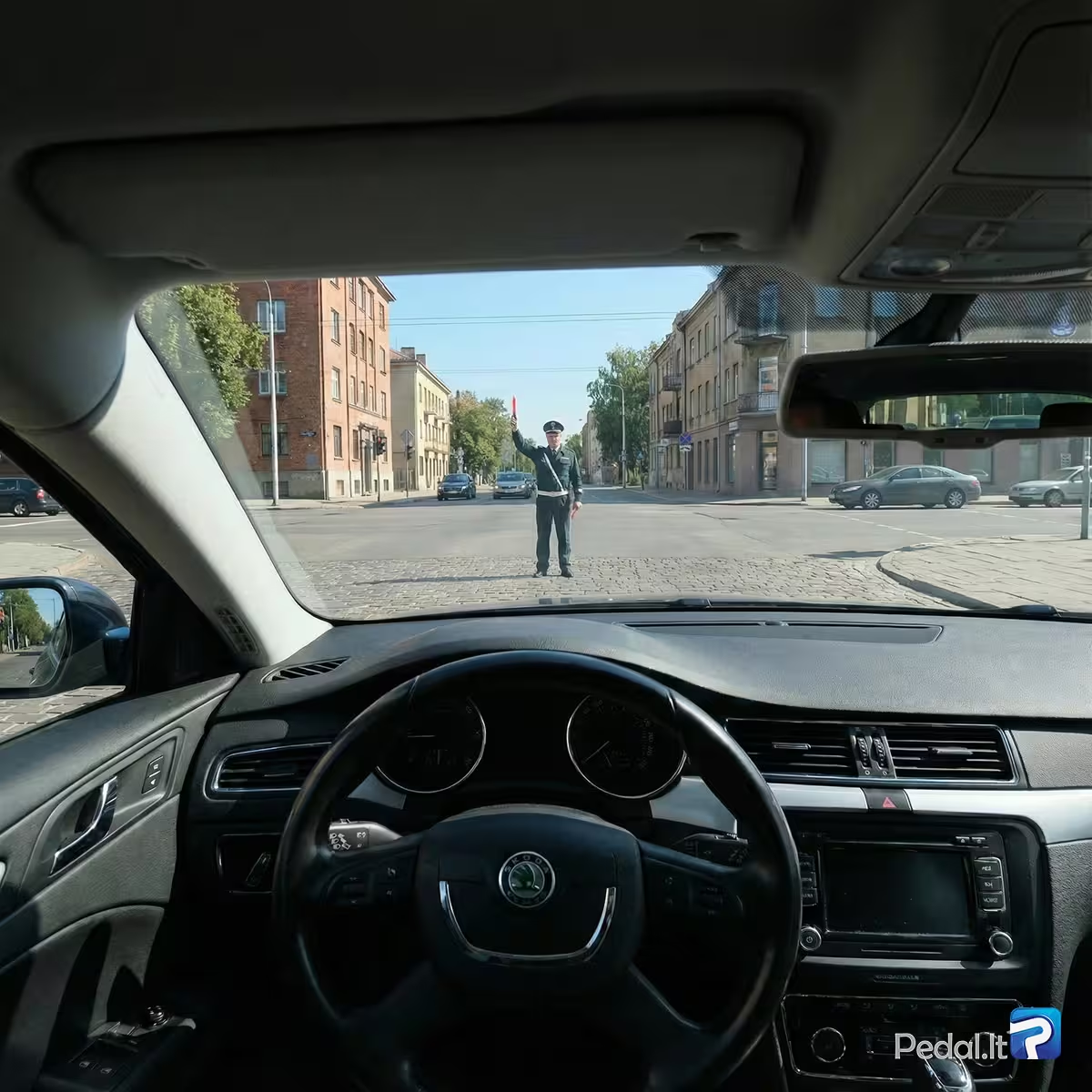
Are you permitted to proceed in this situation?
RTR 77. Signals given by traffic officers have the following meanings: 77.3. Arm raised upward: 77.3.1. All road users must not proceed in any direction.
1. Yes — you may proceed.
2. No — you must not proceed.
What factors affect road surface quality and traffic safety?
Manhole covers for underground information and communication systems can be more slippery than the surrounding road surface and may also be uneven.
1. Potholes.
2. Manhole covers for underground information and communication systems.
3. Oil stains on the roadway.
4. Loose gravel or stone chippings on the road.
5. Wet road surface (slippery conditions).
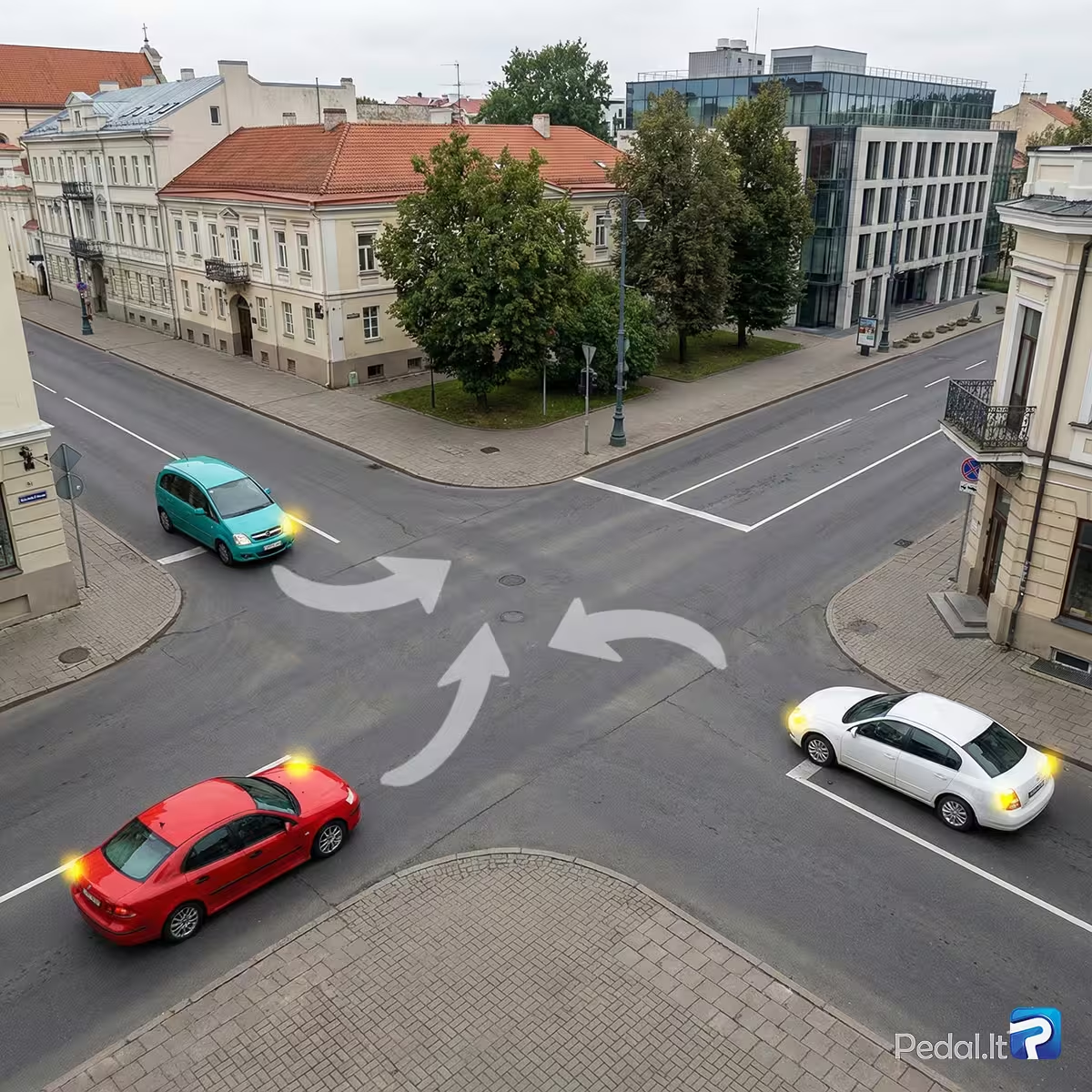
The correct sequence of vehicles to proceed through this intersection is:
The white car goes first because it has no vehicle on its right. It does not need to stop in the middle of the intersection because the green car, which is turning left, does not obstruct it. Next, the red car proceeds because the white car is no longer to its right. Finally, the green car goes. The white and green cars cannot go at the same time because the green car must yield to the red car on its right. (RTR 155) At an uncontrolled intersection, drivers must yield to vehicles approaching from the right when their paths intersect.
1. The white car goes first, then the red car, and finally the green car.
2. The red car goes first, then the green car, and finally the white car.
3. The white and green cars proceed simultaneously, followed by the red car.
What factors determine the severity of aquaplaning (a layer of water that can form between the tyre and the road surface during rain on asphalt)?
When vehicle speed increases, the layer of water on the road becomes deeper. Heavier rainfall also increases the water layer during driving. On roads with a transverse crown (where the carriageway is higher in the centre), the water layer is thinner because rainwater drains off the surface toward the edges more quickly. On asphalt, a tyre can displace only as much water as the volume available in its tread.
1. Vehicle speed.
2. Rainfall intensity.
3. Tyre tread depth.
4. Tyre height.
If you brake sharply while driving in heavy traffic:
Braking sharply in heavy traffic is dangerous because drivers following you often do not maintain a safe distance and may collide with your vehicle when you brake suddenly.
1. A vehicle following you may collide with your vehicle.
2. Your brakes could be damaged.
3. That would be a normal braking method.
4. The brake pads might become stuck.
What is the maximum permitted speed for a truck with a permissible maximum mass of up to 3.5 tonnes on a gravel road?
RTR 131. The following speed limits apply outside built-up areas: 131.1. For passenger cars, goods vehicles with a maximum permissible mass up to 3.5 tonnes, motorcycles and tricycles the maximum permitted speeds are: on motorways — 130 km/h from April to October and 110 km/h from November to March; on highways — 120 km/h from April to October and 110 km/h from November to March; 90 km/h on roads with asphalt or concrete pavement; and 70 km/h on other roads. JB
1. 90 km/h.
2. 60 km/h.
3. 70 km/h.
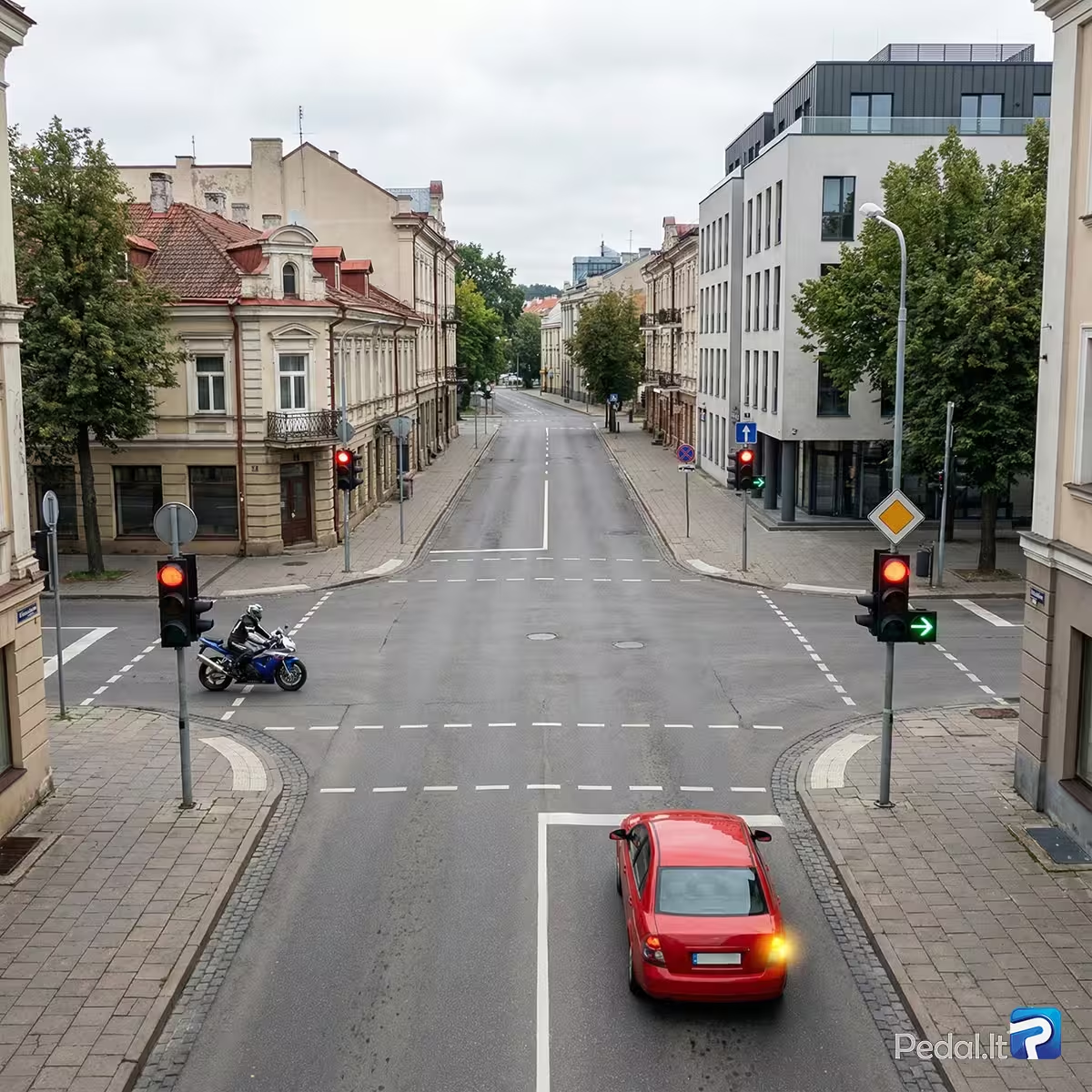
Who has the right of way? (the traffic light is green for the motorcyclist)
RTR 163. When driving in the direction indicated by an arrow illuminated in an auxiliary section of the traffic light together with an amber or red main signal, the driver must yield to road users coming from other directions who have a traffic-light signal permitting them to proceed, except as provided in Paragraph 163-1 of the Rules. RTR 163-1. When making a U-turn at an intersection controlled by traffic lights, the driver must yield to road users coming from other directions who are permitted to proceed by the traffic-light signal. JB
1. The driver of the red car.
2. The motorcyclist.
During hours of darkness or in conditions of poor visibility, a load projecting up to 1 metre beyond the side of a vehicle must be marked:
Any load that projects laterally, even slightly, must be marked. During hours of darkness such a load must be indicated by lights. Loads projecting beyond the sides of the vehicle must always be marked; loads projecting beyond the front or rear do not always require marking. According to RTR 210 and Annex 4: loads extending more than 1 m beyond the front or rear of the vehicle, or projecting laterally beyond the vehicle's outer edge, must be marked as specified in Annex 4.12. Extreme edges of loads that extend more than 1 m beyond the vehicle's dimensions, or that project even minimally to the side, as well as extreme edges of vehicles wider than 2.6 m, shall be marked with distinguishing panels — 400 mm square plates with alternating reflective white and red diagonal stripes 50 mm wide. These panels must be mounted between 0.4 m and 1.6 m above ground level. During hours of darkness or in poor visibility such vehicles must also display lights in the designated positions: white at the front, orange at the sides, and red at the rear.
1. Marked with high-visibility flags.
2. Marked with lights: white at the front, orange at the sides, and red at the rear.
3. Marking is not required.
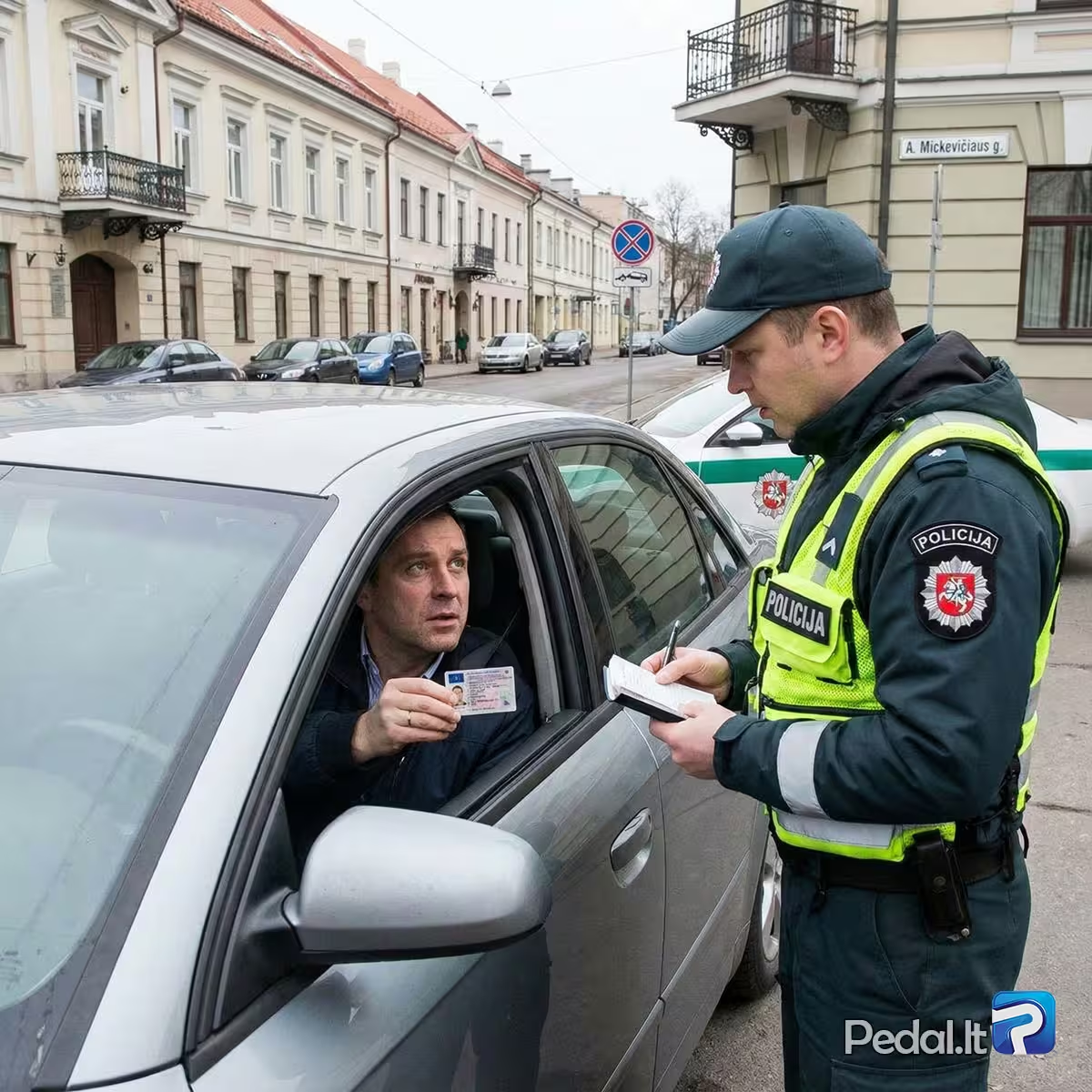
Is a person without a valid driving licence in the Republic of Lithuania permitted to drive (as opposed to only learning to drive) a motor vehicle?
Driving licences issued in Lithuania, in other EU Member States, and in certain other countries are recognised in Lithuania. This question, however, asks whether a person may drive in Lithuania without a valid driving licence (including one issued abroad). The correct answer is “No”.
LAW ON ROAD TRAFFIC SAFETY — Article 13(1): Persons who do not have the right to drive a motor vehicle, tractor, or self-propelled work machine; who are intoxicated; who are under the influence of narcotic, psychotropic or other psychoactive substances; or who have not taken the legally required daily rest must not drive. In addition, a person who is fatigued or ill must not drive if doing so could endanger road safety. A vehicle must not be entrusted to a person affected by any of the factors listed above or who is not authorised to drive that type of vehicle.
1. No — they are not permitted to drive.
2. Yes — they are permitted to drive.
Which of the following statements is correct?
It is always safer to exit a yard or a residential area facing forward, because this provides a better view of the road you are entering. Reversing out of such areas may cause you to miss other road users to whom you must yield. KET 114: When reversing, the driver must give way to other road users.
1. Avoid reversing out onto the road from adjacent premises.
2. Never reverse from the road into adjacent premises.
3. If possible, reverse from adjacent premises onto the road.
4. If possible, reverse from the road into adjacent premises.
Why must you wear a seat belt when driving?
RTR 196. The driver and all passengers must wear seat belts when the vehicle is equipped with them. If a bus is fitted with seat belts, visible notices reading 'Fasten Your Seat Belt' must be displayed in front of every seat, on the seat, or next to it. It is recommended that all bus passengers be informed—verbally or by audio‑visual means—about the requirement to wear seat belts before the journey begins. RTR 197. A seat belt must be fastened over the shoulder and around the waist, or as specified by the vehicle manufacturer.
1. To reduce the risk of injury in a road traffic collision.
2. Because wearing a seat belt makes driving more comfortable.
3. Because the road traffic regulations require it.
Under which conditions does a car battery's capacity decrease?
Battery capacity decreases as ambient temperature falls. A fully charged battery that measures 100% capacity at +25 °C will typically drop to about 80% at 0 °C and to roughly 60% at −25 °C.
1. When ambient temperature rises.
2. When ambient temperature falls.
3. It does not change with temperature.
What is the maximum permissible concentration of ethyl alcohol in the blood for a passenger car driver who has three years of driving experience?
LAW ON ROAD TRAFFIC SAFETY, Article 2, item 43. Intoxication — the state of a person who has consumed ethyl alcohol, when the concentration of that alcohol in the body's biological media (exhaled air, blood, urine, saliva or other bodily fluids) exceeds the legal limit. The maximum permitted concentration of ethyl alcohol in the exhaled air, blood, urine, saliva or other bodily fluids of persons driving vehicles is 0.4 per mille. Novice drivers, taxi drivers, and drivers of mopeds, motorcycles, tricycles, light quadricycles, four-wheel power quadricycles, vehicles with a maximum permissible weight over 3.5 t or with more than 9 seats, and drivers transporting dangerous goods are considered intoxicated when the concentration of ethyl alcohol in their exhaled air, blood, urine, saliva or other bodily fluids is greater than 0 per mille. JB
1. 0.2 ‰
2. 0.3 ‰
3. 0.4 ‰
4. 0 ‰
Are other vehicles permitted to enter the space between a motorcyclist and the driving instructor who is accompanying the motorcyclist in a car?
RTR 26. Drivers of other vehicles must not enter the space between a learner driver—who is learning to operate a moped, motorcycle, tricycle, or any type of quadricycle—and the driving instructor who is accompanying the learner in a vehicle. During the training period the learner must wear a high-visibility vest marked with the distinguishing sign 'M' on both the front and the back. A driving instructor who accompanies the learner on a motorcycle must also wear a vest of the same type bearing the words 'DRIVING INSTRUCTOR'. If the instructor accompanies the learner in a car, the car must display the identifying marking specified in Annex 4 of these Rules.
1. It is permitted.
2. It is prohibited.
Cyclists must not:
RTR 38. Persons moving in a wheelchair, or guiding a motorcycle, moped, bicycle, motorised two‑wheeled vehicle, electric micromobility device, or pulling (pushing) a sledge or handcart along the shoulder or edge of the carriageway must proceed in single file and only in the direction of traffic. RTR 64. Cyclists must not: 64.1. ride on the carriageway, except in cases permitted by the Rules. RTR 57. Bicycles may be ridden only on cycle tracks, combined footpath/cycle tracks, or cycle lanes; if none of these are available, bicycles may be ridden on a suitable hard shoulder (with asphalt or concrete surfacing). When a right‑side cycle track, combined footpath/cycle track, cycle lane, or suitable hard shoulder is not available or is unsuitable for cycling (for example, pitted), cyclists may use the pavement or ride in single file on the right‑hand lane of the carriageway, keeping to the right edge of the lane, except in the cases specified in paragraph 106 of these Rules and except when cyclists must bypass an obstruction or continue straight where turning right from the first lane is the only permitted manoeuvre. When riding on a hard shoulder, footpath, cycle track, or pavement, a cyclist must yield to pedestrians, must not obstruct or endanger them, and should pass pedestrians at a speed close to walking pace (3–7 km/h), leaving sufficient lateral clearance to ensure safety.
1. Ride on the carriageway except when no cycle track, cycle lane, or suitable hard shoulder is available.
2. Ride against the flow of traffic.
3. Walk (push) their bicycle in the same direction as vehicular traffic.
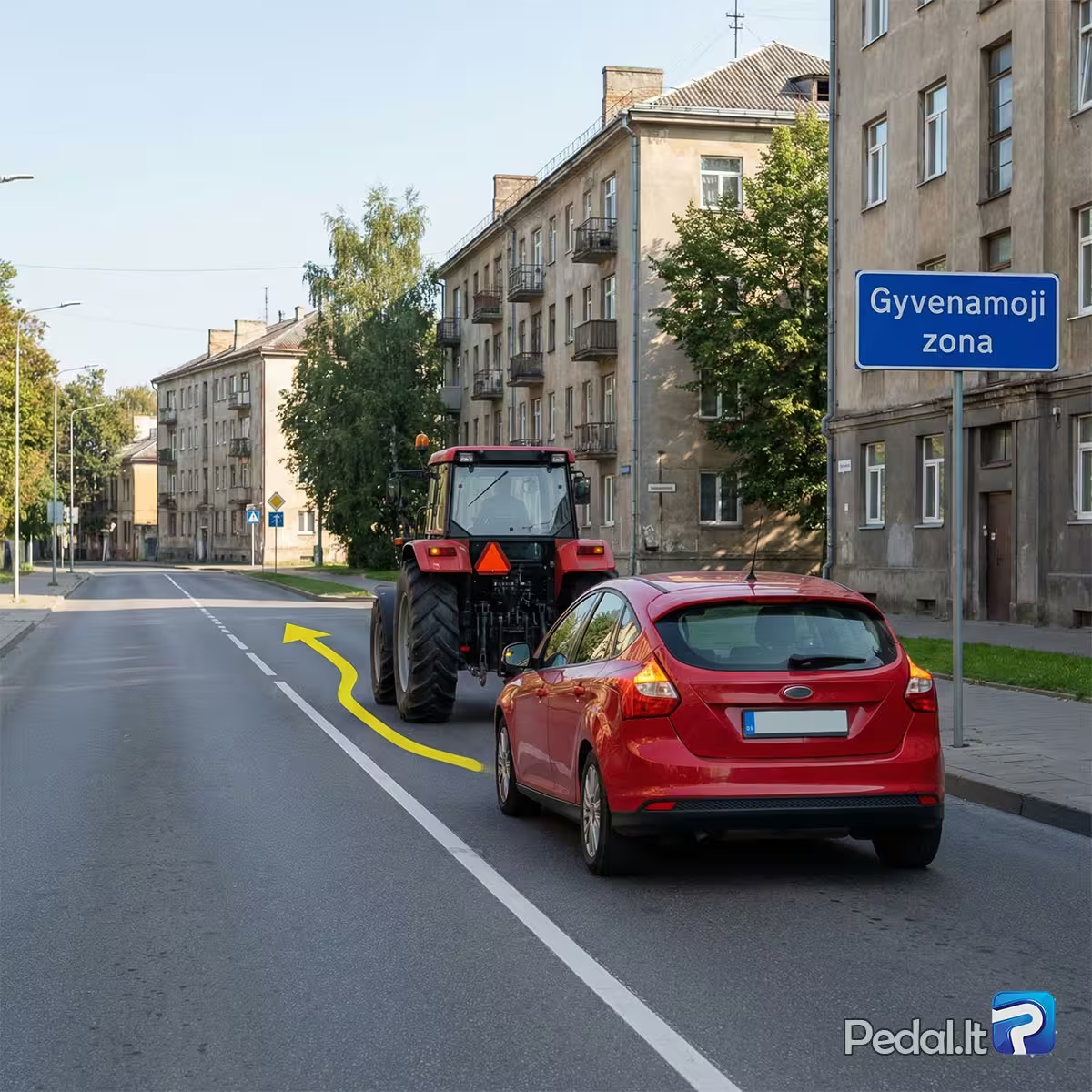
Is overtaking permitted in this situation?
A narrow continuous (solid) line prohibits overtaking. There is an exception when the road has both a narrow solid line and the road sign "Overtaking Prohibited" (RTR Annex 1.325): that sign indicates overtaking is prohibited except for single vehicles or single-vehicle combinations traveling slower than 30 km/h, which means very slow-moving vehicles (e.g., tractors) may be passed. In the pictured case there is no such sign—only a continuous line—so overtaking, even of a very slowly moving tractor, is not permitted.
RTR Annex 1.805 "The Validity Zone Ahead" indicates the length of the zone to which a sign applies beyond the sign itself.
Horizontal Marking 1.1: A narrow solid line separates opposing traffic and forbids drivers from using the oncoming lane on the marked section; it also marks lane boundaries, carriageway areas vehicles are prohibited from entering, parking-space limits, and the carriageway edge. Vehicles must not cross this line except where it marks the edge of the carriageway or a parking space.
1. Overtaking is prohibited.
2. Overtaking is permitted.
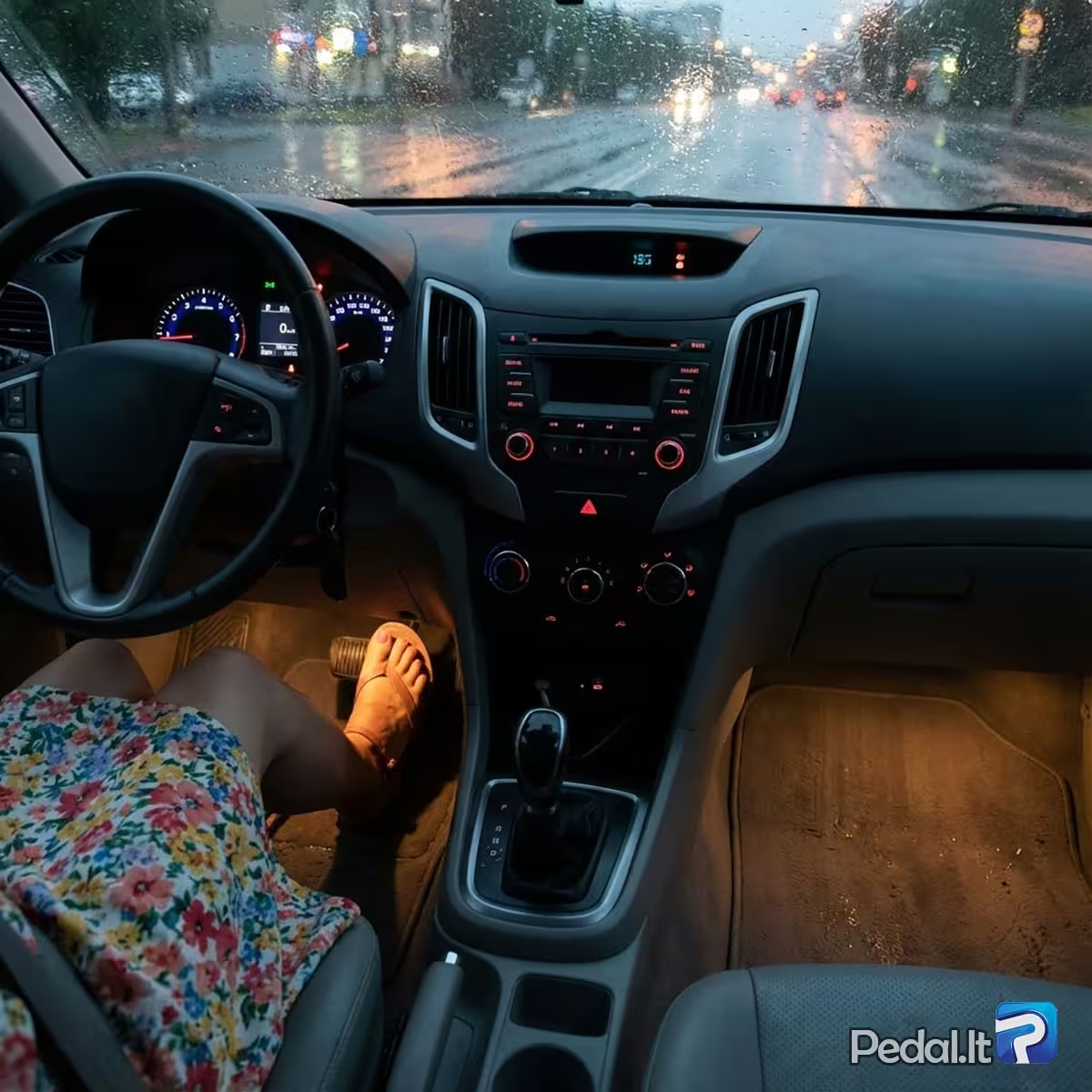
If water gets into the brake pads and reduces braking effectiveness, what will you do?
After driving through a deep puddle or a body of water, drive at low speed for a short while and gently apply the brakes several times to dry the brake discs or drums and the pads or shoes. Friction will heat the components, helping the water to evaporate and restoring braking performance.
1. You would repeatedly apply the brakes while the vehicle is stationary.
2. You would ignore it because they will dry on their own within a few minutes.
3. You would gently apply the brakes several times while driving slowly.
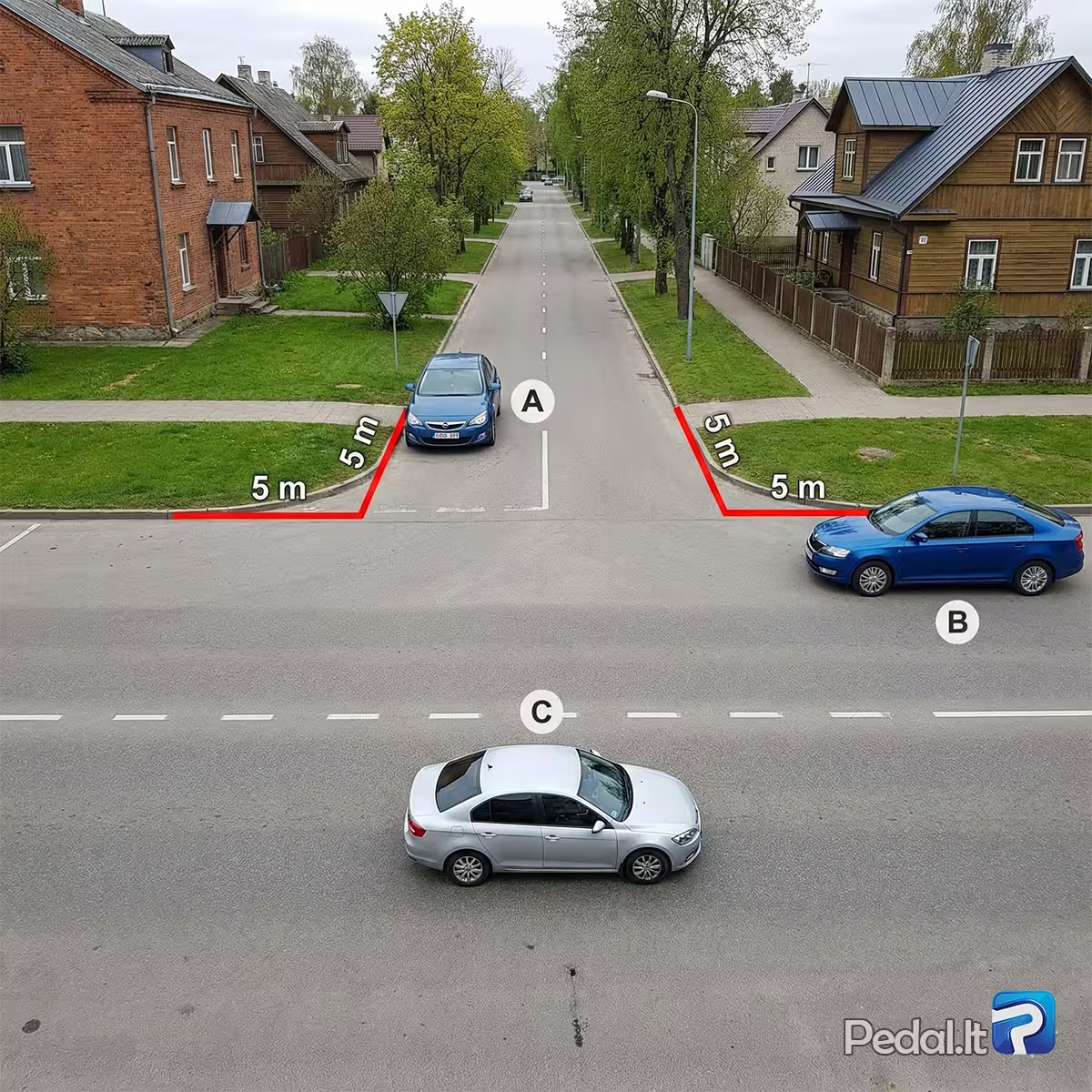
Which vehicles have violated the Road Traffic Rules by stopping at the entrance to the yard?
This is not an intersection but the entrance to a yard. Therefore, vehicle C is not prohibited from parking in this way. RTR 150. Standing and parking shall be prohibited: 150.15 at crossroads and in places where vehicles enter the road from adjacent areas and exit the road to adjacent areas, and within a 5-metre distance from those points (on the side of the road where the entrance/exit is located), except where road signs permit parking.
1. Vehicle A
2. Vehicle B
3. Vehicle C
4. All vehicles are parked correctly.
You are driving on a road with speed bumps and the vehicle ahead is travelling slightly more slowly than you. What should you do:
Remain patient and keep a safe following distance. As a general rule, do not overtake where traffic is intentionally slowed (for example by speed bumps). Overtaking in such places may force you to exceed a safe speed for the road and would undermine the purpose of traffic‑calming measures.
1. Sound your horn.
2. Increase your speed to overtake whenever possible.
3. Flash your headlights to signal the driver.
4. Reduce your speed and follow at a safe distance.
What is the lowest speed at which a collision can be fatal?
Even at 30 km/h, a collision can seriously endanger the health or life of drivers and passengers. For example, in a head-on collision between two vehicles travelling in opposite directions.
1. 50 km/h.
2. 30 km/h.
3. 80 km/h.
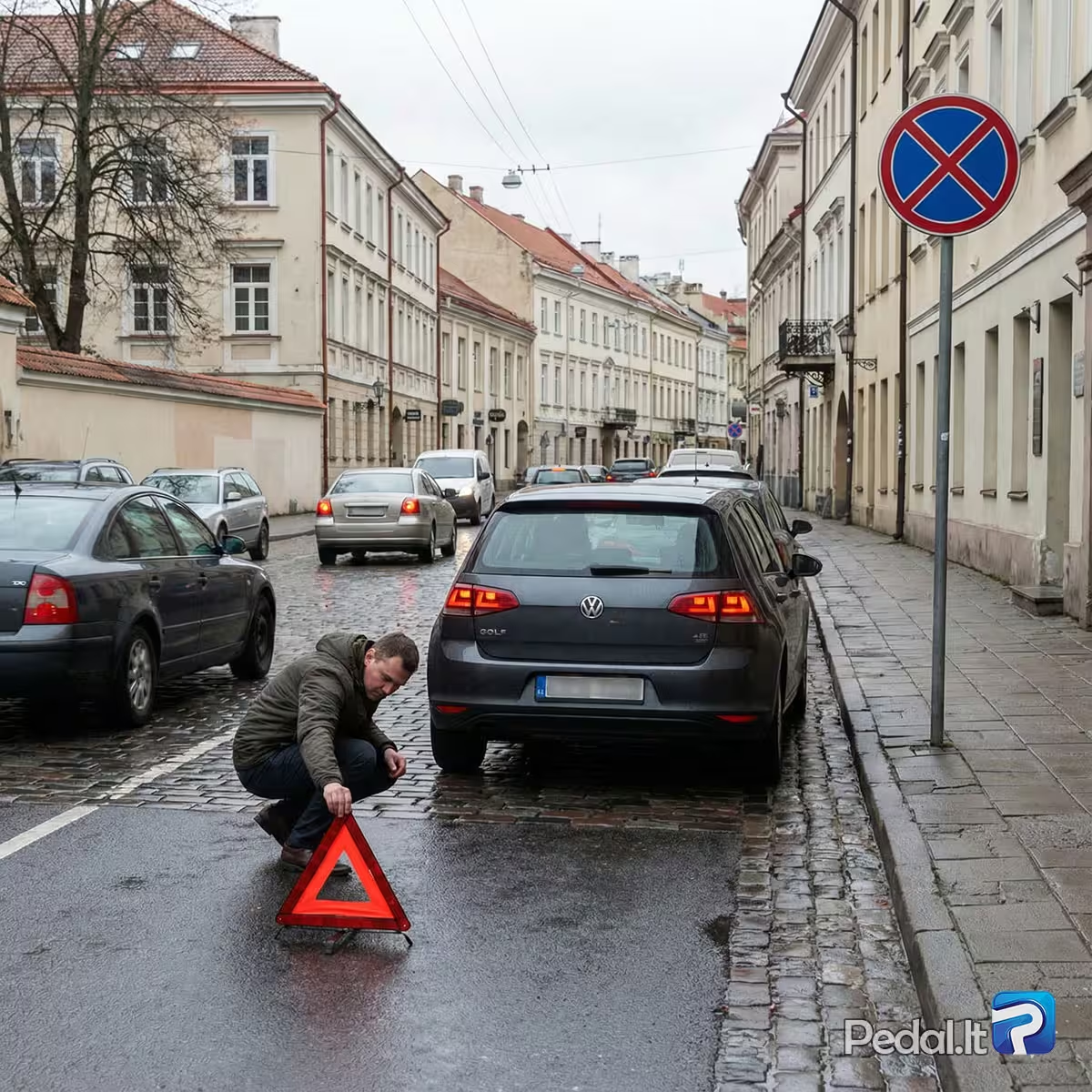
What must you do if you are forced to stop inside a settlement where stopping (parking) is prohibited and the hazard warning lights are not working?
RTR 92. If the emergency warning light system is not fitted or is defective and an emergency stop is required where stopping or parking is prohibited, in the event of an accident, or where the stopped vehicle would be visible to other road users from less than 100 metres, the driver of a motor vehicle (other than a motor moped or a motorcycle without a trailer), a tractor, or a self-propelled machine must immediately place an emergency stop sign on the carriageway side opposite to the direction of travel: in settlements, not closer than 25 m, and outside settlements, not closer than 50 m from the stopped vehicle. If at least one rear position lamp is defective and the hazard warning lights do not work while driving in darkness or poor visibility, an emergency stop sign must be attached to the rear of the vehicle in order to continue driving.
RTR 151. When a vehicle is forced to stop where standing or parking is forbidden, drivers must switch on hazard warning lights if available and/or place a warning triangle on the road as specified in Paragraph 92 of the Rules, and remove the vehicle from the road as soon as possible. If drivers intend to stop on unlit road sections at night or in poor visibility and hazard warning lights are unavailable or inoperable, the vehicle must be parked off the carriageway. If this is impossible, the place must be marked as specified in Paragraph 92 of the Rules. JB
1. Place a warning triangle at least 25 m from the stopped vehicle.
2. Attach a red flag to the vehicle.
3. Switch on the dipped headlights.
4. Stop another vehicle and ask for assistance.
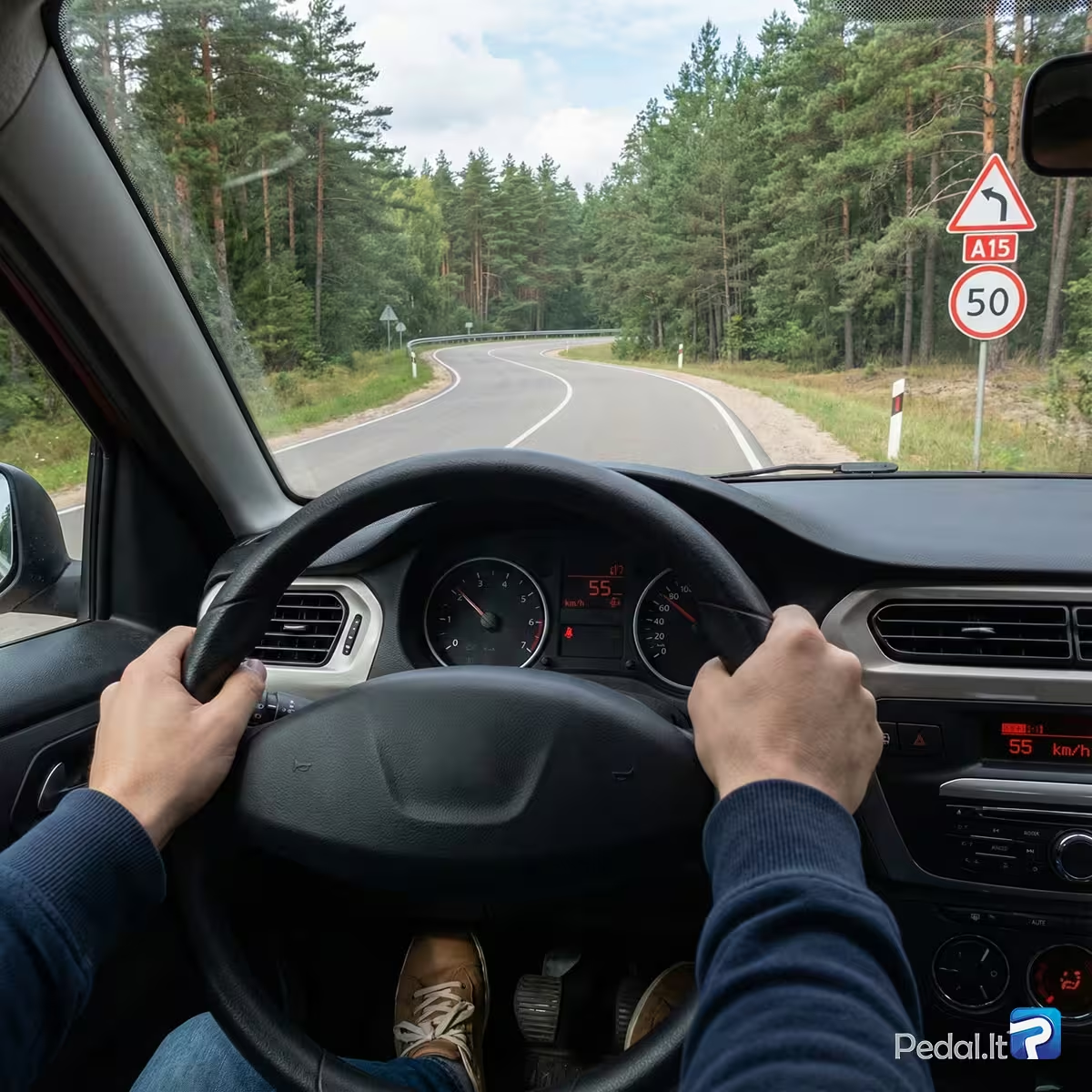
You are approaching a bend in the road. You should:
Drivers approaching a bend should be aware that the curve may be sharper than it appears. Therefore they must select a safe speed and adopt an appropriate position on the road to avoid entering the oncoming traffic lane. A safe speed depends on all circumstances: weather conditions, the technical condition of the road and the vehicle, the vehicle's load, the driver's experience and physical condition. RTR 127. Drivers must not exceed the permitted speed limit. When choosing a driving speed, drivers should consider the driving conditions — in particular the terrain — the condition of the road and the vehicle (including its load), weather conditions and traffic density so that they can stop safely before any foreseeable obstruction. Drivers must slow down or stop if circumstances require, especially when visibility is poor.
1. Reduce your speed.
2. Position your vehicle to avoid crossing into the oncoming traffic lane.
3. Use your turn signal.
Is it permitted to carry passengers in a towed vehicle when a flexible towing link is used?
Passengers may be carried in a towed vehicle except when the vehicle is being towed with its front or rear supported on a towing platform or other support device. Regulation 195 states that drivers must not: 195.4. carry passengers inside a bus, trolleybus, or the body of a goods vehicle that is being towed; if the front or rear of a vehicle is resting on a support device, passengers must not be inside the vehicle or in its cargo body.
1. Yes — it is allowed.
2. No — it is not allowed.
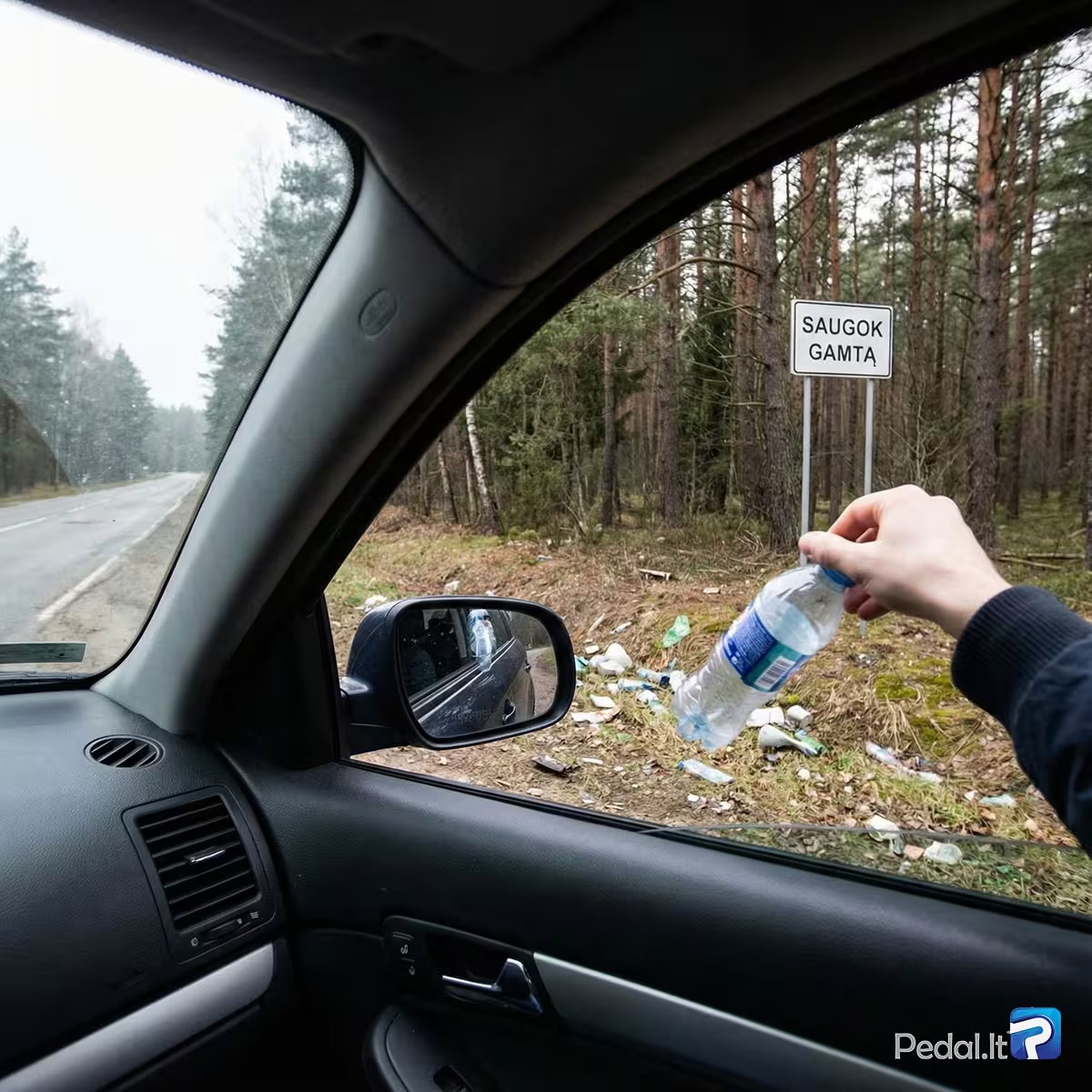
What should we avoid to protect nature?
Carrying unnecessary luggage increases fuel consumption and causes additional harmful emissions. Loud music from a vehicle contributes to noise pollution and can scare wildlife. For short trips, people can walk, cycle, or use public transport, because during brief journeys the engine often does not reach its optimal operating temperature, the vehicle runs less efficiently, and pollution is higher.
1. Leaving a vehicle's engine running while stationary (idling).
2. Playing loud music from a vehicle with the windows open.
3. Using a car for short trips.
4. Carrying unnecessary cargo or luggage.
1 of 30 Task
Time left: 00:00:00
1
2
3
4
5
6
7
8
9
10
11
12
13
14
15
16
17
18
19
20
21
22
23
24
25
26
27
28
29
30