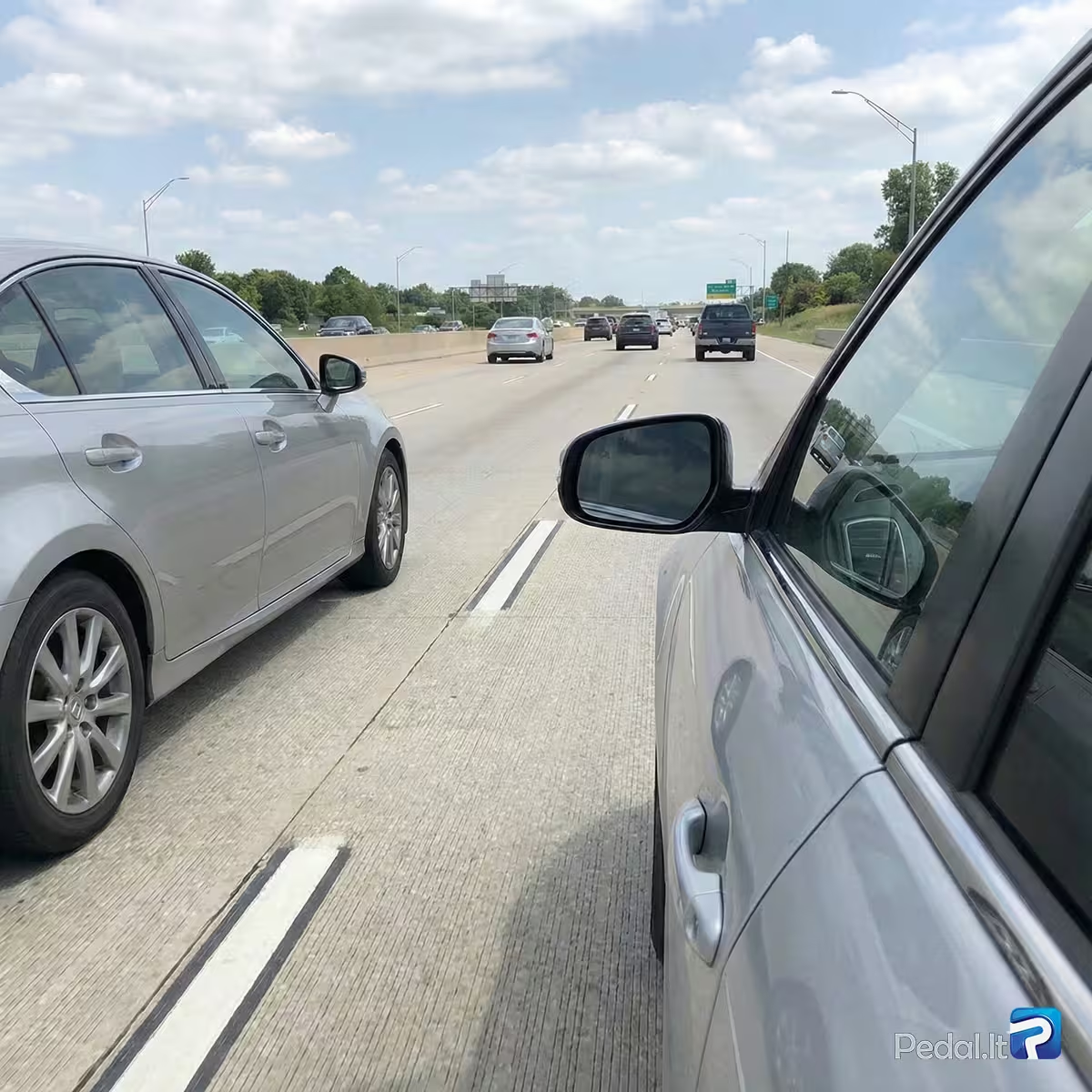
What lateral distance from nearby vehicles is considered safe?
3.17 Choosing a safe distance: operate the vehicle so that: 3.17.3. the distance to other vehicles, whether moving or stationary, is safe relative to any parked vehicle — maintain sufficient clearance to prevent parked vehicles or other obstacles from causing interference. When the vehicle is parked in a parking space, the lateral clearance should permit opening the vehicle's doors.
1. A lateral clearance sufficient to allow the vehicle's doors to be opened.
2. 1 m.
3. 50 cm.
4. 30 cm.
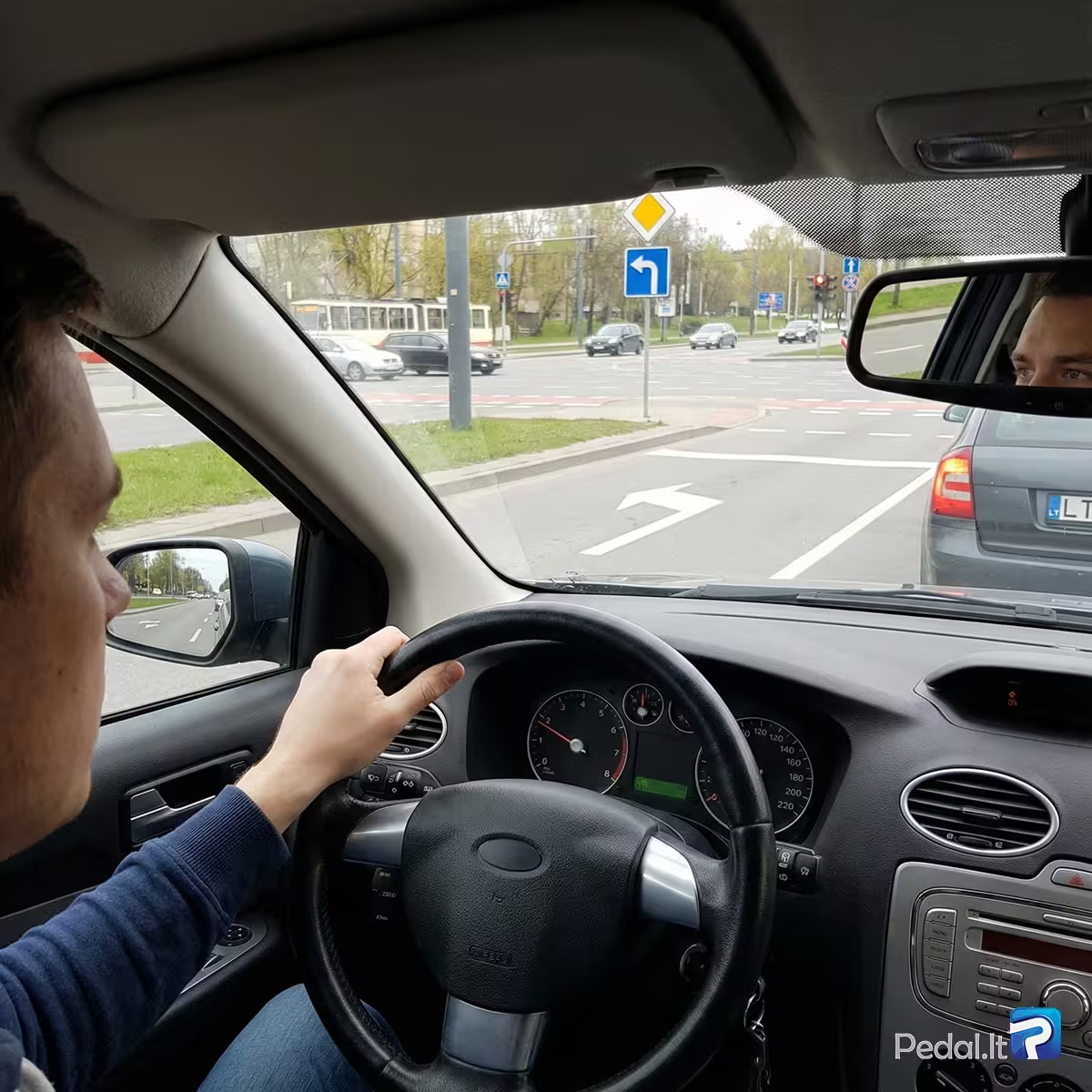
Where is it prohibited to make a U-turn?
RTR 116. U-turns are prohibited: 116.1 on pedestrian crossings; 116.2 on level crossings; 116.3 in tunnels; 116.4 on and beneath bridges, overpasses and viaducts; 116.5 where visibility in at least one direction is less than 100 metres; 116.6 on roads with a central reservation, except at locations designated and marked for U-turns by road signs and/or road markings. JB
1. On and beneath bridges, overpasses and viaducts.
2. In tunnels.
3. On level crossings (railway crossings).
4. On roads where the carriageway is less than 10 m wide.
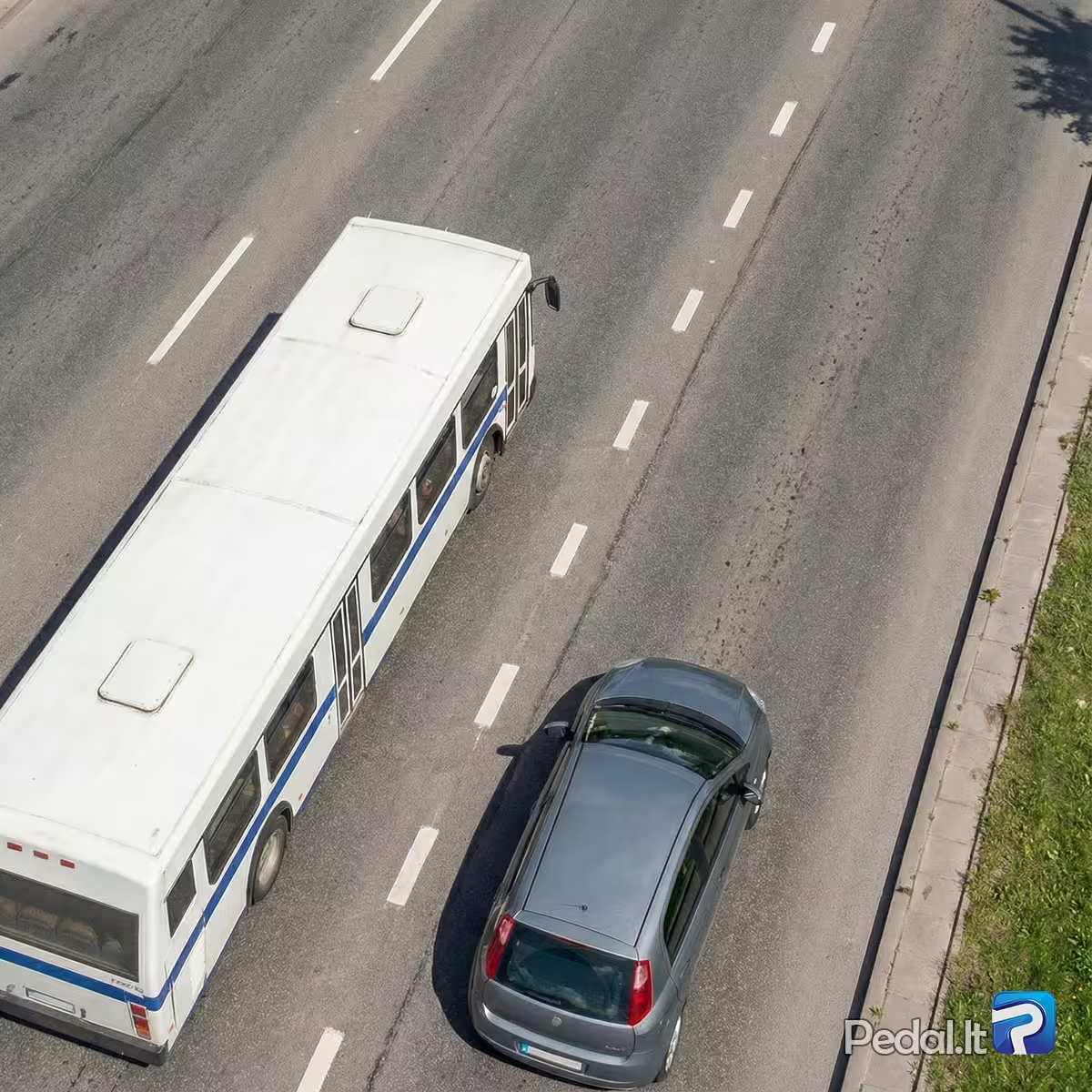
An acceleration lane is used to:
RTR 112. When an acceleration lane is provided for entering a roadway, the driver must use it to gain speed and merge into the main traffic flow, yielding to vehicles already on the road. The driver may change lanes as necessary or enter a deceleration lane when appropriate. JB
1. To accelerate to the speed of traffic and merge into the main flow, yielding to vehicles already on the road.
2. For use by general traffic when the roadway is too narrow.
3. For parking when no nearby parking facilities are available.
When making a turn, a vehicle is more stable when it is moving:
Compared with coasting (driving in neutral), driving with a gear engaged provides better control because, even without pressing the accelerator, the engine maintains steady rotational force on the driven wheels. Rapidly reducing speed during a turn can make the vehicle less stable, while increasing speed can make it harder to complete the turn smoothly due to the higher centrifugal force. Choose and maintain an appropriate speed before entering the turn.
1. With the gearbox engaged.
2. With the gearbox disengaged (in neutral).
3. By increasing speed.
4. By reducing speed.
Are non-public-service vehicles allowed to drive in a lane marked with the letter 'A'?
A lane marked with the letter 'A' is reserved exclusively for public service vehicles. Non-public-service vehicles may only change into or use this lane when preparing to turn right. An exception exists for lanes marked with the 'A+' symbol. (See RTR Annex 3, §1.21; RTR 181 and Paragraph 182 of the Rules.) Non-public-service vehicles must not drive in lanes marked with the 'Lane Reserved for Public Service Vehicles' sign and the letter 'A'.
1. Yes — non-public-service vehicles are permitted to use that lane.
2. No — non-public-service vehicles are not permitted to use that lane.
Which device is used to measure the level of alcohol in the human body?
Alcohol levels in the human body are measured using a breathalyser.
1. A breathalyser.
2. A manometer.
When approaching a traffic-light-controlled intersection and you notice the green light has been on for a long time, what should you do?
A green light that has been lit for an extended period may change to yellow shortly. You may proceed, but remain vigilant and be prepared to stop safely. 73. Traffic light signals mean: 73.1. A steady circular green light permits movement in all directions (straight ahead, to the right, to the left, or a U-turn); 73.3. A flashing green light permits movement but warns that its time is ending and the signals are about to change.
1. Stop immediately.
2. Increase your speed.
3. Continue driving but be prepared to stop.
What can cause a vehicle to skid?
Sudden steering wheel movements, improper use of the accelerator, or other actions that do not take the road surface and driving speed into account can cause a vehicle to skid. In general, it is the driver's own actions (for example, sudden braking), not the actions of another driver, that lead to skidding. The driver must choose an appropriate speed and following distance so that the actions of other road users do not endanger the vehicle. 126. The driver must maintain a distance appropriate to the speed, sufficient to avoid hitting the vehicle in front if it brakes, and must leave a lateral gap to ensure traffic safety. It is recommended that the distance to the vehicle ahead be at least the distance covered in two seconds or at least half the speedometer reading converted into metres (for example, at 70 km/h the distance should be at least 35 m), unless traffic conditions require otherwise. Drivers of motor vehicles, tractors and self-propelled machinery shall, when overtaking pedestrians or when overtaking or passing cyclists or drivers of electric micro-mobility vehicles, leave a lateral distance of at least 1.0 m when their speed does not exceed 50 km/h and at least 1.5 m when their speed exceeds 50 km/h. The requirement to maintain the specified lateral distance does not apply on a single-lane road.
1. The driver's actions.
2. An emergency caused by another driver.
Effects of driving at high speed:
When driving at high speed, tires are subjected to greater loads and wear more quickly. (RTR 127.) Drivers must not exceed the posted speed limit. A driver must choose a driving speed appropriate to the prevailing conditions — in particular the terrain, the condition of the road and the vehicle (including the load), the weather, and traffic density — so as to be able to stop safely before any predictable obstacle. The driver must reduce speed or stop when conditions require it, especially when visibility is poor. JB
1. Increases the risk of a traffic accident.
2. Fuel consumption is reduced.
3. Tires wear out more quickly.
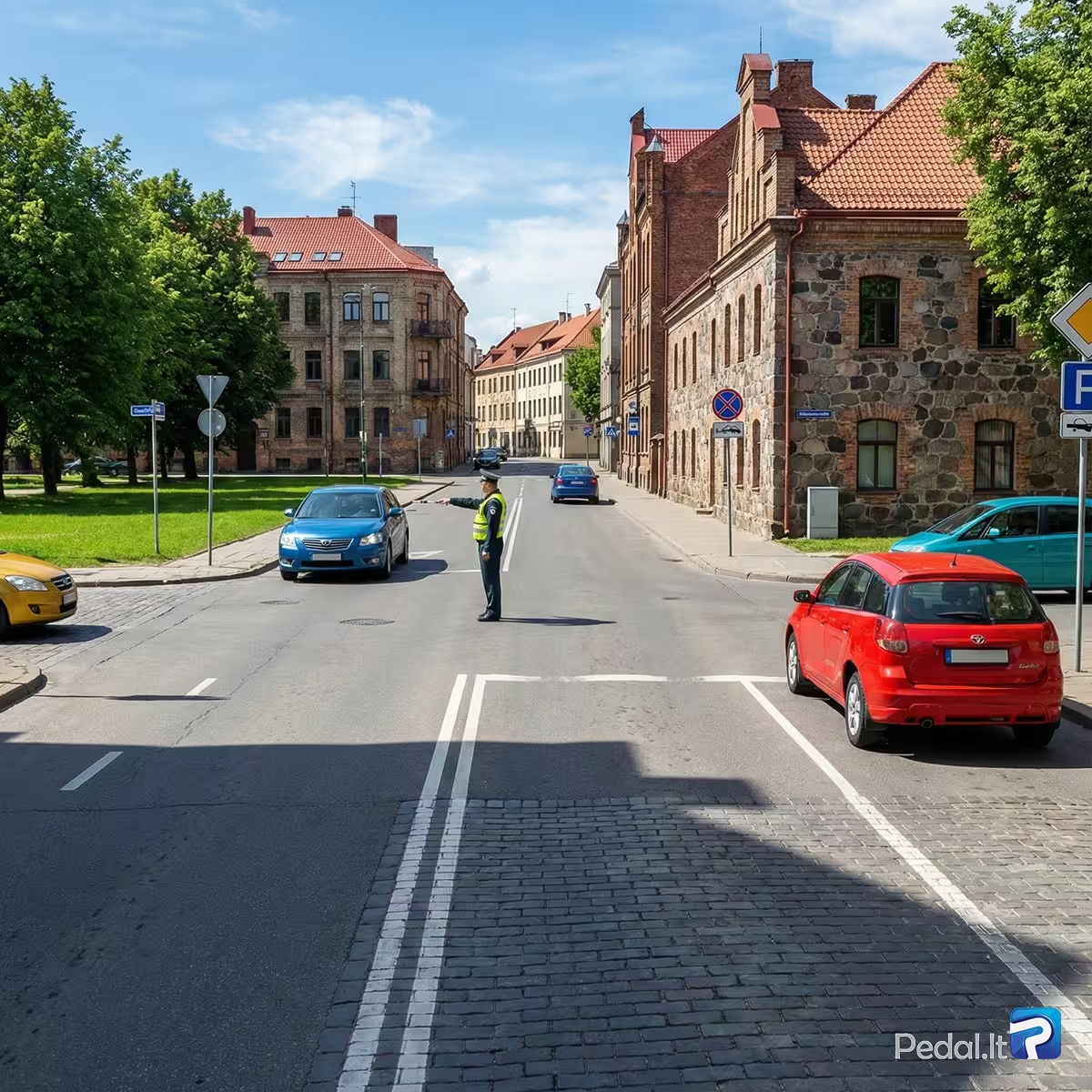
Which vehicles can turn right?
RTR 77.2. Right arm extended forward: 77.2.1. Vehicles on the left side of the traffic officer may proceed in any direction; 77.2.2. Vehicles facing the traffic officer may proceed only to the right; 77.2.3. Vehicles behind the traffic officer and on the right side must not proceed; 77.2.4. Pedestrians may cross the carriageway behind the traffic officer.
1. The red vehicle.
2. The brown vehicle.
3. The blue vehicle.
How does fatigue affect a driver?
When a driver operates a vehicle while fatigued, their memory and attention are impaired. They take longer to notice signals and assess situations, driving performance declines, reaction times are delayed, and vehicle control deteriorates.
1. Attention diminishes.
2. Fatigue has no effect on driving.
3. Reaction time is delayed.
Which of the following distances to a vehicle ahead would be unsafe?
RTR 126. The driver must maintain a following distance at speed sufficient to avoid colliding with the vehicle ahead if it brakes, and must leave a lateral gap to ensure traffic safety. It is recommended that the following distance be at least the distance covered in two seconds, or at least half the speedometer reading converted into metres; for example, at 70 km/h the distance should not be less than 35 m, unless traffic conditions require otherwise. Drivers of motor vehicles, tractors and self‑propelled machinery, when overtaking pedestrians or when overtaking or passing cyclists or drivers of electric micromobility vehicles, must leave a lateral clearance of at least 1.0 m if their speed does not exceed 50 km/h, and at least 1.5 m if their speed exceeds 50 km/h. The requirement to maintain the specified lateral distance does not apply on single‑lane roads.
1. Less than the distance covered in two seconds.
2. Less than the distance covered in five seconds.
3. 30 m
4. 50 m
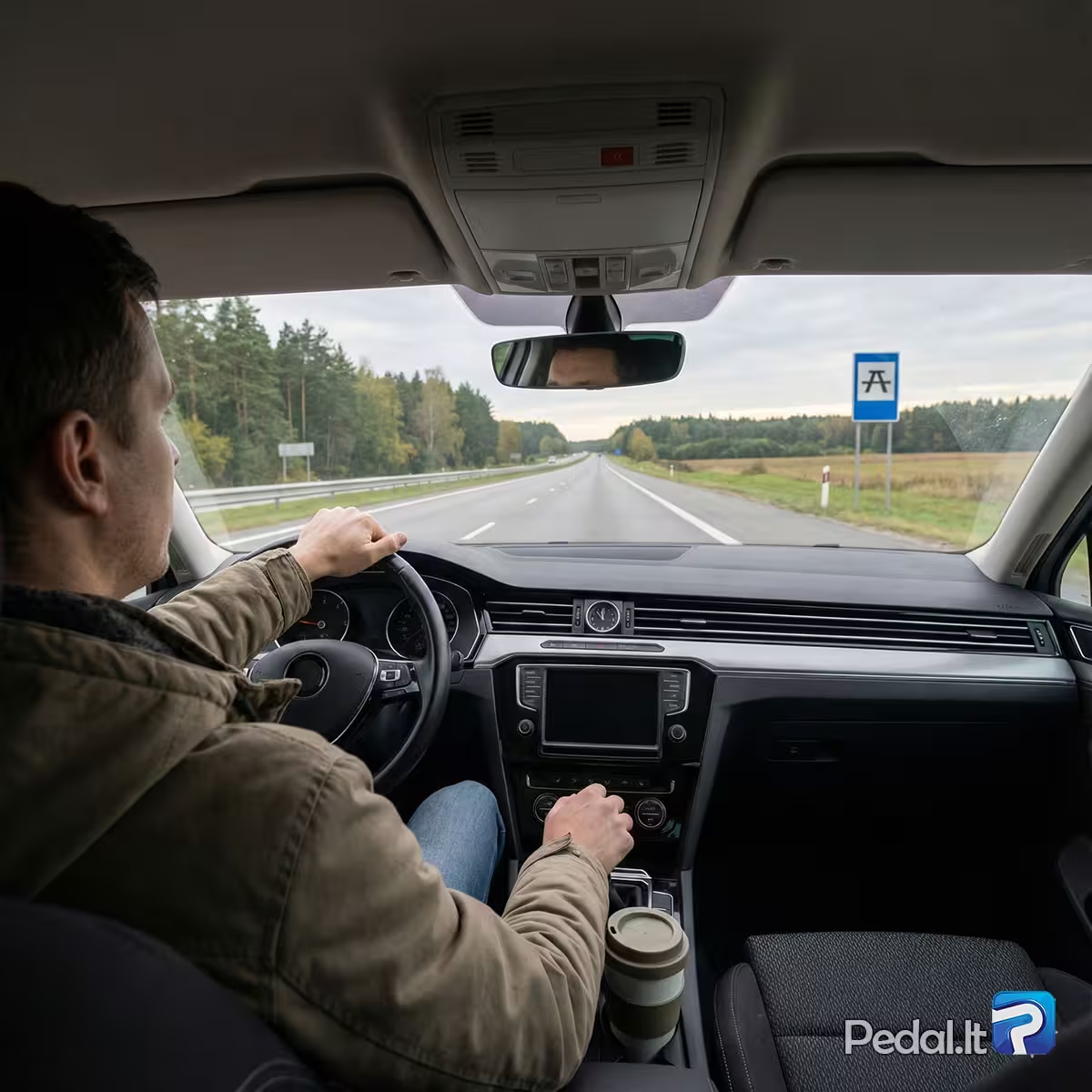
How should you behave during a long journey?
Long journeys can cause the driver to become distracted and fatigued for extended periods, which reduces reaction time and concentration and increases the risk of mistakes. It is recommended to take breaks every 1.5 to 2 hours or after driving approximately 200 kilometres. Sitting for long periods can lead to muscle tension and poor circulation, so getting out of the vehicle helps relax the body and improve well‑being. Exiting the car or opening a window to breathe fresh air can refresh the mind, restore energy and improve concentration.
1. Listen to loud music.
2. Maintain continuous conversation with your passengers to stay alert.
3. Leave the road or motorway and stop to rest; then exit the vehicle or open a window to breathe fresh air.
4. Routinely drink coffee to stay awake.
Which of the following symptoms are characteristic of long-term cannabis use?
Symptoms associated with long-term use become more pronounced with continued consumption. The most serious psychiatric complication is cannabis‑induced psychosis. Users may experience dramatic mood swings, perceptual distortions, anxiety, and aggression. In people with preexisting mental illness, even brief exposure to cannabis can trigger psychosis. Men who begin heavy cannabis use at an early age have an increased risk of developing schizophrenia.
1. Psychiatric disorders.
2. Irritability.
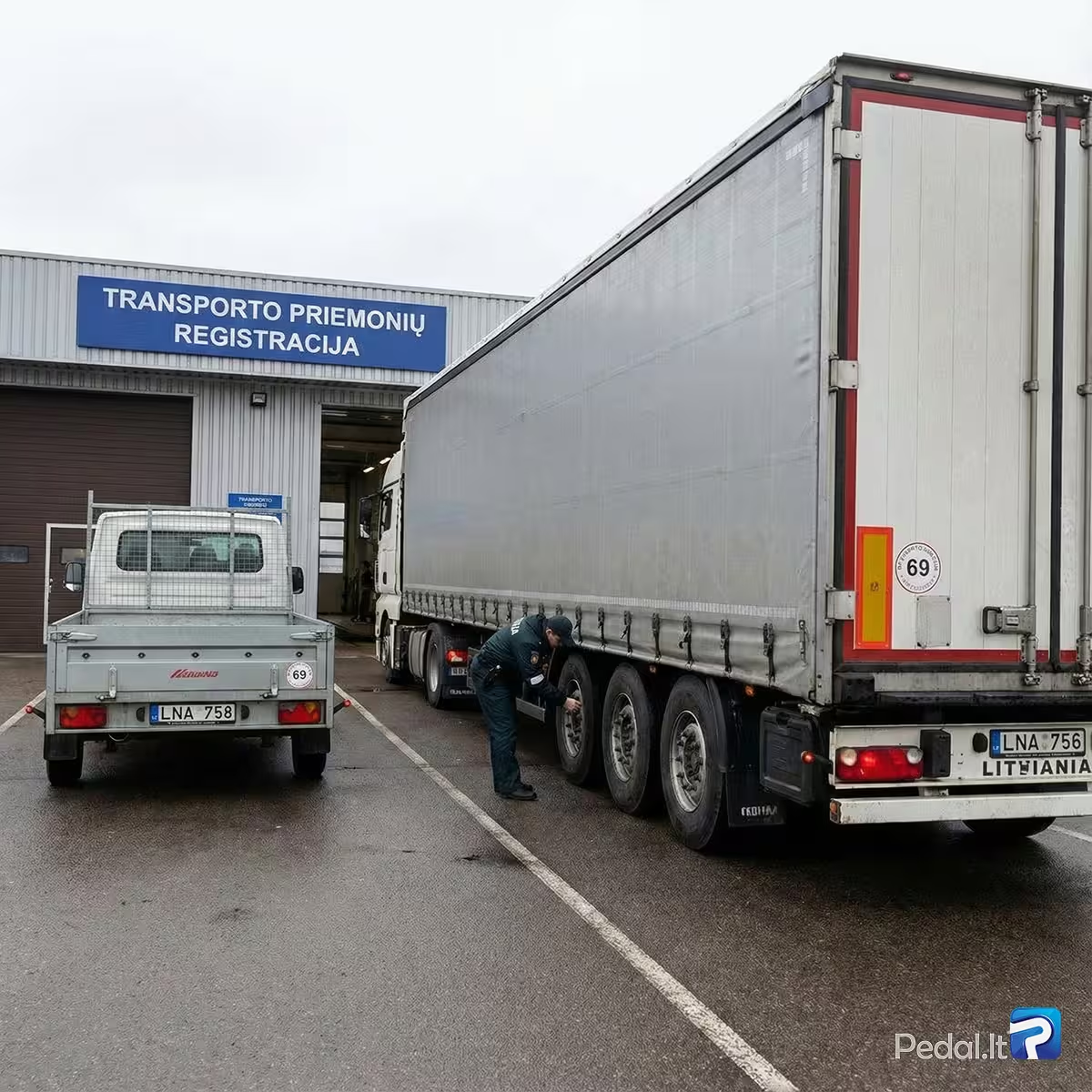
Are trailers and semi-trailers considered vehicles?
48. A trailer is a vehicle designed to be towed by a motor vehicle. Semi-trailers are also regarded as trailers. 52. A semi-trailer is a trailer coupled to a motor vehicle in such a way that part of its weight and the weight of its load are borne by the motor vehicle.
1. No.
2. Yes.
When driving and you discover that a bend in the road is sharper than you anticipated, you should:
If a bend in the road is sharper than anticipated, you must reduce your speed.
1. You should reduce your speed.
2. You should attempt to decrease your turning radius.
3. You should accelerate.
4. You should maintain your current speed.
How should you choose an appropriate driving speed?
Order of the General Director of the state company "Regitra" approving the description of the criteria and methods for evaluating driving skills and abilities (23 December 2013, No. V-223): 3.18 Speed selection — accelerate steadily, choose a speed appropriate to the traffic situation and do not exceed the permitted limit. 3.18.1 Control the vehicle's speed while performing maneuvers: 3.18.1.1 If necessary, maintain a sufficiently low speed to compensate for any errors; 3.18.1.2 The vehicle must move evenly and smoothly. JB
1. Accelerate smoothly and steadily.
2. Drive at a speed appropriate for the traffic conditions and do not exceed the legal speed limit.
3. Drive faster to reach your destination sooner.
How should you drive safely on a steep slope?
Driver competencies - category B: A vehicle will begin to skid when the tires lose traction with the road surface. This may occur on inclines, slopes, or in strong crosswinds.
1. Drive at maximum speed.
2. Drive with the engine turned off.
3. Drive slowly, avoiding sudden steering or braking movements.
Which description corresponds to a "Bicycle path"?
Law on Road Traffic Safety, Art. 2, para. 11. "Bicycle path" — a road or part of a road intended for the movement of bicycles, motorcycles and electric micromobility vehicles, marked with appropriate road signs. A bicycle path must be separated from the roadway or its lanes by engineering measures.
1. A portion of the roadway, or a separate path, designated for bicycle and moped traffic.
2. A road or section of road intended for the movement of bicycles, motorcycles and electric micromobility vehicles, marked by appropriate road signs.
3. A portion of the road designated for shared pedestrian and bicycle use.
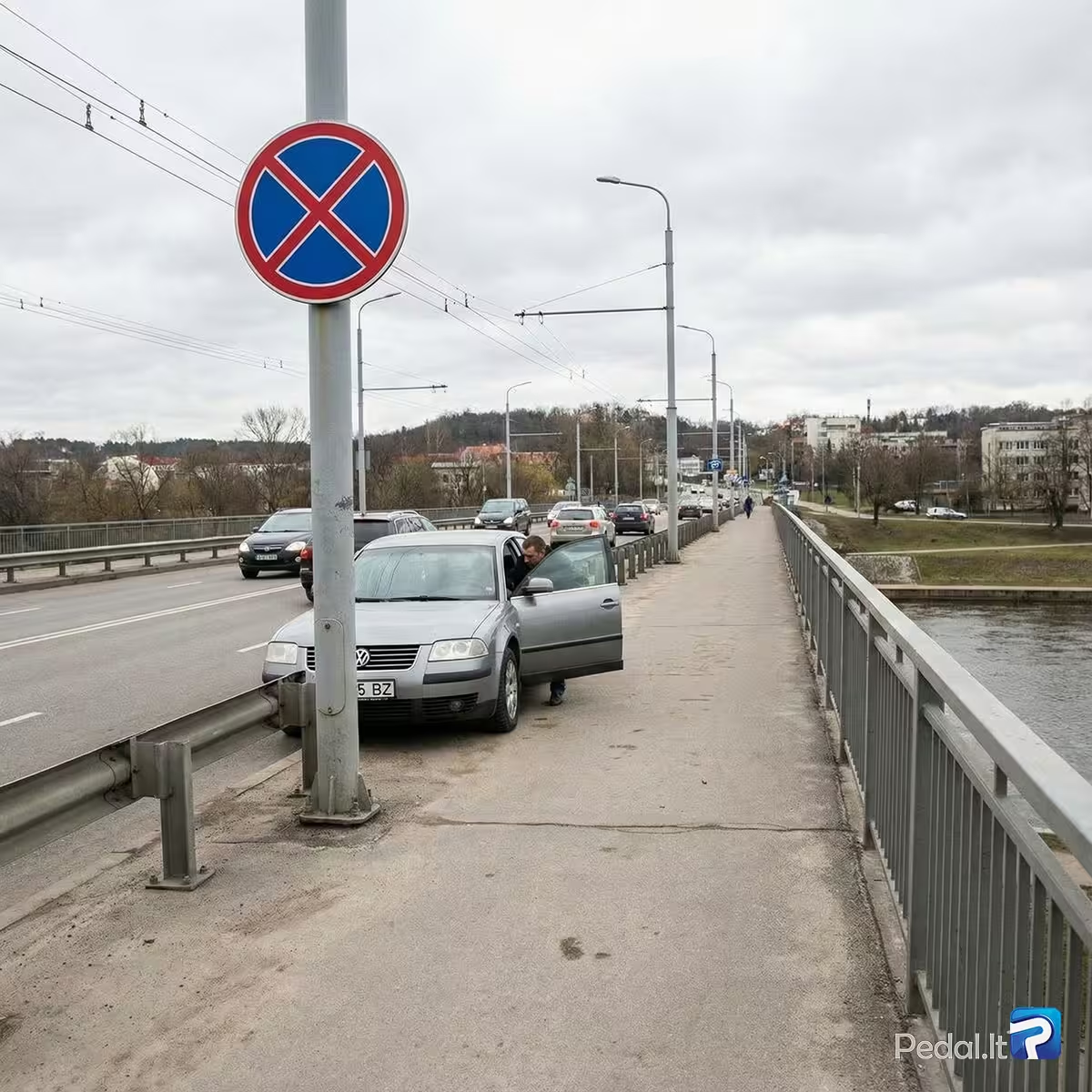
Are drivers permitted to stop or park their vehicles on a bridge if they do not obstruct traffic flow?
RTR – 150. Standing and parking are prohibited: 150.3 on and under bridges, viaducts and flyovers — except where parking is expressly permitted by road signs indicating a parking space — and in tunnels.
1. Yes — it is permitted.
2. Parking is permitted only where road signs explicitly designate a parking space.
Is it permitted to carry passengers in a towed vehicle when a flexible towing link is used?
Passengers may be carried in a towed vehicle except when the vehicle is being towed with its front or rear supported on a towing platform or other support device. Regulation 195 states that drivers must not: 195.4. carry passengers inside a bus, trolleybus, or the body of a goods vehicle that is being towed; if the front or rear of a vehicle is resting on a support device, passengers must not be inside the vehicle or in its cargo body.
1. Yes — it is allowed.
2. No — it is not allowed.
What must you do first before overtaking?
RTR 136. Drivers should avoid unnecessary overtaking maneuvers. Before overtaking, drivers must take extra precautions and ensure that: 136.1 no driver following has already begun to overtake them; 136.2 the driver of the vehicle to be overtaken is not signaling a left turn; 136.3 the portion of the lane required for overtaking is clear and the maneuver will not obstruct oncoming traffic or pedestrians on the carriageway; 136.4 a safe distance from the vehicle being overtaken will be maintained throughout the maneuver; 136.5 after overtaking, the driver can safely return to the original lane without obstructing the overtaken vehicle.
1. Ensure the road ahead is clear.
2. Shift to a lower gear.
3. Increase your speed.
4. Reduce your speed.
What are the common signs that a car battery is dead?
Select the signs that indicate the car battery may be dead.
1. When attempting to start the car, the starter motor does not engage or cranks very slowly.
2. When attempting to start the car, the dashboard lights dim or go out.
The effect of inertia on the vehicle (risk of sliding sideways) when cornering is reduced by:
The higher the vehicle's speed when cornering, the greater the effect of inertia and the higher the risk of the car sliding sideways. Lower speeds reduce inertia and the risk of sliding. A larger turning radius (a gentler curve) also reduces lateral inertial forces.
1. By decreasing the turning radius (making the turn tighter).
2. By reducing vehicle speed.
3. By increasing the turning radius (making the curve gentler).
Can the parking brake be used to slow the vehicle while braking?
The parking brake may be used to help slow the vehicle if the service (main) brakes fail.
1. No — it cannot be used.
2. Yes — in any circumstance.
3. Yes — in an emergency, if the service (main) brakes fail.
Where should you stop when you must give way to an approaching rail vehicle?
RTR 170. When yielding to an approaching rail vehicle, or whenever crossing a level crossing is prohibited, drivers must stop at the STOP line, the 'Stop' traffic sign, traffic lights, or barriers. If none of these are present, drivers must stop no nearer than 10 metres from the first rail. When a STOP line is used together with a 'Stop' sign, the driver must stop at the STOP line; if the STOP line is absent, stop at the 'Stop' sign even if a flashing white traffic light is displayed. JB
1. At the traffic lights.
2. At the first rail of the crossing.
Under which conditions does a car battery's capacity decrease?
Battery capacity decreases as ambient temperature falls. A fully charged battery that measures 100% capacity at +25 °C will typically drop to about 80% at 0 °C and to roughly 60% at −25 °C.
1. When ambient temperature rises.
2. When ambient temperature falls.
3. It does not change with temperature.
When should you release the throttle and rely on the vehicle's inertia to conserve fuel?
Note: Releasing the throttle is not the same as freewheeling. See 3.4 Control the throttle: 3.4.9 Release the throttle and use the vehicle's inertia before coming to a stop at a predetermined location (for example, at an intersection with a traffic light or at a stop sign) or in similar situations. JB
1. When approaching an intersection with a red traffic light.
2. When driving downhill on a steep slope.
3. When approaching a stop sign.
4. Before coming to a stop at a predetermined location.
In low-visibility conditions, a driver should select a speed so that the stopping distance is:
Stopping distance is the distance a vehicle covers from the moment the driver becomes aware of an obstacle until the vehicle comes to a complete stop.
1. Shorter than the length of the visible road ahead.
2. Longer than the length of the visible road ahead.
You are driving on a road with speed bumps and the vehicle ahead is travelling slightly more slowly than you. What should you do:
Remain patient and keep a safe following distance. As a general rule, do not overtake where traffic is intentionally slowed (for example by speed bumps). Overtaking in such places may force you to exceed a safe speed for the road and would undermine the purpose of traffic‑calming measures.
1. Sound your horn.
2. Increase your speed to overtake whenever possible.
3. Flash your headlights to signal the driver.
4. Reduce your speed and follow at a safe distance.
1 of 30 Task
Time left: 00:00:00
1
2
3
4
5
6
7
8
9
10
11
12
13
14
15
16
17
18
19
20
21
22
23
24
25
26
27
28
29
30