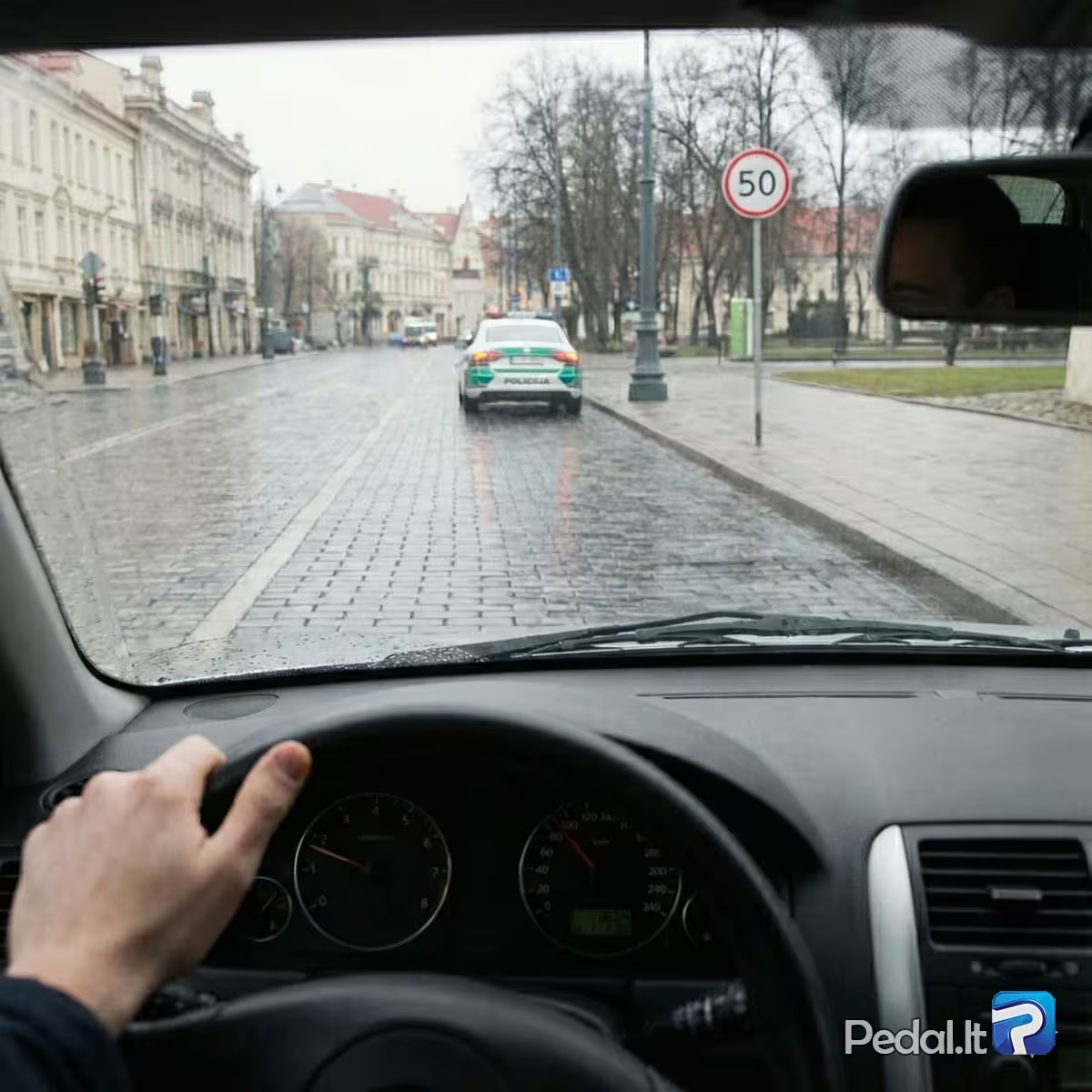
What should you do in this situation if you are driving 10 km/h above the speed limit?
When you see traffic sign 636 — Automatic traffic control (part of the Advanced Traffic Management System) and you are traveling 10 km/h above the speed limit, ease off the accelerator so your speed drops to the legal limit and you avoid a possible fine. Sign 636 indicates a road section monitored by fixed automatic devices. The first version of the sign warns of devices that detect various traffic rule violations (except speed violations); the second version denotes a section where fixed devices record speed limit violations and, where technically feasible, other infringements.
1. Brake suddenly.
2. Ease off the accelerator pedal.
3. Maintain your current speed.
In low-visibility conditions, a driver should select a speed so that the stopping distance is:
Stopping distance is the distance a vehicle covers from the moment the driver becomes aware of an obstacle until the vehicle comes to a complete stop.
1. Shorter than the length of the visible road ahead.
2. Longer than the length of the visible road ahead.
.avif)
Which driver will proceed through the intersection first?
RTR 154. At a controlled intersection, drivers on a side road must yield to vehicles on the priority road.
1. The driver of the blue car.
2. The driver of the red car.
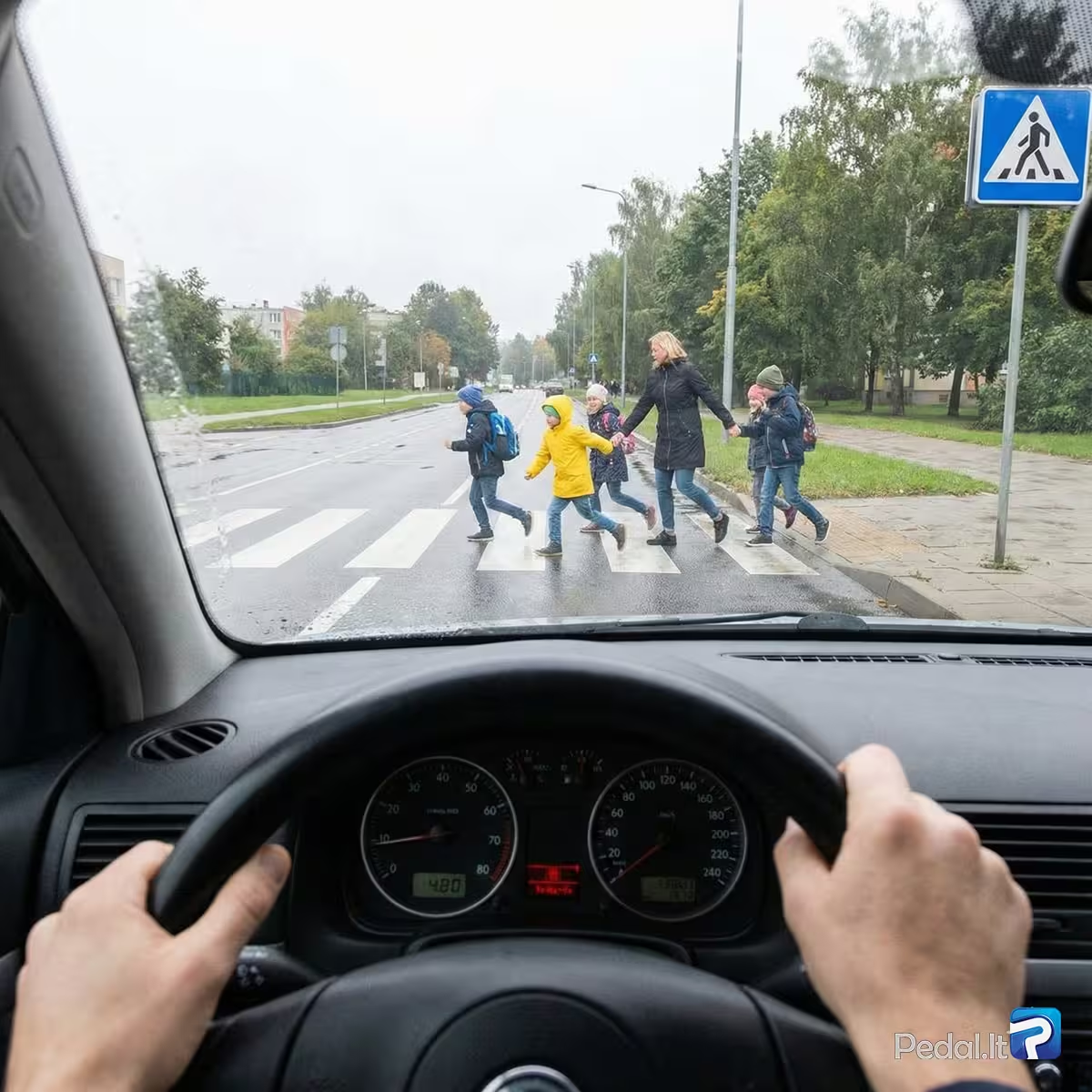
What should a driver be aware of about children's behavior when they cross a pedestrian crossing?
Drivers should be prepared for unexpected behavior from children at pedestrian crossings. When children act predictably and responsibly, it improves road safety.
1. Children may suddenly step onto the pedestrian crossing.
2. Children may stop or hesitate while on the pedestrian crossing.
3. Children behave predictably and in an orderly manner.
What is the primary difference between winter diesel and summer diesel fuel?
In winter, air temperatures can easily drop to -25 °C or lower, causing diesel vehicles to experience starting problems. When temperatures fall below 0 °C, water in diesel fuel can freeze; failing to prepare a diesel vehicle for such conditions may lead to breakdowns. At service stations you can choose “summer” diesel, typically suitable from May through October, or “winter” diesel, formulated for use from November through April and adapted to low sub-zero temperatures.
1. Winter diesel fuel does not gel or freeze at -25 °C.
2. Winter diesel fuel begins to gel or freeze at temperatures below -5 °C.
What should you do if you break another car's headlamp while manoeuvring in a car park?
This is considered a road traffic accident. First, try to locate the vehicle's owner and, together with them, complete the Road Accident Report Form. If you cannot find the owner, call the police — they can help locate the owner or come to the scene to record the accident. Also notify your insurance company of the accident as soon as possible. RTR 220. If there are no deaths or injuries and the involved road users agree on the circumstances and do not call the police to the scene, the parties must draw the accident sketch on the Road Accident Report Form, describe the circumstances in writing, and have the form signed by all involved. If none of the parties has the Road Accident Report Form, the circumstances and sketch may be recorded on a blank sheet of paper listing all involved road users, their vehicles and any witnesses, and confirmed by the signatures of all involved. If the circumstances are contested, the police must be called to the scene. RTR 221. Participants in a road accident must refrain from consuming alcoholic beverages, medicines, narcotic drugs or other intoxicating substances immediately after the accident until they have undergone, or have refused, testing for alcohol or impairment by narcotic, psychotropic or other substances. RTR 222. If the accident caused only property damage and the victim is not present at the scene, the person involved in the accident must immediately notify the victim, and if this is not possible — the police.
1. Locate the vehicle's owner; if you cannot find them, call the police.
2. If nobody notices, you may continue driving.
3. Fill in the Road Accident Report Form together with the car owner, if possible.
4. Notify your insurance company about the accident.
When may a driver leave the scene of a road accident?
XXIX. Obligations of Road Users in the Event of a Road Accident (paras. 219–222) 219. In the event of a road accident, every driver involved or any other road user must: 219.4. if a person has died or has been injured in the road accident, report the accident to the police and remain at the accident scene or, after notifying the police, return to the scene and wait for the police to arrive, except where the police permit the road user to leave the scene or when the casualties or the person who reported the accident require first aid; 220. If no deaths or injuries occurred in the road accident and the road users involved agree on the circumstances and do not call the police to the accident scene, the road users must draw the accident sketch on the Road Accident Report Form, describe the circumstances in writing, and have it signed by all road users involved. If none of the road users involved has the Road Accident Report Form, the circumstances may be described and the accident sketch drawn on a blank sheet of paper listing all road users involved, their vehicles, and witnesses, and all details and circumstances must be confirmed by the signatures of the road users involved. Where the circumstances of the accident are disputed, the police must be called to the scene.
1. If a person sustained only minor injuries.
2. If the driver requires first aid.
3. If an injured person requires first aid.
4. If the police have permitted the driver to leave the scene.
Before making a turn, drivers must ensure that:
Before making a turn, drivers must reduce speed and ensure their vehicle does not enter the lane of oncoming traffic or that the rear wheels do not mount the pavement. RTR 108. The turning manoeuvre must be executed so that vehicles do not encroach on the oncoming-traffic lane when entering or leaving the intersection. If a turn is made from a single lane, the driver may choose any lane of the carriageway into which they are turning. If turning is permitted from multiple lanes, drivers must remain in their lane and must not obstruct a vehicle turning from an adjacent lane.
1. Their vehicle does not enter the lane designated for oncoming traffic.
2. The rear wheels of their vehicle do not mount the pavement.
Who or what poses the greatest risk of causing road accidents?
According to the Lithuanian Road Administration, in 2017 drivers accounted for 68.83% of all traffic offenders. Although slippery roads are a traffic hazard, drivers can adapt to conditions, choose a safe speed, and thus reduce the risk of accidents.
1. Drivers.
2. Pedestrians.
3. Slippery road surfaces.
4. Road signs.
When approaching a traffic-light-controlled intersection and you notice the green light has been on for a long time, what should you do?
A green light that has been lit for an extended period may change to yellow shortly. You may proceed, but remain vigilant and be prepared to stop safely. 73. Traffic light signals mean: 73.1. A steady circular green light permits movement in all directions (straight ahead, to the right, to the left, or a U-turn); 73.3. A flashing green light permits movement but warns that its time is ending and the signals are about to change.
1. Stop immediately.
2. Increase your speed.
3. Continue driving but be prepared to stop.
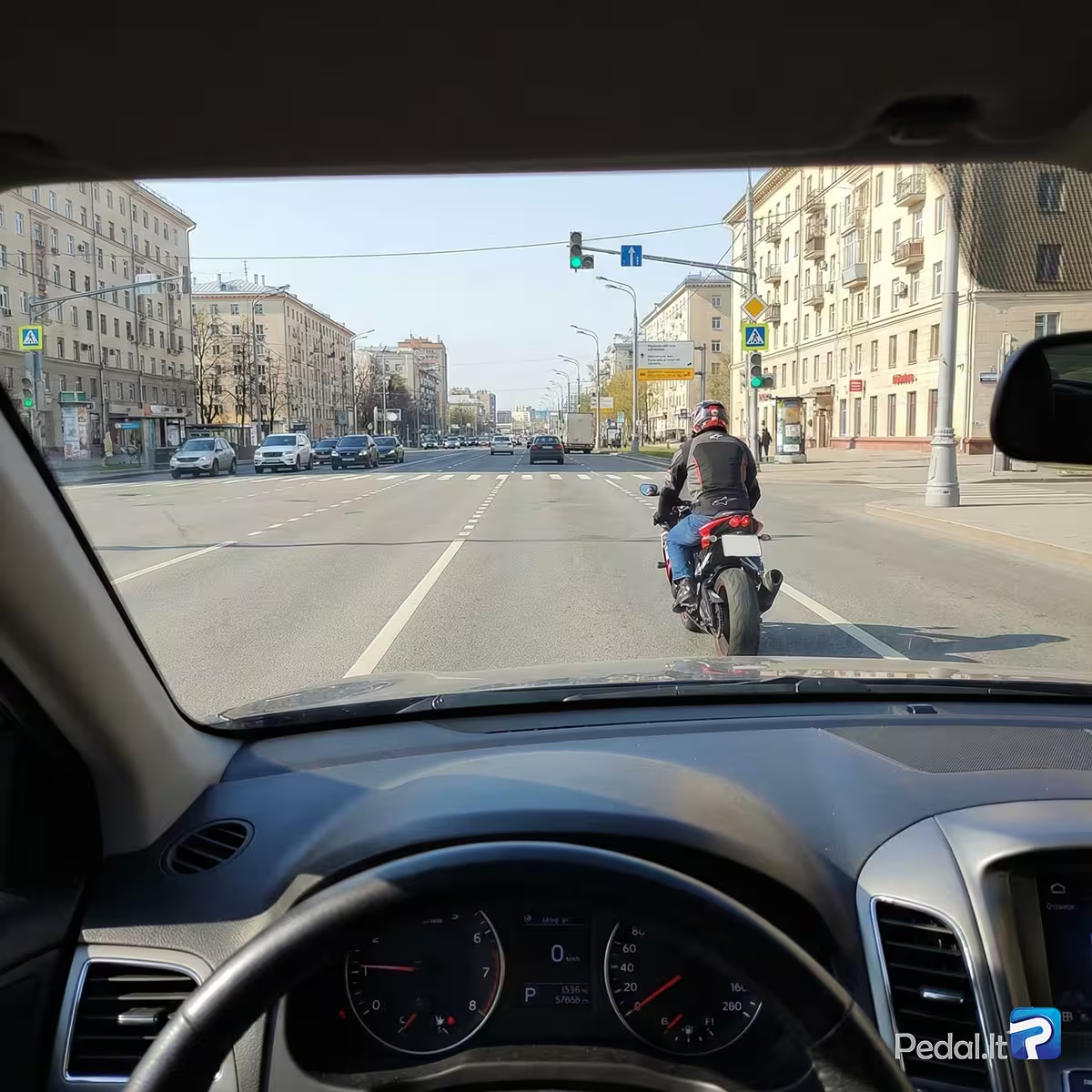
Are you allowed to ride a motorcycle with only a category B driving licence?
LAW ON ROAD TRAFFIC SAFETY — Article 22(12). Persons aged 24 or older who have at least two years' driving experience with a category B licence and who have completed practical training for category A1 vehicles in accordance with the procedure established by the Ministry of Transport and Communications or its authorised institution are granted the right to drive category A1 vehicles within the territory of the Republic of Lithuania.
1. Driving category A1 motorcycles is permitted for persons aged at least 24 who have held a category B licence for at least two years and have completed special practical motorcycle training at a driving school.
2. It is permitted to drive all motorcycles.
If your vehicle gets a flat tyre while crossing an intersection and vehicles are approaching from both directions, what should you do?
128. If there is an obstruction or traffic safety is endangered, the driver must reduce speed, stop if necessary, or avoid the obstruction (if it can be detected) without creating danger for other road users. 135. Drivers must not: 135.4. decelerate abruptly except for safety reasons.
1. You will stop in the middle of the intersection.
2. You will accelerate to clear the intersection quickly and then stop beyond it.
3. You will reduce your speed and stop beyond the intersection at a safe location.
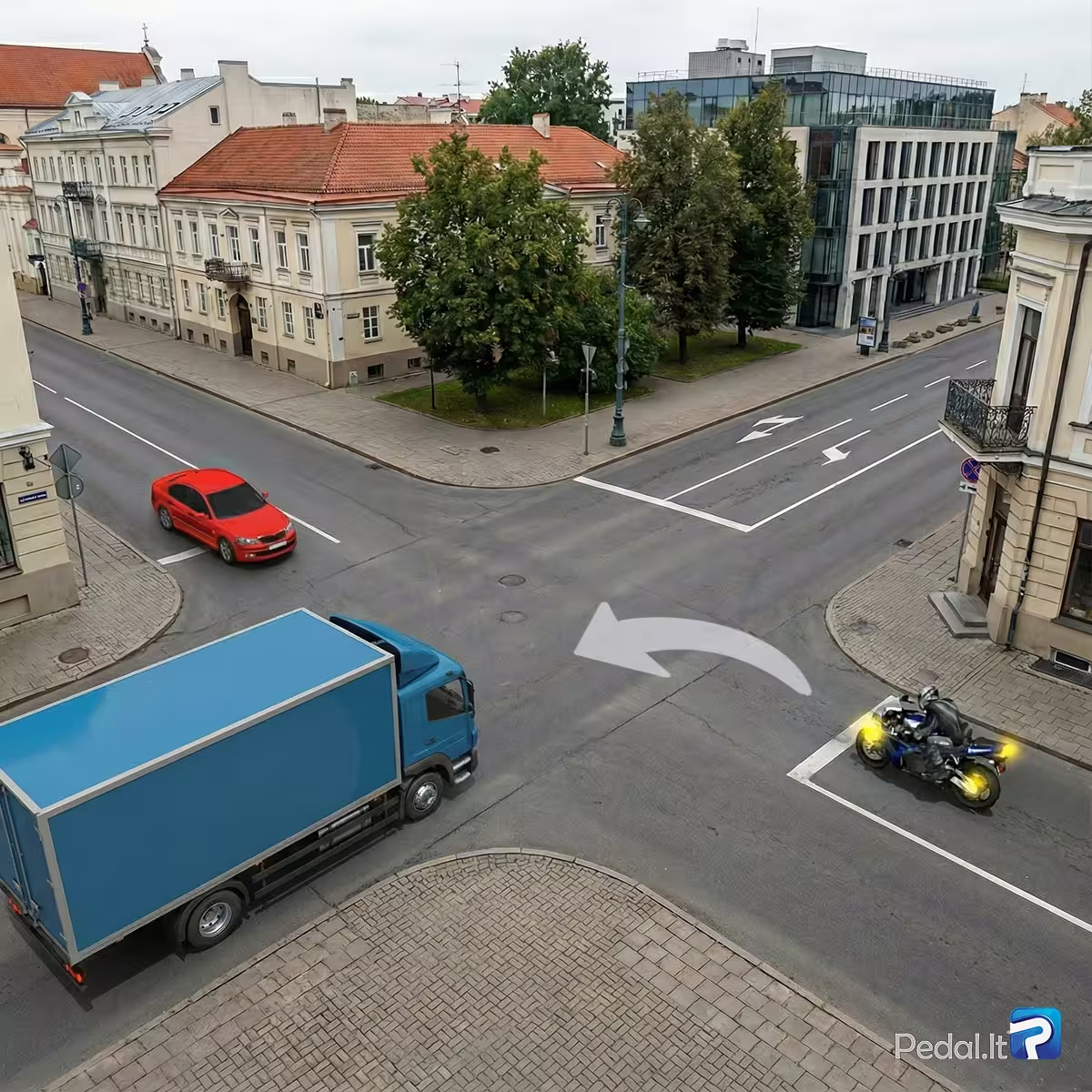
Which vehicle will be the last to pass through the intersection?
The motorcycle, being the only vehicle with no approaching traffic from the right, will enter the intersection first but will stop in the middle to give way to the passenger car (see Paragraph 157 of the Road Traffic Rules). After that, the goods vehicle will proceed through the intersection, as there will no longer be any vehicles approaching it from the right. The passenger car will go second, and the motorcycle will be last. A driver must comply with the requirement of Paragraph 155 of the Road Traffic Rules when driving straight ahead, turning left, or making a U-turn. RTR 155. At an uncontrolled intersection, drivers must give way to vehicles approaching from the right if the vehicle trajectories intersect. RTR 157. When turning left or making a U-turn, the driver shall give way to oncoming vehicles on a road of equal importance that are driving straight ahead or turning right, and—at an intersection where overtaking is allowed—to overtaking vehicles as well.
1. Passenger car.
2. Motorcycle.
3. Goods vehicle.
Is it permitted to carry passengers in a towed vehicle when a flexible towing link is used?
Passengers may be carried in a towed vehicle except when the vehicle is being towed with its front or rear supported on a towing platform or other support device. Regulation 195 states that drivers must not: 195.4. carry passengers inside a bus, trolleybus, or the body of a goods vehicle that is being towed; if the front or rear of a vehicle is resting on a support device, passengers must not be inside the vehicle or in its cargo body.
1. Yes — it is allowed.
2. No — it is not allowed.
How can you confirm that all the lights on your vehicle are functioning?
Drivers should check that all vehicle lights are working before every long journey and at least once every six months. Properly functioning lights help you assess road conditions accurately and reduce the risk of accidents.
1. Turn on all vehicle lights and, each time you exit the car, walk around it to verify that they are illuminated.
2. You do not need to inspect your car's lights; instead, replace the bulbs every six months.
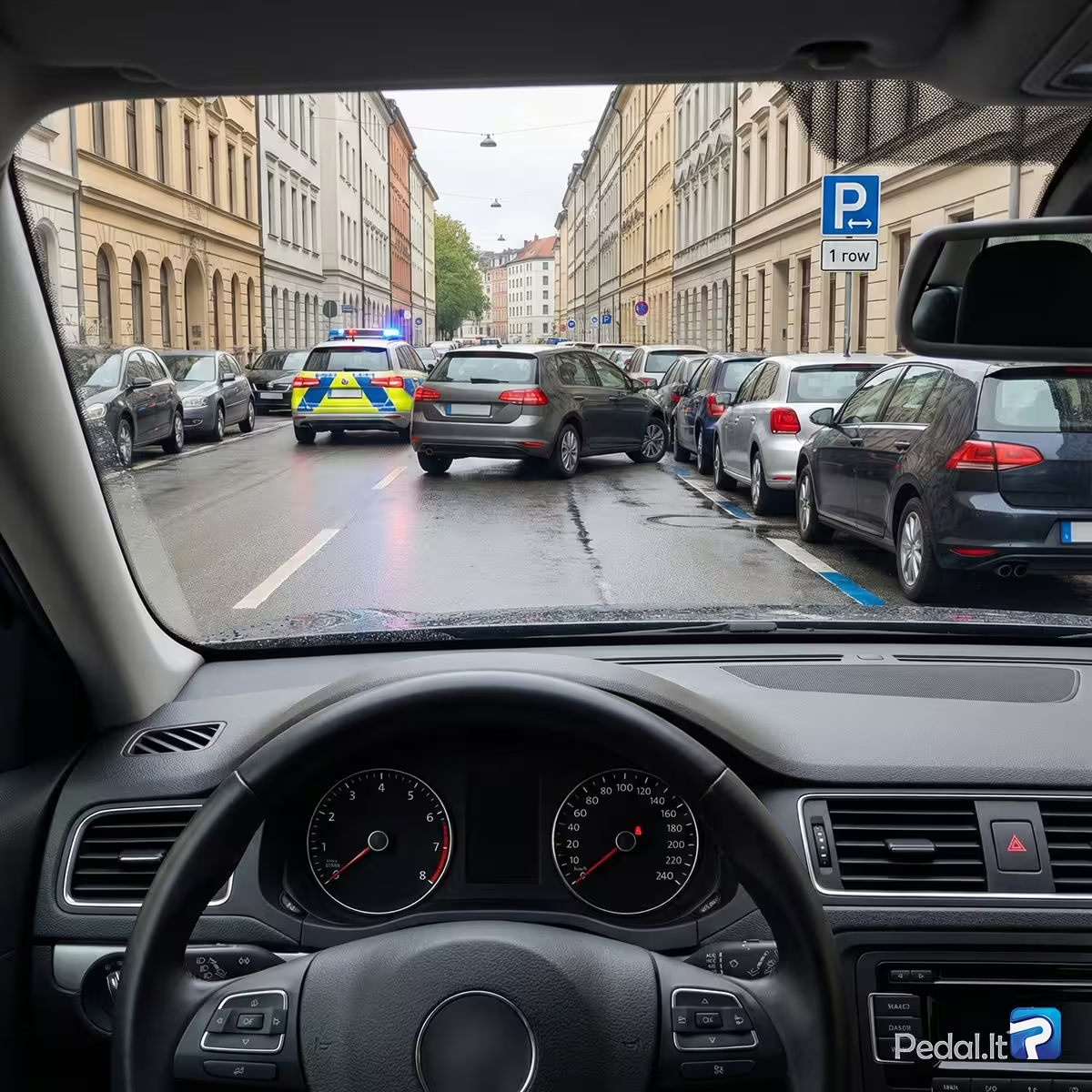
How many rows of cars are permitted to stop and park on the roadway?
RTR 144. Vehicles must stop and park on the carriageway in a single line. RTR 145. Motorcycles without a sidecar, mopeds, bicycles, and electric micromobility devices may be parked in two lines provided such parking does not obstruct traffic.
1. In a single row.
2. In two rows.
3. In three rows.
What size handcart carrying a load that is pushed or pulled at the roadside must be equipped with reflectors?
The option "More than 1 meter long" is incorrect because the RTR do not specify any marking requirement based on the cart's length. Under RTR 41: pedestrians moving along an unlit hard shoulder or along the edge of the carriageway, or standing there during hours of darkness or when visibility is poor, must carry a torch visible to other road users, wear a high-visibility vest, or carry a reflector visible to other road users. A pulled or pushed handcart wider than 1 m must have reflectors affixed on its left side: a white reflector at the front and a red reflector at the rear. JB
1. More than 1 meter wide.
2. More than 1 meter long.
What factors should you consider when choosing a safe distance?
A safe distance is the distance a vehicle travels from the moment the driver notices a hazard until the vehicle comes to a complete stop. It depends on vehicle speed, size, braking performance, road type and surface condition, visibility, driver reaction time, and personal characteristics such as temperament. To choose an appropriate distance, you need to know the vehicle's stopping distance.
1. Visibility.
2. The condition of a road surface.
3. Speed.
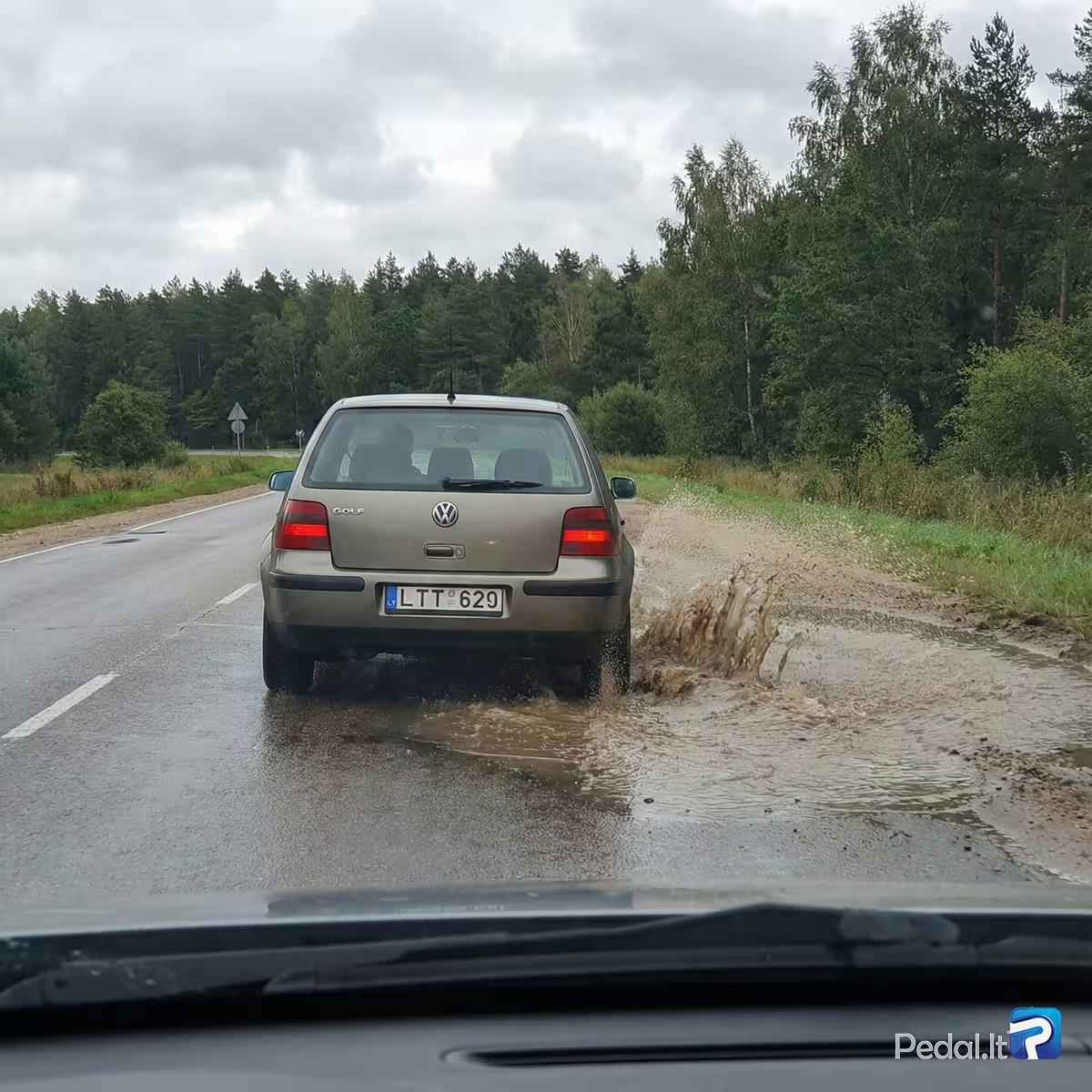
If either the left or right wheel of your vehicle has entered a body of water (for example, a puddle), you must:
When a wheel travels through standing water, the vehicle can aquaplane (ride on a layer of water), causing loss of traction and possible skidding. Hold the steering wheel firmly and gradually reduce speed to regain traction and maintain control.
1. Apply the brakes immediately.
2. Grip the steering wheel firmly.
3. Increase your speed.
The service brake has failed while you are driving on a motorway. What should you do?
Maintain a speed that allows you to stop the vehicle with the parking brake if necessary. Switch on your hazard warning lights to warn other road users. Drive to the nearest safe place to stop and call roadside assistance.
1. Reduce your speed and switch on the hazard warning lights. If necessary, apply the parking brake gradually. Carefully drive to the nearest safe place to stop and call roadside assistance.
2. Reduce your speed and notify the road police. Continue driving cautiously to your destination. If possible, add brake fluid.
Why might a vehicle skid or move sideways during braking?
Braking with uneven tire wear between the left and right sides is dangerous because it can cause the vehicle to slide off the road and overturn.
1. Uneven wear between the vehicle's left and right tires.
2. Irregularities in the road surface.
3. A brake on one wheel is not working, or braking force is uneven between sides.
A vehicle has nearly completed an overtaking maneuver while another vehicle is approaching in the oncoming lane. What should you do?
The Driver Behaviour Manual states: If another vehicle's overtaking endangers or inconveniences traffic in the oncoming lane, the driver of the vehicle being overtaken must try to prevent a hazardous situation by: (1) reducing speed; (2) moving to the side; (3) stopping if necessary. Section 128: If there is an obstruction or traffic safety is at risk, the driver must slow down and, if required, bring the vehicle to a complete stop or go around the obstruction (if it can be seen), provided this can be done without endangering other road users. Section 135: Drivers must not: 135.4. decelerate sharply for reasons other than safety.
1. Apply the brakes.
2. Maintain your current speed.
3. Ease off the accelerator.
4. Increase your speed.
.avif)
What are the fundamental principles of driver conduct?
1. Responsibility and courtesy.
2. Aggressive behavior.
3. Anger.
4. Disrespect toward other road users.
.avif)
Which driver will proceed through the intersection in the blue car?
The blue car is on the priority (main) road, so it has the right of way and must proceed first — the fact that the green car is to its right is irrelevant. Only after the blue car has passed may the green car proceed. (RTR 154) At a controlled intersection, drivers entering from a side road must yield to vehicles on the priority road.
1. The second car.
2. The first car.
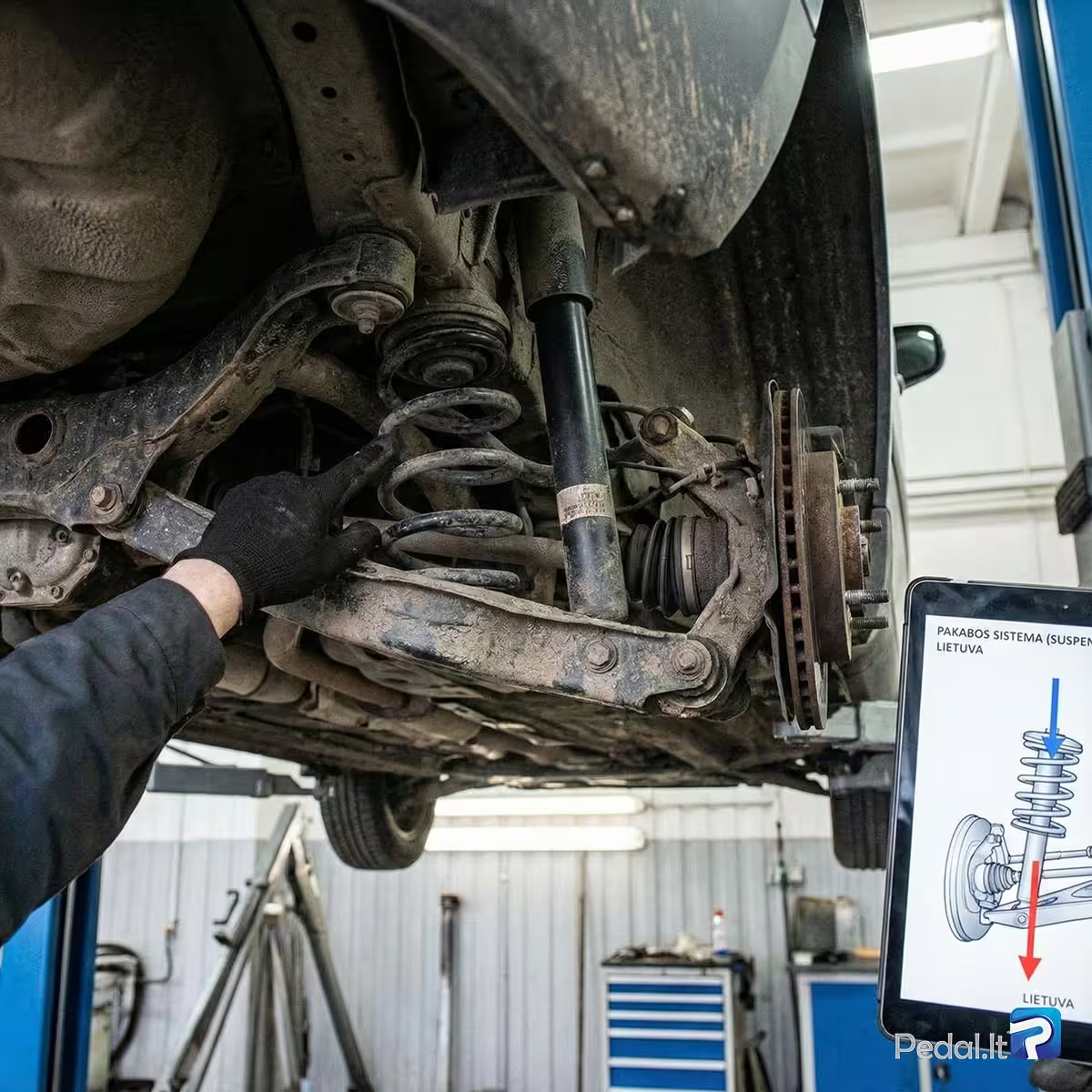
What is the function of a vehicle's suspension system?
The function of a vehicle suspension system is to convert bumps and shocks transmitted to the wheels, with the aid of shock absorbers, into minor oscillations of the vehicle body, providing comfort for driver and passengers. The suspension reduces body oscillations, and when functioning properly it enhances driving safety.
1. To improve ride comfort for the driver and passengers.
2. To convert bumps and shocks transmitted to the wheels into minor oscillations of the vehicle body.
Are non-public-service vehicles allowed to drive in a lane marked with the letter 'A'?
A lane marked with the letter 'A' is reserved exclusively for public service vehicles. Non-public-service vehicles may only change into or use this lane when preparing to turn right. An exception exists for lanes marked with the 'A+' symbol. (See RTR Annex 3, §1.21; RTR 181 and Paragraph 182 of the Rules.) Non-public-service vehicles must not drive in lanes marked with the 'Lane Reserved for Public Service Vehicles' sign and the letter 'A'.
1. Yes — non-public-service vehicles are permitted to use that lane.
2. No — non-public-service vehicles are not permitted to use that lane.
If you brake sharply while driving in heavy traffic:
Braking sharply in heavy traffic is dangerous because drivers following you often do not maintain a safe distance and may collide with your vehicle when you brake suddenly.
1. A vehicle following you may collide with your vehicle.
2. Your brakes could be damaged.
3. That would be a normal braking method.
4. The brake pads might become stuck.
You are driving on a road with speed bumps and the vehicle ahead is travelling slightly more slowly than you. What should you do:
Remain patient and keep a safe following distance. As a general rule, do not overtake where traffic is intentionally slowed (for example by speed bumps). Overtaking in such places may force you to exceed a safe speed for the road and would undermine the purpose of traffic‑calming measures.
1. Sound your horn.
2. Increase your speed to overtake whenever possible.
3. Flash your headlights to signal the driver.
4. Reduce your speed and follow at a safe distance.

A traffic officer directing vehicles stands with their arms lowered. Are you permitted to proceed straight through the intersection when the traffic light displays a red signal?
1. Yes
2. No
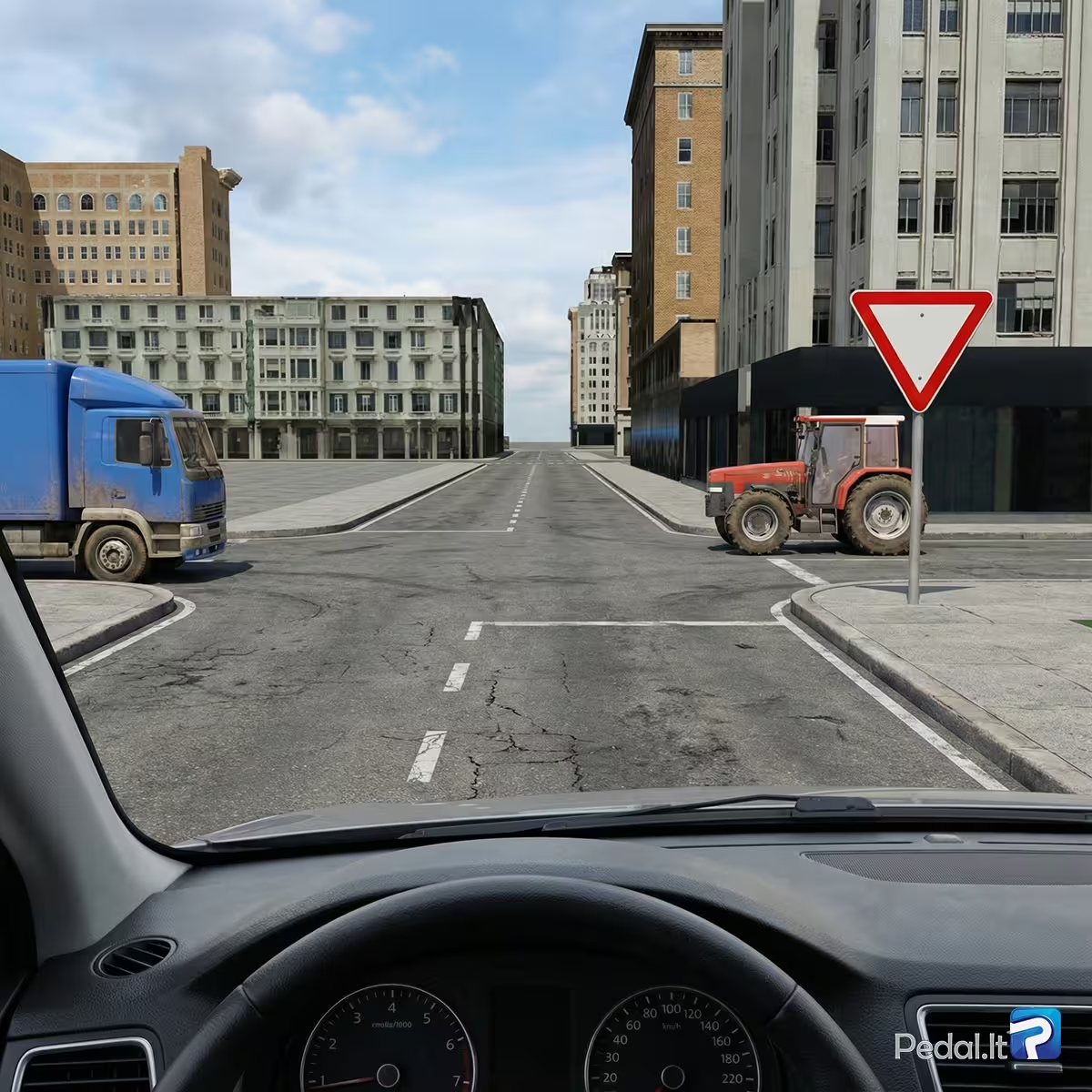
You intend to drive straight through the junction. In this situation:
1. I will yield to the commercial vehicle.
2. I will yield to the tractor.
3. I will proceed through the junction first.
1 of 30 Task
Time left: 00:00:00
1
2
3
4
5
6
7
8
9
10
11
12
13
14
15
16
17
18
19
20
21
22
23
24
25
26
27
28
29
30