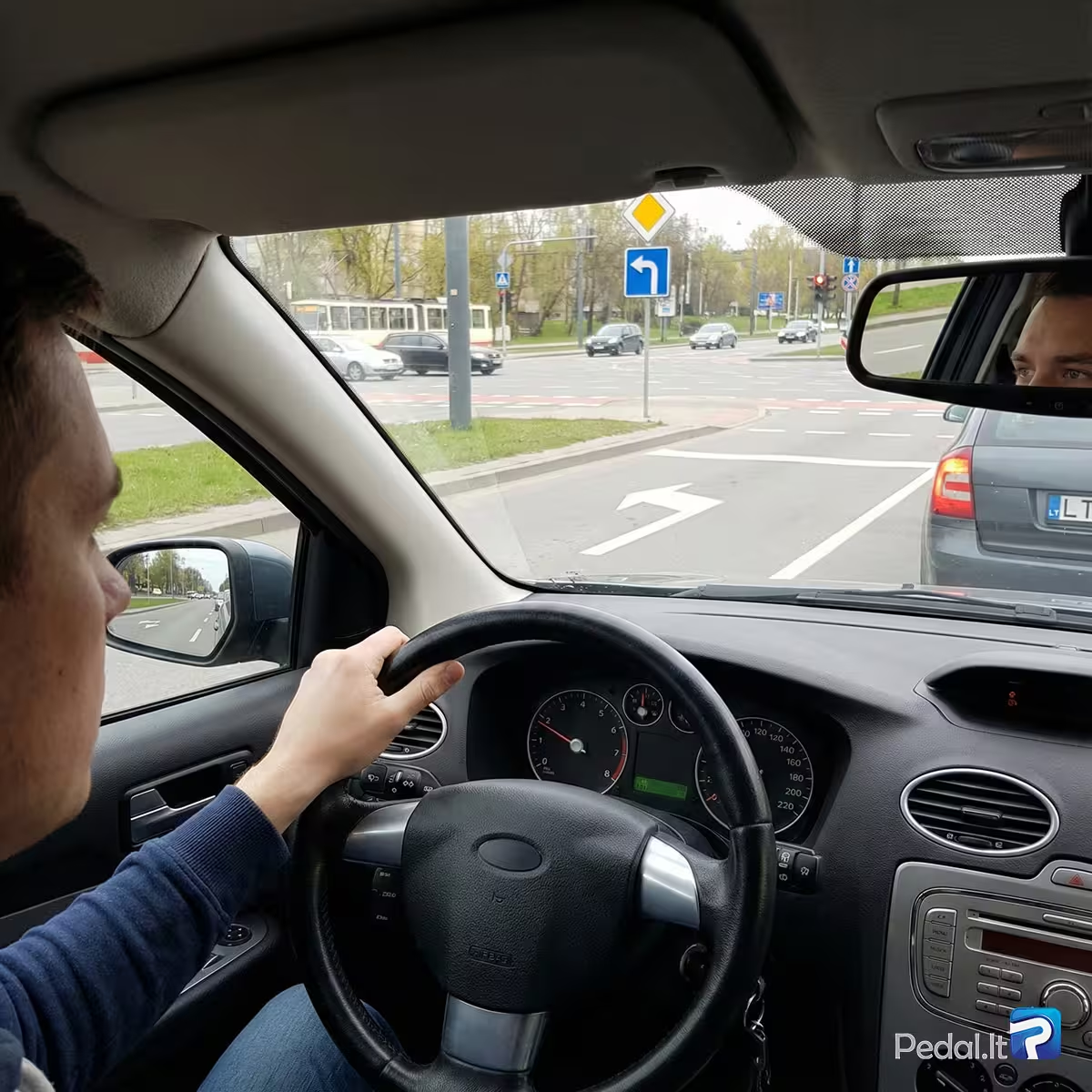
Where is it prohibited to make a U-turn?
RTR 116. U-turns are prohibited: 116.1 on pedestrian crossings; 116.2 on level crossings; 116.3 in tunnels; 116.4 on and beneath bridges, overpasses and viaducts; 116.5 where visibility in at least one direction is less than 100 metres; 116.6 on roads with a central reservation, except at locations designated and marked for U-turns by road signs and/or road markings. JB
1. On and beneath bridges, overpasses and viaducts.
2. In tunnels.
3. On level crossings (railway crossings).
4. On roads where the carriageway is less than 10 m wide.
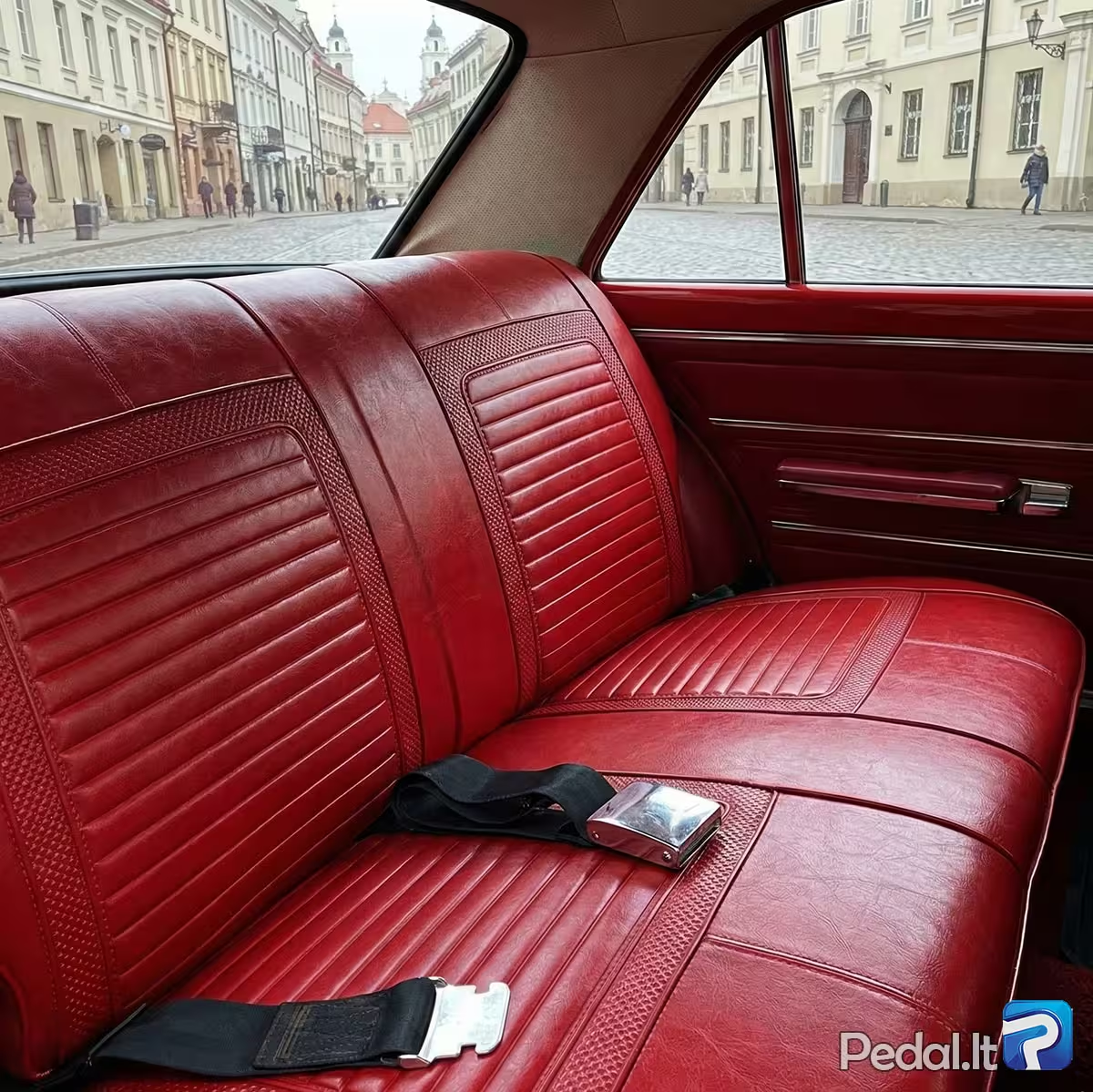
Must a rear-seat passenger wear a seat belt while the vehicle is in motion?
Drivers and all passengers must wear seat belts in vehicles that are equipped with them. In buses fitted with seat belts, a "Fasten Your Seat Belt" notice must be displayed in a clearly visible location in front of each seat, on the seat, or adjacent to it. It is recommended that all bus passengers be informed of the seat belt requirement — either verbally or by audiovisual means — before the journey begins.
1. Yes — you are required to wear a seat belt.
2. No — you are not required to wear a seat belt.

A traffic officer directing vehicles stands with their arms lowered. Are you permitted to proceed straight through the intersection when the traffic light displays a red signal?
1. Yes
2. No
Is the term "Pavement" included within the definition of "Road"?
RTR 3.7. 'Road' means the surface of a strip of ground or a superstructure intended for, and used by, road traffic across its full width; this includes the carriageway, intersections, pavements, roadsides, pedestrian and bicycle paths, and dividing strips. RTR 3.8. 'Shoulder' means a road area adjacent to the carriageway (from the carriageway edge to the roadbed edge) that is paved with the same or different material as the carriageway and/or separated from the carriageway by an edge line, but is not regarded as a pavement or as a pedestrian or bicycle track. JB
1. Yes, it is.
2. No, it is not.
Why does a vehicle need a generator?
A generator charges the battery and supplies electrical current to the vehicle's electrical systems and other consumers only while the engine is running, i.e. while the engine's crankshaft is turning. Via the drive pulley and belt, the crankshaft turns the generator, which produces electricity.
1. It supplies electrical current to the vehicle's electrical systems when the engine is not running.
2. It supplies electrical current to the vehicle's electrical systems while the engine is running.
3. It provides current to the starter motor when starting the engine.
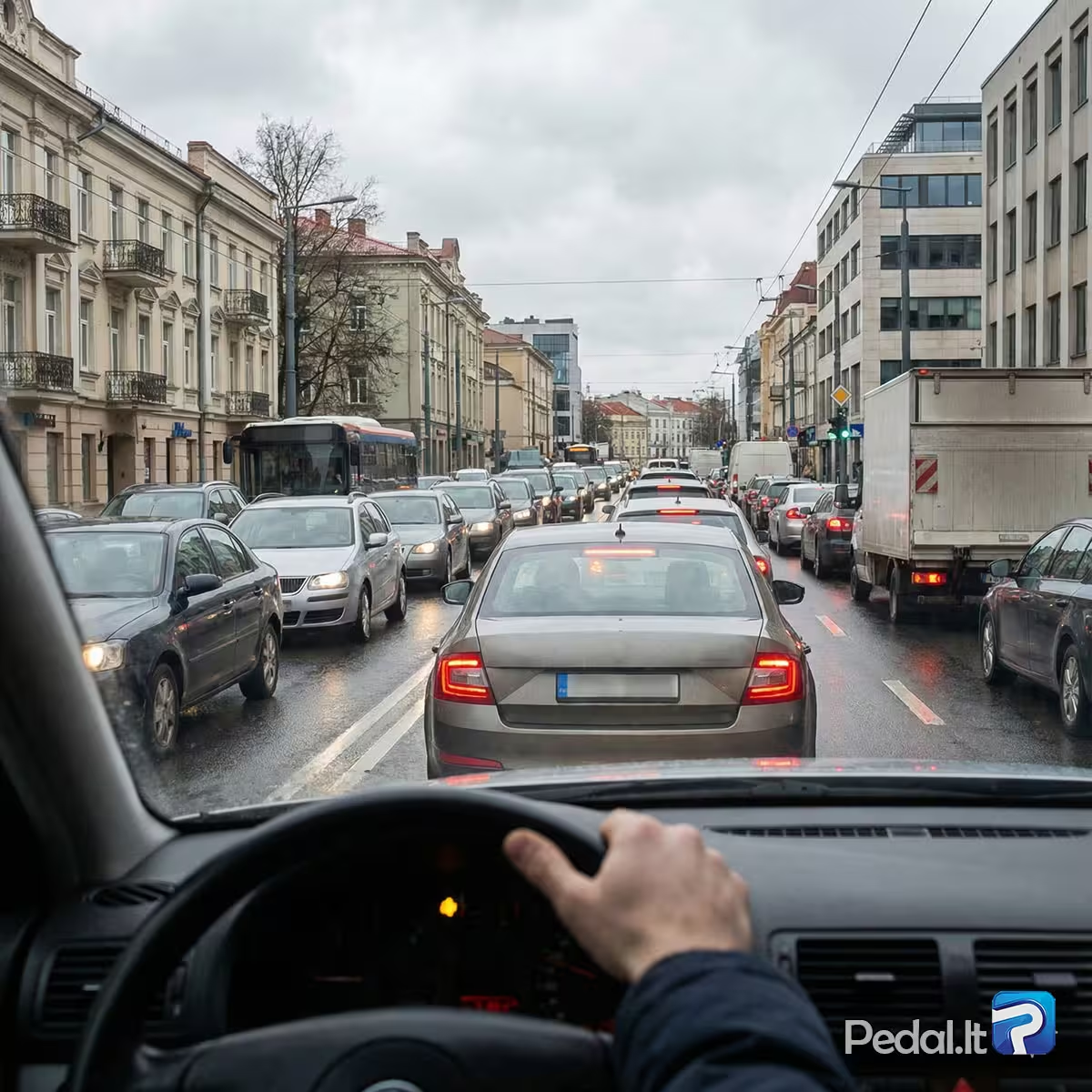
Is a driver permitted to change lanes in heavy traffic when all lanes are occupied?
RTR 11D. In heavy traffic, when all lanes are occupied by vehicles, changing lanes is permitted only when necessary to make a turn, make a U‑turn, or stop. JB
1. Changing lanes to stop is permitted when necessary.
2. Changing lanes to make a U‑turn is permitted when necessary.
3. Changing lanes to make a turn is permitted when necessary.
4. Changing lanes is prohibited.
.avif)
A child is saying goodbye to a friend. What should you anticipate in this situation?
Children close to the road can behave unpredictably. Exercise extreme caution when driving near them — they may run into the carriageway without looking and may not respond to a horn.
1. The child may step into the carriageway without looking.
2. The child may be looking toward the road but still step into the carriageway.
3. The child may step into the carriageway even if you sound the horn to warn them.
When is it permitted to teach someone to drive a motor vehicle on the roads?
RTR 21. Driving training. 4. Driving instruction on roads is permitted only when the student possesses sufficient driving skill. Instruction may be carried out only on roads where the owner has not prohibited it.
1. When the student has sufficient driving skills, understands the traffic rules, and complies with their requirements.
2. When the student can drive a vehicle but does not know the traffic rules.
3. Driving instruction on public roads is permitted only after the student has completed driving school.
Who has the right of way when the traffic lights at the intersection are not functioning?
Regulation RTR 167: When an intersection is controlled by traffic lights, drivers must obey the light signals regardless of any priority indicated by road signs. If the traffic lights are not operating or the amber (yellow) light is flashing, drivers must follow the priority indicated by the road signs.
1. No one has the right of way.
2. Drivers on the main (priority) road.
3. Drivers making a right turn.
4. Drivers on the side (secondary) road.
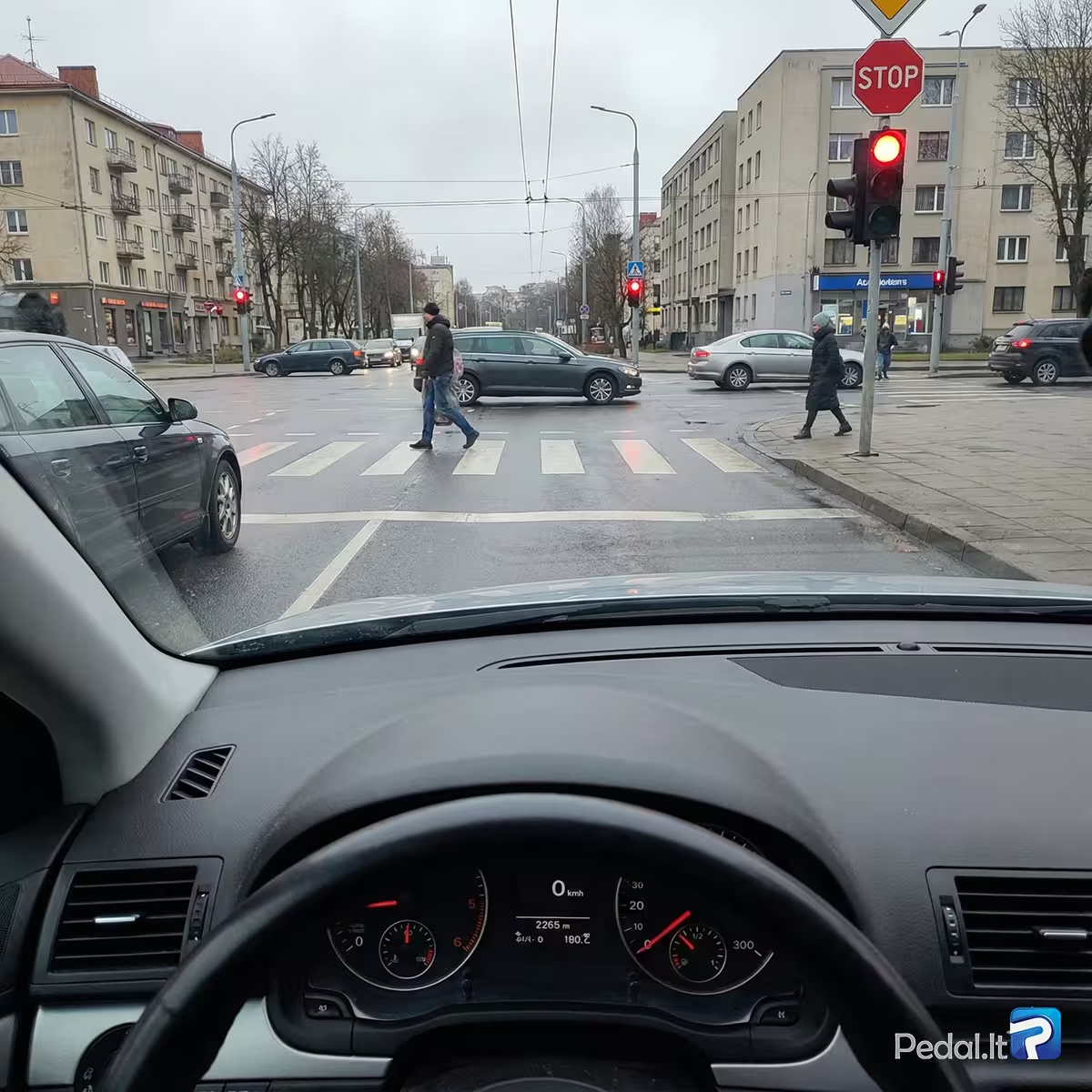
Where must the driver stop, according to traffic rules, when a prohibitory traffic signal or a traffic regulator's signal is in effect?
RTR 165 p. When a prohibitory traffic signal or a traffic regulator's signal is displayed, the driver must stop before the 'Stop line' road sign and/or before the marked stop line. If neither is present, the driver must stop before the traffic light, before the junction or the connecting carriageway, before a pedestrian crossing, or before a bicycle crossing, in such a position that does not obstruct vehicular or pedestrian traffic.
1. Before the 'Stop line' road sign and/or before the marked stop line.
2. So as not to obstruct vehicular traffic.
3. So as not to obstruct pedestrian traffic.
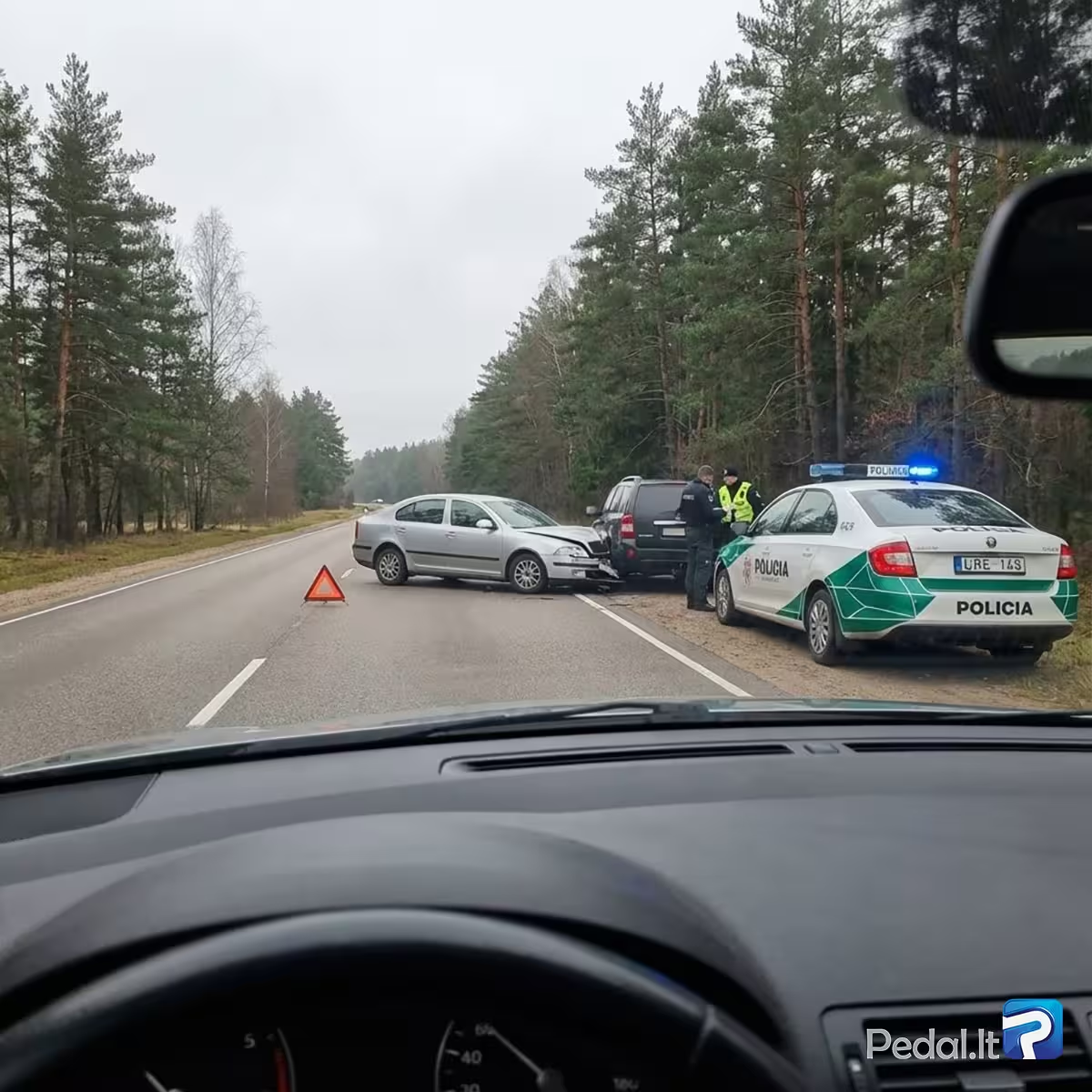
In most cases, those responsible for road accidents in Lithuania are:
According to data from the Lithuanian Road Administration, in 2017 drivers accounted for 68.83% of all individuals found responsible for road accidents.
1. Drivers of motor vehicles.
2. Cyclists (bicyclists).
3. Pedestrians (people on foot).
4. Drivers of animal-drawn vehicles.
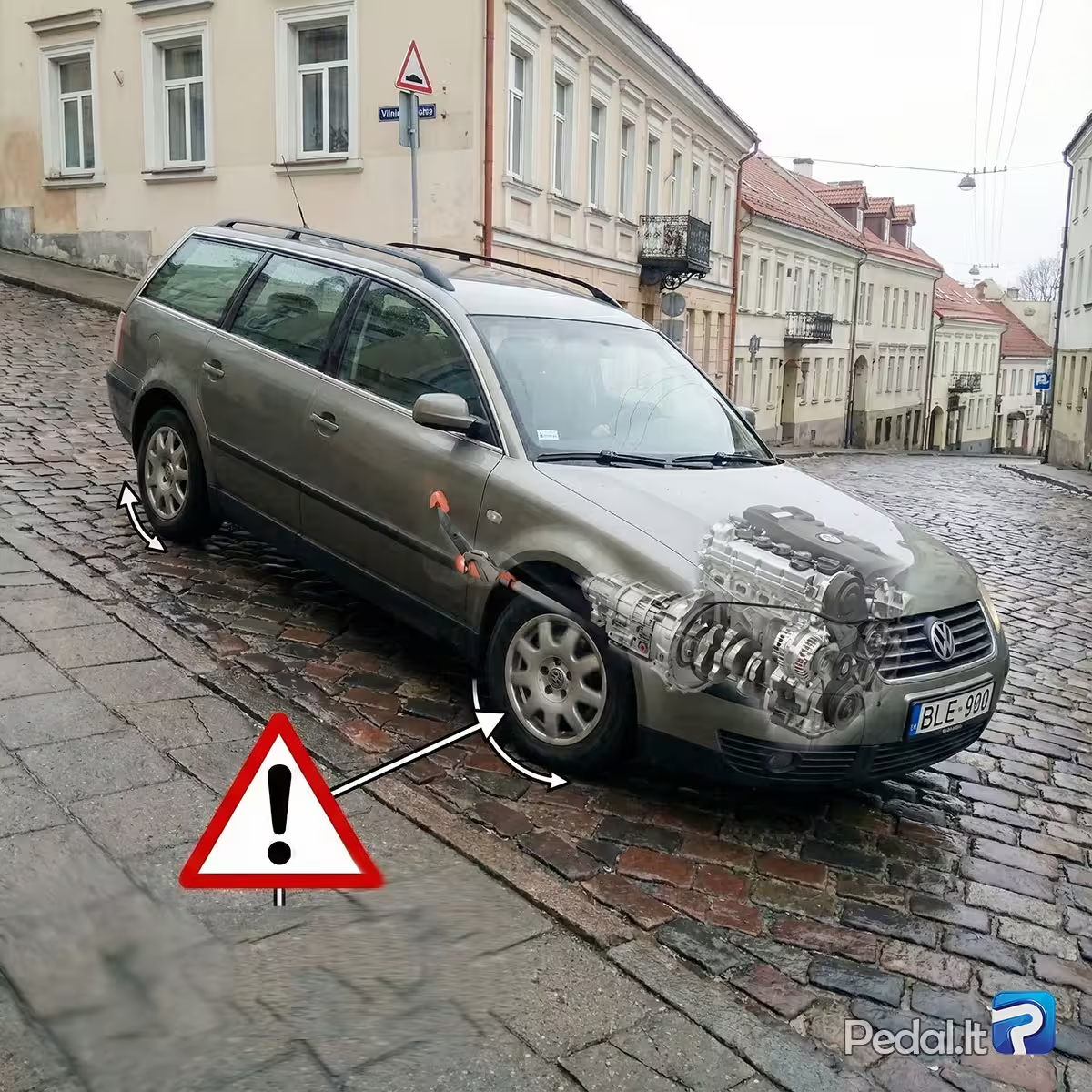
When parked on a downhill slope, leaving a diesel vehicle in gear is hazardous because:
If a vehicle is left in gear and begins to roll downhill, certain older diesel engines may rotate and start automatically.
1. The transmission or gearshift mechanism can be damaged.
2. An older diesel engine may start automatically.
3. There is no danger.
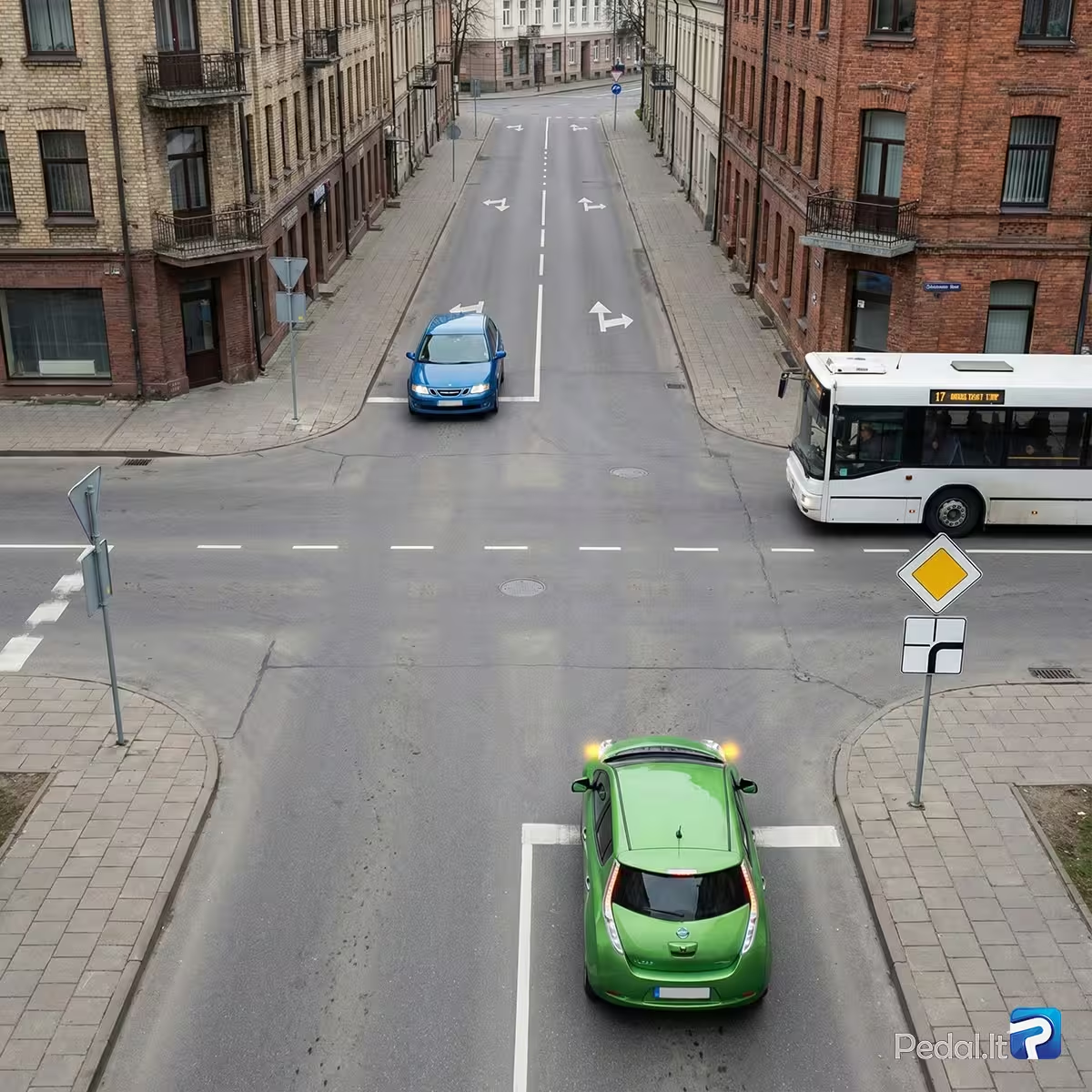
You are driving the green vehicle. When turning left, must you yield to the blue vehicle?
The green vehicle is on the main (priority) road, so it does not need to give way to the blue vehicle when turning left. Right-of-way rules vary depending on whether an intersection is controlled: at a controlled intersection, drivers entering from a side road must yield to traffic on the priority road. See rule 154.
1. Yes — you must yield.
2. No — you do not have to yield.
You are driving on the road when a vehicle rapidly approaches from behind. The driver has switched on the left-turn indicator and is signaling by flashing the headlights. What will you do?
Even if another driver breaks the rules by overtaking or exceeding the speed limit, you must not endanger other road users — allow that driver to overtake you. 4. Road users shall follow the principle of mutual respect and safety.
1. You will accelerate to increase the distance between the vehicles.
2. You will maintain your speed and prevent the other driver from overtaking you.
3. You will allow the approaching vehicle to overtake you.
4. You will apply the brake pedal to activate the brake lights.
When approaching a traffic-light-controlled intersection and you notice the green light has been on for a long time, what should you do?
A green light that has been lit for an extended period may change to yellow shortly. You may proceed, but remain vigilant and be prepared to stop safely. 73. Traffic light signals mean: 73.1. A steady circular green light permits movement in all directions (straight ahead, to the right, to the left, or a U-turn); 73.3. A flashing green light permits movement but warns that its time is ending and the signals are about to change.
1. Stop immediately.
2. Increase your speed.
3. Continue driving but be prepared to stop.
Does a category B driving licence permit the holder to drive a light quadricycle?
A category B driving licence entitles the holder to drive vehicles of category AM (mopeds and light quadricycles). LAW ON ROAD TRAFFIC SAFETY Article 23. 1. Categories of motor vehicles and their combinations with trailers are as follows: 1) Category AM: mopeds and light quadricycles; 5) Category B1: quadricycles. 4. A driving licence that entitles a person to drive: 1) vehicles referred to in Subparagraphs 2–16 of Paragraph 2 of this Article also entitles the holder to drive vehicles of category AM; 4) vehicles of categories B, C, or D also entitle the holder to drive vehicles of categories B1, C1, or D1.
1. Yes. A category B driving licence allows the holder to drive a light quadricycle.
2. No. A category B driving licence does not permit driving a light quadricycle.
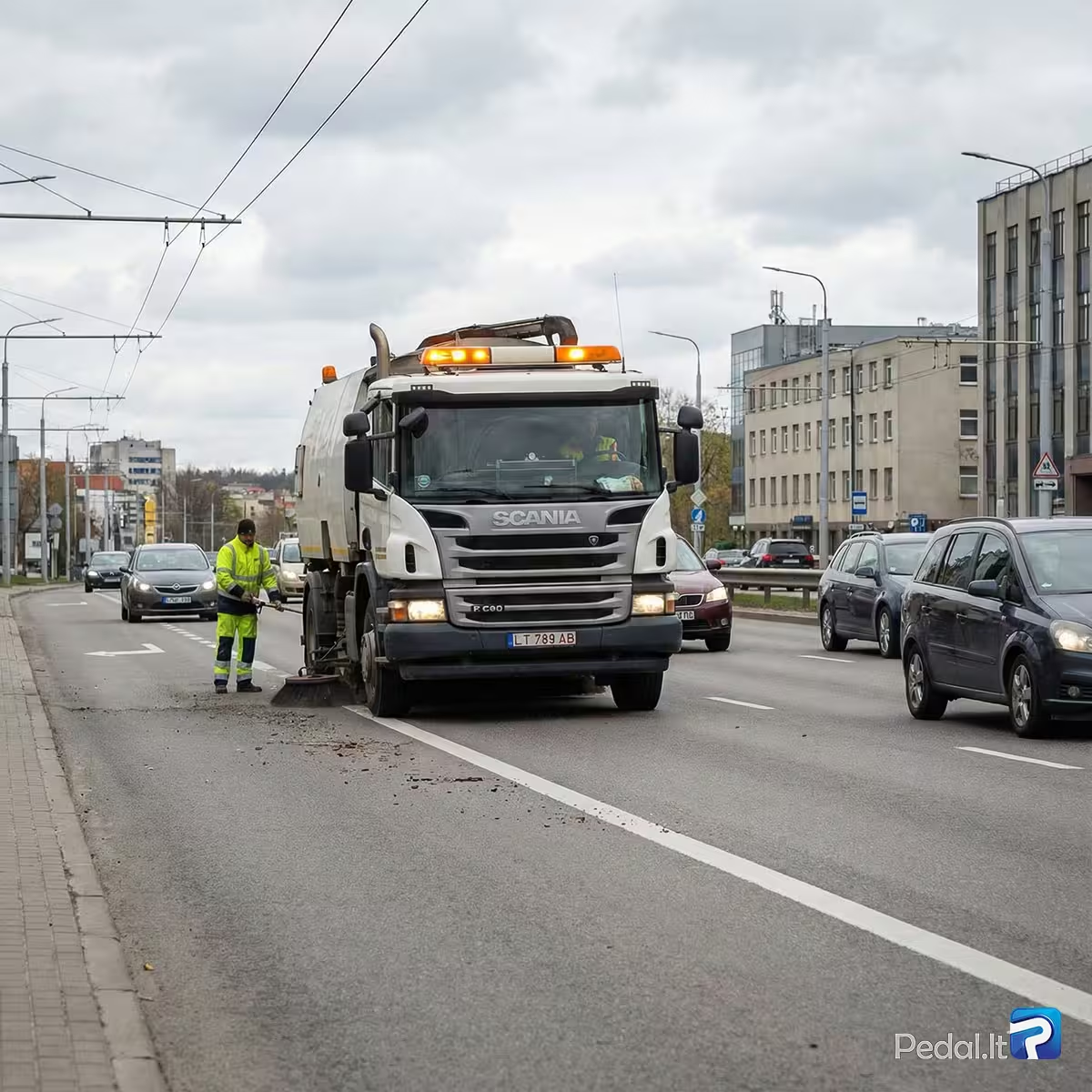
Are drivers of motor vehicles equipped with orange flashing lights permitted to disregard road-marking lines while performing work on the roadway?
Regulation RTR 188: An orange flashing light may be used only when the vehicle obstructs other road users—for example, when the vehicle's loaded or unloaded dimensions exceed permitted limits; when performing work on the roadway; when stopping or standing; when moving at very low speed; when escorting an organized group of cyclists; or when transporting hazardous goods. An orange flashing light does not confer priority; it merely attracts attention and warns other road users of a potential hazard. While driving, standing, or working on the road, drivers of vehicles displaying orange flashing lights must ensure they do not compromise traffic safety.
1. Yes — provided doing so does not jeopardize traffic safety.
2. No — they are not allowed to do so.
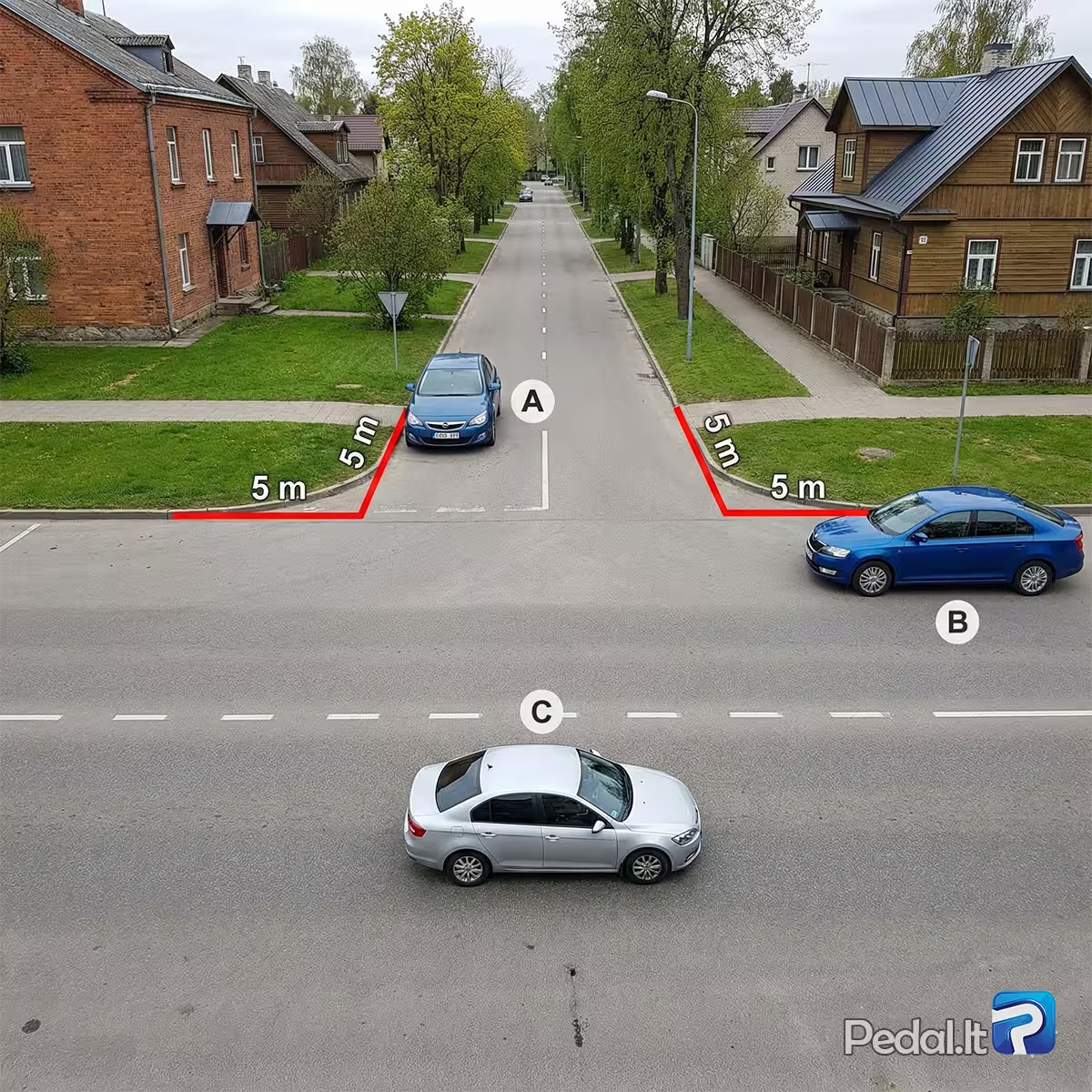
Which vehicles have violated the Road Traffic Rules by stopping at the entrance to the yard?
This is not an intersection but the entrance to a yard. Therefore, vehicle C is not prohibited from parking in this way. RTR 150. Standing and parking shall be prohibited: 150.15 at crossroads and in places where vehicles enter the road from adjacent areas and exit the road to adjacent areas, and within a 5-metre distance from those points (on the side of the road where the entrance/exit is located), except where road signs permit parking.
1. Vehicle A
2. Vehicle B
3. Vehicle C
4. All vehicles are parked correctly.
Which factors can reduce a driver's attention while driving?
1. Engaging in a heated or intense conversation with a passenger.
2. Experiencing strong emotions (e.g., joy, anger, or hatred).
3. Listening to an engaging radio programme.
After depressing the clutch lever, you should hold it down only as long as necessary to:
3.3. Clutch control: 3.3.3. Keep the clutch lever depressed only for the time necessary to engage, change, or disengage a gear, to start moving, to stop, or to maneuver at low speed;
1. Engage a gear.
2. Engage or disengage a gear.
3. Start moving the vehicle.
4. Stop the vehicle or maneuver at low speed.
When is it mandatory to renew or replace a driver's license?
Order No. 1V-328 of the Minister of Internal Affairs of the Republic of Lithuania, dated 10 September 2008, "On Approval of the Rules for Issuing Motor Vehicle Driver's Licences", ch. II, p. 7: A new driver's licence shall be issued when: 7.1 the previous licence expires or has expired; 7.2 the previous licence is lost (misplaced, stolen, etc.); 7.3 the licence is worn out or damaged; 7.4 the personal data entered in the licence has changed; 7.5 the driver's medical condition has changed; 7.6 the applicant wishes to obtain a licence for driving vehicles of another category(ies) or to acquire the right to drive motor vehicles for the first time; 7.7 the applicant wishes to replace an old-model licence with a new model; 7.8 the applicant wishes to obtain a licence in place of one issued by another state; 7.9 the applicant wishes to obtain a licence in place of a destroyed one. SEAK Art. 22(4): Driver's licences are issued for a period not exceeding 10 years, and the right to drive vehicles of categories C1, C1E, C, CE, D1, D1E, D, DE is issued for no longer than 5 years from the date of licence issuance. SEAK Art. 22(5): Novice drivers receive a licence valid for 3 years; after 2 years from issuance they have the right to replace it with a licence valid for 10 years, pursuant to the procedure established by the Minister of the Interior or an authorized institution, without additional driver training, provided that within those 2 years they did not commit traffic offences requiring additional training under the Law on Road Traffic or cause a traffic accident that harmed a road user's health (except where the accident occurred under circumstances excluding criminal liability or where the person is not subject to administrative sanction). A novice driver who committed such an offence or caused such an accident must complete the required additional driver training within one year from the date the relevant resolution (court verdict) takes effect or from the date of enforcement of the administrative order issued after the offence. If the court verdict or criminal order imposes arrest or imprisonment and the sentence is not suspended, the additional training must be completed within one year after completion of the imposed sentence. JB
1. When the personal data on the licence has changed (for example, a change of name or surname).
2. If your place of residence has changed.
3. If you are going abroad.
4. If you drive more than one vehicle.

How should you plan your route when travelling a long distance that may include roadworks, border crossings and unexpected events?
JB
1. Estimate the additional fuel required for your journey and plan appropriate refuelling stops.
2. No planning is necessary.
3. Plan your departure time, stops and rest breaks, parking arrangements, and the route your vehicle will follow to the destination.
4. Check the traffic laws and legal requirements of any countries you will pass through.
A road user must not:
Dipped-beam headlights are not required when daytime running lights are illuminated (not all vehicles have them). RTR 10. Road users must not deliberately move, cover, remove, or install traffic control devices that regulate traffic; obstruct the carriageway; leave objects on the road or otherwise interfere with traffic; damage the road surface, traffic control devices, outdoor emergency communication systems, or planted lawns; block access to a fire hydrant or other rescue equipment or otherwise prevent access to them; throw any items from a vehicle or litter; discharge lubricants in undesignated areas; or otherwise pollute the environment.
1. Discard litter from a moving vehicle.
2. Release oils or other lubricants in undesignated areas or otherwise pollute the environment.
3. Use dipped-beam (low-beam) headlights during daylight hours.
4. Drive at a speed significantly lower than the vehicle's specified limits when it does not obstruct traffic.
Under what circumstances are drivers prohibited from operating a vehicle?
IV 15. It is prohibited to drive vehicles that are not in good condition or that fail to meet the applicable technical requirements. Before setting off, the driver of a motor vehicle, tractor, or self-propelled vehicle must ensure the vehicle is in proper condition and is equipped with a warning triangle, fire extinguisher, first-aid kit, and any other items mandated for that vehicle type. The driver must also monitor the vehicle's technical condition during the trip. If the vehicle breaks down while driving and ceases to meet technical requirements, and repairs on-site are impossible, the driver may proceed—taking all necessary precautions—to the nearest parking area or repair facility, except in cases specified in paragraph 234 of these Rules.
1. When the engine has not yet warmed up to its optimal operating temperature.
2. When the vehicle's fuel tank is not full.
3. When the vehicle is not in roadworthy condition.
4. When the vehicle does not meet the required technical standards.
.avif)
In this situation, is the driver of the green vehicle permitted to cross the indicated double horizontal line when completing the overtaking maneuver?
He is allowed because the driver of the green vehicle must complete the overtaking maneuver. RTR Annex 3.1.10: A double line composed of two narrow parallel lines — one solid and one broken — separates traffic moving in opposite directions or in the same direction on road sections where lane changing is permitted only from one lane. It also marks locations for U-turns and the entrances and exits of parking areas where travel is allowed in only one direction. Drivers may cross this line from the side of the broken line, and they may also cross it from the side of the solid line only when finishing an overtaking or passing maneuver.
1. No — he is not allowed.
2. Yes — he is allowed.
Are people using a wheelchair considered pedestrians?
LAW ON ROAD TRAFFIC SAFETY — Article 2, clause 42. "Pedestrian" means a person present on the road who is not inside a vehicle, including a person using a wheelchair, on roller/inline skates, on a skateboard or scooter, walking while leading or pushing a bicycle, moped, or motorcycle, or pulling/pushing a sledge, pram, or other type of carriage. A person performing work on the road shall not be considered a pedestrian.
1. Yes — they are considered pedestrians.
2. No — they are not considered pedestrians.
How would you react if the vehicle began to skid on a wet surface (i.e., started to aquaplane)?
On roads (especially those with ruts) during heavy rain, water can accumulate on the asphalt because it cannot drain quickly toward the edges. If you accelerate under these conditions, the tire treads may be unable to disperse the accumulated water. The vehicle can aquaplane when a wedge of water lifts the tires off the road surface, reducing traction and making the vehicle difficult to control. If a vehicle begins to aquaplane, the driver should reduce speed to regain traction and stability.
1. You would immediately apply the brakes.
2. You would ease off the accelerator to reduce your speed.
3. You would increase your speed.
Your car begins to skid sideways while braking. What should you do?
If the wheels lock and the car begins to skid while braking, you must release the brake pedal. For example, if you brake hard before a bend and lock the wheels, the vehicle will continue moving in its original direction (straight ahead) despite steering input. That can cause you to run off the road or collide with an obstacle. In that situation you must stop braking — which can be difficult, especially for inexperienced drivers.
1. Press the clutch pedal.
2. Release the brake pedal (stop applying the brakes).
3. Apply the brakes more firmly.
When are drivers permitted to brake on a pedestrian crossing?
According to traffic regulations, there are no specific locations where braking is prohibited. Braking is necessary to ensure road safety; therefore drivers must brake whenever required.
1. When it is necessary to prevent a traffic accident.
2. When they see the brake lights of the vehicle ahead.
3. When they need to stop after the pedestrian crossing on the right-hand side of the road.
4. It is forbidden to brake on a pedestrian crossing in all circumstances.
Which vehicle is not allowed to be ridden on the pavement (sidewalk)?
RTR VIII. Requirements for Cyclists (paras. 55–66). 57. Bicycles may be ridden only on cycle tracks, footpaths, or cycle lanes; if none of these is available, bicycles may be ridden on an appropriate hard shoulder (with an asphalt or concrete surface). When a road has no cycle track or combined footpath-and-cycle track, and there is no cycle lane or hard shoulder on the right side — or if such facilities exist but are unsuitable for cycling (for example, are damaged) — cyclists may ride on the pavement (sidewalk) or in single file in the right-hand lane of the carriageway, keeping to the right edge of the lane, except in the cases specified in Paragraph 106 of these Rules, or when a cyclist needs to pass an obstruction or must continue straight ahead while only a right turn is allowed from the first lane. When riding on a hard shoulder, footpath, cycle track, or pavement, a cyclist must yield to pedestrians and must not create obstructions or hazards; when overtaking a pedestrian, the cyclist should travel at a speed close to walking speed (3–7 km/h) and leave sufficient lateral space so that passage is safe.
1. A moped (motorized two-wheeled vehicle).
2. A bicycle (non-motorized).
1 of 30 Task
Time left: 00:00:00
1
2
3
4
5
6
7
8
9
10
11
12
13
14
15
16
17
18
19
20
21
22
23
24
25
26
27
28
29
30