When driving and you discover that a bend in the road is sharper than you anticipated, you should:
If a bend in the road is sharper than anticipated, you must reduce your speed.
1. You should reduce your speed.
2. You should attempt to decrease your turning radius.
3. You should accelerate.
4. You should maintain your current speed.
Why does a vehicle pull to one side during braking?
If a vehicle pulls to one side only during braking, the fault lies in the braking system. If the wheel alignment is incorrect or there is a malfunction in the steering system, the vehicle may also pull to one side while driving.
1. Because the wheels are misaligned.
2. Because the braking system is applying unevenly.
3. Because of a malfunction in the steering mechanism.
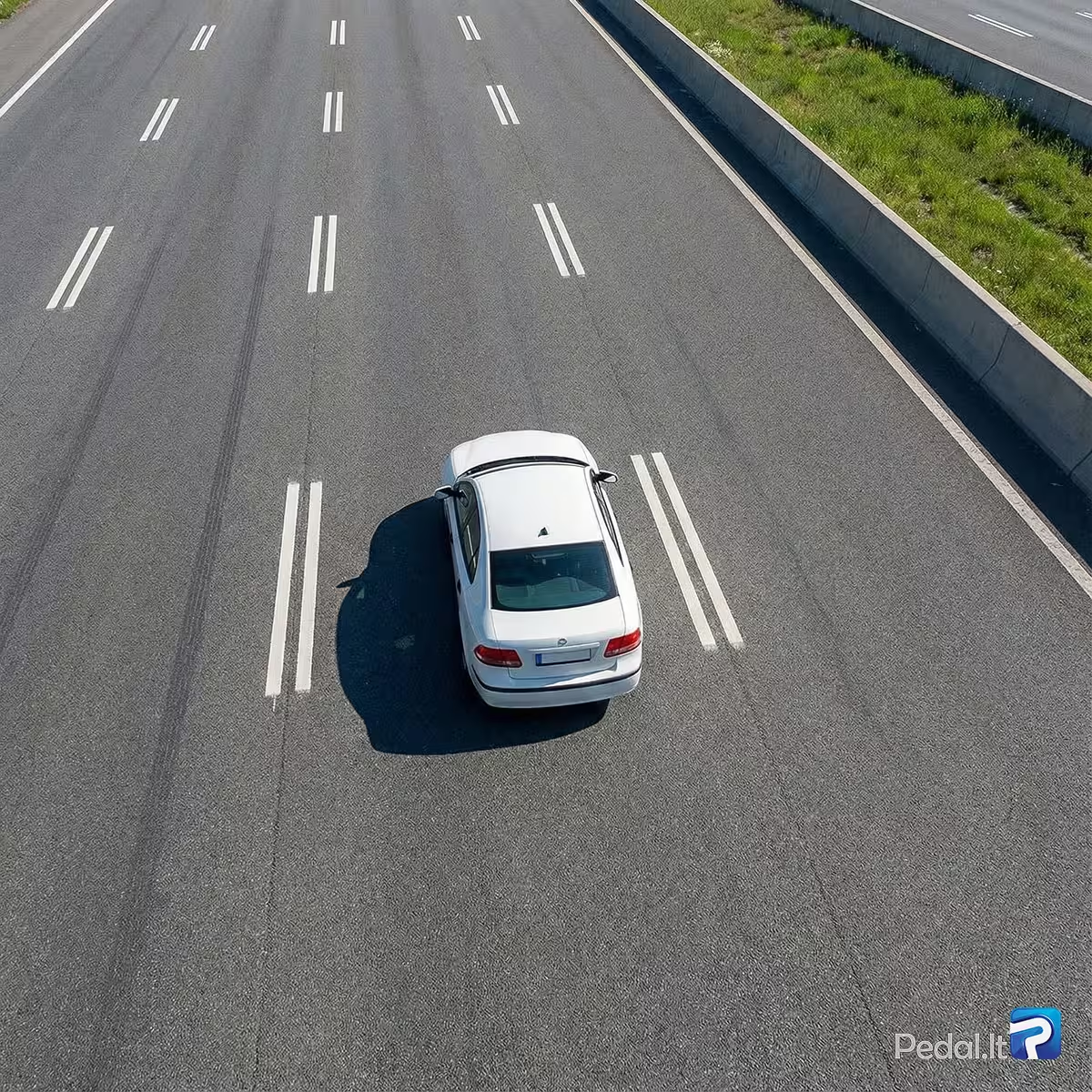
When may a double broken line be crossed?
RTR – Annex 3. 1.26. A double broken line indicates lanes of opposing traffic; it separates flows of traffic moving in opposite directions. Vehicles must not cross this line when it separates traffic moving in opposite directions. If the line separates lanes moving in the same direction, vehicles may cross it from either side when the green lane-control light is illuminated. When the amber lane-control light is illuminated, vehicles may cross it only if the line is to the driver’s right.
1. On both sides when the green lane-control light is illuminated.
2. When the amber lane-control light is illuminated, and the double broken line lies to the driver’s right.
3. Crossing it is prohibited in all cases.
Which description corresponds to a "Bicycle path"?
Law on Road Traffic Safety, Art. 2, para. 11. "Bicycle path" — a road or part of a road intended for the movement of bicycles, motorcycles and electric micromobility vehicles, marked with appropriate road signs. A bicycle path must be separated from the roadway or its lanes by engineering measures.
1. A portion of the roadway, or a separate path, designated for bicycle and moped traffic.
2. A road or section of road intended for the movement of bicycles, motorcycles and electric micromobility vehicles, marked by appropriate road signs.
3. A portion of the road designated for shared pedestrian and bicycle use.
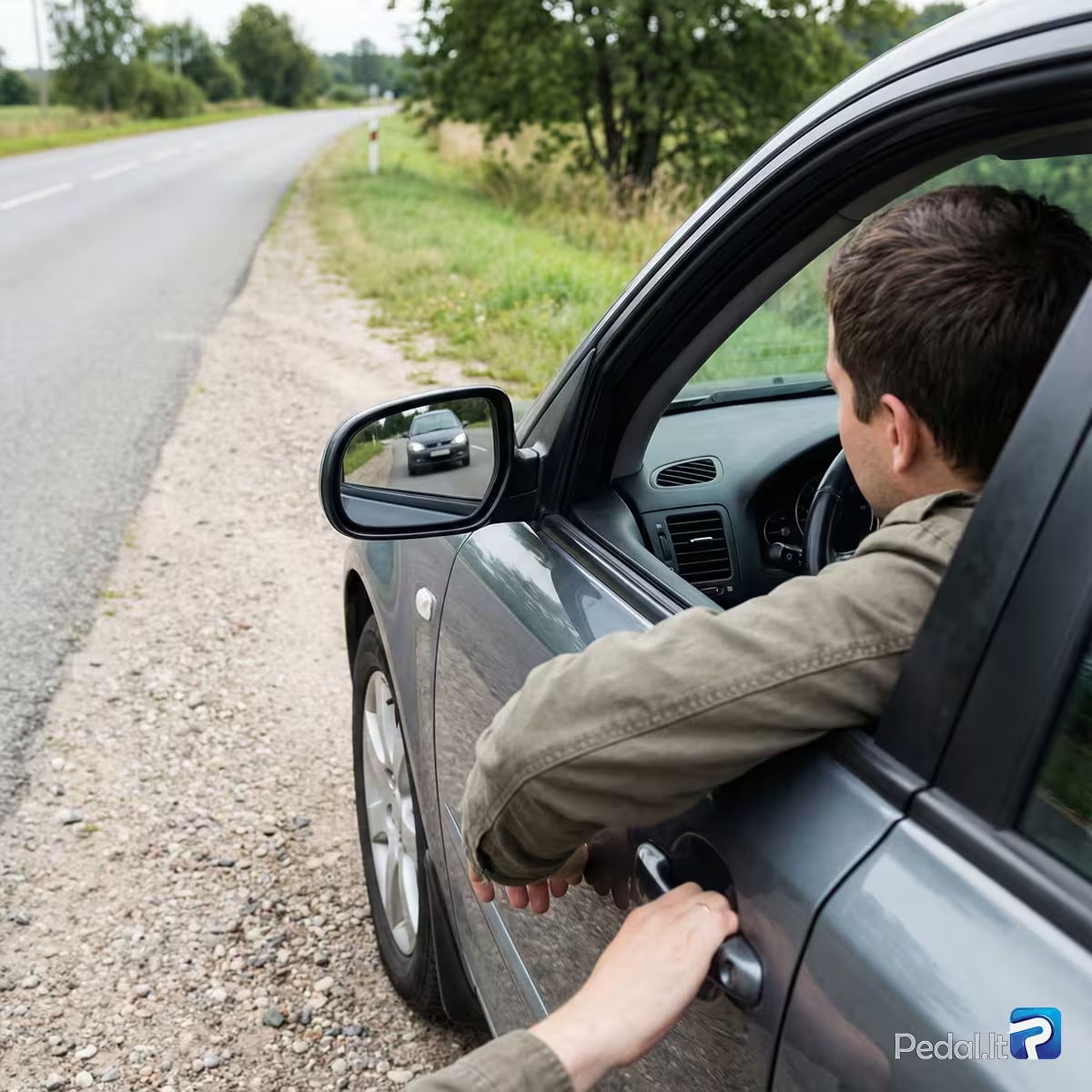
After stopping on the right-hand shoulder, what should a driver check before opening the door?
Vehicles may be approaching from the rear on the left-hand side, so opening the door could be unsafe. (RTR 148) Do not open the doors of a parked vehicle if doing so would create an obstruction or pose a hazard to other road users.
1. Vehicles approaching from behind on the left-hand side.
2. Vehicles approaching from behind on the right-hand side.
3. They do not need to pay attention to anything specific.
Under what circumstances are drivers prohibited from operating a vehicle?
IV 15. It is prohibited to drive vehicles that are not in good condition or that fail to meet the applicable technical requirements. Before setting off, the driver of a motor vehicle, tractor, or self-propelled vehicle must ensure the vehicle is in proper condition and is equipped with a warning triangle, fire extinguisher, first-aid kit, and any other items mandated for that vehicle type. The driver must also monitor the vehicle's technical condition during the trip. If the vehicle breaks down while driving and ceases to meet technical requirements, and repairs on-site are impossible, the driver may proceed—taking all necessary precautions—to the nearest parking area or repair facility, except in cases specified in paragraph 234 of these Rules.
1. When the engine has not yet warmed up to its optimal operating temperature.
2. When the vehicle's fuel tank is not full.
3. When the vehicle is not in roadworthy condition.
4. When the vehicle does not meet the required technical standards.
At what age can you obtain a category A (motorcycle) driving licence?
Under Article 23 of the Law on Road Traffic Safety, there are two ways to obtain a category A (motorcycle) driving licence. You may obtain category A from the age of 24 without prior experience. Alternatively, from the age of 20 you may obtain category A if you have at least two years' qualifying experience riding category A2 motorcycles. The two-year A2 experience requirement does not apply to applicants aged 24 or older. Separately, the right to drive tricycles (three-wheelers) with power exceeding 15 kW is granted from the age of 21.
1. From the age of 24.
2. From the age of 20, provided you have two years' experience riding category A2 motorcycles.
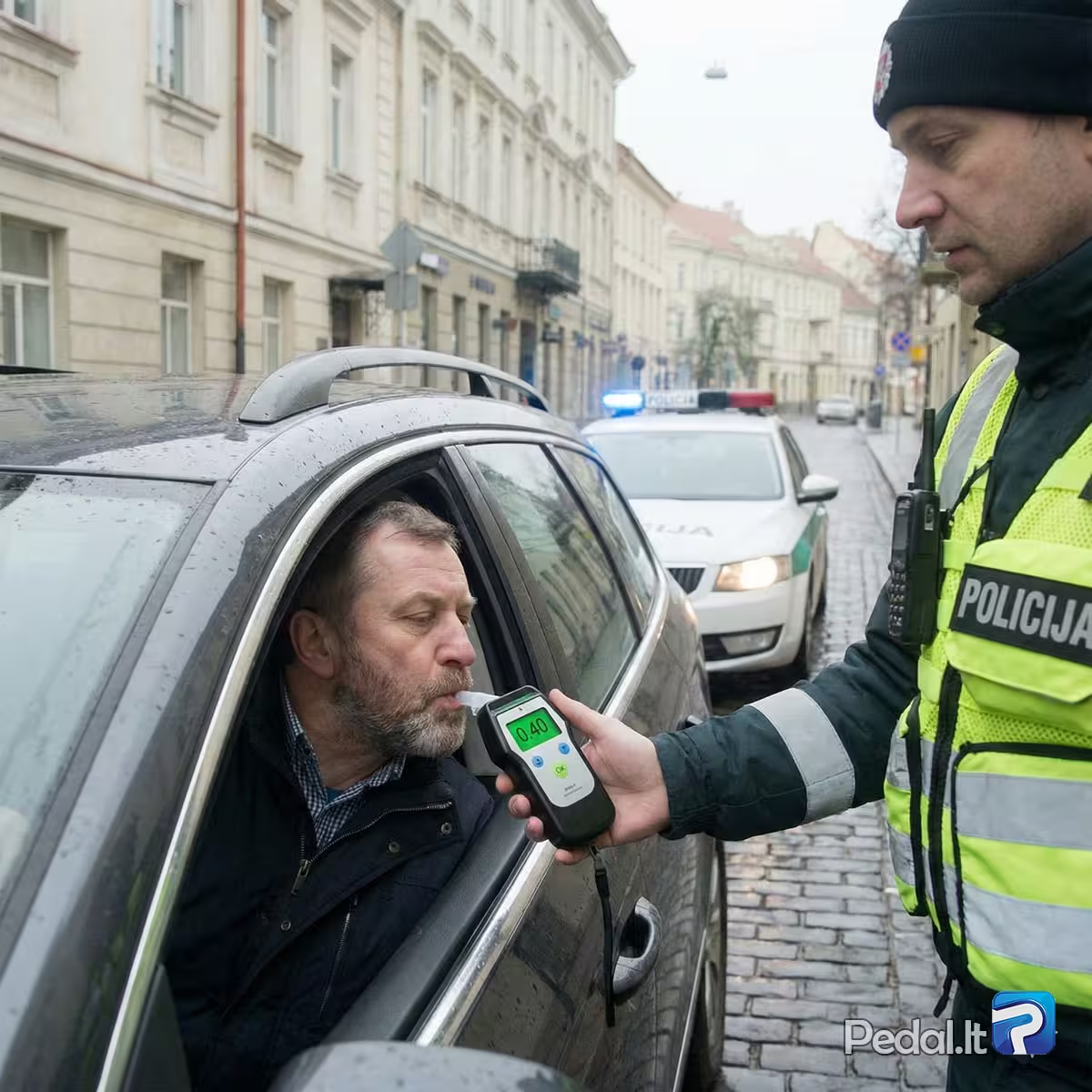
What is the maximum permitted alcohol concentration (in per mille, ‰) for a driver with 20 years of driving experience?
According to the Law on Road Traffic Safety, Article 2, point 43: “Drunkenness” means a state in which a person has consumed ethyl alcohol and the concentration of that alcohol in the body's biological media (exhaled air, blood, urine, saliva or other bodily fluids) exceeds the legal limit. The maximum permitted concentration of ethyl alcohol in the exhaled air, blood, urine, saliva or other bodily fluids of persons operating vehicles is 0.4 per mille (‰). Novice drivers, taxi drivers, and drivers of mopeds, motorcycles, tricycles, light quadricycles, four-wheelers, motorized quadricycles, vehicles with a maximum permissible weight over 3.5 t or with more than 9 seats, and drivers transporting dangerous goods are considered intoxicated when the concentration of ethyl alcohol in their exhaled air, blood, urine, saliva or other bodily fluids is greater than 0 ‰. JB
1. 0.2 ‰
2. 0.3 ‰
3. 0.4 ‰
4. 0.8 ‰
Are vehicles permitted to drive on the pavement (sidewalk)?
RTR 124. Drivers of motor vehicles, tractors, self‑propelled machines, and animal‑drawn vehicles must not drive or manoeuvre on lawns, pavements (sidewalks), footpaths, cycle tracks, or cycle lanes. An exception applies where road signs permit (partial) parking at the pavement edge and a cycle track or lane is delineated by the horizontal marking line 1.14. Driving on central reservations, embankment slopes, excavations, or in ditches is prohibited. Drivers must also not enter or leave the roadway except at locations designated for that purpose.
1. They may do so provided they do not obstruct pedestrians.
2. They are permitted only where road signs indicate that (partial) parking on the pavement edge is allowed.
3. Driving on pavements is prohibited.
If you are forced to stop outside a built-up area where stopping is prohibited and your hazard warning lights are not working, what must you do?
RTR 92. If the vehicle's hazard warning lights are absent or defective and an emergency stop is required where stopping or parking is prohibited, in the event of an accident, or when the stopped vehicle would be visible to other road users from less than 100 metres, the driver of a motor vehicle (excluding a motor moped and motorcycles without a trailer), a tractor, or a self-propelled machine must immediately place an emergency stop sign on the side of the carriageway opposite the direction of travel: within settlements not less than 25 m, and outside settlements not less than 50 m from the stopped vehicle. If at least one rear position lamp is defective and the hazard warning signal is not working when driving in darkness or poor visibility, an emergency stop sign must be affixed to the rear of the vehicle in order to continue driving.
1. Attach a red flag to your vehicle.
2. Place a warning triangle 50 m behind the stopped vehicle.
3. Stop another vehicle and request assistance.
4. Turn on your dipped-beam headlights.
.avif)
Is it permitted to use high‑beam headlights after dark on an unlit road within a settlement?
On unlit roads it is permitted to use high‑beam headlights. According to regulation RTR 95, during hours of darkness or in conditions of poor visibility high beams must be switched to low beam on illuminated roads (see 95.1).
1. Yes — it is permitted.
2. No — it is prohibited.
When must passengers fasten their seat belts?
RTR 196. All passengers and the driver must wear seat belts when traveling in vehicles equipped with them. If a bus is fitted with seat belts, visible signs reading "Fasten Your Seat Belt" must be displayed in front of every seat, on the seat, or next to it. It is recommended that all bus passengers be informed of the requirement to wear seat belts verbally or by audio-visual means before the journey begins. 198. Within built-up areas, a driver is permitted not to fasten the seat belt while reversing or when in parking areas. 205. Persons who, for serious medical reasons, hold special permits issued by competent authorities are exempt from wearing seat belts. These permits must include an expiry date.
1. Only when traveling on mountain roads.
2. At all times when traveling in a vehicle.
3. Only when traveling outside built-up areas.
4. Only when traveling on motorways.
.avif)
Which driver will proceed through the intersection first?
RTR 154. At a controlled intersection, drivers on a side road must yield to vehicles on the priority road.
1. The driver of the blue car.
2. The driver of the red car.
Who has the right of way when the traffic lights at the intersection are not functioning?
Regulation RTR 167: When an intersection is controlled by traffic lights, drivers must obey the light signals regardless of any priority indicated by road signs. If the traffic lights are not operating or the amber (yellow) light is flashing, drivers must follow the priority indicated by the road signs.
1. No one has the right of way.
2. Drivers on the main (priority) road.
3. Drivers making a right turn.
4. Drivers on the side (secondary) road.
Under which conditions does a car battery's capacity decrease?
Battery capacity decreases as ambient temperature falls. A fully charged battery that measures 100% capacity at +25 °C will typically drop to about 80% at 0 °C and to roughly 60% at −25 °C.
1. When ambient temperature rises.
2. When ambient temperature falls.
3. It does not change with temperature.
What is the colour of the road sign labelled 'Place of Interest'?
629. 'Place of Interest' sign. Indicates the name of a cultural or historical site of interest. The sign has a brown background.
1. Blue.
2. Green.
3. Yellow.
4. Brown.
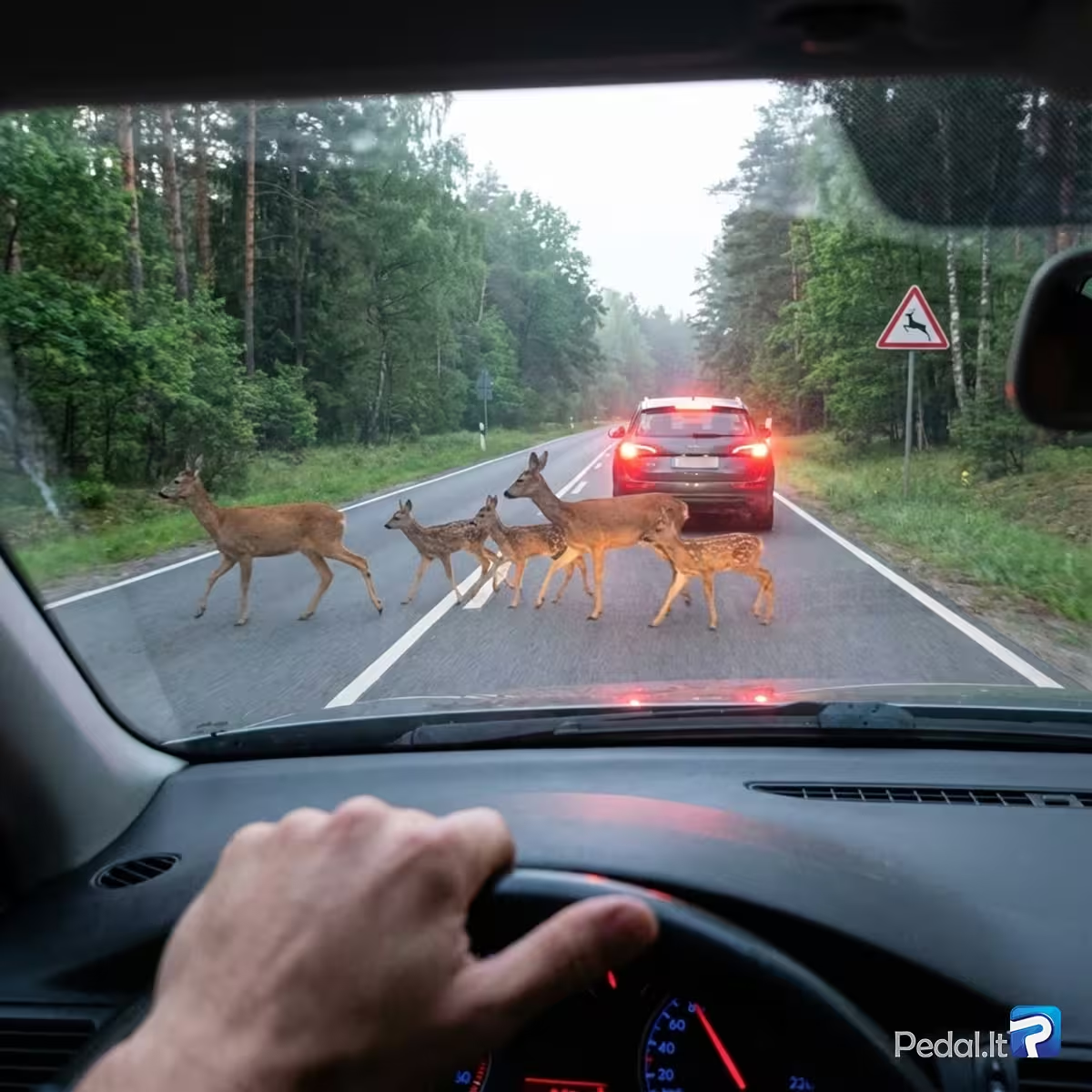
While driving, a group of roe deer crossed the road in front of your vehicle. What should you expect?
Wild animals typically travel in groups. If you see a lone roe deer, deer, or wild boar, others are likely nearby. Herding instincts lead animals to cross roads together rather than individually.
1. The animals may return to the road.
2. A solitary animal may follow the group.
3. It is unlikely that there will be any solitary animals.
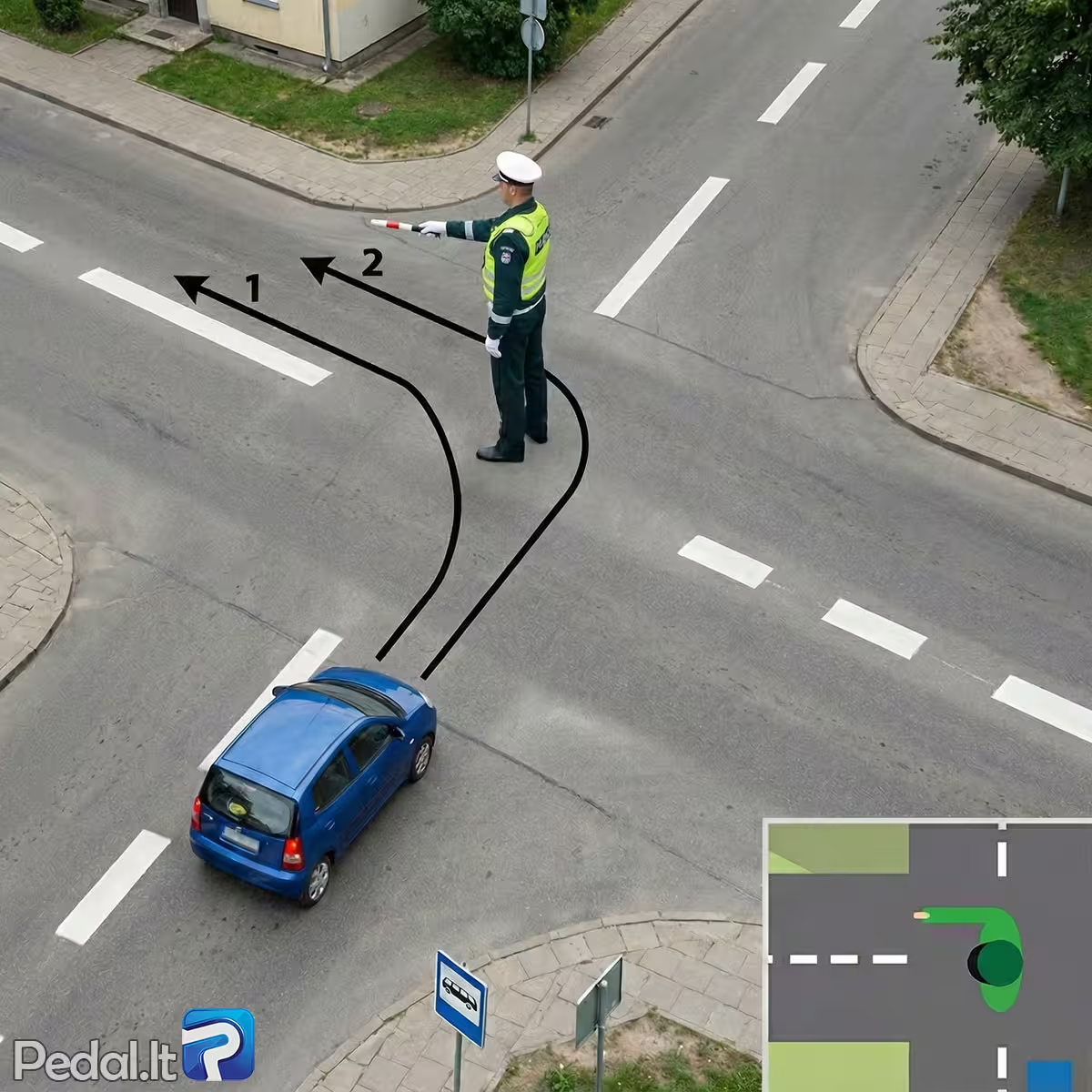
Is it permitted to make a left turn in this situation?
In this scenario the driver must complete the left turn before passing the traffic officer. Turning left after passing the officer would violate Road Traffic Rules requirement 77.2.3, which prohibits vehicles approaching from the rear and from the right from proceeding. RTR 77 — Signals given by traffic officers — are defined as follows: 77.1 Arms extended sideways or down: 77.1.1 Vehicles to the left and to the right may proceed straight ahead or turn right; pedestrians may cross the carriageway. 77.1.2 Vehicles and pedestrians in front of and behind the officer must not proceed. 77.2 Right arm extended forward: 77.2.1 Vehicles approaching from the left may proceed in any direction. 77.2.2 Vehicles from the front may proceed only to the right. 77.2.3 Vehicles from the rear and from the right must not proceed. 77.2.4 Pedestrians may cross the carriageway behind the officer. 77.3 Arm raised upwards: 77.3.1 All road users must not proceed in any direction. 77.3.2 Drivers must stop their vehicles without changing lanes.
1. Turning left is permitted, but only when following the first trajectory.
2. Turning left is permitted, but only when following the second trajectory.
3. Turning left is permitted in both cases.
4. Turning left is prohibited.
Which car colors are most visible to other road users?
Light, bright-colored vehicles are most visible to other road users. (JB)
1. Black, gray, or blue.
2. White, orange, or red.
3. Purple or brown.
4. Vehicle color has no effect on visibility.
How can you confirm that all the lights on your vehicle are functioning?
Drivers should check that all vehicle lights are working before every long journey and at least once every six months. Properly functioning lights help you assess road conditions accurately and reduce the risk of accidents.
1. Turn on all vehicle lights and, each time you exit the car, walk around it to verify that they are illuminated.
2. You do not need to inspect your car's lights; instead, replace the bulbs every six months.
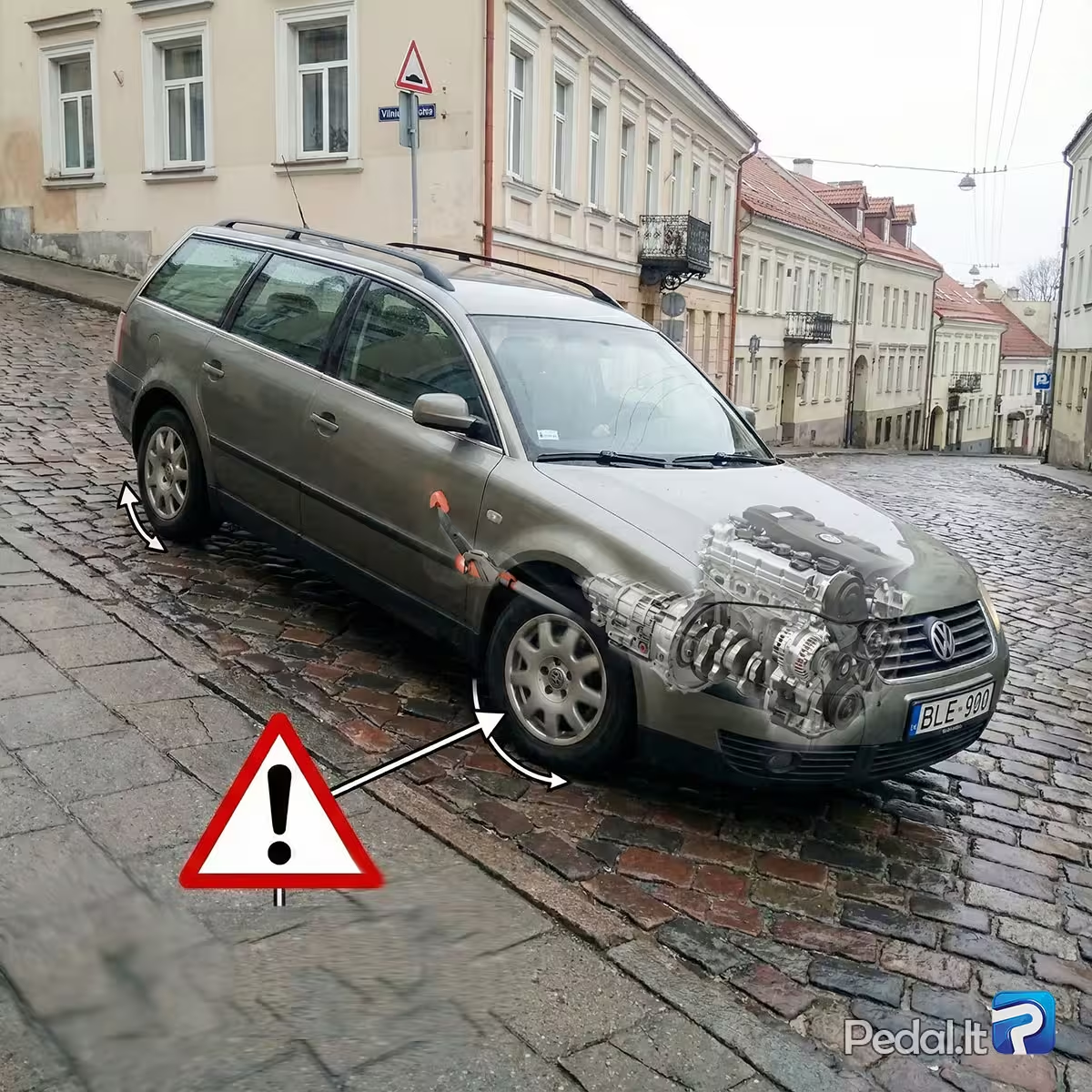
When parked on a downhill slope, leaving a diesel vehicle in gear is hazardous because:
If a vehicle is left in gear and begins to roll downhill, certain older diesel engines may rotate and start automatically.
1. The transmission or gearshift mechanism can be damaged.
2. An older diesel engine may start automatically.
3. There is no danger.
A load projects up to 1 metre beyond the front or rear of a vehicle. It will be transported at night or in conditions of poor visibility. How should this load be marked?
If the load projects less than 1 m beyond the front or rear of the vehicle, marking is not required (RTR 2.10). Any motor vehicle carrying a load that extends more than 1 m beyond the front or rear, or beyond the sides of the vehicle, must have the extremities of the load marked as specified in Annex 4 to these Rules (RTR 4.12). The extremities of loads protruding more than 1 m in front or rear, any projection to the side, and extremities of vehicles wider than 2.6 m must bear distinguishing marks — 400 mm square plates covered with alternating diagonal reflective white and red stripes 50 mm wide. These plates must be mounted not lower than 0.4 m and not higher than 1.6 m above ground level. During hours of darkness or when visibility is poor, such vehicles must have lights at the projecting points: white at the front, amber at the sides and red at the rear. JB
1. Using brightly coloured flags.
2. Distinctive markers — square plates with alternating diagonal reflective white and red stripes.
3. Marked with lights: white at the front, amber at the sides and red at the rear.
4. Marking is not required.
Which of the following are warning signals?
RTR 81. Warning signals include: using turn and brake lights (arm signals may be used), sounding the horn, switching the headlights on and off, activating hazard warning lights or flashing amber beacons, and placing a warning triangle on the road or attaching it to the vehicle.
1. Brake light signal.
2. Indicating a turn using an arm signal.
3. Horn signal.
4. Switching the headlights on and off.
5. Placing a warning triangle on the road.
Who is responsible for ensuring that children transported in a motor vehicle use the appropriate installed and correctly fitted restraint systems?
RTR 203. A driver must ensure that children transported in a motor vehicle use the appropriate installed and correctly fitted restraint systems. JB
1. The children being transported.
2. The parents or legal guardians.
3. The foster parents.
4. The driver of the vehicle.
Are you required to signal before starting to move?
RTR 82. A driver must indicate intended actions by using the right or left direction indicators, or by arm signals if the indicators are not available or are inoperative: 82.1 before starting to move off and before stopping; 82.2 before changing lanes, before and after overtaking, before and after bypassing an obstruction, before turning right or left, before making a U-turn, and before leaving a roundabout or an intersection where traffic circulates in a circle. JB
1. Yes — you must signal before starting to move.
2. No — you are not required to signal.
Which of the following statements is correct?
During the summer season, it is permitted to drive on winter tyres that do not have studs. Such winter tyres are often used in summer when their tread depth is approximately 3 mm; during the winter season winter tyres may be used if their tread depth is at least 3 mm. The tread depth of tyres used in the summer season must not be less than 1.6 mm. RTR XXX. REQUIREMENTS FOR VEHICLES (p. 223-235) 229. Vehicles with studded tyres must not be used from April 10 to October 31. During the warm season, it is recommended to use vehicles with summer tyres. If winter conditions are prolonged, an order of the Minister of Transport and Communications may extend the permitted period for using studded tyres. 230. From November 10 to March 31, motor vehicles other than mopeds, motorcycles, tricycles, all types of quadricycles, and trailers must not be operated with summer tyres. Mopeds, motorcycles, tricycles, and all types of quadricycles fitted with summer tyres must not be operated in December–February, and also from March to November if any part of the carriageway is covered with snow or ice. JB
1. Summer tyres may be used in winter.
2. During the summer season, you may drive using winter tyres without studs.
3. You are only allowed to use summer tyres in summer and winter tyres in winter.
Which actions are permitted for a driver to attract the attention of other road users when overtaking them outside built-up areas?
Outside built-up areas, a driver may warn others when overtaking by flashing the high or low beams (provided this does not dazzle other road users) or by sounding the horn. Within built-up areas, flashing the lights is permitted if it does not dazzle others; sounding the horn is prohibited except when necessary to avoid a traffic accident. RTR — 89.
1. A driver may repeatedly switch the headlights on and off to attract attention.
2. A driver may sound the vehicle's horn to attract attention.
3. A driver may switch on the hazard warning lights.
Does a category B driving licence permit the holder to drive a light quadricycle?
A category B driving licence entitles the holder to drive vehicles of category AM (mopeds and light quadricycles). LAW ON ROAD TRAFFIC SAFETY Article 23. 1. Categories of motor vehicles and their combinations with trailers are as follows: 1) Category AM: mopeds and light quadricycles; 5) Category B1: quadricycles. 4. A driving licence that entitles a person to drive: 1) vehicles referred to in Subparagraphs 2–16 of Paragraph 2 of this Article also entitles the holder to drive vehicles of category AM; 4) vehicles of categories B, C, or D also entitle the holder to drive vehicles of categories B1, C1, or D1.
1. Yes. A category B driving licence allows the holder to drive a light quadricycle.
2. No. A category B driving licence does not permit driving a light quadricycle.
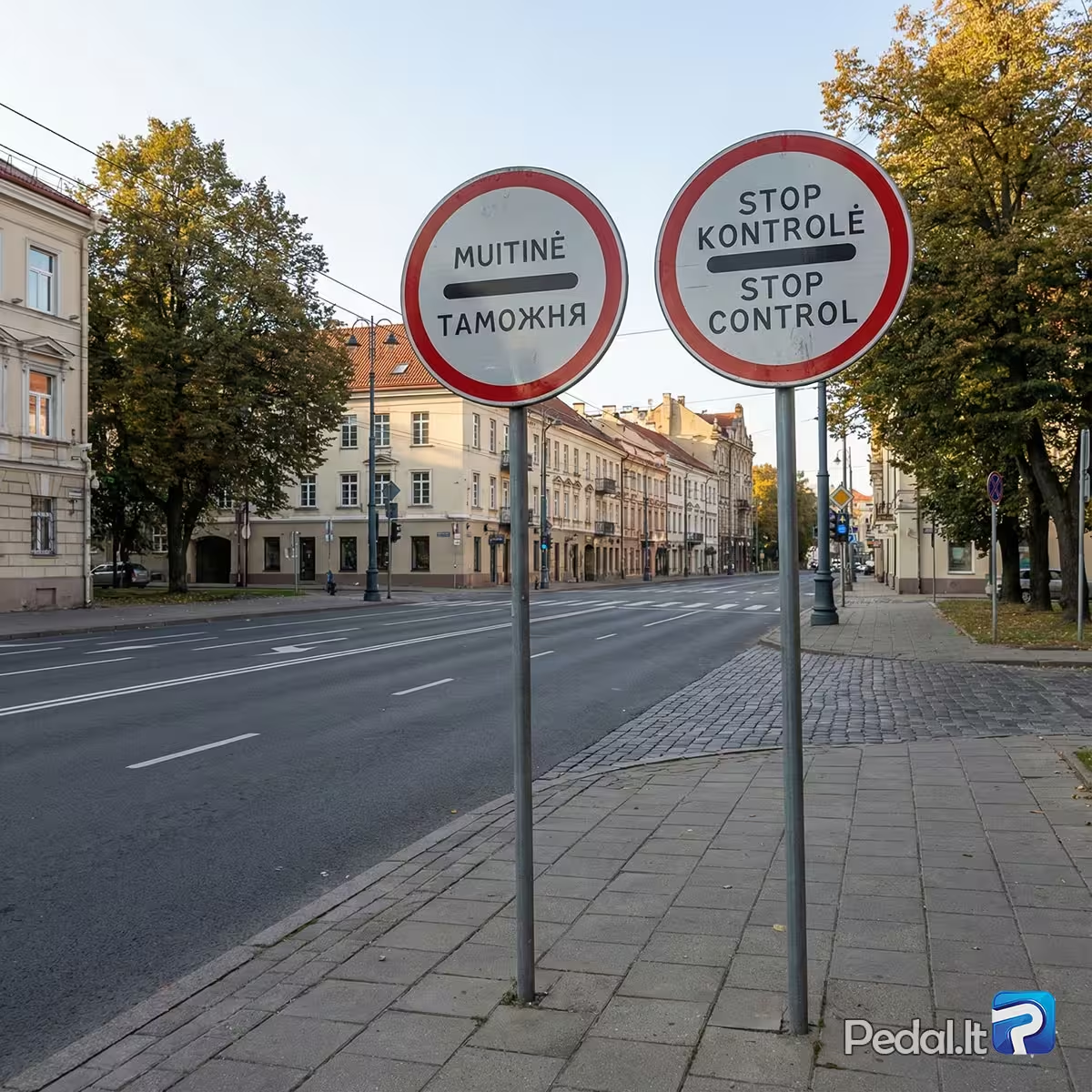
When approaching these traffic signs, you must:
Traffic sign 320 — Customs. Passing the sign without stopping is prohibited. Vehicles may proceed only with the permission of the customs officer. Traffic sign 321 — Check point. Passing the sign without stopping is prohibited. Vehicles may proceed only with the permission of the inspecting officer. JB
1. Proceed very slowly.
2. Stop and immediately continue driving.
3. Stop at the sign and proceed only after receiving permission from the inspecting officer.
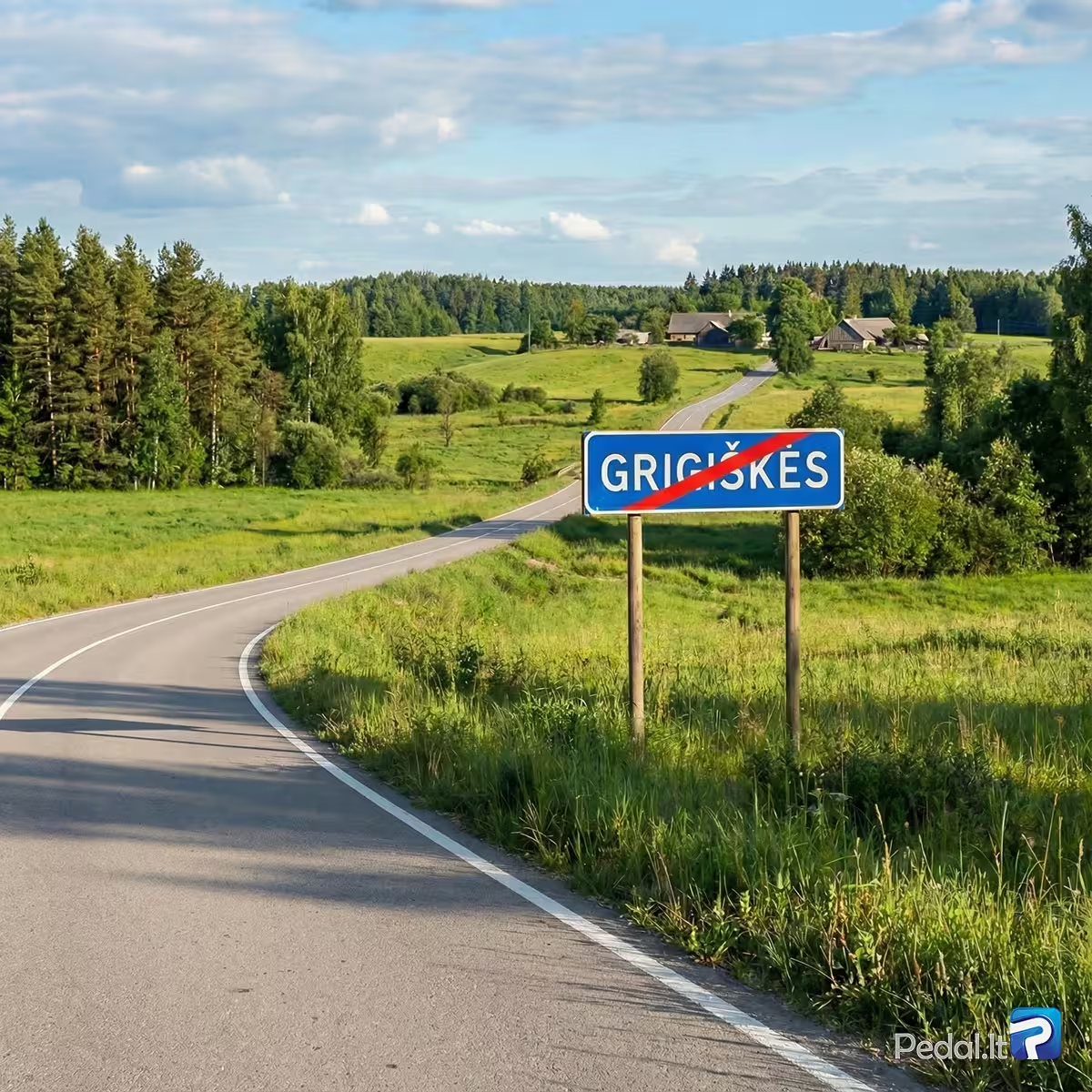
What is the maximum permitted speed for a passenger car on an asphalt- or concrete-surfaced road where this sign applies?
According to the Road Traffic Rules (RTR), a blue sign showing the settlement name in white letters indicates the start of a settlement where the special traffic regulations that normally apply within built-up areas do NOT apply. By contrast, a sign with the settlement name in black letters on a white background marks the start of a settlement where built-up-area traffic rules are in force (RTR 131). The following maximum speeds apply outside built-up areas (RTR 131.1): for passenger cars, light goods vehicles with a permissible maximum mass up to 3.5 tonnes, motorcycles and tricycles — on motorways: 130 km/h from April to October and 110 km/h from November to March; on expressways/highways: 120 km/h from April to October and 110 km/h from November to March; on roads with asphalt or concrete pavement: 90 km/h; on other roads: 70 km/h. See road sign 612: Beginning of a built-up area where special built-up-area rules do not apply. Road sign 613: End of a built-up area (marked by sign 616); it may show the name of another settlement and the distance to it.
1. 70 km/h
2. 80 km/h
3. 90 km/h
1 of 30 Task
Time left: 00:00:00
1
2
3
4
5
6
7
8
9
10
11
12
13
14
15
16
17
18
19
20
21
22
23
24
25
26
27
28
29
30