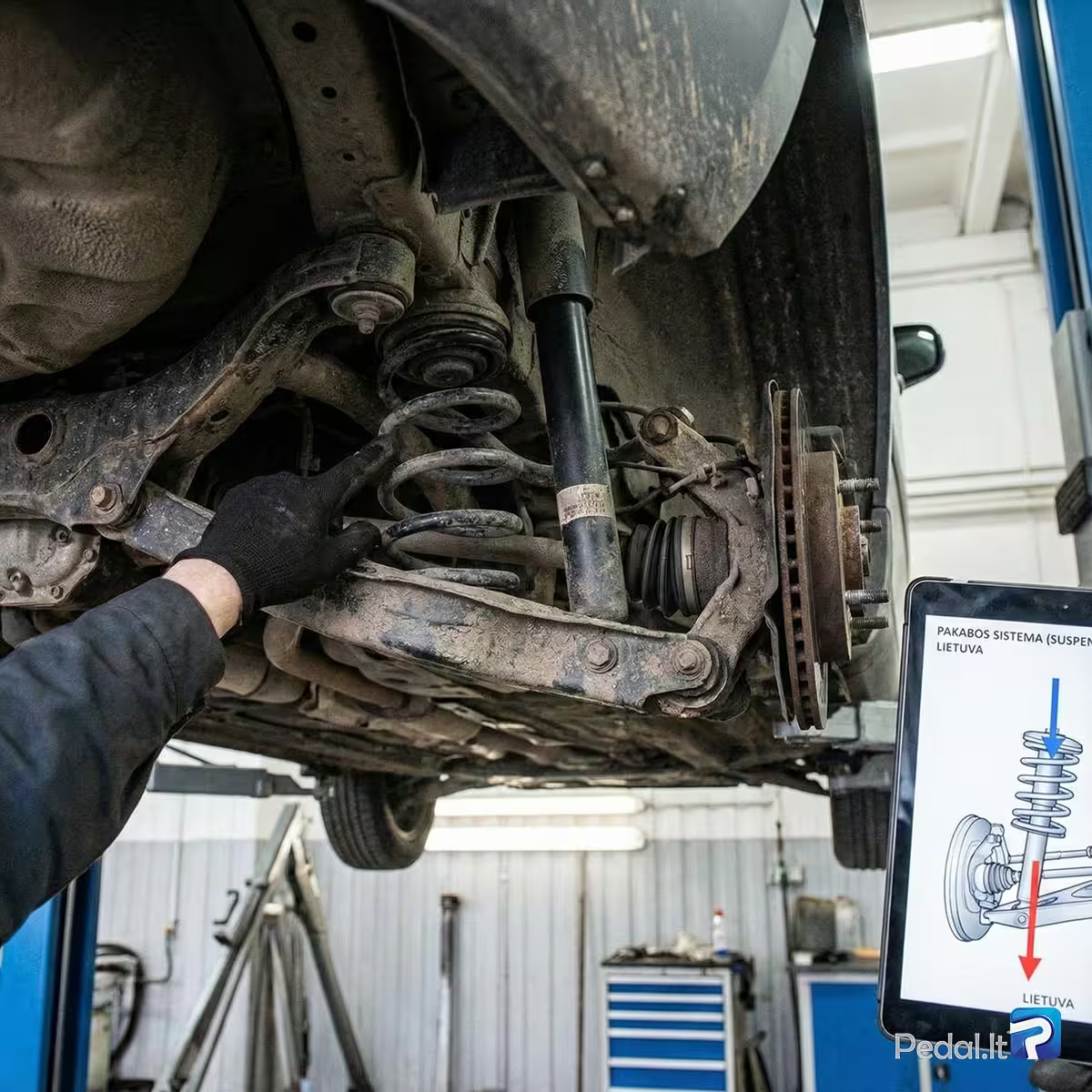
What is the function of a vehicle's suspension system?
The function of a vehicle suspension system is to convert bumps and shocks transmitted to the wheels, with the aid of shock absorbers, into minor oscillations of the vehicle body, providing comfort for driver and passengers. The suspension reduces body oscillations, and when functioning properly it enhances driving safety.
1. To improve ride comfort for the driver and passengers.
2. To convert bumps and shocks transmitted to the wheels into minor oscillations of the vehicle body.
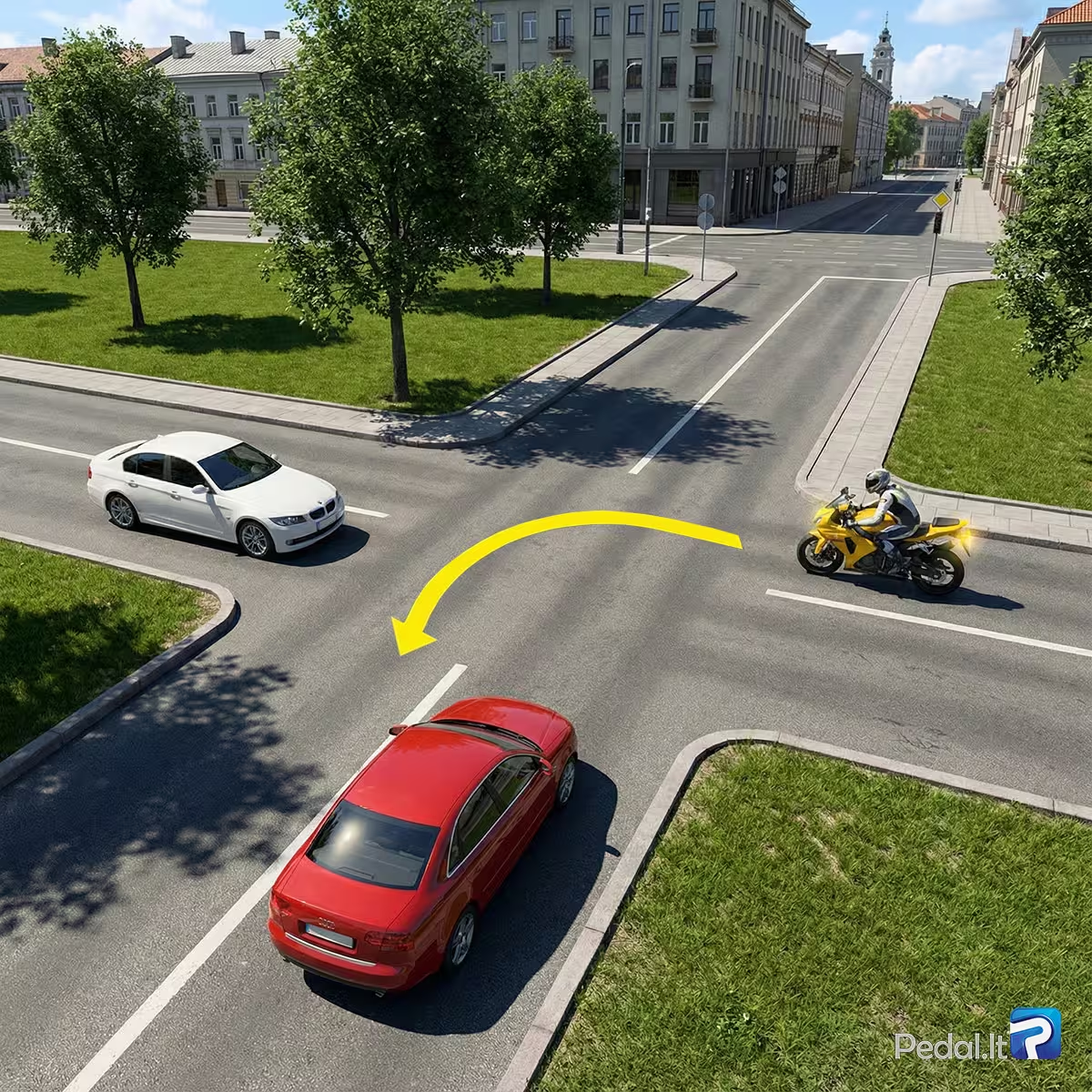
What is the motorcycle's order of passage through the intersection? The rider is turning left.
At an uncontrolled intersection of roads with equal priority, drivers must yield to vehicles approaching from the right when their paths intersect. A vehicle turning left must give way to oncoming traffic that is going straight or turning right. In this scenario, the red car goes first because the motorcycle, which had entered the intersection, stopped to yield. The white car proceeds next, since it no longer has a vehicle to its right, and finally the motorcyclist completes the maneuver — the motorcycle goes third. (RTR 155; RTR 157.)
1. First.
2. Third.
3. Second.
Documents a motor vehicle driver must carry while driving and present upon request to an inspecting officer:
Drivers are generally required to carry only a driving licence or an identity document; other documents are required only if the driver is not the owner of the vehicle they are driving (RTR 16). A driver must stop the vehicle when ordered by an inspecting officer. The driver of a motor vehicle, tractor or self-propelled vehicle shall carry and, at the request of the inspecting officer, present a valid driving licence or a document certifying the right to drive tractors and/or self-propelled vehicles; the vehicle registration documents; the certificate of compulsory roadworthiness inspection (compulsory technical inspection); the report of the most recent technical inspection for vehicle categories M2, M3, N2, N3, O3, O4 and wheeled tractor categories T1b, T2b, T3b, T4.1b, T4.2b, T4.3b, T5; the certificate (policy) of compulsory motor third‑party liability insurance; and other documents specified by the laws of the Republic of Lithuania and these Rules (except where the Law on Road Traffic Safety provides that a driver is not required to carry the relevant documents). The driver must also allow the inspecting officer to check readings of validated devices registering driving time and rest periods. Documents should be presented without leaving the vehicle; the driver may exit the vehicle only with the inspecting officer's permission.
6. A driver whose licence was issued in the Republic of Lithuania need not carry and present the licence if they present a valid identity document.
7. A driver referred to in paragraph 6 who is driving a vehicle registered in the Republic of Lithuania is not required to carry and present the compulsory technical inspection document or the compulsory motor third‑party liability insurance certificate (policy) upon request of the inspecting officer.
8. A driver referred to in paragraph 6 who is driving a vehicle registered in the Republic of Lithuania that they own is not required to carry and present the documents referred to in paragraph 7 or the vehicle registration document upon request of the inspecting officer. (RTR 219). In the event of a road accident, every driver involved or any other road user must: 219.3. produce the driver's licence, vehicle registration and compulsory technical inspection documents, the motor third‑party liability insurance policy or other documents in their possession if so requested by other road users involved in the accident. JB
1. The driver's licence, compulsory insurance certificate (policy), vehicle registration documents and the mandatory technical inspection documents.
2. Certificate of completion of compulsory first aid training.
3. A document proving personal identity or a valid driving licence.
4. A valid driver's medical certificate.
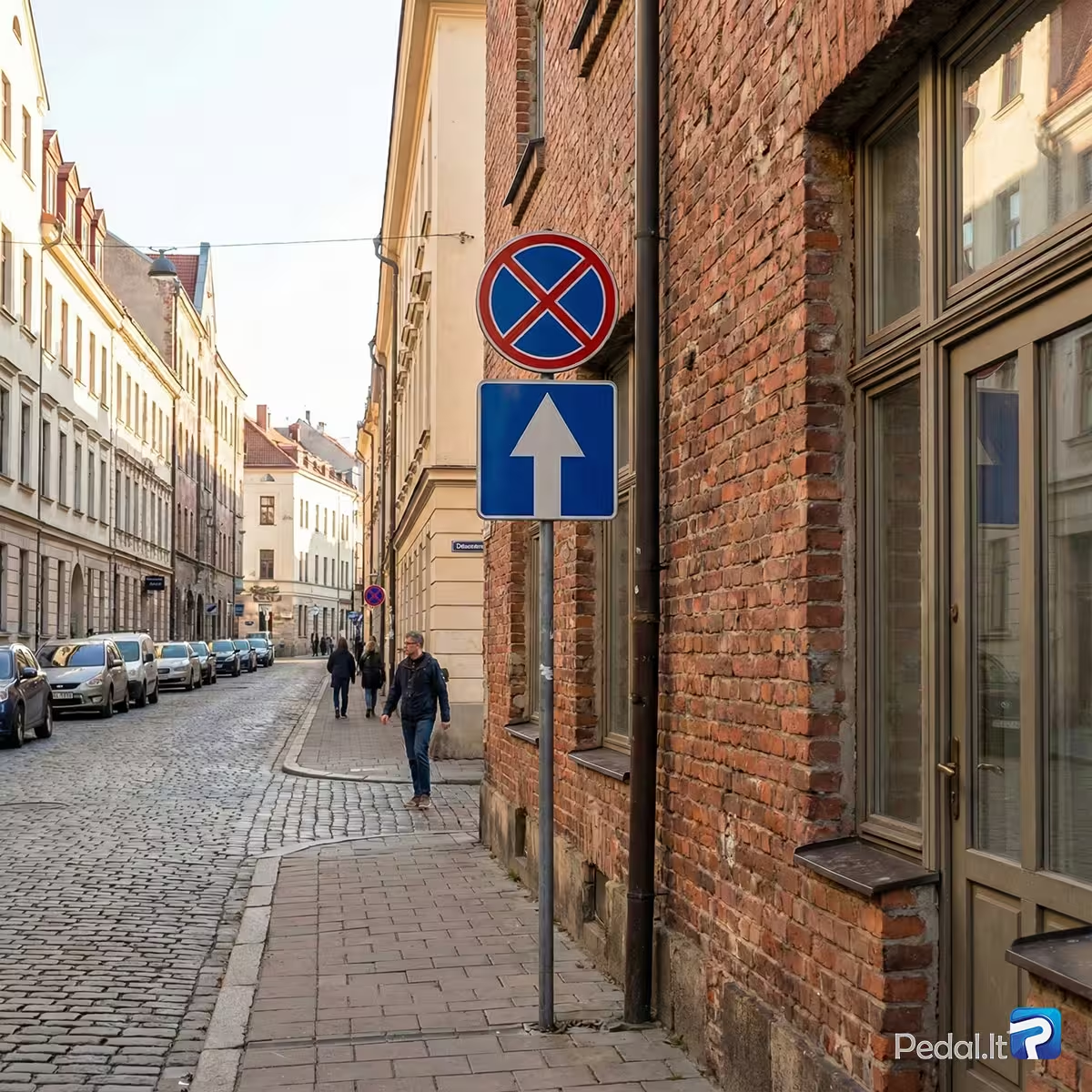
Which of the following actions are permitted on the road beyond these signs?
Traffic rules prohibit reversing only on motorways, expressways and in tunnels; otherwise reversing is allowed. U‑turns are prohibited here because they would require driving against the flow of traffic. RTR Annex 1, III — Restrictive signs: Road sign 332 'No stopping'. Vehicles must not stop or stand on the side of the road where this sign is placed, except for stopping at bus stops. The sign does not apply to vehicles displaying the distinguishing sign 'A person with a disability' or holding a parking card for people with disabilities. If the sign is used in combination with road marking 1.4, the prohibition applies until the end of that marking. RTR Annex 1, V — Special regulation signs: Road sign 503 'One-way traffic' — indicates a road or carriageway where vehicular traffic moves in one direction across the full width.
1. Proceed in one direction.
2. Park vehicles displaying the 'Person with a disability' badge.
3. Make a U‑turn.
4. Reverse (drive backward).
How would you react if the vehicle began to skid on a wet surface (i.e., started to aquaplane)?
On roads (especially those with ruts) during heavy rain, water can accumulate on the asphalt because it cannot drain quickly toward the edges. If you accelerate under these conditions, the tire treads may be unable to disperse the accumulated water. The vehicle can aquaplane when a wedge of water lifts the tires off the road surface, reducing traction and making the vehicle difficult to control. If a vehicle begins to aquaplane, the driver should reduce speed to regain traction and stability.
1. You would immediately apply the brakes.
2. You would ease off the accelerator to reduce your speed.
3. You would increase your speed.
To begin driving uphill, when should the parking brake be released?
If the parking brake is used when starting on an uphill gradient, release it simultaneously with moving off.
1. After you have started moving.
2. Before you start moving.
3. Simultaneously with starting to move.
Standing and parking are prohibited when the distance between a stationary vehicle and a solid line of the road marking (or the kerb) is:
The distance between a stationary vehicle and a solid line (or the kerb) must be at least 3 metres. If the distance is exactly 3 metres, standing and parking are permitted. If the distance is less than 3 metres (for example, 2 metres), standing and parking are prohibited.
RTR 150. Standing and parking are prohibited:
150.7 where there is a distance of less than 3 m between a stationary vehicle and a solid line of the road marking, the kerb, or, in its absence, the edge of the carriageway;
1. 3 metres
2. 3.5 metres
3. 4 metres
4. 2 metres
Your car begins to skid sideways while braking. What should you do?
If the wheels lock and the car begins to skid while braking, you must release the brake pedal. For example, if you brake hard before a bend and lock the wheels, the vehicle will continue moving in its original direction (straight ahead) despite steering input. That can cause you to run off the road or collide with an obstacle. In that situation you must stop braking — which can be difficult, especially for inexperienced drivers.
1. Press the clutch pedal.
2. Release the brake pedal (stop applying the brakes).
3. Apply the brakes more firmly.
What should you consider before setting out on a long journey?
Before a long journey, inspect your vehicle for obvious defects that could force you to stop. Avoid overloading the car to improve safety and reduce fuel consumption and wear. Planning your route with a navigation system helps make the trip faster, more efficient, and safer.
1. Performing a roadworthiness check.
2. Checking your tyre pressure.
3. Planning your route using a navigation system.
4. Avoiding overloading your vehicle.
In which situations must a driver report a road accident to the police?
If a road accident results only in property damage and the owner of the damaged property is not present at the scene and cannot be contacted, the road user involved must immediately notify the owner or, if that is not possible, report the accident to the police.
XXIX. Obligations of Road Users in the Event of a Road Accident (paras. 219–222)
219. In the event of a road accident, every driver involved or any other road user must:
219.1. stop immediately without creating further danger to other road users and mark the accident scene as required by subparagraph 91.2 and paragraph 92 of these Rules;
219.2. take all possible measures to ensure safety at the scene, and if the police are called, avoid (without endangering traffic) altering the circumstances of the accident and preserve the traces and evidence of the collision;
219.3. at the request of other road users involved, present a valid identity document or driving licence and a certificate (policy) of compulsory motor third-party liability insurance to identify the insurer;
219.4. if a person has been injured or has died in the accident, report the accident to the police and remain at the scene, or after notifying the police return and wait for them, except where the police permit departure or where the casualties or the person reporting the accident require immediate first aid;
219.5. take all necessary measures to provide first aid to the casualties, call an ambulance or, if calling an ambulance or transporting casualties to a medical facility by other means is impossible, carry them to the nearest medical facility in a private vehicle unless such transport would endanger their life or health.
222. If a road accident causes only property damage and the victim is not present at the scene, the road user involved must immediately notify the victim or, if that is not possible, the police.
1. When the accident caused only property damage and the owner of the damaged property is not present at the scene and cannot be reached.
2. When there is a dispute or disagreement about the circumstances of the accident.
3. When a person has been injured as a result of the accident.
4. When a person has died as a result of the accident.
When may a driver leave the scene of a road accident?
XXIX. Obligations of Road Users in the Event of a Road Accident (paras. 219–222) 219. In the event of a road accident, every driver involved or any other road user must: 219.4. if a person has died or has been injured in the road accident, report the accident to the police and remain at the accident scene or, after notifying the police, return to the scene and wait for the police to arrive, except where the police permit the road user to leave the scene or when the casualties or the person who reported the accident require first aid; 220. If no deaths or injuries occurred in the road accident and the road users involved agree on the circumstances and do not call the police to the accident scene, the road users must draw the accident sketch on the Road Accident Report Form, describe the circumstances in writing, and have it signed by all road users involved. If none of the road users involved has the Road Accident Report Form, the circumstances may be described and the accident sketch drawn on a blank sheet of paper listing all road users involved, their vehicles, and witnesses, and all details and circumstances must be confirmed by the signatures of the road users involved. Where the circumstances of the accident are disputed, the police must be called to the scene.
1. If a person sustained only minor injuries.
2. If the driver requires first aid.
3. If an injured person requires first aid.
4. If the police have permitted the driver to leave the scene.
What is the maximum permissible concentration of ethyl alcohol in the blood for a passenger car driver who has three years of driving experience?
LAW ON ROAD TRAFFIC SAFETY, Article 2, item 43. Intoxication — the state of a person who has consumed ethyl alcohol, when the concentration of that alcohol in the body's biological media (exhaled air, blood, urine, saliva or other bodily fluids) exceeds the legal limit. The maximum permitted concentration of ethyl alcohol in the exhaled air, blood, urine, saliva or other bodily fluids of persons driving vehicles is 0.4 per mille. Novice drivers, taxi drivers, and drivers of mopeds, motorcycles, tricycles, light quadricycles, four-wheel power quadricycles, vehicles with a maximum permissible weight over 3.5 t or with more than 9 seats, and drivers transporting dangerous goods are considered intoxicated when the concentration of ethyl alcohol in their exhaled air, blood, urine, saliva or other bodily fluids is greater than 0 per mille. JB
1. 0.2 ‰
2. 0.3 ‰
3. 0.4 ‰
4. 0 ‰
How does alcohol affect a driver's abilities?
When driving under the influence of alcohol, attention and comprehension are reduced; critical thinking and memory are impaired; coordination of movements deteriorates; reflexes are weakened or lost; drivers take longer to perceive signals and interpret situations; overall driving performance declines, reaction times slow, and vehicle control worsens or may be lost.
1. Reaction time is delayed.
2. Reaction times become shorter.
3. Attention diminishes.
4. Alcohol has no effect on a driver's reactions.
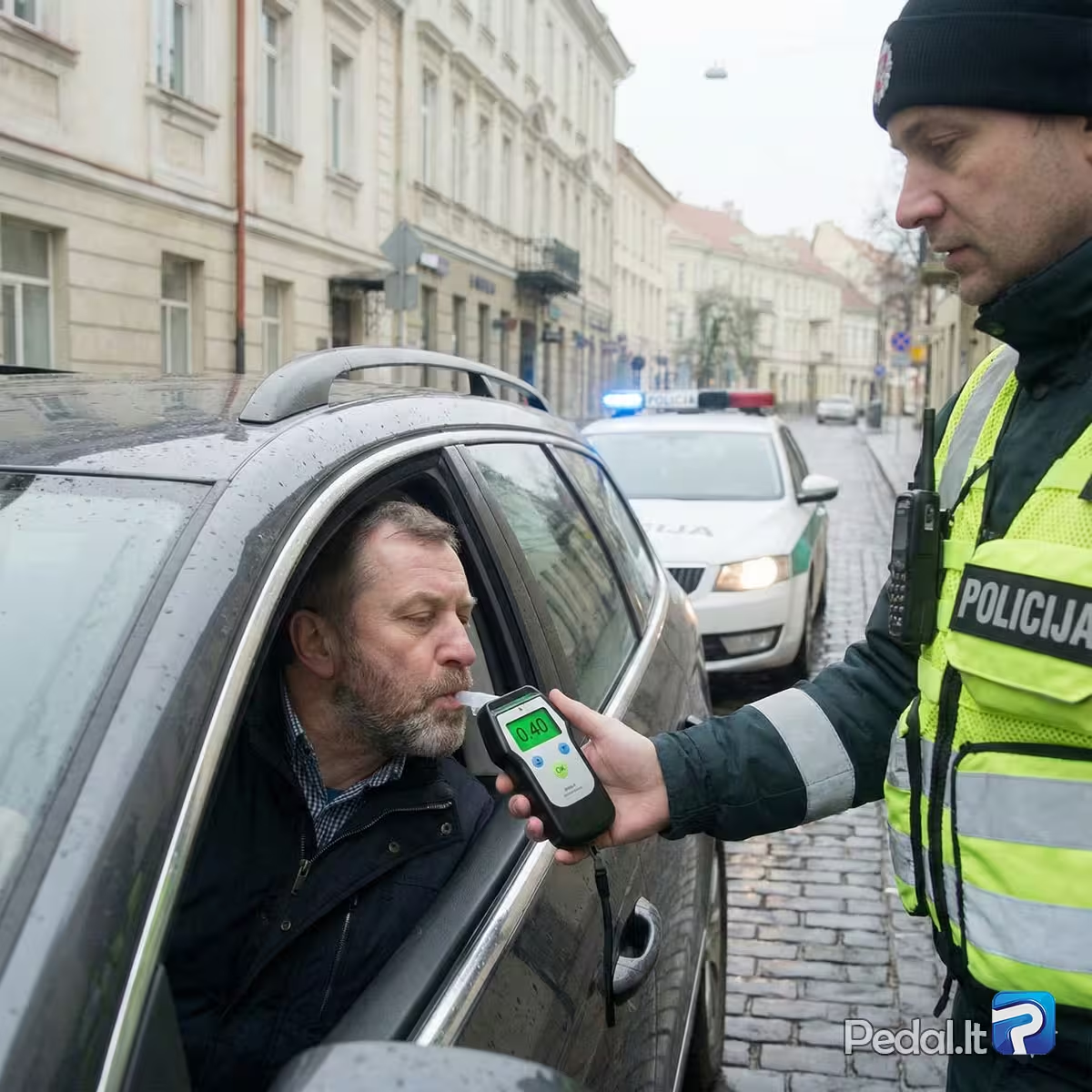
What is the maximum permitted alcohol concentration (in per mille, ‰) for a driver with 20 years of driving experience?
According to the Law on Road Traffic Safety, Article 2, point 43: “Drunkenness” means a state in which a person has consumed ethyl alcohol and the concentration of that alcohol in the body's biological media (exhaled air, blood, urine, saliva or other bodily fluids) exceeds the legal limit. The maximum permitted concentration of ethyl alcohol in the exhaled air, blood, urine, saliva or other bodily fluids of persons operating vehicles is 0.4 per mille (‰). Novice drivers, taxi drivers, and drivers of mopeds, motorcycles, tricycles, light quadricycles, four-wheelers, motorized quadricycles, vehicles with a maximum permissible weight over 3.5 t or with more than 9 seats, and drivers transporting dangerous goods are considered intoxicated when the concentration of ethyl alcohol in their exhaled air, blood, urine, saliva or other bodily fluids is greater than 0 ‰. JB
1. 0.2 ‰
2. 0.3 ‰
3. 0.4 ‰
4. 0.8 ‰
What types of liability apply to reckless driving while intoxicated?
Drivers with a blood alcohol concentration (BAC) exceeding 1.5 per mille are subject to a fine, arrest, or imprisonment for up to one year (since 01/01/2017). Drink-driving may give rise to both criminal and administrative liability. The applicable type of liability depends on the specific circumstances and the seriousness of the offence:
- Administrative liability: applies when the offences are of lesser severity.
- Criminal liability: applies when the offence is particularly serious or when driving endangers road safety, or the health or life of others.
Code of Administrative Offences of the Republic of Lithuania, Article 420(2): Reckless driving, i.e. a violation of the Road Traffic Rules that endangers road safety or the safety of oneself or others for hooligan motives, incurs a fine ranging from EUR 450 to EUR 550 for drivers and from EUR 750 to EUR 1,000 for persons not entitled to drive vehicles.
Code of Administrative Offences of the Republic of Lithuania, Article 420(4): The acts referred to in paragraph 2 committed by an intoxicated person (mild intoxication: more than 0.4 per mille but not exceeding 1.5 per mille), by a person under the influence of drugs, psychotropic or other psychoactive substances, by a person who avoided performing a field sobriety test, or by a person who consumed alcohol, drugs, psychotropic or other psychoactive substances before the test, shall incur a fine ranging from EUR 850 to EUR 1,200 for drivers.
Criminal Code of the Republic of Lithuania, Article 281(7): Persons who drive a road vehicle or instruct a learner driver while under the influence of alcohol with a BAC exceeding 1.5 per mille shall be punished by a fine, arrest, or imprisonment for up to one year.
1. Criminal liability.
2. Administrative liability.
3. Civil liability.
How should you choose an appropriate driving speed?
Order of the General Director of the state company "Regitra" approving the description of the criteria and methods for evaluating driving skills and abilities (23 December 2013, No. V-223): 3.18 Speed selection — accelerate steadily, choose a speed appropriate to the traffic situation and do not exceed the permitted limit. 3.18.1 Control the vehicle's speed while performing maneuvers: 3.18.1.1 If necessary, maintain a sufficiently low speed to compensate for any errors; 3.18.1.2 The vehicle must move evenly and smoothly. JB
1. Accelerate smoothly and steadily.
2. Drive at a speed appropriate for the traffic conditions and do not exceed the legal speed limit.
3. Drive faster to reach your destination sooner.
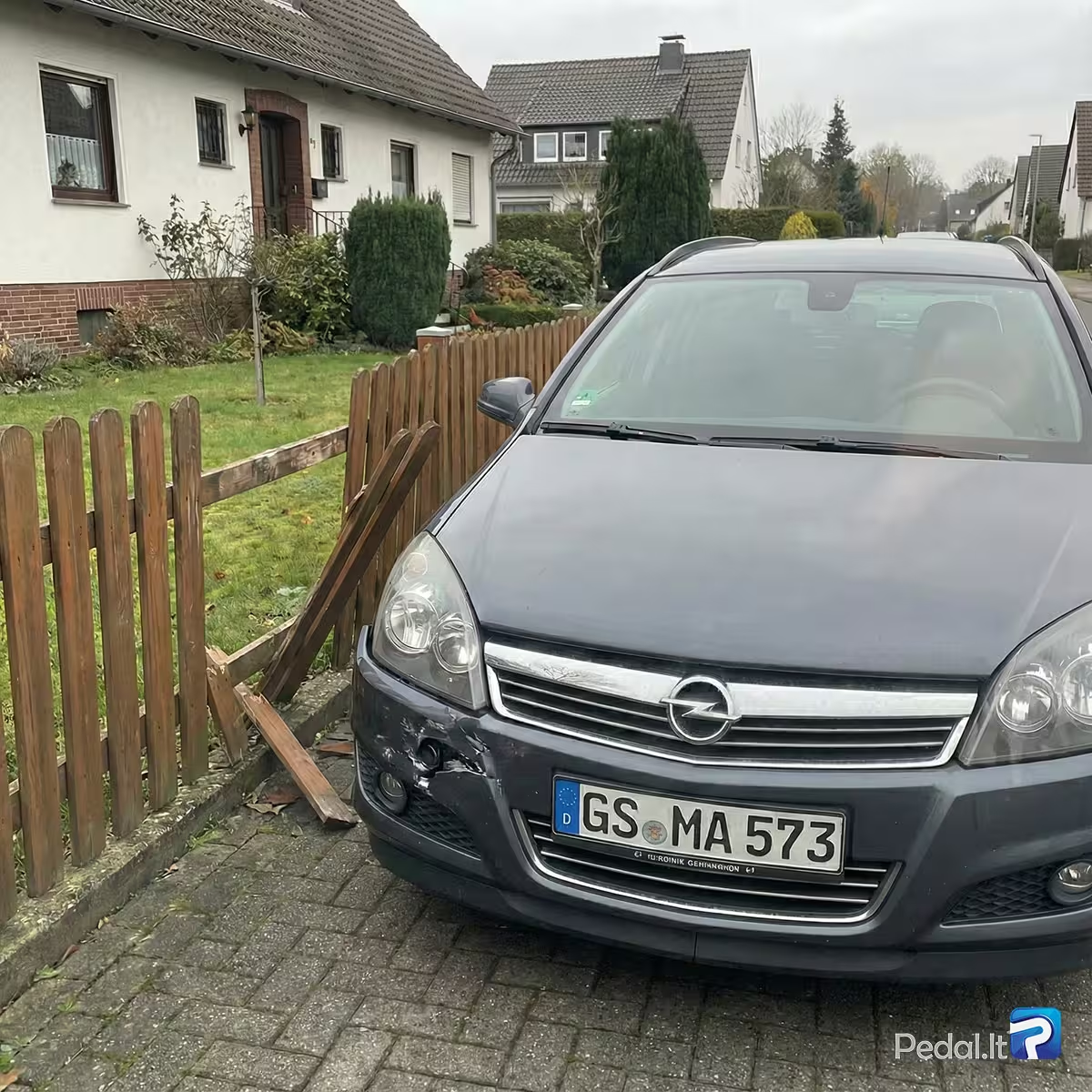
You have damaged the fence of a private property with your vehicle while the owner is absent. What must you do?
1. Leave a note with your contact information and then leave the scene.
2. Attempt to repair the damage yourself if it is safe and feasible.
3. Notify the police and remain at the scene until instructed otherwise.
4. Drive away from the scene because the property owner is absent.
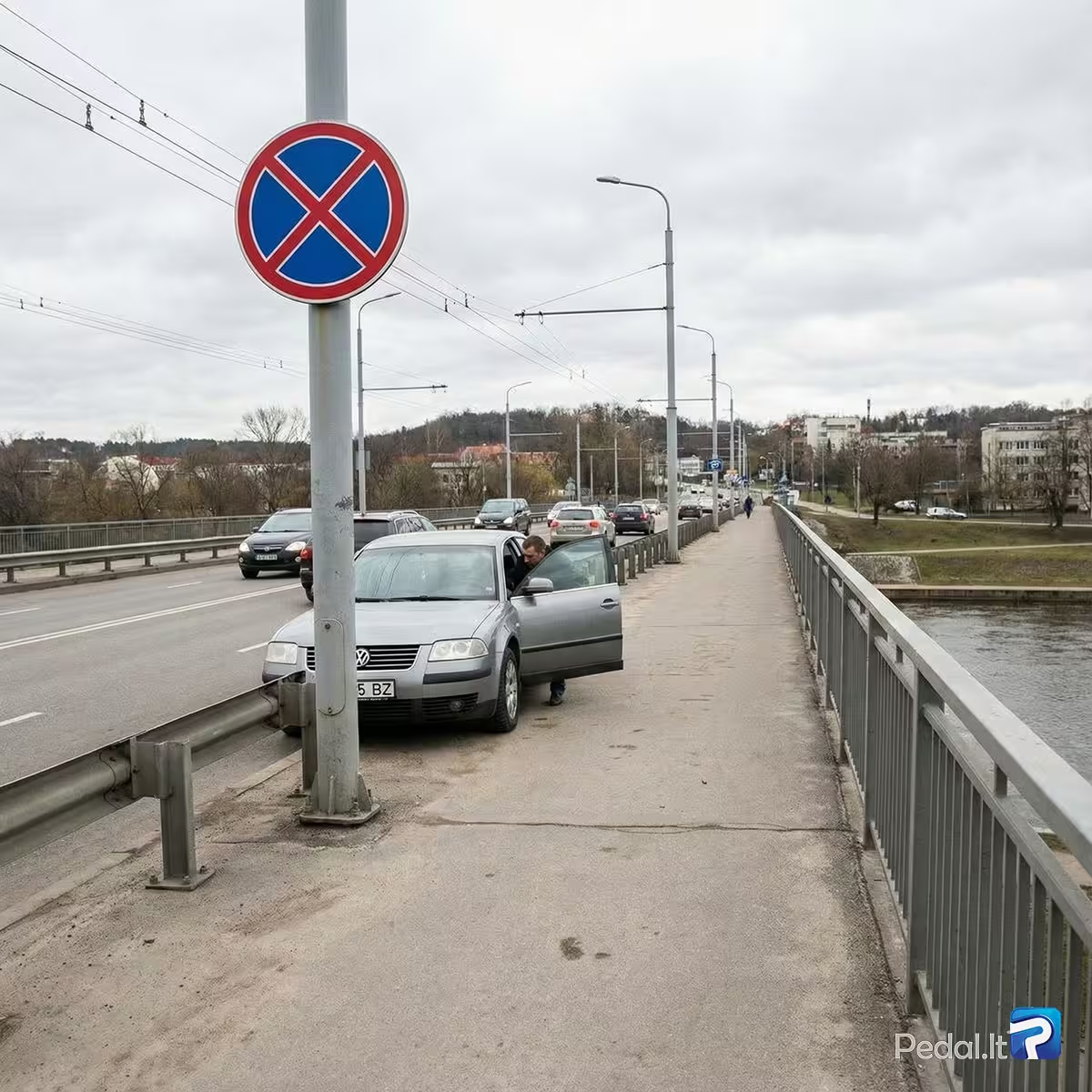
Are drivers permitted to stop or park their vehicles on a bridge if they do not obstruct traffic flow?
RTR – 150. Standing and parking are prohibited: 150.3 on and under bridges, viaducts and flyovers — except where parking is expressly permitted by road signs indicating a parking space — and in tunnels.
1. Yes — it is permitted.
2. Parking is permitted only where road signs explicitly designate a parking space.
A vehicle driving ahead of you on the motorway has switched on its hazard warning lights and keeps driving. What does this indicate?
91. If a vehicle is equipped with hazard warning lights, they must be used: 91.7 when other road users should be warned of an obstruction or hazard.
1. There is an obstruction or hazard ahead.
2. Police are ahead.
3. They are indicating that they intend to turn around.
What should drivers do when approaching an intersection where the green traffic light is flashing?
According to the Road Traffic Rules (RTR 73.3), a flashing green light permits traffic to proceed but indicates that the green phase is ending and that a prohibitive signal will soon appear. Drivers who try to speed through the intersection — by accelerating or overtaking — take unnecessary risks and may cause an accident. Other drivers may brake suddenly; therefore, to pass the intersection safely while the green light is flashing, drivers must ensure their actions will not obstruct other vehicles and must consider the behavior of drivers behind them, since sudden braking can also lead to collisions. Anticipating the need to stop before the intersection, drivers should reduce their speed.
1. Observe and take into account the actions of vehicles ahead.
2. Accelerate to the maximum allowable speed.
3. Be aware of and consider the actions of drivers behind you.
4. Reduce your speed.
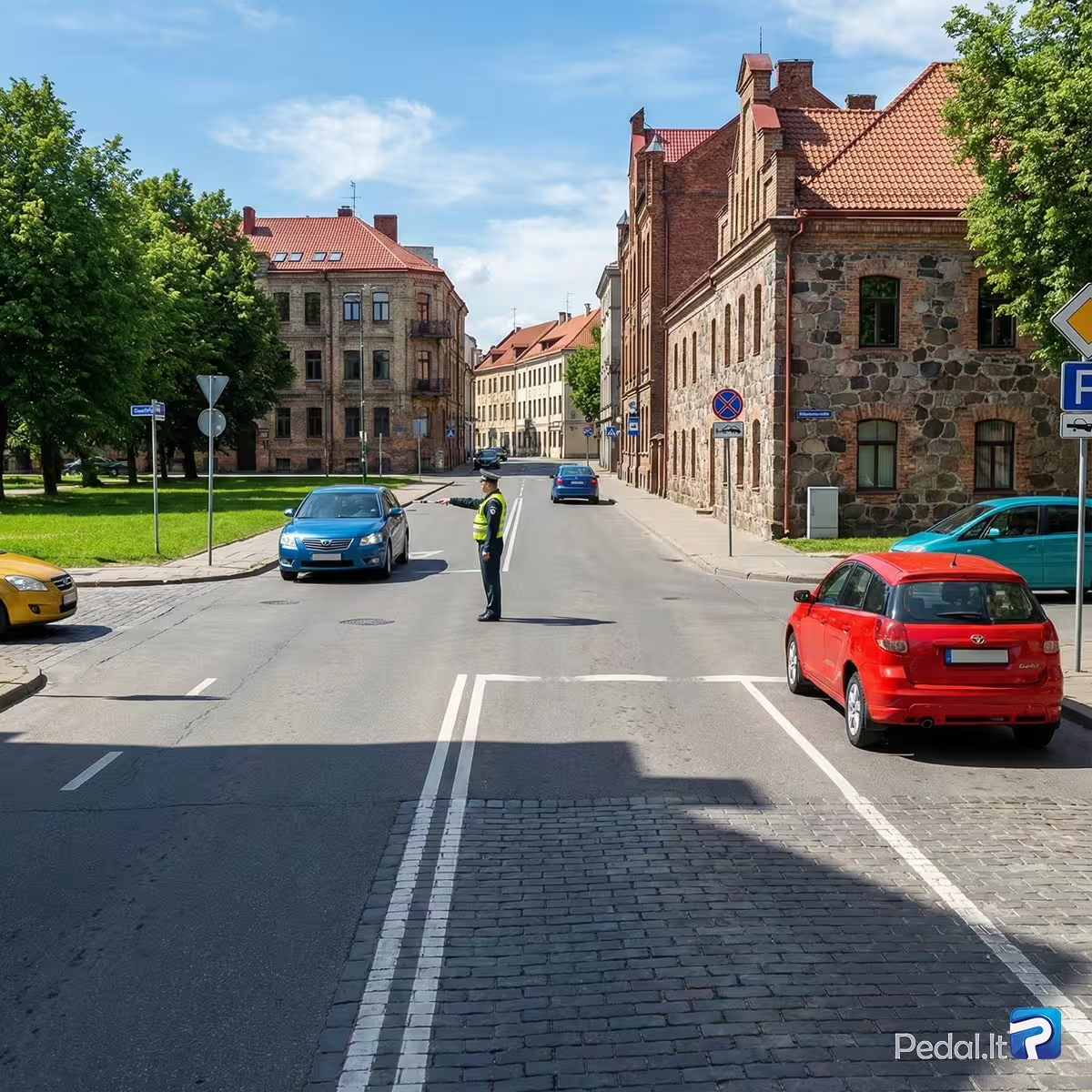
Which vehicles can turn right?
RTR 77.2. Right arm extended forward: 77.2.1. Vehicles on the left side of the traffic officer may proceed in any direction; 77.2.2. Vehicles facing the traffic officer may proceed only to the right; 77.2.3. Vehicles behind the traffic officer and on the right side must not proceed; 77.2.4. Pedestrians may cross the carriageway behind the traffic officer.
1. The red vehicle.
2. The brown vehicle.
3. The blue vehicle.
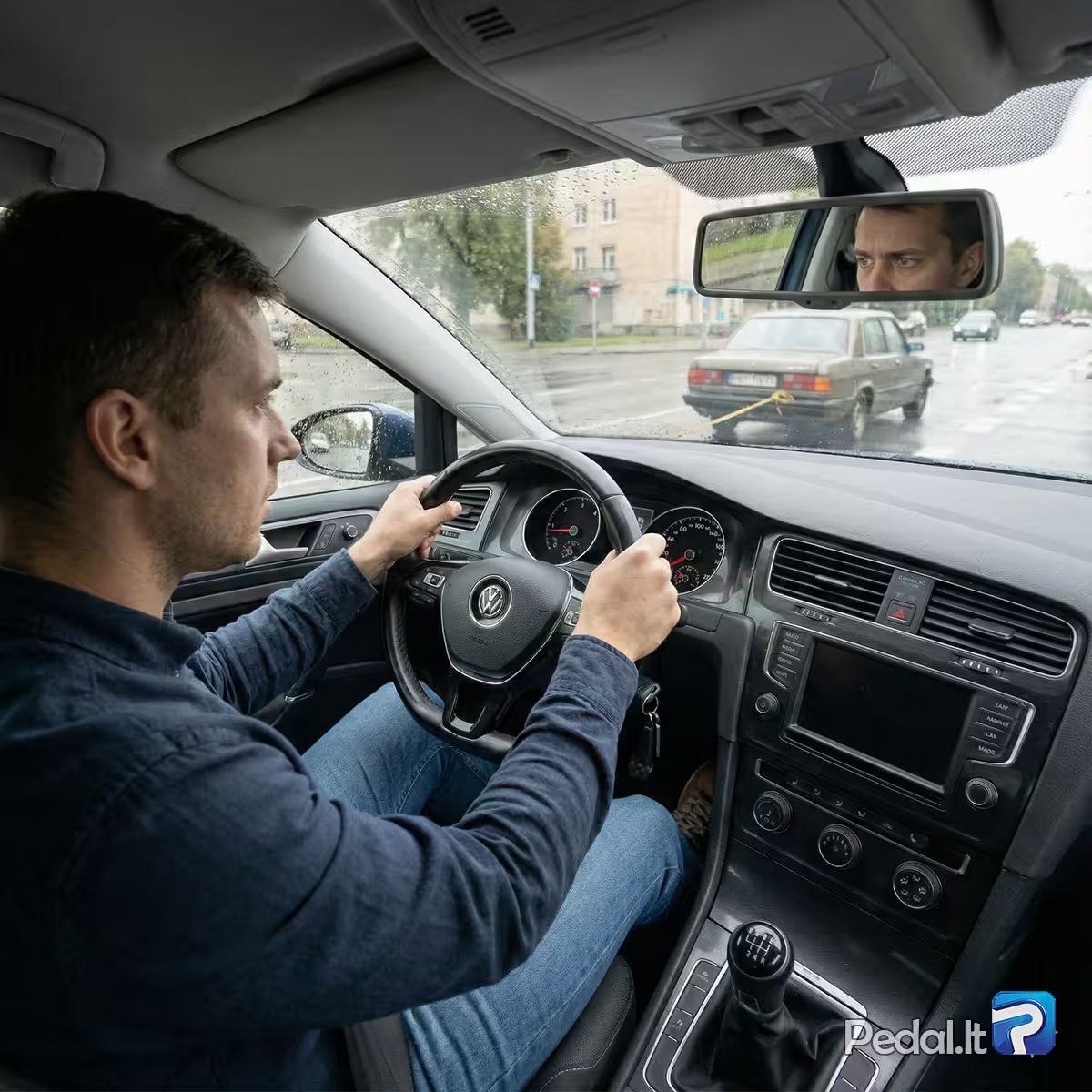
What should a driver be aware of when towing a vehicle whose engine—and therefore its brake servo—is not running?
Consider the effect on braking performance when towing a vehicle whose engine (and thus its brake servo) is not operating.
1. Continue driving as usual.
2. The towed vehicle's braking effectiveness is reduced.
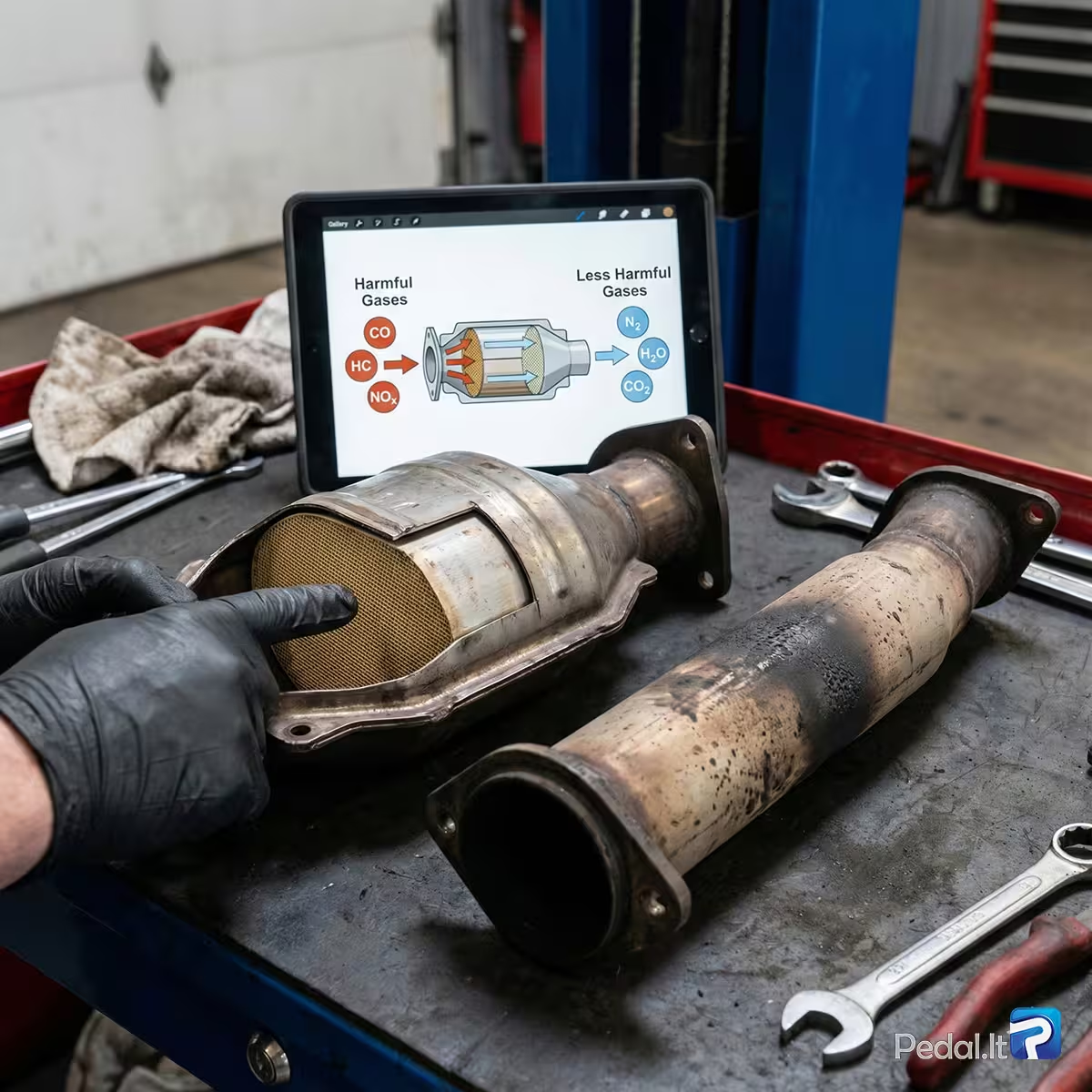
What is the function of a cardan shaft?
A cardan shaft is a mechanical component with a universal joint at one or both ends. It transmits torque and rotational motion. It is used for the following reasons: - To accommodate misalignment between shafts; - To allow changes in shaft position (for example, when driving over uneven terrain); - To transmit torque.
1. To transmit rotational motion to the drive wheels.
2. To transmit torque to the drive wheels.
3. To transmit inertia forces.
What is the primary difference between winter diesel and summer diesel fuel?
In winter, air temperatures can easily drop to -25 °C or lower, causing diesel vehicles to experience starting problems. When temperatures fall below 0 °C, water in diesel fuel can freeze; failing to prepare a diesel vehicle for such conditions may lead to breakdowns. At service stations you can choose “summer” diesel, typically suitable from May through October, or “winter” diesel, formulated for use from November through April and adapted to low sub-zero temperatures.
1. Winter diesel fuel does not gel or freeze at -25 °C.
2. Winter diesel fuel begins to gel or freeze at temperatures below -5 °C.
Where may drivers park their vehicles on unlit sections of road during hours of darkness?
RTR 143. Stopping on unlit sections of road during hours of darkness or when visibility is poor is permitted only with hazard warning lights activated. Parking is allowed only in designated car parks or in areas off the carriageway.
1. On the hard shoulder.
2. On the carriageway.
3. In car parks.
4. In off-road areas.
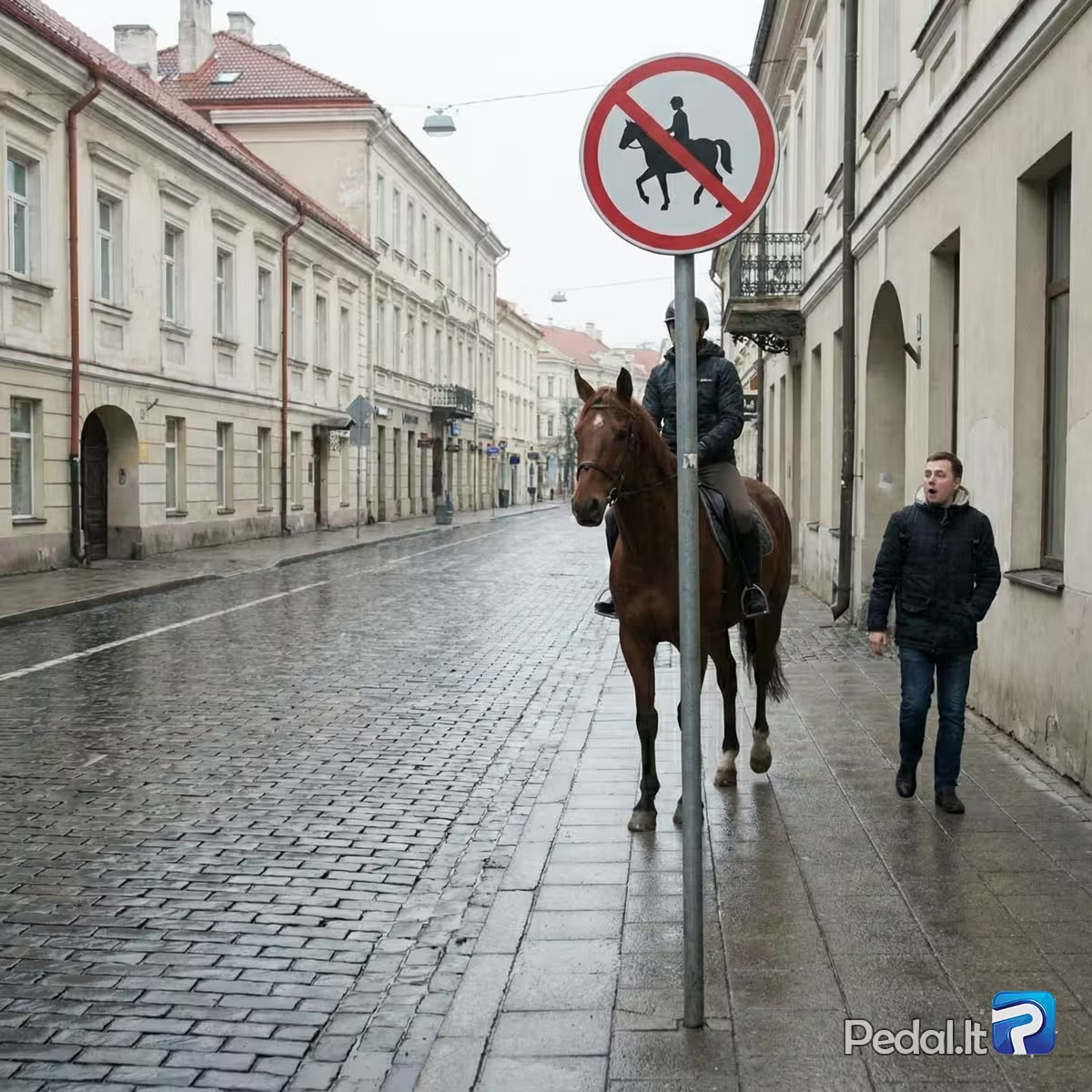
Persons riding animals are prohibited from:
67. Only persons aged 14 or older may drive an animal-drawn vehicle, herd animals or birds, or ride an animal on a road. 72. Drivers of animal-drawn vehicles, those herding animals or birds, riders, and other persons must not: 72.1. leave animals or birds unattended on a road or near a road; 72.2. tie animals so that they could enter a road; 72.3. herd animals or birds along a cobbled road or roads with asphalt or concrete pavement without the road owner's consent; 72.4. herd animals or birds across railway tracks or a road where there are no specially designated crossings; 72.5. ride an animal on the carriageway during hours of darkness; 72.6. drive animal-drawn vehicles, herd animals or birds, or ride animals on motorways and highways; 72.7. drive animal-drawn vehicles, herd animals or birds, or ride animals while under the influence of alcohol or psychoactive substances.
1. Riding an animal while under the influence of alcohol or psychoactive substances.
2. Riding an animal on the carriageway during hours of darkness, and riding on motorways and highways.
3. Riding an animal on roads if the rider is under 14 years old.
4. Riding an animal on the carriageway during daylight hours.
It is prohibited to operate (permanently use) a vehicle if:
If you discover that the horn is not working, you may drive only to a parking area or a repair facility. However, it is prohibited to operate a vehicle permanently if it does not meet the technical requirements (for example, if the horn, speedometer, or other required systems are not functioning). RTR 223. Vehicles traveling on roads must comply with the technical requirements applicable in the Republic of Lithuania when undergoing mandatory technical inspection. RTR 224. Only motor vehicles and trailers that are in good repair, except in the cases provided for in these Rules, may participate in public traffic in the Republic of Lithuania. Short-term (one-day) participation in public traffic is allowed, pursuant to the prescribed procedure, for vehicles and trailers displaying temporary license plates whose registered owners (keepers) have obtained compulsory motor third-party liability insurance and have paid the applicable fees and taxes for the vehicle or road use. RTR 15. Driving vehicles that are not in proper condition and do not comply with technical requirements for vehicles is prohibited. Before starting to drive, the driver of a motor vehicle, tractor, or self-propelled vehicle must ensure that the vehicle is in good condition, that it carries a warning triangle, fire extinguisher, first aid kit, and any other items mandatory for that type of vehicle, and must monitor the vehicle's technical condition during the journey. If the vehicle breaks down while driving and therefore does not meet the technical requirements and cannot be repaired on site, the driver may proceed, taking all necessary precautions, to the nearest parking area or vehicle repair shop, except in the cases laid down in paragraph 234 of these Rules. JB
1. The horn (sound signal) is not functioning.
2. The speedometer is not functioning.
3. The windshield is cracked and obstructs the driver's view.
What is the primary purpose of a vehicle's main brakes?
A vehicle's braking system is intended to slow the vehicle, bring it to a complete stop, and hold it stationary. Braking distance should be kept as short as possible, and you must maintain control of the vehicle while braking.
1. Slow the vehicle to bring it to a complete stop and hold it stationary on a downhill slope.
2. Maintain a safe, controlled speed when driving downhill.
Which of the following are warning signals?
RTR 81. Warning signals include: using turn and brake lights (arm signals may be used), sounding the horn, switching the headlights on and off, activating hazard warning lights or flashing amber beacons, and placing a warning triangle on the road or attaching it to the vehicle.
1. Brake light signal.
2. Indicating a turn using an arm signal.
3. Horn signal.
4. Switching the headlights on and off.
5. Placing a warning triangle on the road.
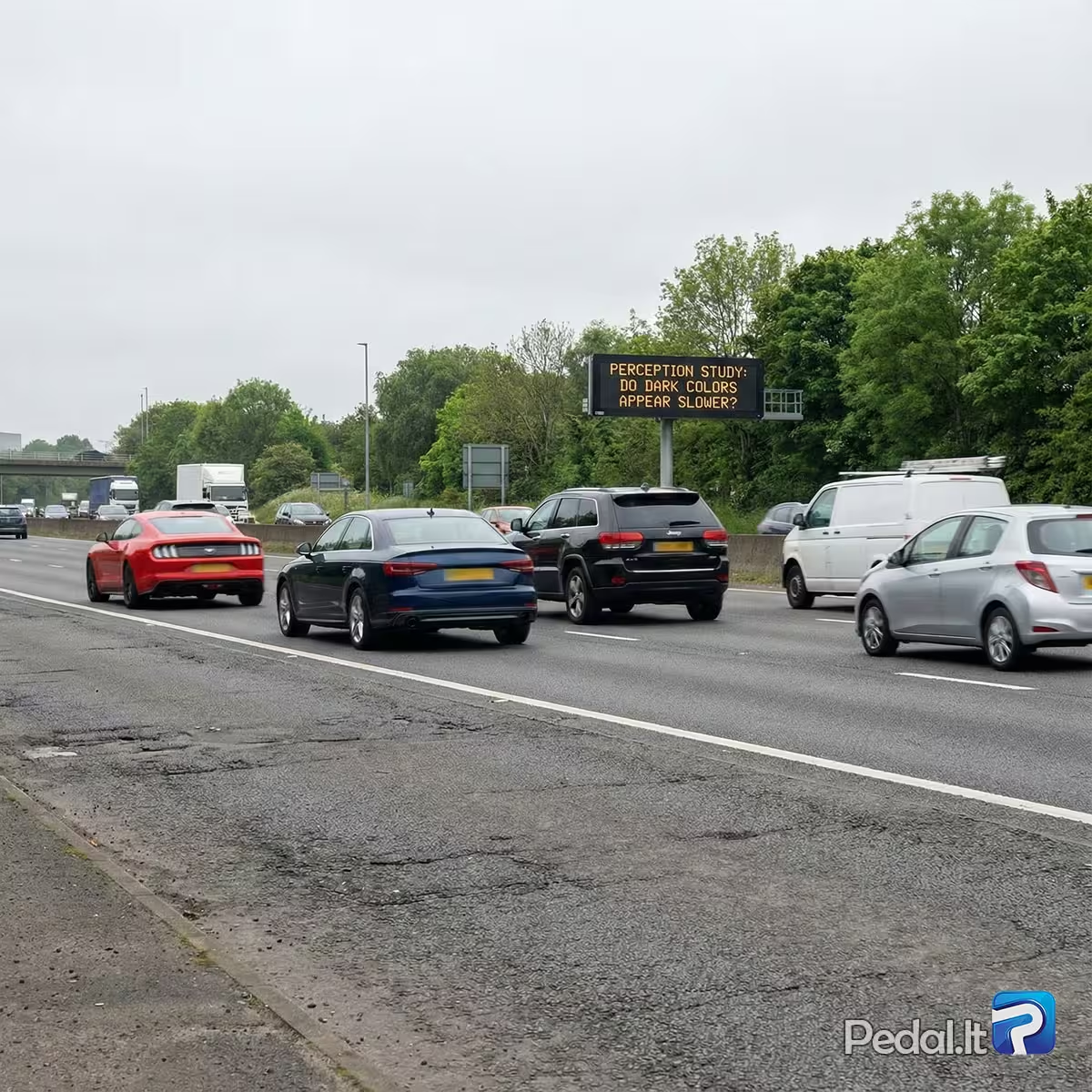
Which colour of vehicle tends to appear to be moving more slowly than it actually is?
Oncoming vehicles painted in dark colours often create the illusion that they are moving more slowly than they actually are.
1. Light-coloured vehicles.
2. Dark-coloured vehicles.
1 of 30 Task
Time left: 00:00:00
1
2
3
4
5
6
7
8
9
10
11
12
13
14
15
16
17
18
19
20
21
22
23
24
25
26
27
28
29
30