Indicate the maximum permitted speed for learner drivers when driving outside a built-up area on a road with an asphalt surface.
RTR 131. The following speed limits apply outside built-up areas: 131.2. The maximum speed for A1, A2, A or B category vehicles driven by novice drivers, persons learning to drive or taking a practical driving test, and buses (including school buses) is: 100 km/h on motorways; 90 km/h on highways; 80 km/h on roads with asphalt or concrete pavement; and 70 km/h on other roads. JB
1. 50 km/h.
2. 80 km/h.
3. 70 km/h.
4. 90 km/h.
When operating electric scooters, choppers, or electric mopeds with a maximum design speed of 25–45 km/h and power between 1 kW and 4 kW:
The AM category is sufficient to drive these vehicles, but it is not the only entitlement that allows you to do so. Possessing another driving category that authorises operation of such vehicles also permits you to drive them. LAW ON ROAD TRAFFIC SAFETY — Article 2. Basic concepts of the Law: 30. Light quadricycle means a four-wheeled motor vehicle with an unladen mass (excluding batteries if it is an electric vehicle) not exceeding 350 kg, a maximum design speed not exceeding 45 km/h, an engine capacity not exceeding 50 cm3 (for a spark-ignition engine), a maximum net power not exceeding 4 kW (for another type of internal combustion engine), and a maximum rated power not exceeding 4 kW (for an electric motor). 33. Moped means a two-wheeled motor vehicle with a maximum design speed exceeding 25 km/h and not exceeding 45 km/h, an engine capacity not exceeding 50 cm3 (for an internal combustion engine), and a maximum net power not exceeding 4 kW (for an electric motor); or a three-wheeled motor vehicle with a maximum design speed exceeding 25 km/h and not exceeding 45 km/h, an engine capacity not exceeding 50 cm3 (for a spark-ignition engine), a maximum net power not exceeding 4 kW (for another type of internal combustion engine), and a maximum net power not exceeding 4 kW (for an electric motor). LAW ON ROAD TRAFFIC SAFETY — Article 23. Categories of motor vehicles and the minimum driving age: 1. Categories of motor vehicles and their combinations with trailers: 1) Category AM: mopeds and light quadricycles;
1. A driving licence is not required to operate these vehicles.
2. The driver must hold a valid driving licence entitling them to operate AM‑category vehicles, or a licence of another category that permits driving such vehicles.
What must you do first before overtaking?
RTR 136. Drivers should avoid unnecessary overtaking maneuvers. Before overtaking, drivers must take extra precautions and ensure that: 136.1 no driver following has already begun to overtake them; 136.2 the driver of the vehicle to be overtaken is not signaling a left turn; 136.3 the portion of the lane required for overtaking is clear and the maneuver will not obstruct oncoming traffic or pedestrians on the carriageway; 136.4 a safe distance from the vehicle being overtaken will be maintained throughout the maneuver; 136.5 after overtaking, the driver can safely return to the original lane without obstructing the overtaken vehicle.
1. Ensure the road ahead is clear.
2. Shift to a lower gear.
3. Increase your speed.
4. Reduce your speed.
What is the colour of the road sign labelled 'Place of Interest'?
629. 'Place of Interest' sign. Indicates the name of a cultural or historical site of interest. The sign has a brown background.
1. Blue.
2. Green.
3. Yellow.
4. Brown.
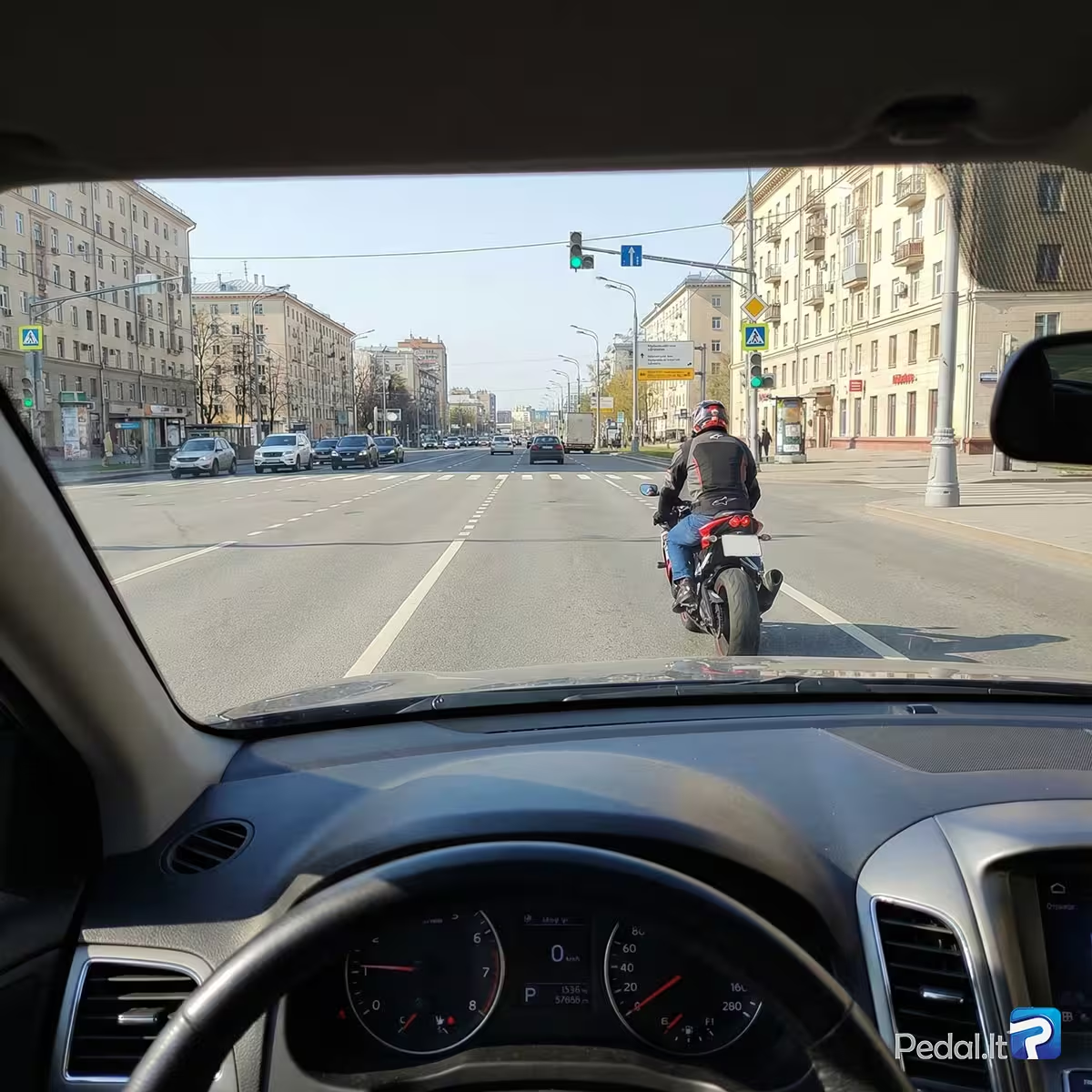
Are you allowed to ride a motorcycle with only a category B driving licence?
LAW ON ROAD TRAFFIC SAFETY — Article 22(12). Persons aged 24 or older who have at least two years' driving experience with a category B licence and who have completed practical training for category A1 vehicles in accordance with the procedure established by the Ministry of Transport and Communications or its authorised institution are granted the right to drive category A1 vehicles within the territory of the Republic of Lithuania.
1. Driving category A1 motorcycles is permitted for persons aged at least 24 who have held a category B licence for at least two years and have completed special practical motorcycle training at a driving school.
2. It is permitted to drive all motorcycles.
When driving at night, a car's dipped-beam (low-beam) headlamps may dazzle oncoming drivers if:
Your vehicle may dazzle oncoming drivers for one or more of the following reasons: the headlamps are incorrectly aimed (too high); the headlamps are improperly fitted (not seated correctly in their sockets or the wrong type has been fitted); or the vehicle is carrying a heavy load in the boot or is fully loaded and the headlamps have not been lowered using the headlamp aiming/levelling control (if fitted).
1. The vehicle's headlamps are incorrectly adjusted (aimed too high).
2. The headlamps are improperly installed or the wrong type has been fitted.
3. The vehicle is carrying a heavy load in its boot.
At what times of day are wild animals most likely to cross the road?
Wild animals commonly appear on roads at dusk and in the late evening (approximately 17:00–23:00), and also in the early morning hours around 4:00–5:00.
1. At dawn (early morning).
2. During the night.
3. At dusk (twilight, when it is getting dark).
4. During the middle of the day.
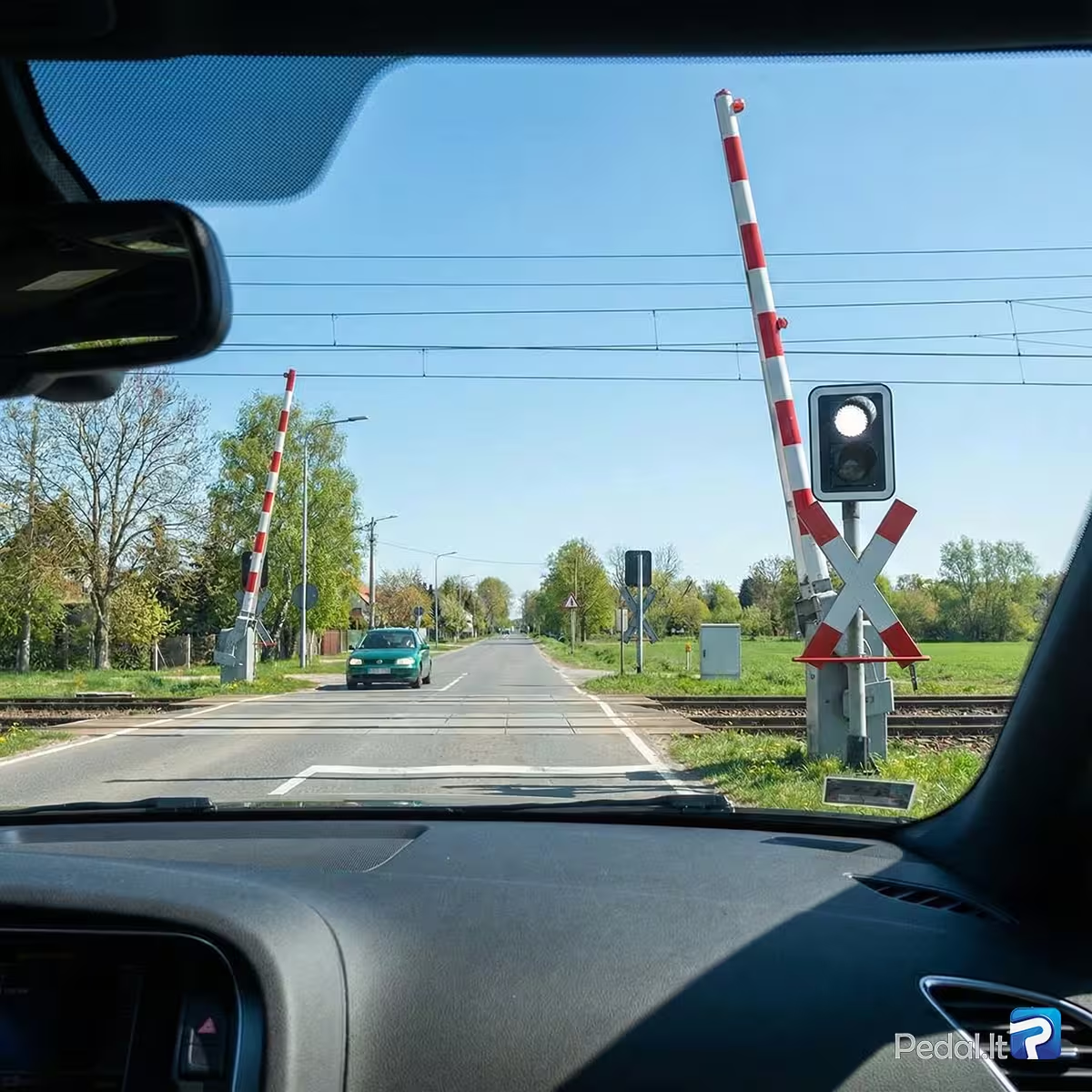
You see a flashing white light and the barrier is fully raised. Are you permitted to cross the level crossing in this situation?
RTR 73. Traffic light signals: 73.10. A flashing white light used at level crossings indicates that vehicles may proceed only after confirming that no rail-borne vehicle is approaching the crossing.
1. Yes — but only after you have verified that no train or other rail vehicle is approaching the level crossing.
2. No — you may not proceed.
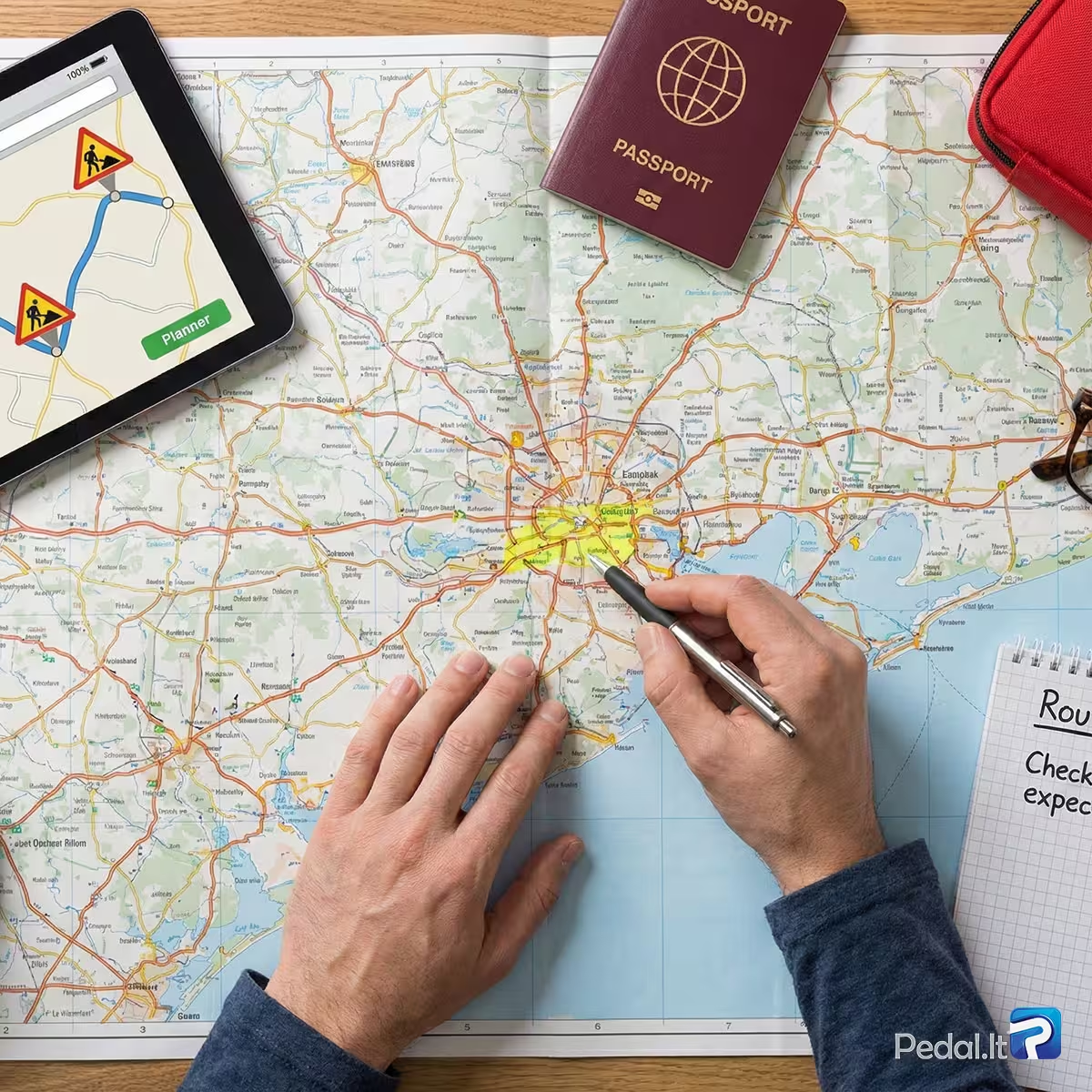
How should you plan your route when travelling a long distance that may include roadworks, border crossings and unexpected events?
JB
1. Estimate the additional fuel required for your journey and plan appropriate refuelling stops.
2. No planning is necessary.
3. Plan your departure time, stops and rest breaks, parking arrangements, and the route your vehicle will follow to the destination.
4. Check the traffic laws and legal requirements of any countries you will pass through.
When driving, you must yield to pedestrians when they:
RTR 30. When approaching an uncontrolled pedestrian crossing, a driver must slow down or stop before the crossing to yield to pedestrians who have stepped into any lane, are moving within any lane, or are standing immediately before a lane (at the edge of the roadway) waiting for the opportunity to step into that lane in the direction of the vehicle’s travel or into any lane on a road with one lane in each direction. Drivers must take extra precautions during hours of darkness, when visibility is poor, or whenever a pedestrian crossing is not clearly visible from the driver’s position, and must ensure there are no pedestrians who should be given way at the crossing.
1. Are already on a pedestrian crossing.
2. Are stepping onto a pedestrian crossing.
3. Are standing at the edge of the roadway before a pedestrian crossing and waiting for the opportunity to step onto it.
The front passenger airbag must be deactivated when a child is seated in a rear-facing child seat on the front passenger seat in a motor vehicle because:
RTR 201. A child must not be transported in a rear-facing child seat appropriate for their size on a front passenger seat that is protected by an active airbag. This restriction does not apply if the front airbag has been deactivated. It is recommended that a child be carried as long as possible in a child seat suitable for their height and weight and installed rear-facing, contrary to the vehicle’s direction of travel (as specified by the seat manufacturer).
1. In a collision the child’s neck can be seriously injured.
2. In a collision the child’s head can be seriously injured.
3. The driver may receive a fine.
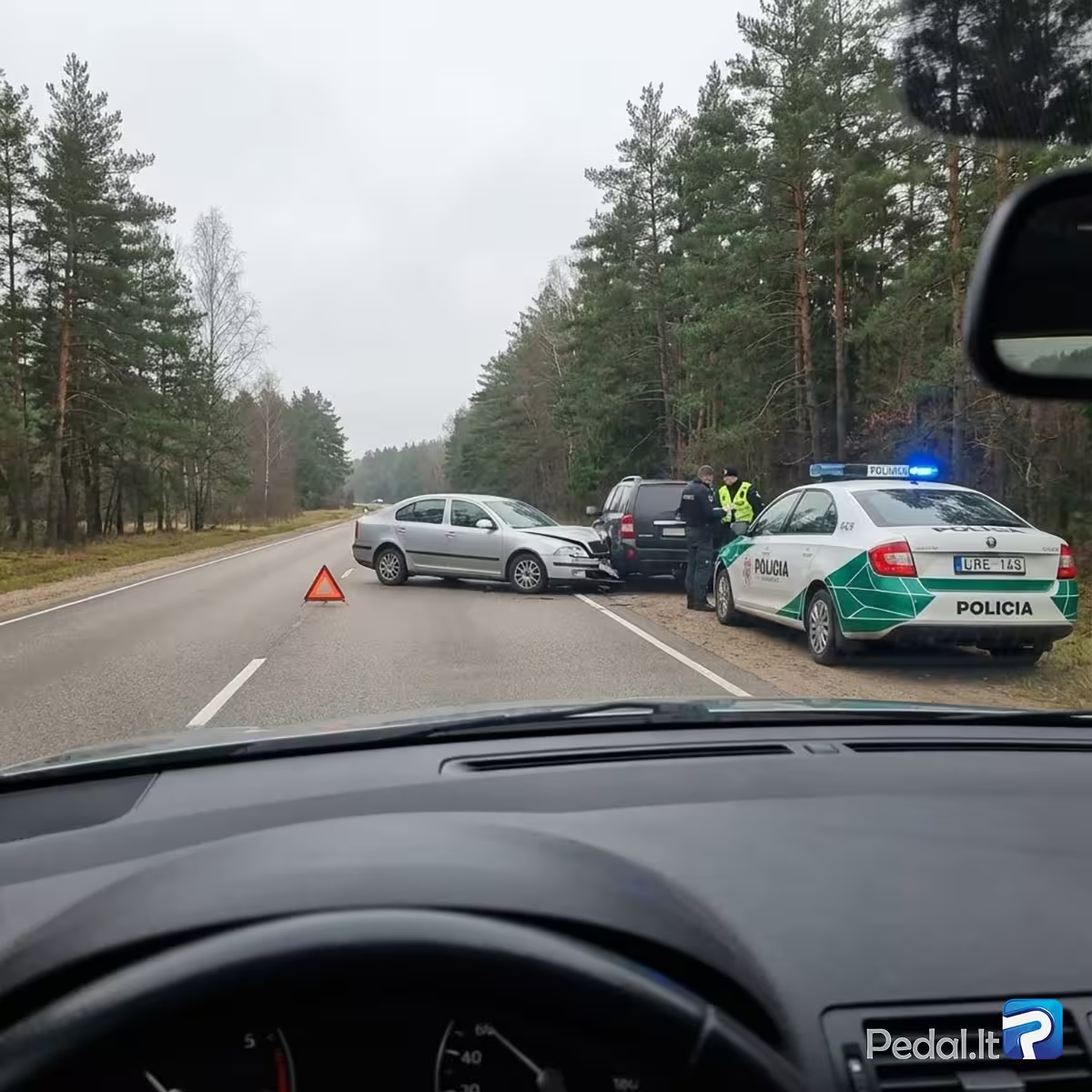
In most cases, those responsible for road accidents in Lithuania are:
According to data from the Lithuanian Road Administration, in 2017 drivers accounted for 68.83% of all individuals found responsible for road accidents.
1. Drivers of motor vehicles.
2. Cyclists (bicyclists).
3. Pedestrians (people on foot).
4. Drivers of animal-drawn vehicles.
Operating a vehicle is prohibited if any of the following applies:
RTR 14. Persons who are not authorized to drive, who are intoxicated, under the influence of narcotic or psychotropic drugs or other psychoactive substances, or who have not taken the legally required daily rest must not drive. Additionally, a person who is fatigued or ill must not drive if doing so could endanger road safety. A vehicle must not be entrusted to anyone affected by the above factors or who is not authorized to operate that class of vehicle. When driving, the driver must comply with any restrictions or conditions indicated on the driving licence.
1. The driver is not authorized to do so.
2. The driver holds valid documents required by the Road Traffic Rules.
3. The driver is intoxicated.
4. The driver is not under the influence of psychoactive substances (e.g., narcotics, medications, or other intoxicating substances).
Which features ensure a vehicle's active safety?
Difference between active and passive safety:
- Active safety: systems and features that help prevent accidents by improving vehicle control, handling and stability before a collision occurs. These measures operate before an impact and commonly include technologies such as Anti-lock Braking System (ABS), Electronic Brakeforce Distribution (EBD), traction control, correct tyre pressure and adequate tread depth, among others. Active safety also depends on the driver’s condition and behavior — for example, poor ventilation or heating can cause drowsiness or nausea and reduce attention on the road.
- Passive safety: systems and equipment designed to reduce injury and damage during or after a collision. These features are activated in a crash to protect occupants and other road users and include seat belts, airbags, motorcycle helmets, seat-belt reminders, head restraints, crumple zones and other structural or restraint systems that absorb impact and lower the risk of injury.
1. Proper ventilation and heating.
2. Tyre pressure and tread depth.
3. Anti-lock Braking System (ABS).
4. Electronic Brakeforce Distribution (EBD).
What does a flashing white traffic light at a level crossing indicate?
RTR 73. Traffic light signals have the following meanings: 73.10. A flashing white light used at level crossings means that vehicles may proceed after ensuring that no rail-borne vehicle is approaching the level crossing;
1. It prohibits traffic from proceeding.
2. It permits traffic to proceed after ensuring that no rail-borne vehicle is approaching the level crossing.
3. It permits traffic only if you can cross the level crossing before the approaching train arrives.
Which of the following can cause your vehicle to begin skidding while driving?
Worn tyres affect a vehicle's tendency to skid — even at low speeds they can cause the vehicle to skid. A faulty power steering can make the steering wheel harder to turn, but it does not directly cause skidding. Likewise, the parking brake only affects a parked vehicle and does not cause skidding while driving.
1. Faulty parking brake.
2. Faulty power steering.
3. Worn tyres.
Why might a vehicle skid or move sideways during braking?
Braking with uneven tire wear between the left and right sides is dangerous because it can cause the vehicle to slide off the road and overturn.
1. Uneven wear between the vehicle's left and right tires.
2. Irregularities in the road surface.
3. A brake on one wheel is not working, or braking force is uneven between sides.
.avif)
A child is saying goodbye to a friend. What should you anticipate in this situation?
Children close to the road can behave unpredictably. Exercise extreme caution when driving near them — they may run into the carriageway without looking and may not respond to a horn.
1. The child may step into the carriageway without looking.
2. The child may be looking toward the road but still step into the carriageway.
3. The child may step into the carriageway even if you sound the horn to warn them.
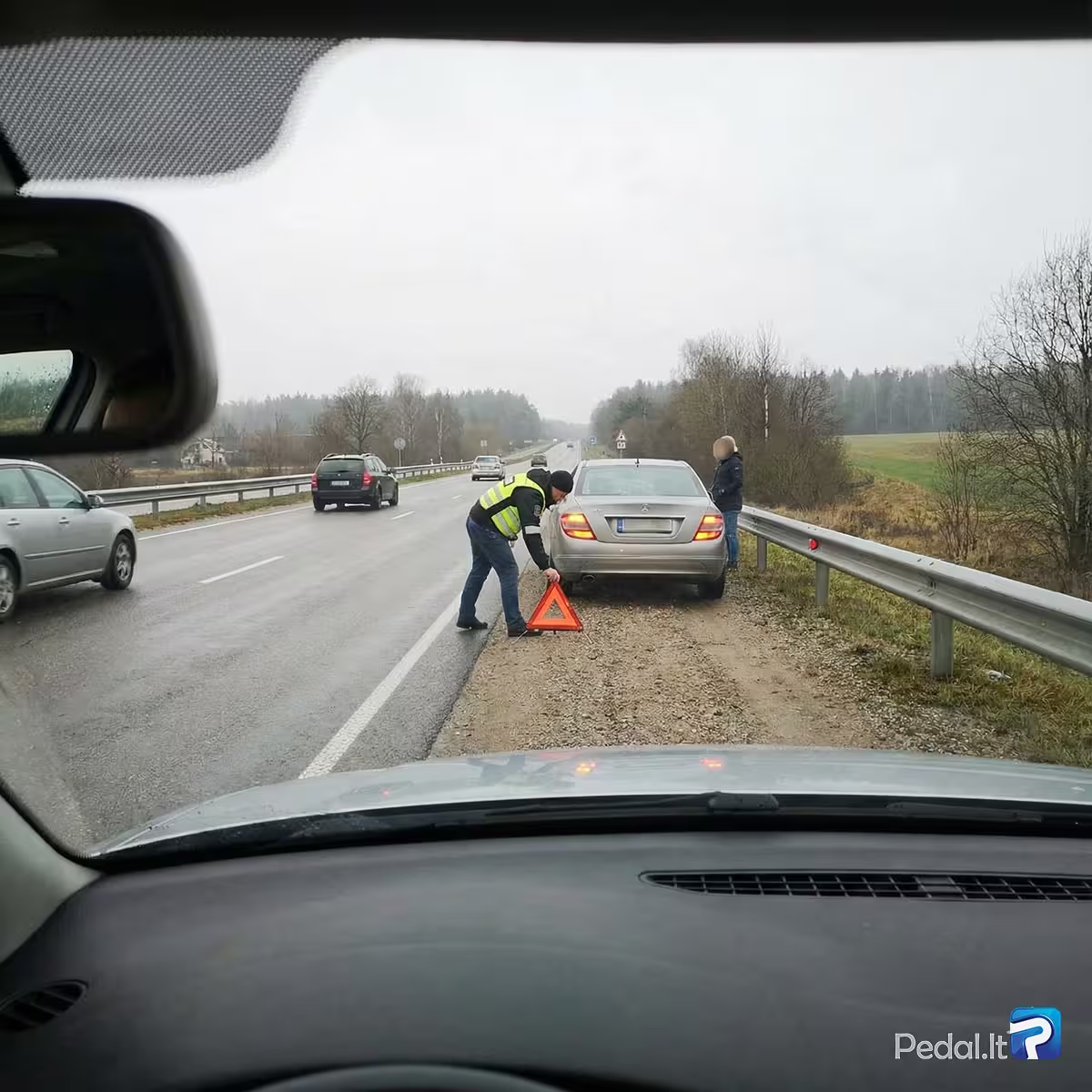
A vehicle has broken down on the road. What is the safest action to take?
1. Have the vehicle removed from the roadway as soon as possible using a tow truck (rigid towing).
2. Turn on your hazard lights and wait beside the vehicle.
3. Try to push the vehicle to the side of the road.
4. Stop and attempt to repair the vehicle while still on the roadway.
When is it mandatory to renew or replace a driver's license?
Order No. 1V-328 of the Minister of Internal Affairs of the Republic of Lithuania, dated 10 September 2008, "On Approval of the Rules for Issuing Motor Vehicle Driver's Licences", ch. II, p. 7: A new driver's licence shall be issued when: 7.1 the previous licence expires or has expired; 7.2 the previous licence is lost (misplaced, stolen, etc.); 7.3 the licence is worn out or damaged; 7.4 the personal data entered in the licence has changed; 7.5 the driver's medical condition has changed; 7.6 the applicant wishes to obtain a licence for driving vehicles of another category(ies) or to acquire the right to drive motor vehicles for the first time; 7.7 the applicant wishes to replace an old-model licence with a new model; 7.8 the applicant wishes to obtain a licence in place of one issued by another state; 7.9 the applicant wishes to obtain a licence in place of a destroyed one. SEAK Art. 22(4): Driver's licences are issued for a period not exceeding 10 years, and the right to drive vehicles of categories C1, C1E, C, CE, D1, D1E, D, DE is issued for no longer than 5 years from the date of licence issuance. SEAK Art. 22(5): Novice drivers receive a licence valid for 3 years; after 2 years from issuance they have the right to replace it with a licence valid for 10 years, pursuant to the procedure established by the Minister of the Interior or an authorized institution, without additional driver training, provided that within those 2 years they did not commit traffic offences requiring additional training under the Law on Road Traffic or cause a traffic accident that harmed a road user's health (except where the accident occurred under circumstances excluding criminal liability or where the person is not subject to administrative sanction). A novice driver who committed such an offence or caused such an accident must complete the required additional driver training within one year from the date the relevant resolution (court verdict) takes effect or from the date of enforcement of the administrative order issued after the offence. If the court verdict or criminal order imposes arrest or imprisonment and the sentence is not suspended, the additional training must be completed within one year after completion of the imposed sentence. JB
1. When the personal data on the licence has changed (for example, a change of name or surname).
2. If your place of residence has changed.
3. If you are going abroad.
4. If you drive more than one vehicle.
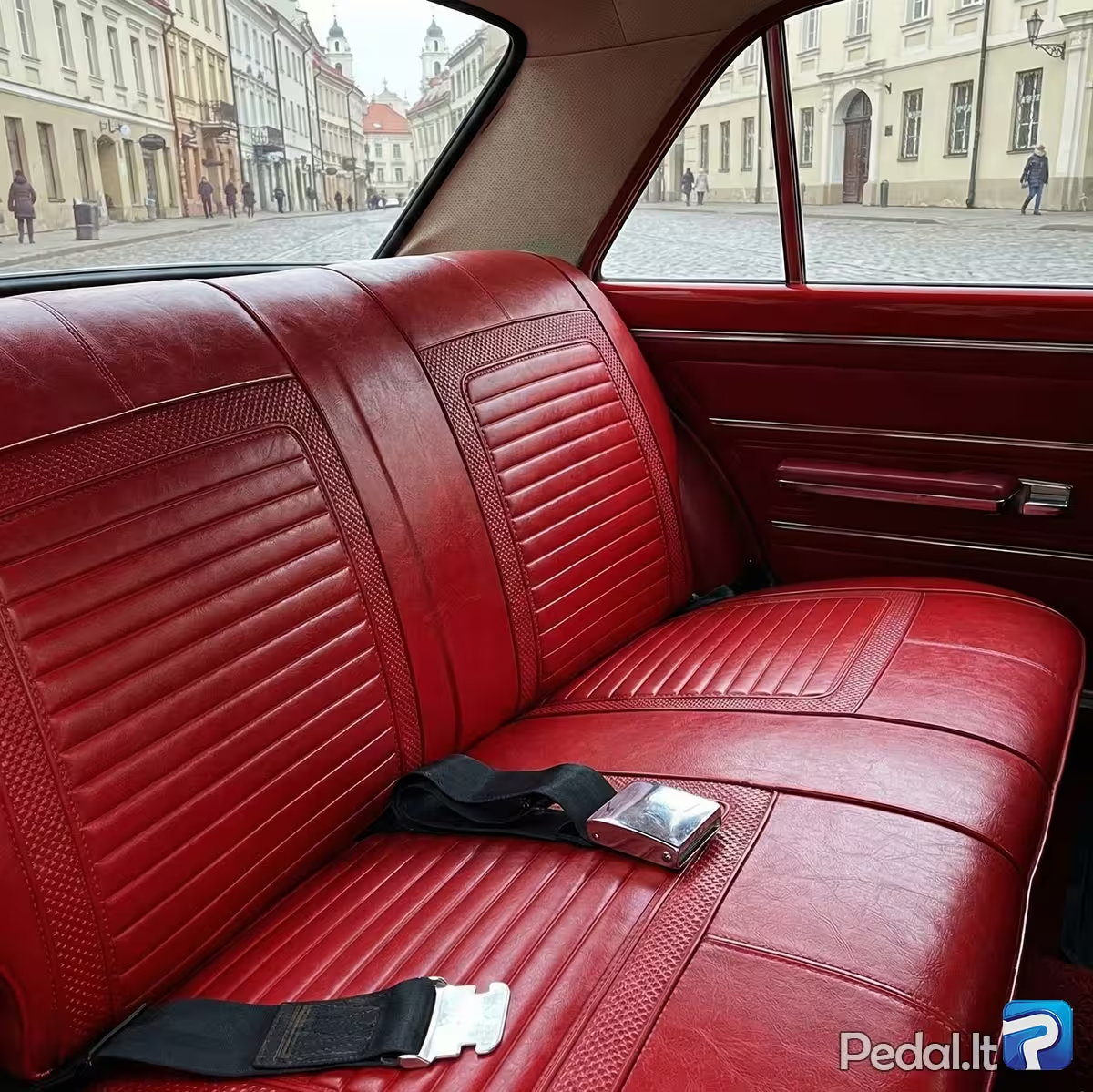
Must a rear-seat passenger wear a seat belt while the vehicle is in motion?
Drivers and all passengers must wear seat belts in vehicles that are equipped with them. In buses fitted with seat belts, a "Fasten Your Seat Belt" notice must be displayed in a clearly visible location in front of each seat, on the seat, or adjacent to it. It is recommended that all bus passengers be informed of the seat belt requirement — either verbally or by audiovisual means — before the journey begins.
1. Yes — you are required to wear a seat belt.
2. No — you are not required to wear a seat belt.
Is it permitted to transport dogs in a motor vehicle?
206. The driver must ensure the safety of pets in the vehicle and make sure they are transported in a way that does not interfere with driving and does not cause injury to the animals or to vehicle occupants if the vehicle stops suddenly.
1. Permitted, provided the animals are secured or restrained so they do not interfere with driving and do not pose a risk of injury to themselves or to the vehicle’s occupants in the event of a sudden stop.
2. Permitted only when the dogs are placed on the vehicle’s front seat.
3. Permitted only when the dogs are placed on the vehicle’s rear seat.
4. Prohibited.
What should you do when approaching an intersection where you must give way?
The correct action is to apply the brakes and release the accelerator pedal, because you must be prepared to stop if necessary. Road sign 203 — "Give Way" — indicates that drivers must yield to vehicles travelling on the road being crossed. If supplementary panel No. 843 "Direction of Priority Road" is mounted beneath the sign, you must yield to vehicles on the priority road.
1. You will apply the brakes.
2. You will release the accelerator pedal.
3. You will maintain your current speed.
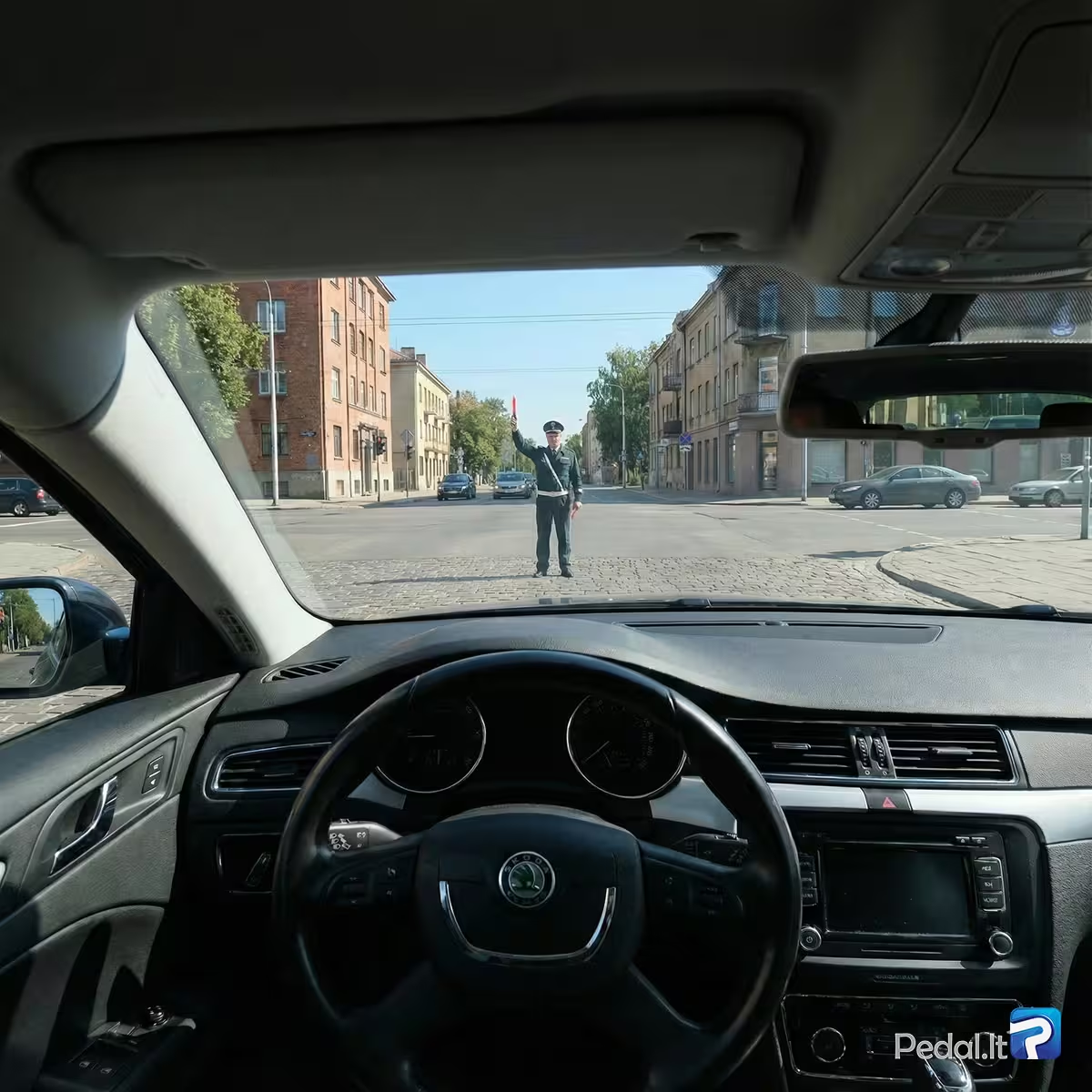
Are you permitted to proceed in this situation?
RTR 77. Signals given by traffic officers have the following meanings: 77.3. Arm raised upward: 77.3.1. All road users must not proceed in any direction.
1. Yes — you may proceed.
2. No — you must not proceed.
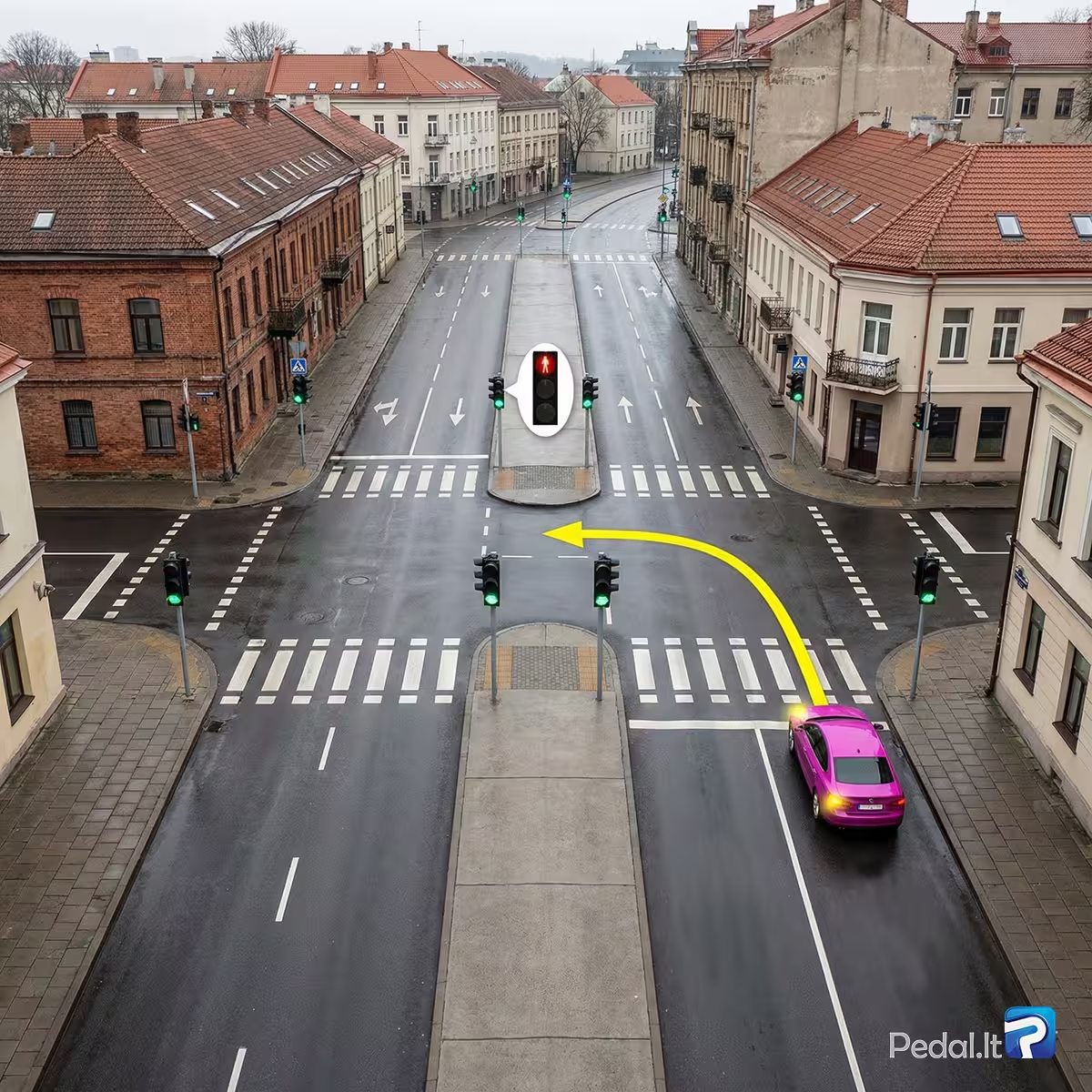
What must the driver do when turning left at the intersection?
RTR 73.11. A red light or two alternately flashing red lights prohibit traffic; if the light displays black arrow(s), it prohibits traffic in the direction(s) indicated by the arrow(s) and indicates which directions road users may proceed when the green arrow appears. RTR 162. Drivers who entered the intersection in accordance with a traffic light signal permitting them to proceed may continue in their intended direction regardless of the traffic light signal shown when the vehicle is leaving the intersection. However, if the 'STOP' sign and/or a 'Stop' line is present at the intersection before other traffic lights on the route, the driver must obey every traffic light signal. RTR 165. If traffic light signals or traffic officers prohibit driving, drivers must stop before the 'STOP' sign and/or the 'Stop' line if present; if not, they must stop before the traffic lights, before the carriageway they are about to cross or join, or before a pedestrian or bicycle crossing so as not to obstruct vehicular or pedestrian traffic.
1. The driver must turn left and then proceed straight ahead without stopping.
2. The driver must turn left and then proceed straight ahead without stopping, provided this does not obstruct other road users.
3. The driver must turn left, stop before the 'Stop' line, and when the traffic light displays a signal permitting movement, proceed straight ahead.
Which of the following are warning signals?
RTR 81. Warning signals include: using turn and brake lights (arm signals may be used), sounding the horn, switching the headlights on and off, activating hazard warning lights or flashing amber beacons, and placing a warning triangle on the road or attaching it to the vehicle.
1. Brake light signal.
2. Indicating a turn using an arm signal.
3. Horn signal.
4. Switching the headlights on and off.
5. Placing a warning triangle on the road.
.avif)
To whom must a motorcyclist yield?
RTR 12. Road users must immediately yield to approaching emergency vehicles that display blue and red (or only blue) flashing lights and use special audible signals, as well as to vehicles escorted by them. Road users shall form an emergency corridor as follows: 12.1 On a road with a single lane in one direction, drivers must stop on the right hard shoulder if one exists; if there is no hard shoulder, they must stop as close as possible to the right edge of the carriageway. 12.2 On a road with two or more lanes in the same direction, vehicles in the far-left lane must move and stop as close as possible to the left edge of the carriageway designated for that direction, while vehicles in the lanes to the right must move and stop as close as possible to the right edge of the carriageway (or the hard shoulder). 12.3 On a road with a central reservation, only drivers travelling in the same direction must comply with the requirements in paragraphs 12.1 and 12.2. RTR 154. At a controlled intersection, drivers on a side (minor) road must yield to vehicles approaching on the priority road.
1. The red car.
2. The police vehicle.
3. The bus.
4. The motorcyclist is not required to yield to anyone.
When is the road surface most slippery?
The road surface is most slippery at the start of rain because accumulated dust and oil on the pavement combine with the first drops to form a slippery film.
1. When rain begins.
2. After heavy rain.
3. After puddles have formed on the road.
A vehicle has nearly completed an overtaking maneuver while another vehicle is approaching in the oncoming lane. What should you do?
The Driver Behaviour Manual states: If another vehicle's overtaking endangers or inconveniences traffic in the oncoming lane, the driver of the vehicle being overtaken must try to prevent a hazardous situation by: (1) reducing speed; (2) moving to the side; (3) stopping if necessary. Section 128: If there is an obstruction or traffic safety is at risk, the driver must slow down and, if required, bring the vehicle to a complete stop or go around the obstruction (if it can be seen), provided this can be done without endangering other road users. Section 135: Drivers must not: 135.4. decelerate sharply for reasons other than safety.
1. Apply the brakes.
2. Maintain your current speed.
3. Ease off the accelerator.
4. Increase your speed.
When cycling on the road, must the bicycle have a red rear reflector and orange reflectors attached to the wheel spokes on both sides?
RTR 56. Only bicycles equipped with functioning brakes and a working audible warning device may be ridden on the road. A bicycle must have a red rear reflector and orange reflectors or other reflective elements fixed to the spokes on both sides of each wheel. During hours of darkness or when visibility is poor, a bicycle ridden on the road must have white front and red rear lights switched on. The cyclist must wear a reflective vest or have other reflective accessories attached to clothing in a location clearly visible to other road users. JB
1. Yes — at all times.
2. Only during hours of darkness.
3. Not required if the cyclist wears a high-visibility vest with reflective elements.
4. No, it does not.
1 of 30 Task
Time left: 00:00:00
1
2
3
4
5
6
7
8
9
10
11
12
13
14
15
16
17
18
19
20
21
22
23
24
25
26
27
28
29
30